
Where – Mackenzie River (Bun-nah) Wimmera River ( Barringgi Gadyin or Barengi Djul) junction walk. From Mackenzie Creek Bridge, Three Bridges Road, to Weir Park.
Distance walking 8.2km
Time – a very leisurely 2 hours but you can do it a bit faster.
In less than 10 words – Peaceful, diverse, surprising, reflective and worthwhile two hour wander.
What better way to start our year-long adventure but with a short trek close to home.
On January 3 Bean and I wandered along two of the Wimmera’s most high-profile rivers, the Mackenzie or Bun-nah and the Wimmera or Barringgi Gadyin or Barengi DjulI.
Barengi DjulI or the Wimmera is the big daddy of the rivers and boasts plenty of grand old red gums and while Bun-nah might seem a bit of a poor cousin, but this thirsty little tributary is flowing with life, charm and spirit.
So let’ get walking. We start at the bridge parking on gravel on the left side of the road and cross over the right to start the track, heading north.

The gate to keep vehicles out is off its hinges and squashed on the track and the dirt road has it fair share of pot holes from past traffic in the wet.
The track follows Mackenzie River or Bun-nah, Referred locally as a Creek this river winds its way 57km from the northern end of the Grampians Gariewerd before joining the wimmera.
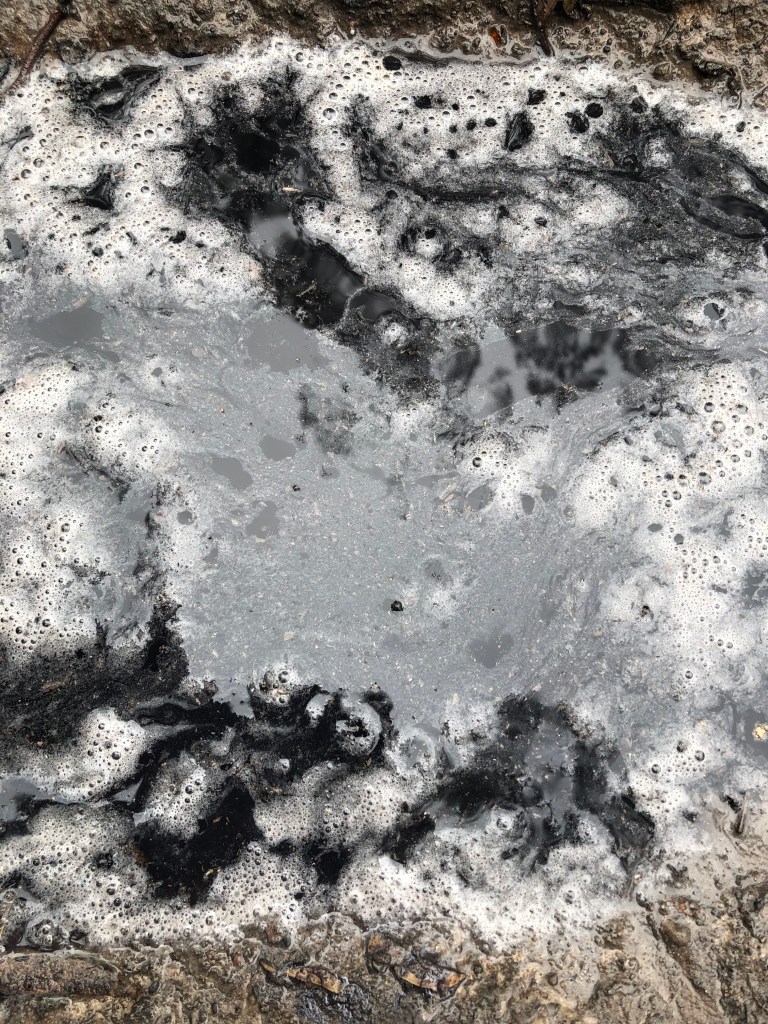
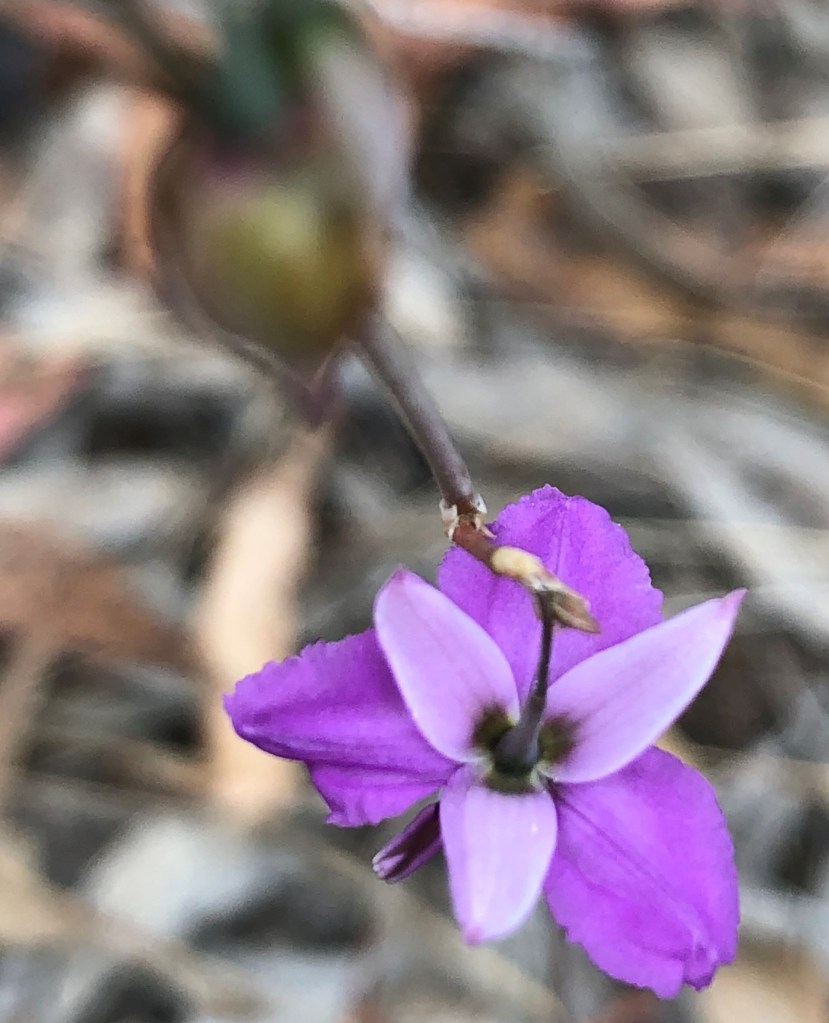
First week of January and it is pretty dry, although some summer rains have gifted us some black and foaming puddles and surprisingly healthy looking undergrowth. We pass quite a few flowers, which are more common in spring than summer.
The birds are also in fine form and the ornithological symphony is music to my ears. Not sure where 20-20 hearing, eternally-nervous Bean Dog sits on this issue especially as we have recently added early morning corellas choruses to his lists of hates/fears.
Kookaburra reckons its pretty funny even if the dog doesn’t.
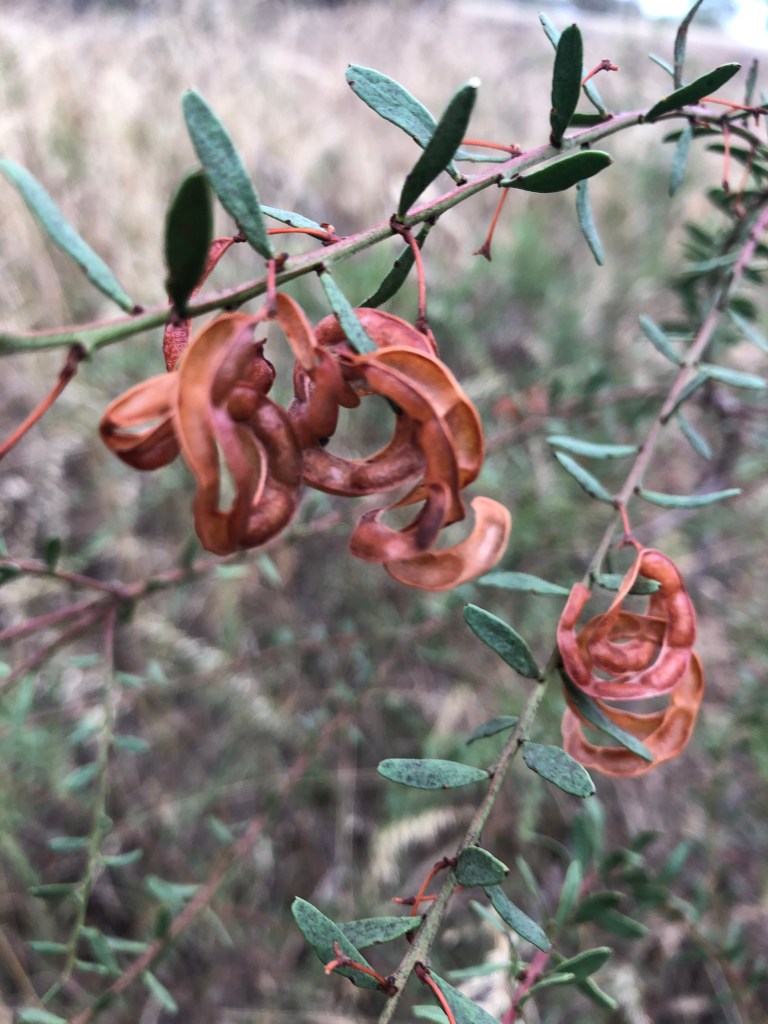
A wall of trees and shrubs hides the Mackenzie for much of the walk, until we reach a grassy patch dotted with large, old trees, many of which are sporting long oblong scars. I can’t find any written evidence that these were made by local Aboriginal people but I’d like to think I might be right.
Makes you wonder what it was like here more than 200 years ago. Who else walked this path and what happened under these trees? I want to step lightly as I pass
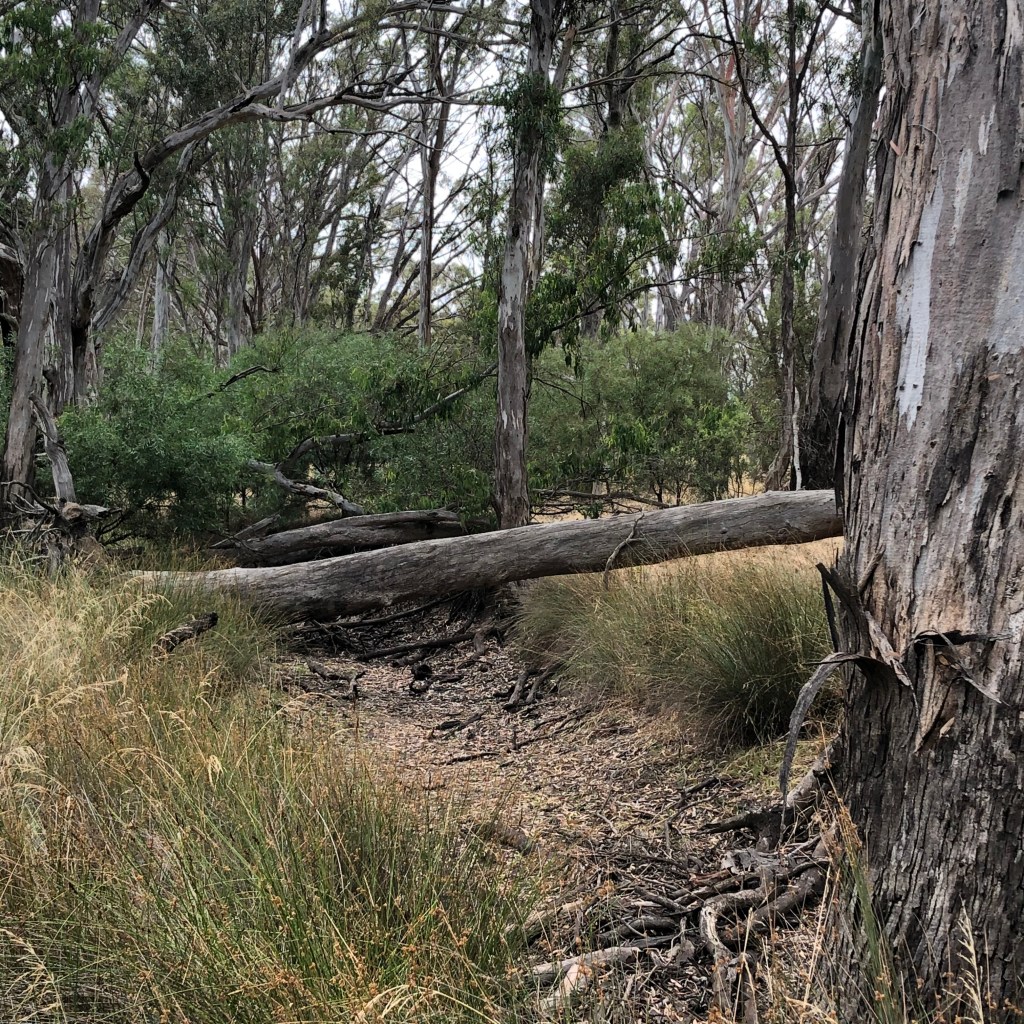


Just a few minutes further and we are at the Wimmera junction. With no water flow from Mackenzie and quite a few reeds you have to search to find the spot they connect.
Here I find another scar – made in recent years by modern day campers choosing to leave a different pointless mark.

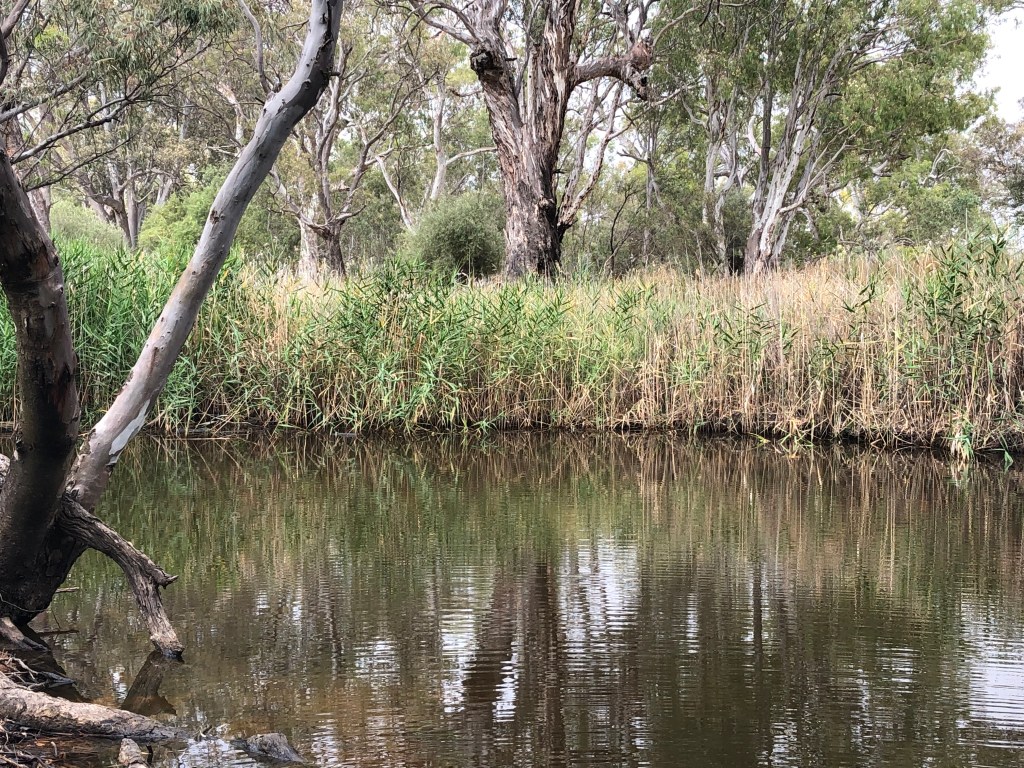
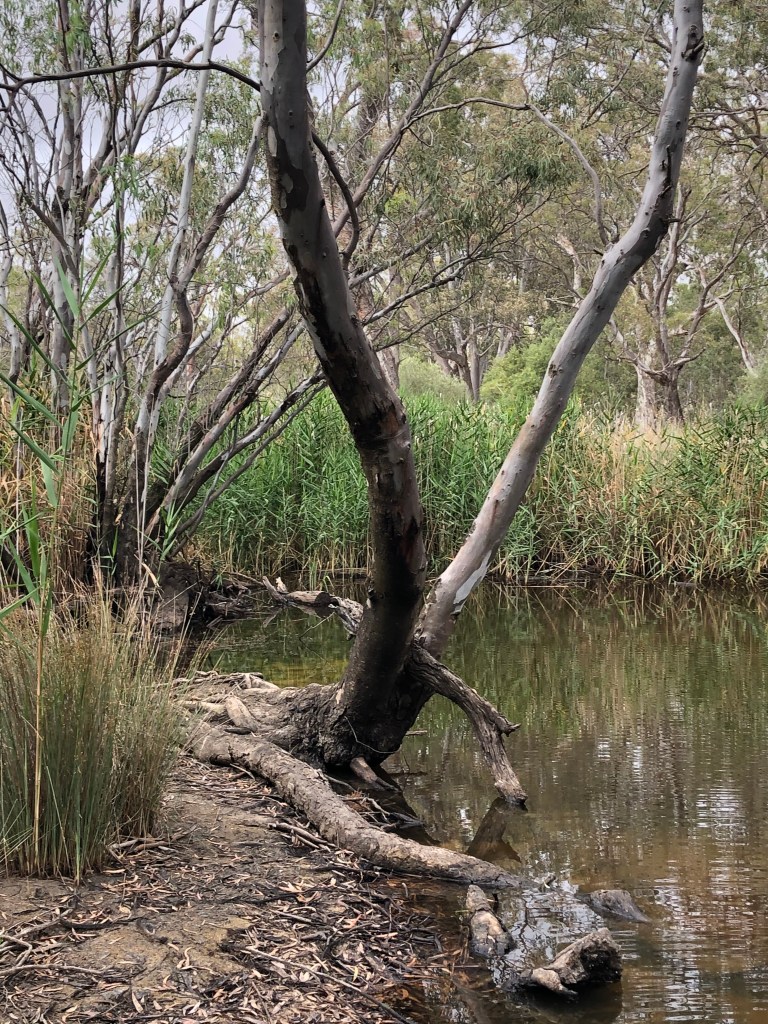
I now follow the Wimmera River back towards Horsham. The trees are bigger and the river is wider and wetter. A few more of them appear to have scars, others expose their giant roots at the rivers edge or have been beaten by water, wind and time and lie awkwardly in the water. They too, would have plenty of stories to tell from the last few 100 years.
It’s a great walk right near town and while COVID has increased the number of feet that use this path, it never loses its beauty. IN the mornings there can be misty fog sitting over the water and on the right evenings at the right time of the year a wimmera sunset creates a little art work all its own with reflections in the wider stretches of water.
 52 weeks 52 walks