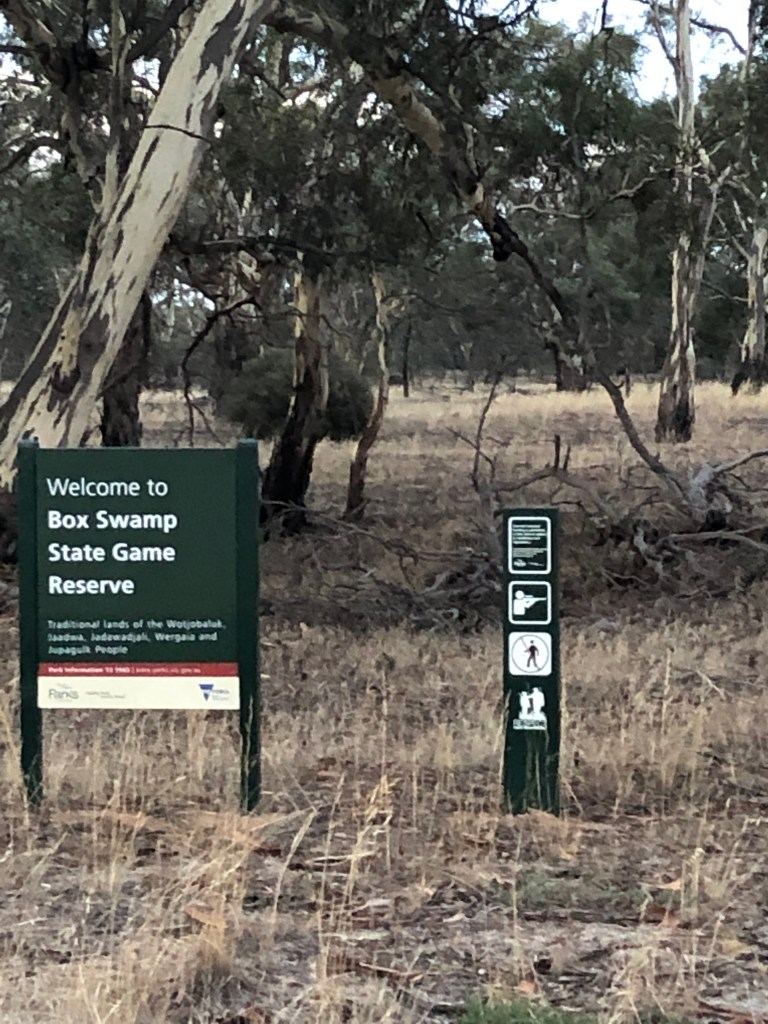
What – Box Swamp Wildlife Reserve
Where – 60ha about 15km from Horsham
How far – One hour and 4.1km
In 10 words: Highs, lows: visible birds, trees; unseen possums, lizards, kangaroos, water
We might live in a desert but we are literally swamped by wetlands in the Wimmera.
Only trouble is they don’t get really wet all the time and these days they don’t stay moist for that long.
Doesn’t mean they are not great places to soak up the great outdoors and all it has to offer.
So today I am dipping my toe into the imaginary water of Box Swamp Wildlife Reserve.
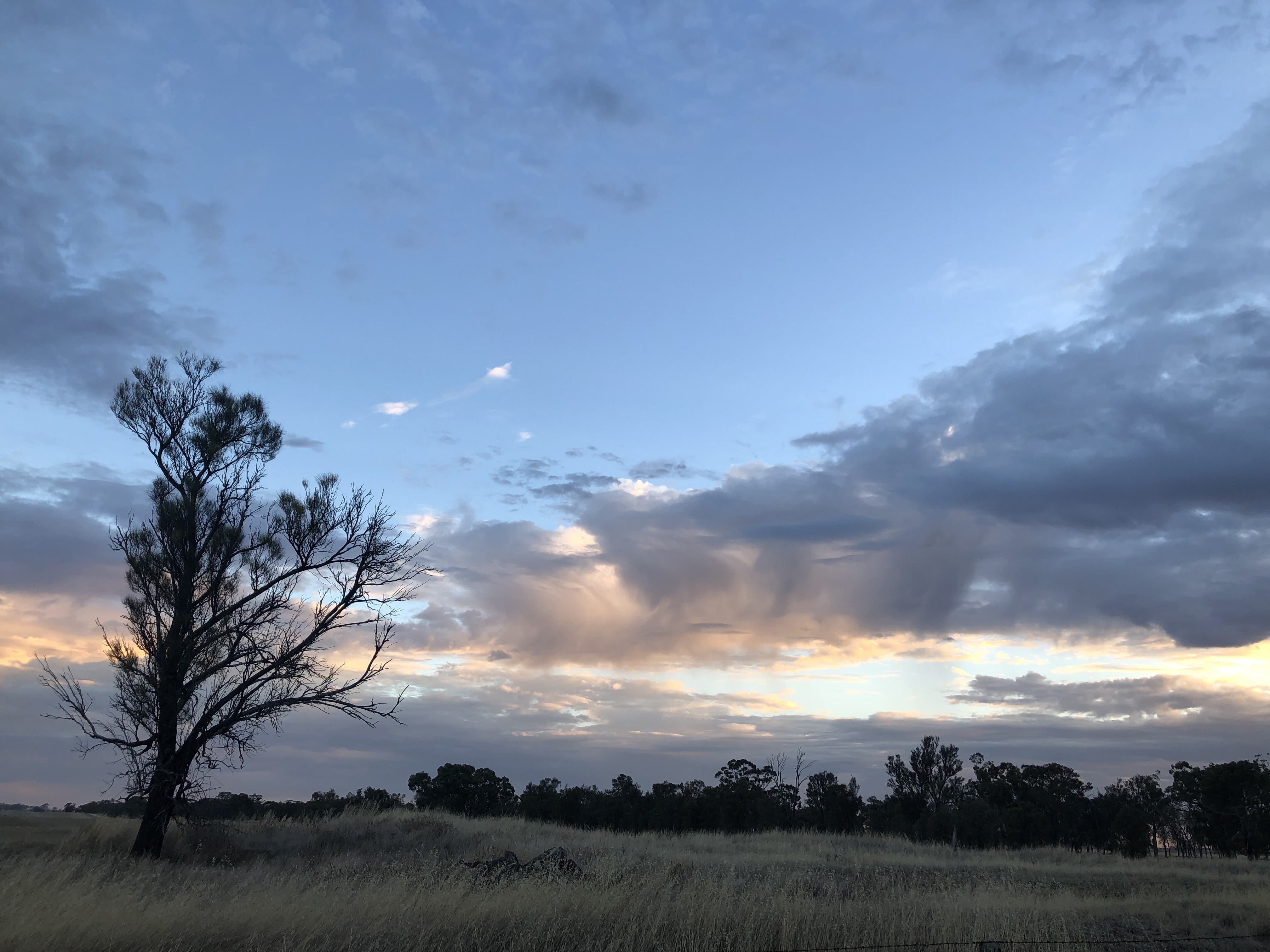
On arrival the sky is pretty murky with patches of thin vertical clouds which could be rain – I might experience some wet land after all.
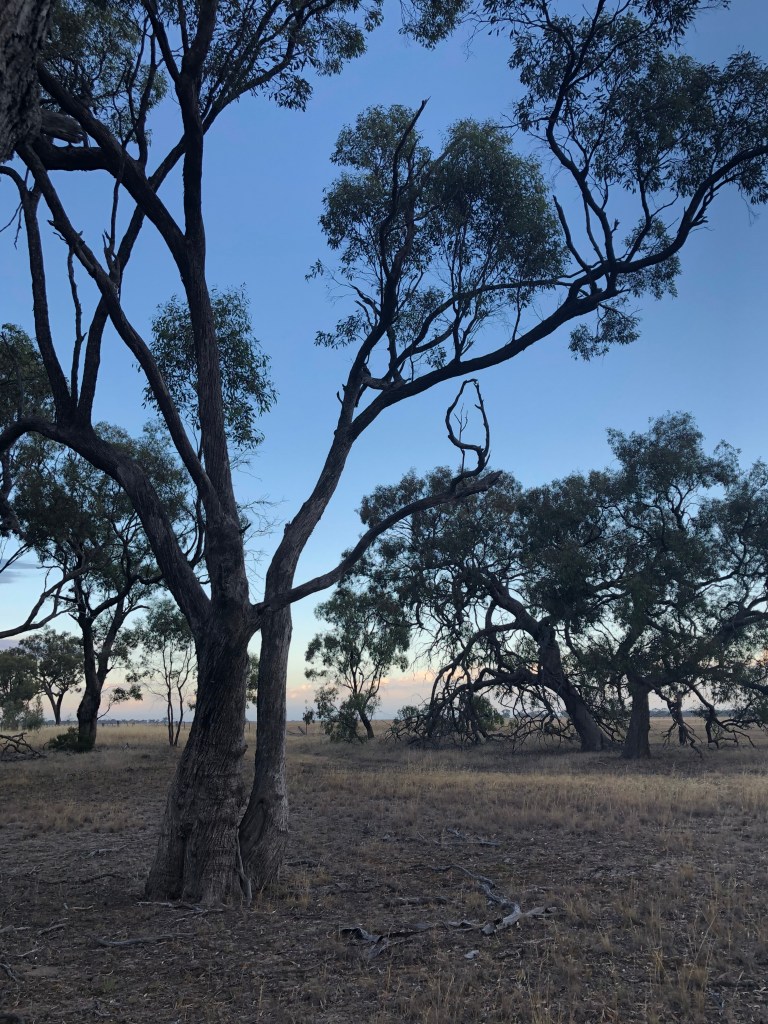
The first trees I see are some yellow box gums (I think) with their bark flaking off. It hangs curled and dry off the trunk or lies at the base – looks painful but this process uncovers a beautiful pale trunk.
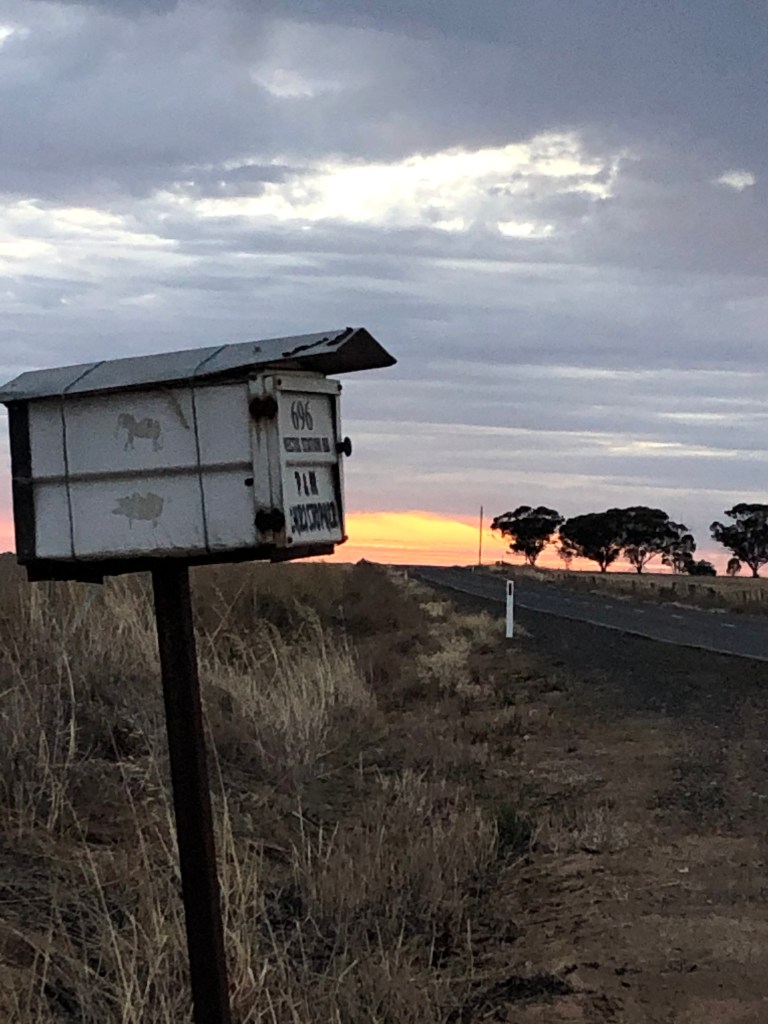
There is no obvious path so I head north along Vectis Station road. Vectis station was one of the earliest European farms established after white settlement and had a big house that stood until the 1930s after the property had been carved up for soldier settlement.
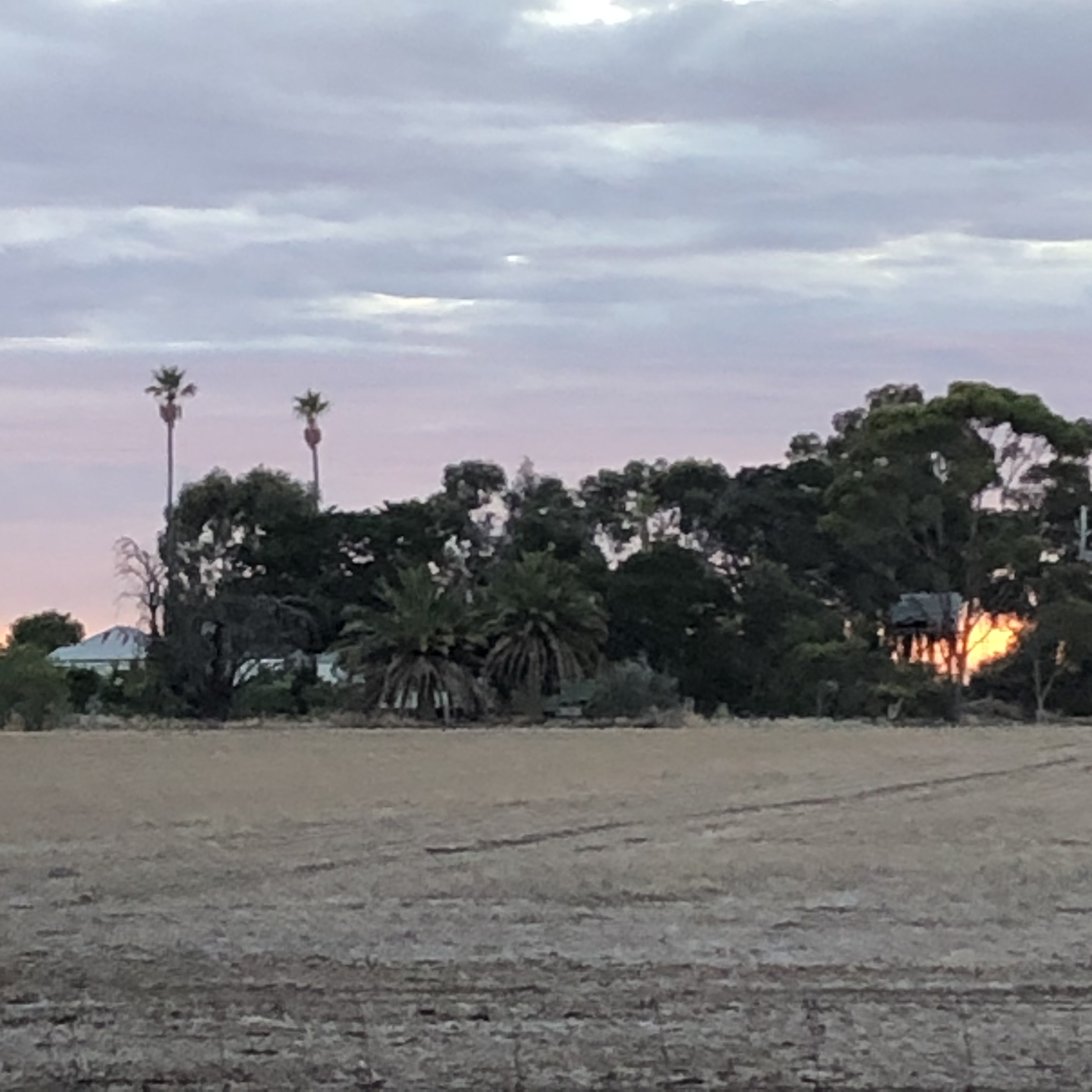
I see two tall skinny palms stretching up into the sky at a house site on the other side of the road and wonder if that might have been where the house was? Palms were all the go in the 1920s so more likely planted by an ex-soldier. I also hear a new noise for my early morning walks in a rooster crowing. Makes a change from corellas.
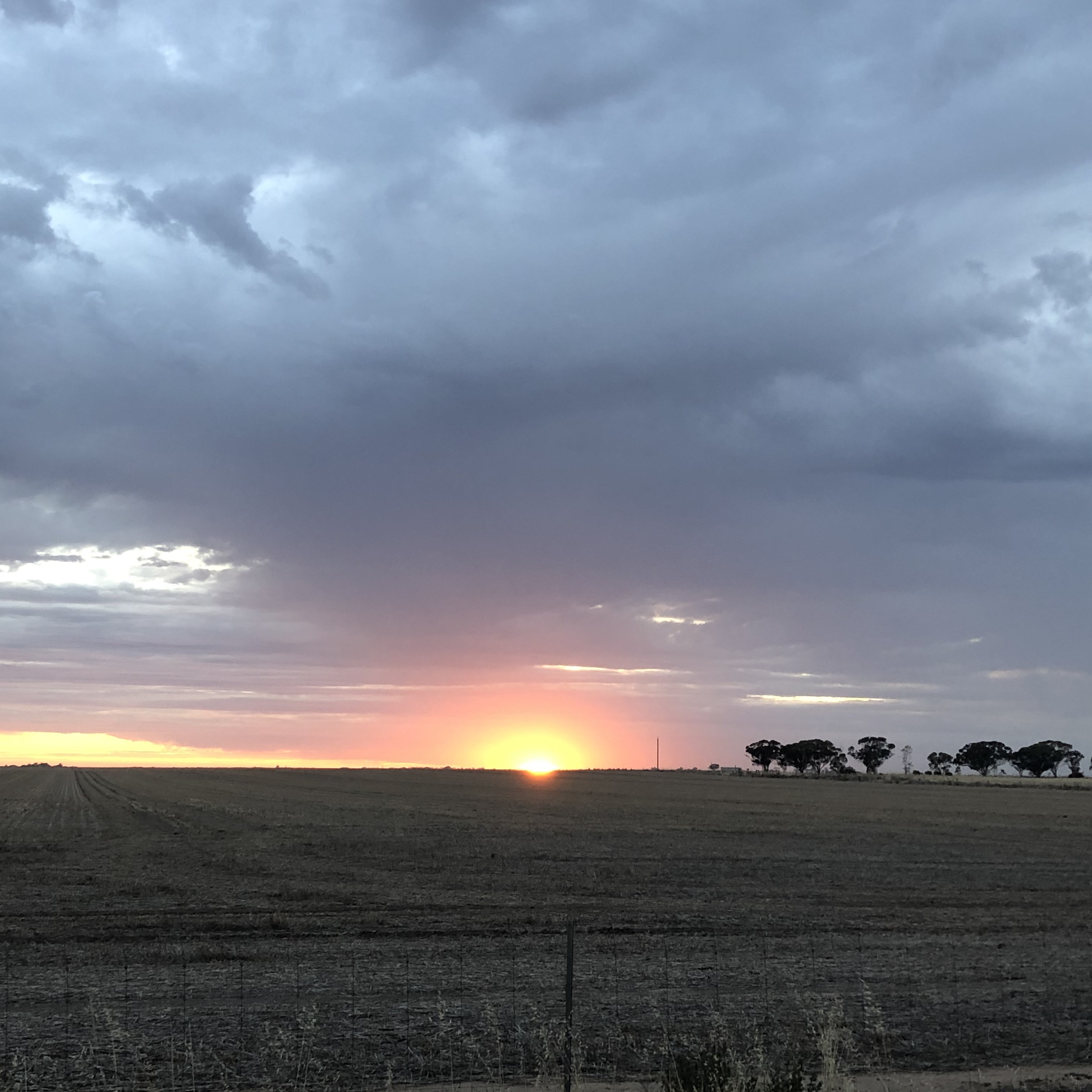
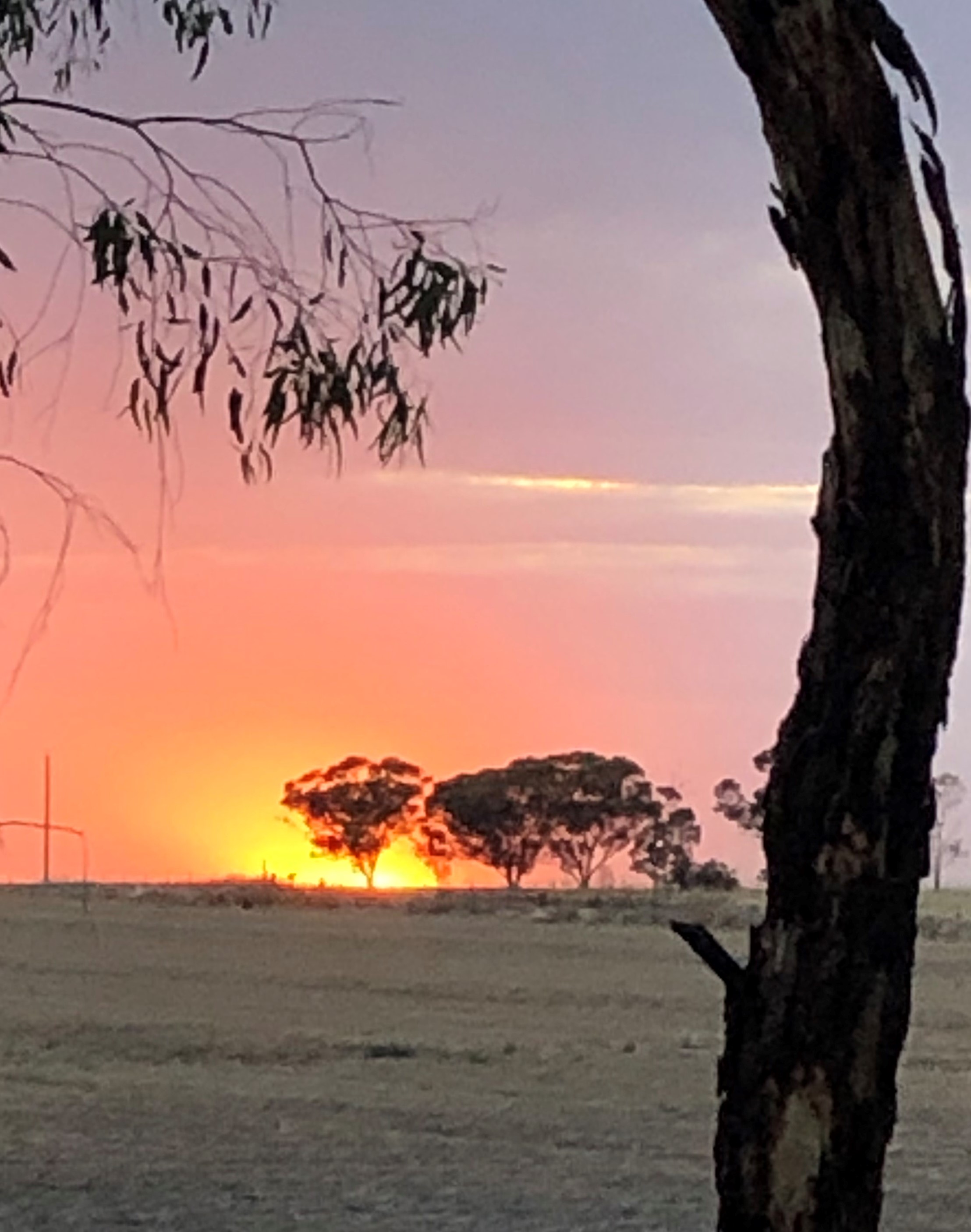
Behind this house the golden sun pops into the tiny mass of fairy floss pink resting precariously under a sea of dirty clouds. Next time I look the floss has been gobbled up and the whole sky is just murky grey.
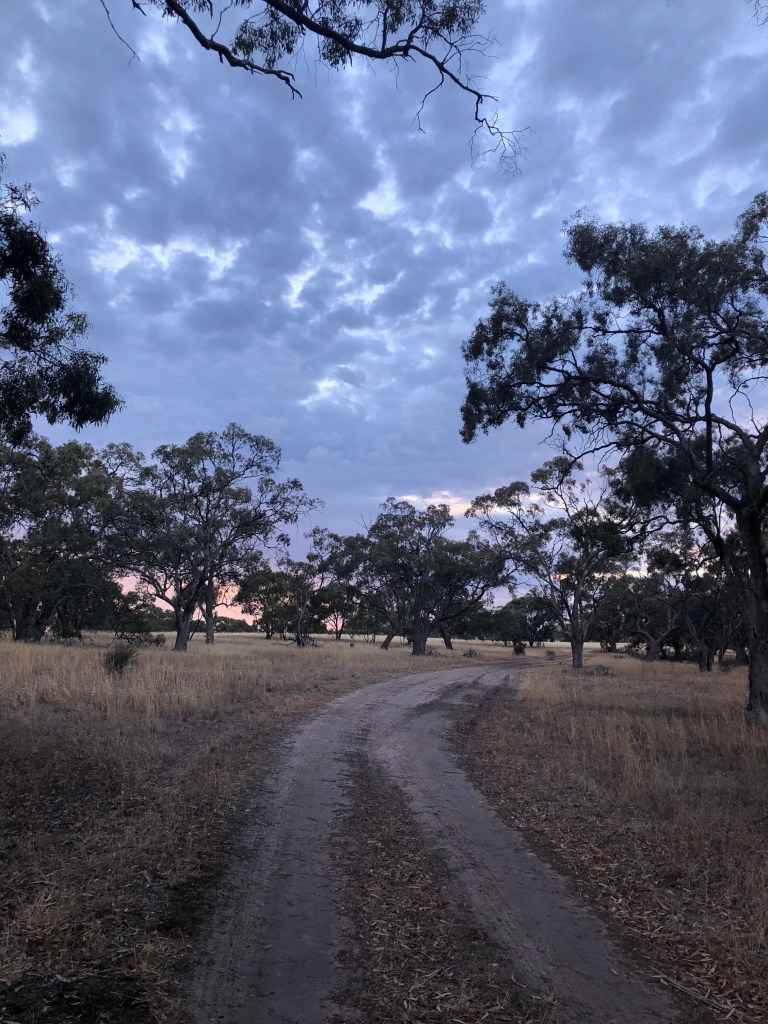
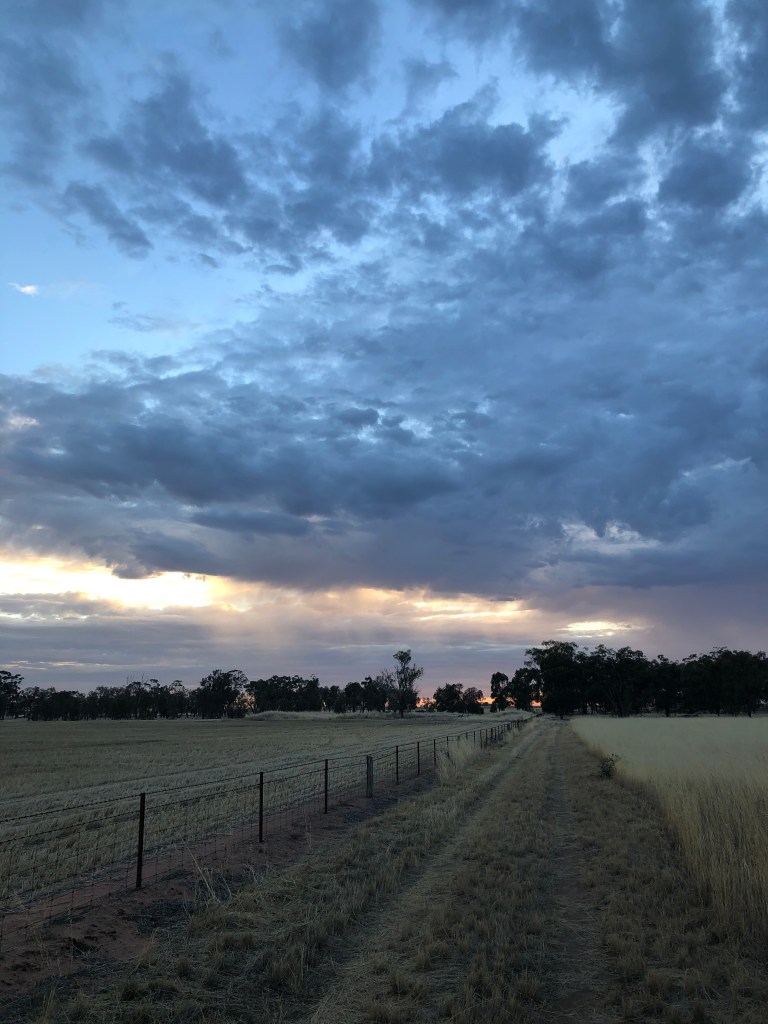
I find a track into the reserve and head west along its north boundary which fronts onto cropping country.
This is a well used track with a large area of open grassland to the south that slopes down to the wetland ahead.
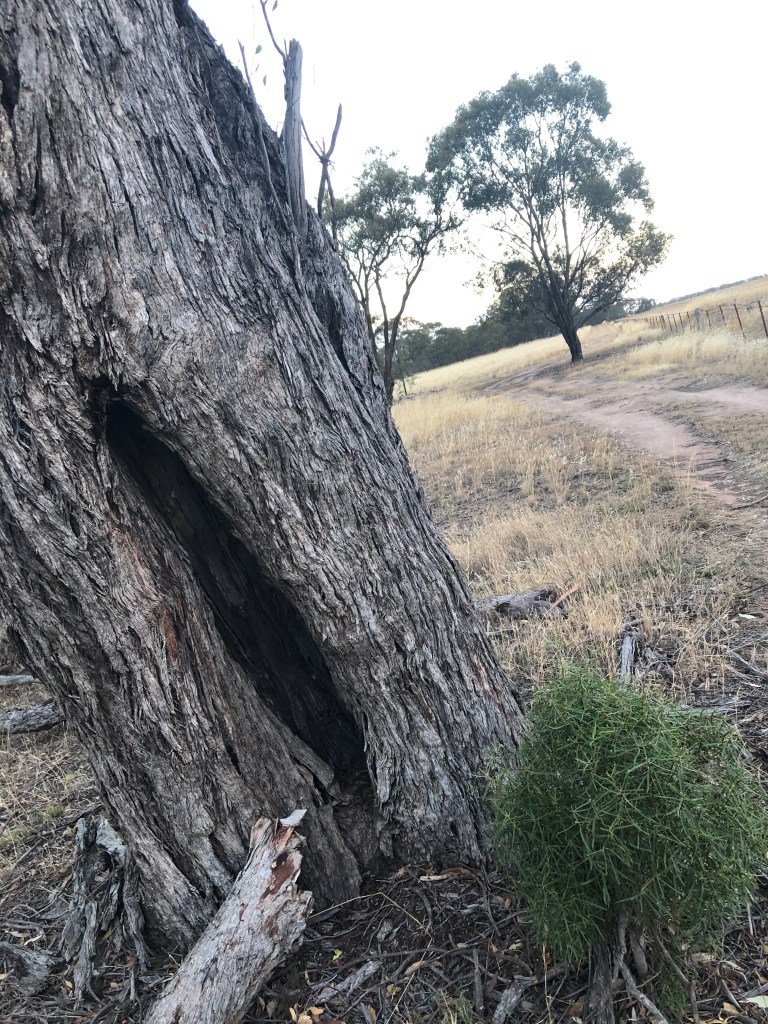
I notice what looks like a scar in a box tree but trees are pretty thin on the ground on this open part of the reserve.
The birds are also starting to get active. A group of parrots have plenty to say as they eat breakfast, magpies sing in the new day and wagtails quietly bounce from tree to tree. The bees are also active and noisy.
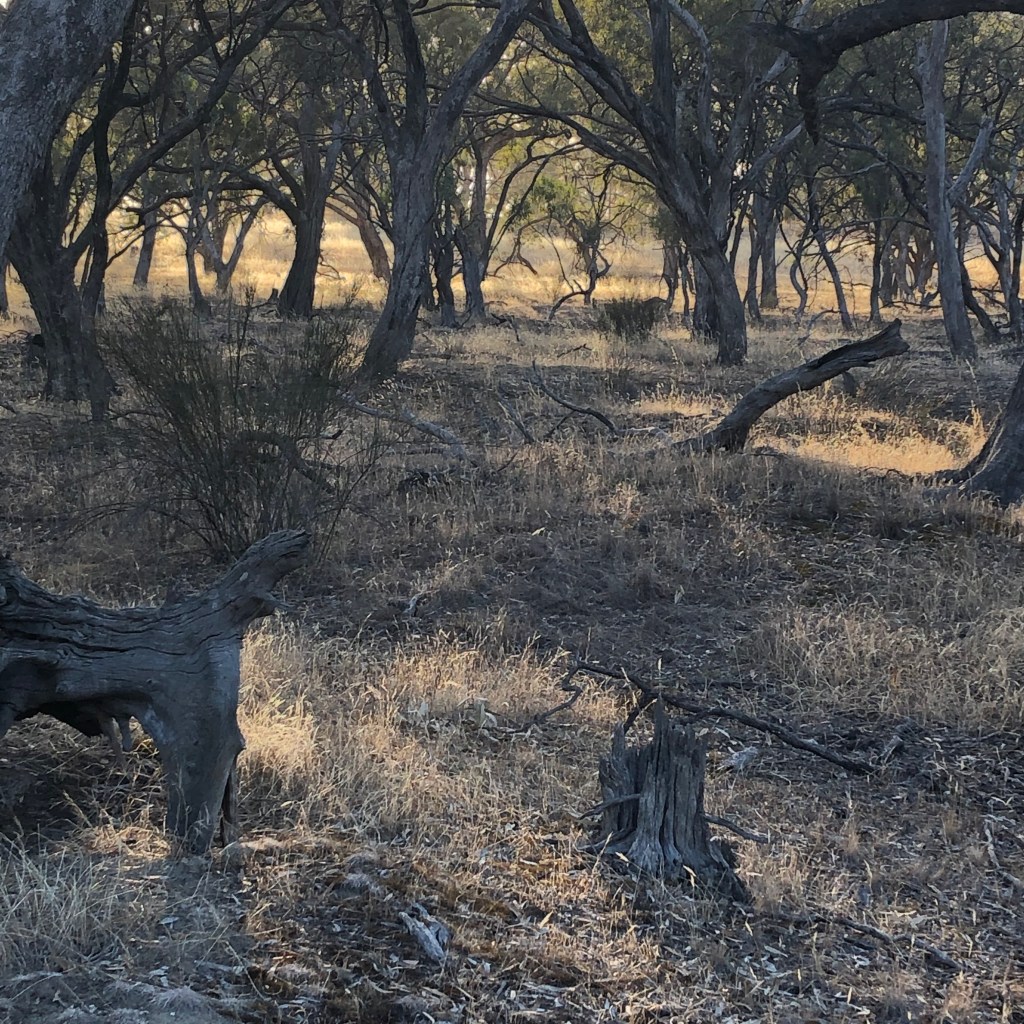
There track heads downhill into heavier clay country and a mass of box trees emerge in the swamp on my left. I decide to explore box trees on the higher ground along fenceline before heading into the centre.
Black box trees, or Ngarri as they are apparently called in locally are pretty cool.
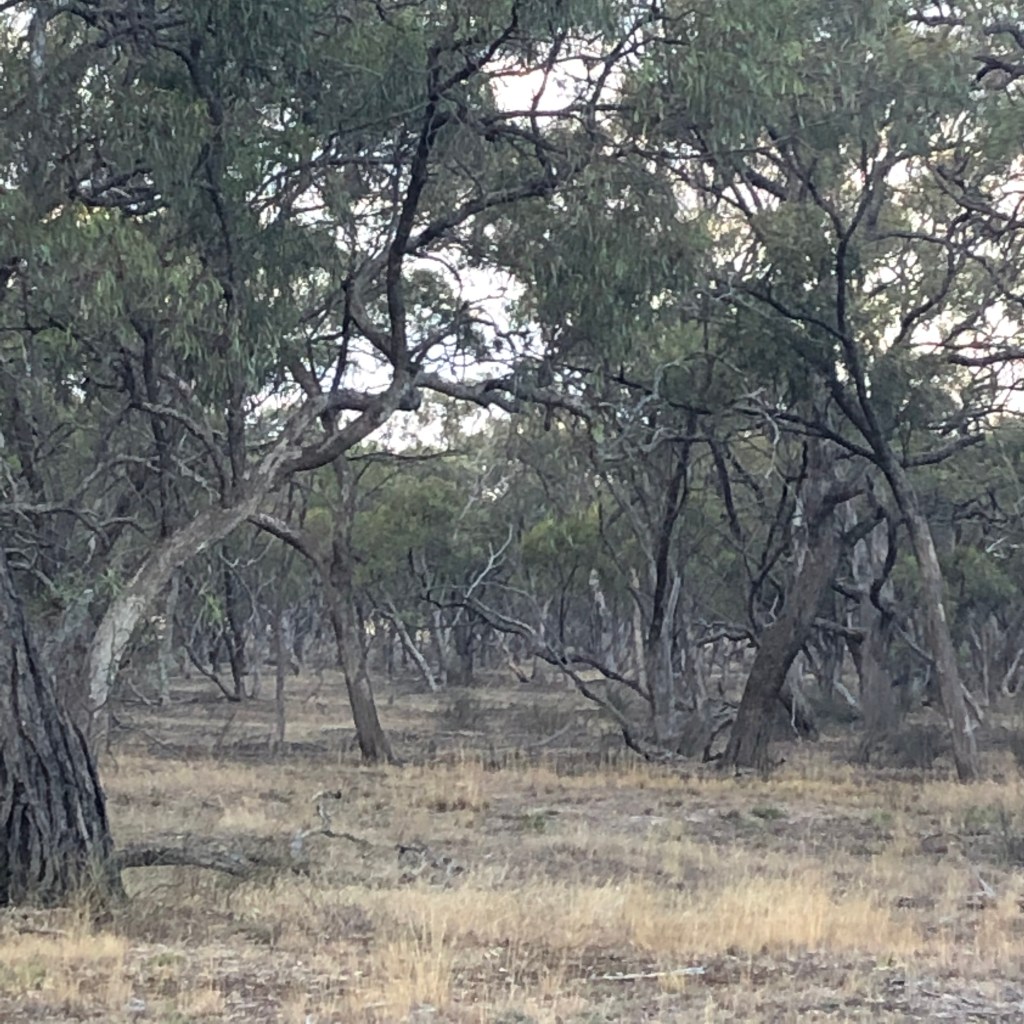
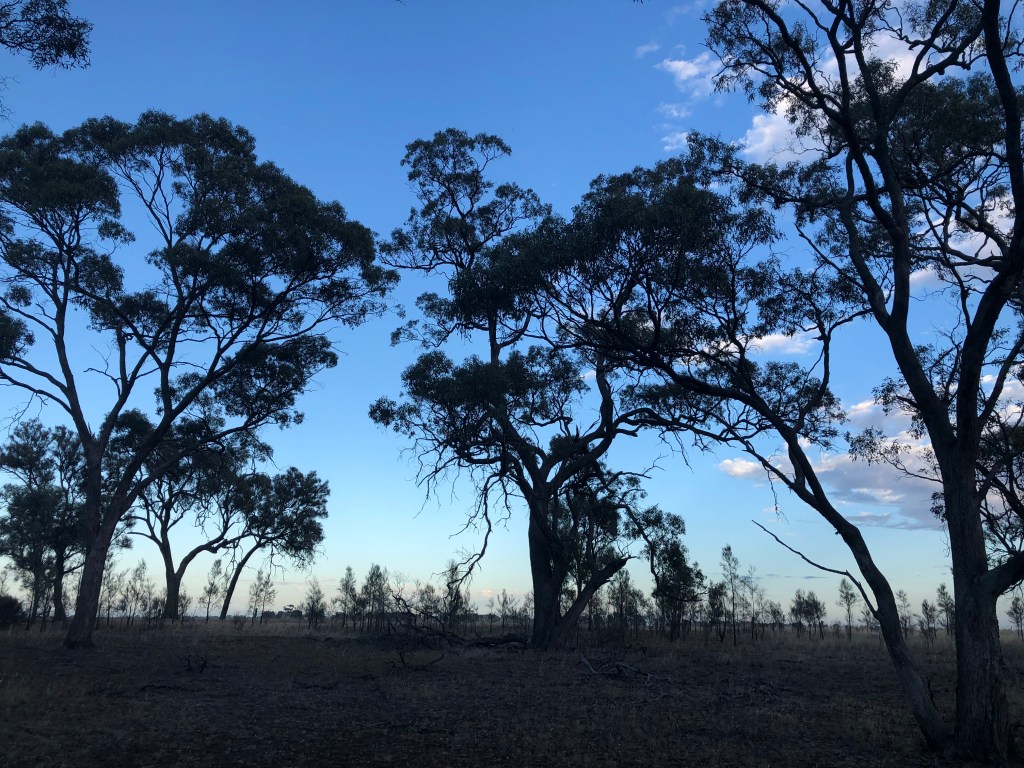
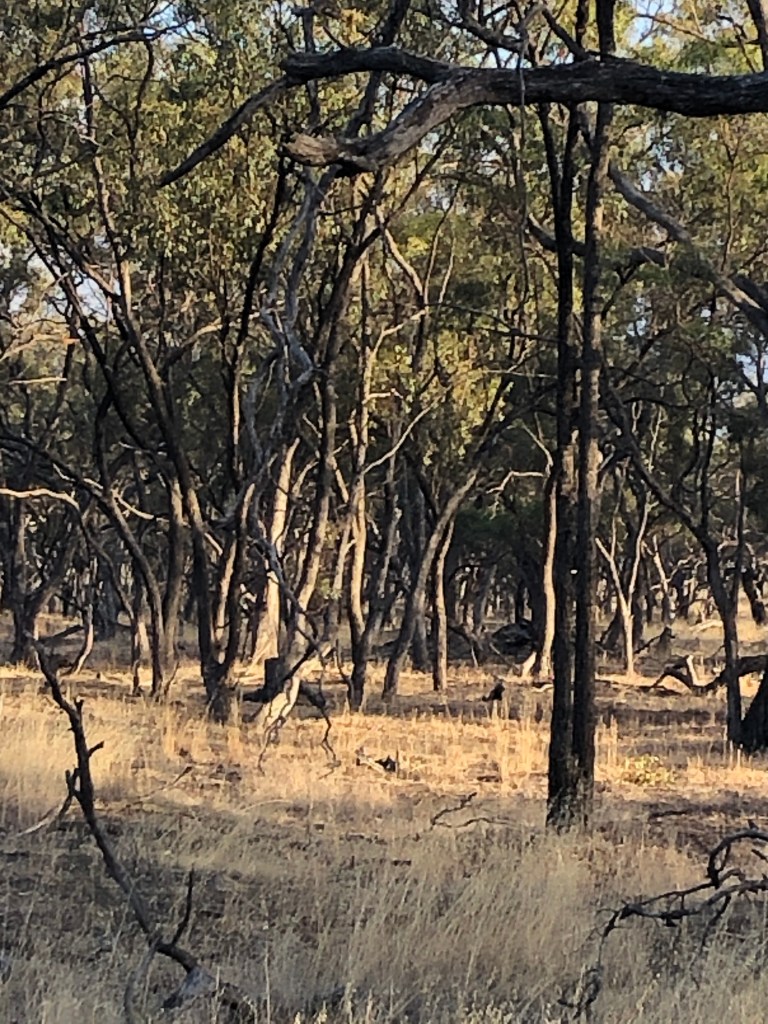
A Wimmera Mallee species, we’ve lost a lot of Ngarri over the past 150 years and a third of them are now restricted to public reserves like this one. They grow pretty slowly and one study suggested they take 400 years to reach 10 metres. Today I think I will be making some very old friends.
They seem to congregate in wet areas and keep on keeping on even when it remains dry for years.
I once knew a man named Mervyn from Jeparit who would watch the box trees every year to determine when the first rains – or the break – was due. I wish I could remember what February flowering means, as I come across some yellow flowers on the tree ahead.
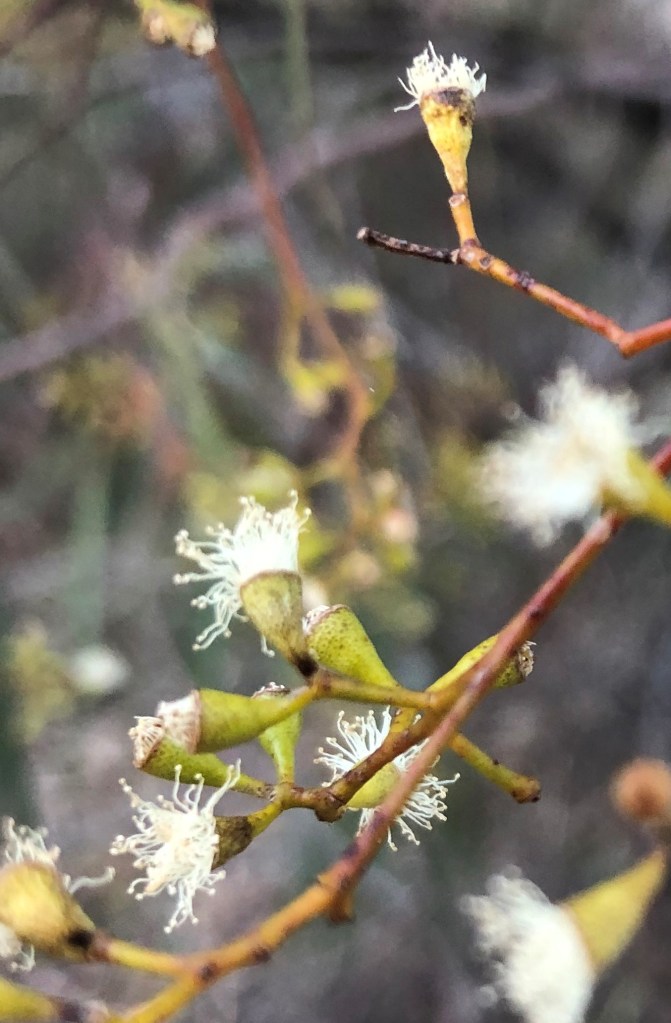
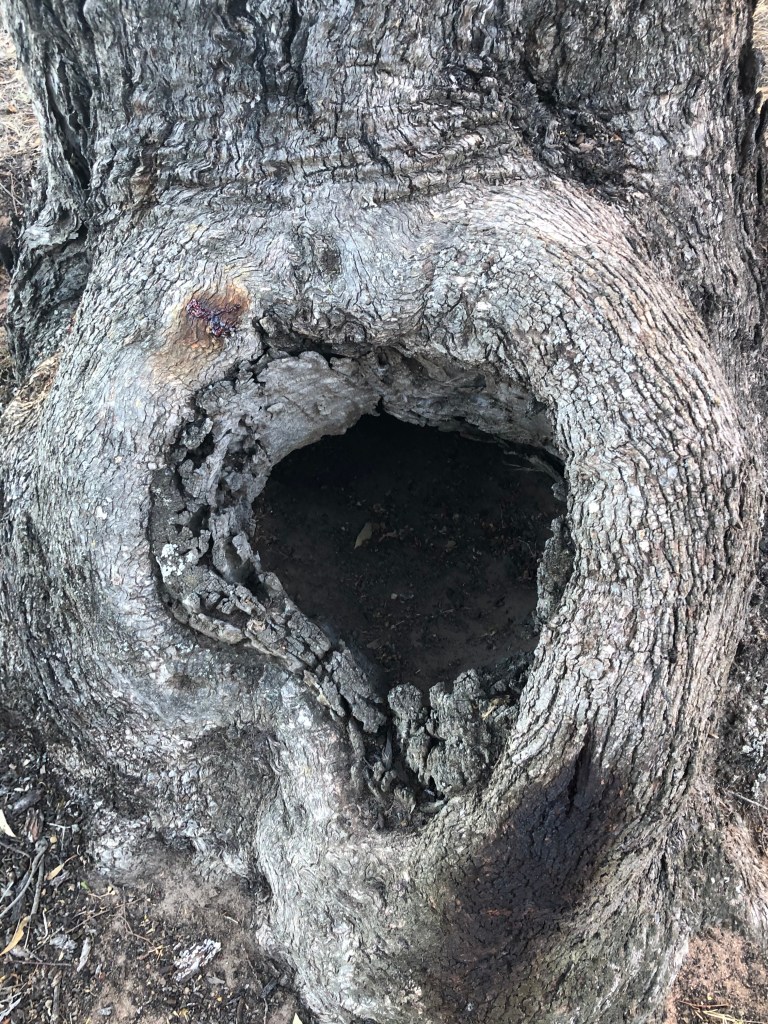
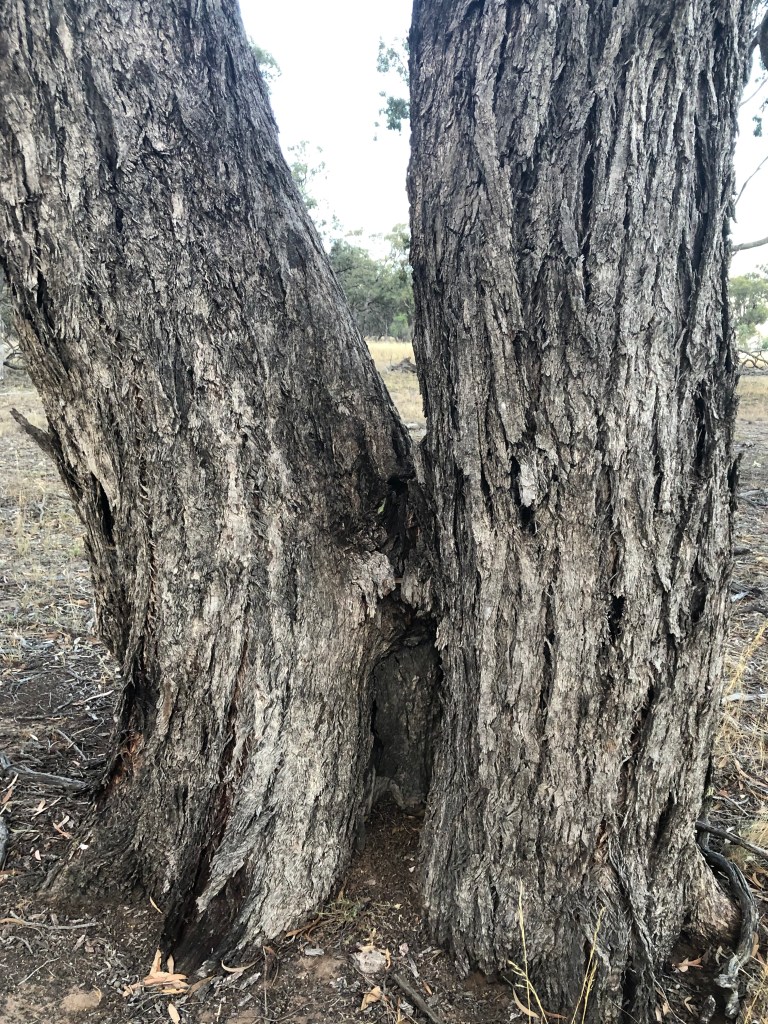
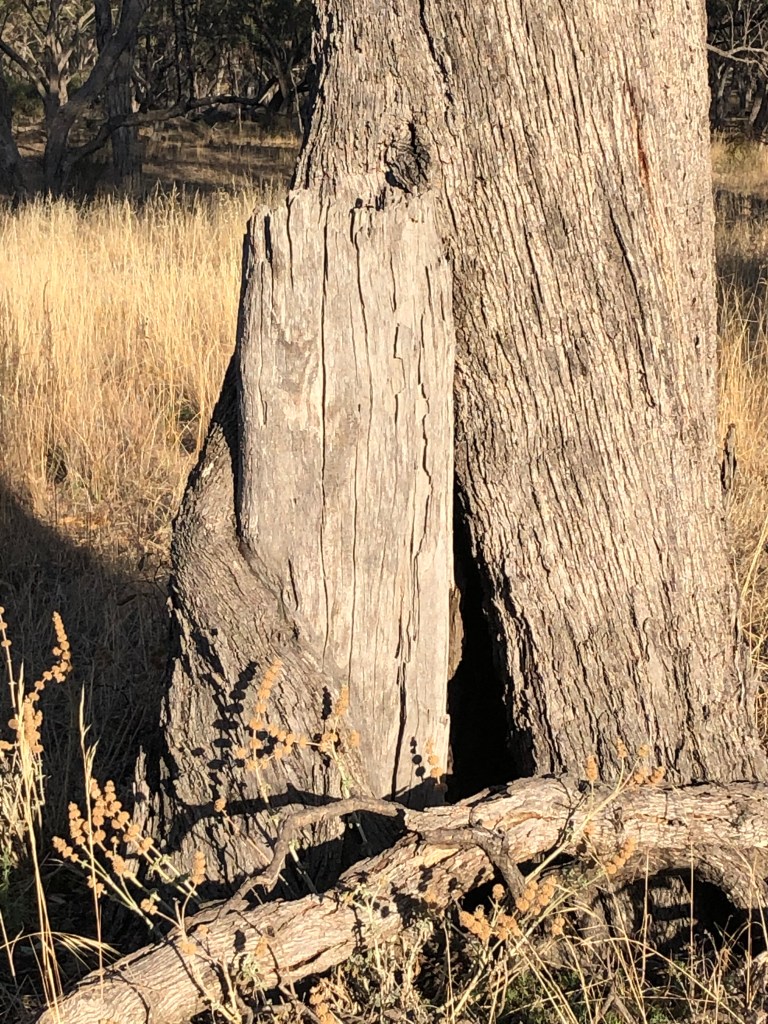
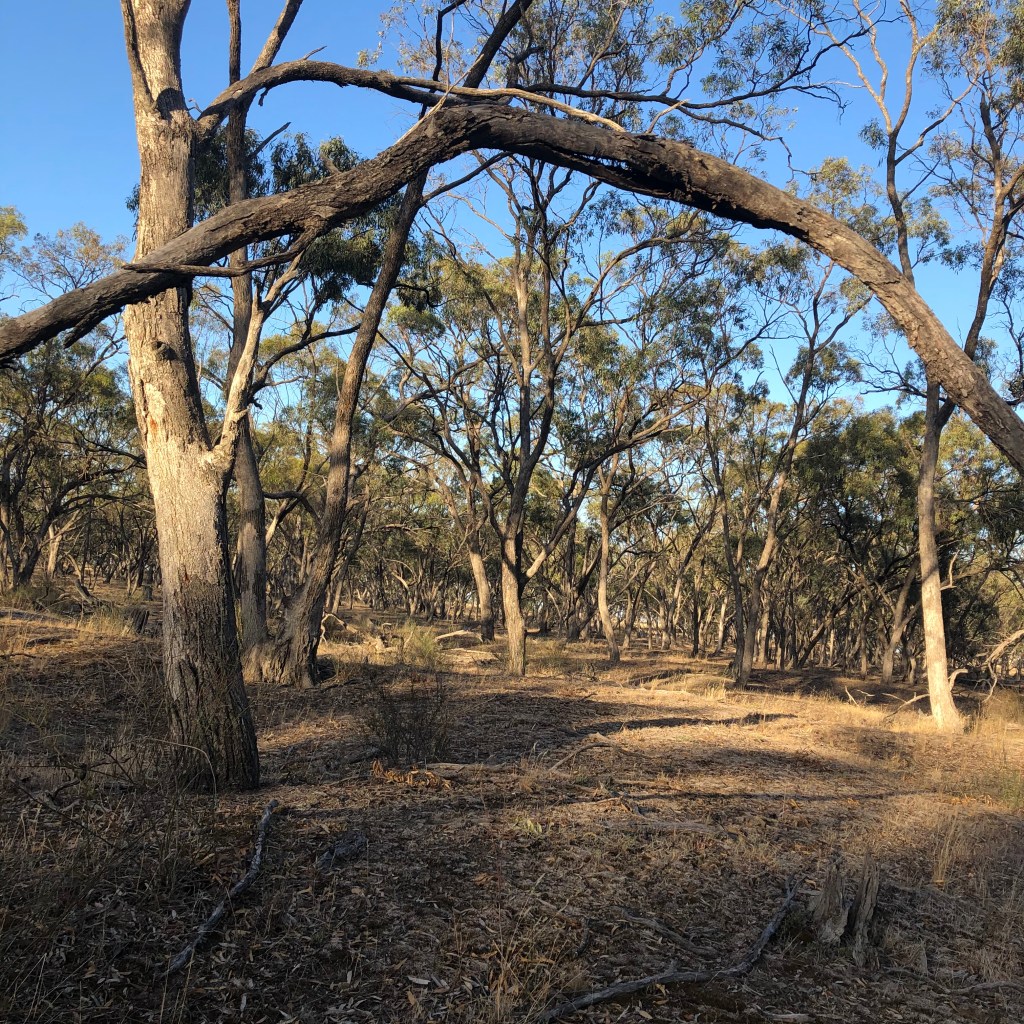
The other thing about box trees is their amazing visual diversity. One has a love heart hole in the trunk, others stretch high – or low and one looks like it is hugging a child to its trunk. I have seen them fall over and continue growing from the ground where the limb landed.
I am waiting for the day when a centenarian asked their secret to long life responds “Ah simple, I take my inspiration from the box trees. They know how to survive.”
Another enduring species is the buloke and to the north I see a row of baby bulokes standing to attention along the fenceline. Not sure if they will last as long as box trees, especially if they are growing too close the boundary line.
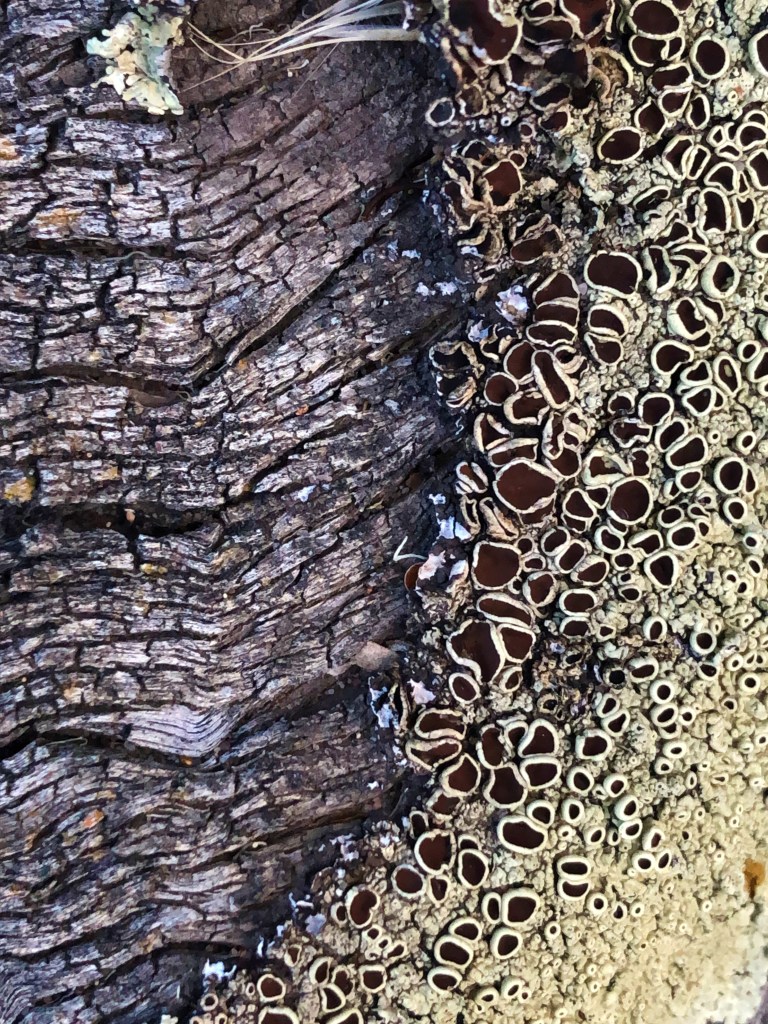
I notice lichen on the ground and some ruby salt bush which is looking a lot thirstier than the ones I have seen in recent weeks at other reserves. It must have missed those summer storms.
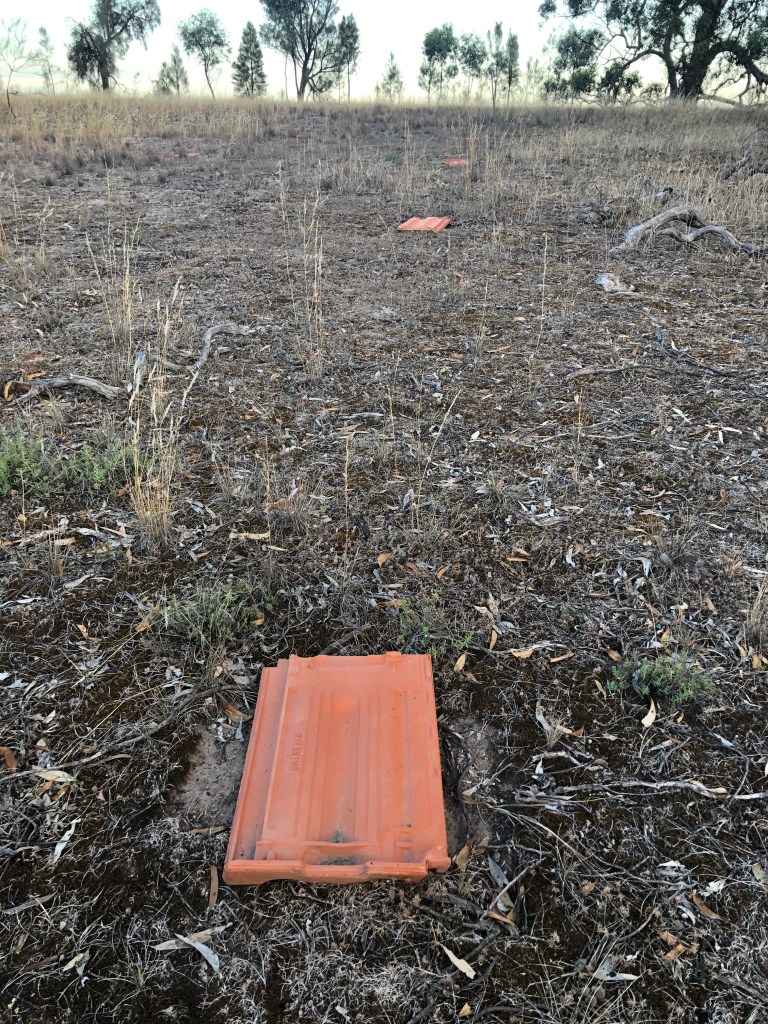
Another strange thing is a number of roof tiles sitting flat on the ground in a perfect grid. Research suggests this could be a way of monitoring legless lizards which are found in grasslands.
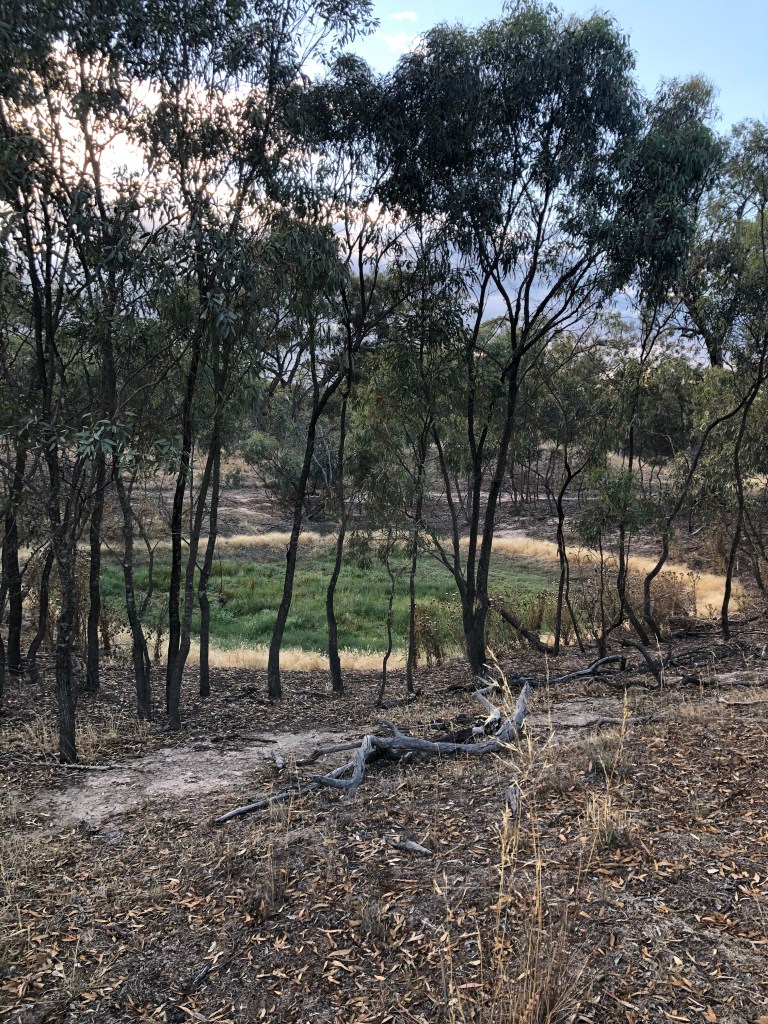

I also see signs of old channels and a dam which has obviously been dug many years ago on the edge of the swamp area. This is ringed by trees and appears to be a bit wet on the bottom because there is grass growing at the base.
The track turns left and heads back east now so I head into the swamp area to have a look.
What I am noticing is a lack of kangaroo tracks for the first time during my walks. This is an oasis in a sea of farmland so maybe it is just too far from other reserves for it to be a viable spot for the roos to visit.
Looks like there might be some target practice goes on here too, so that noise would be enough to deter even the bravest of kangas.
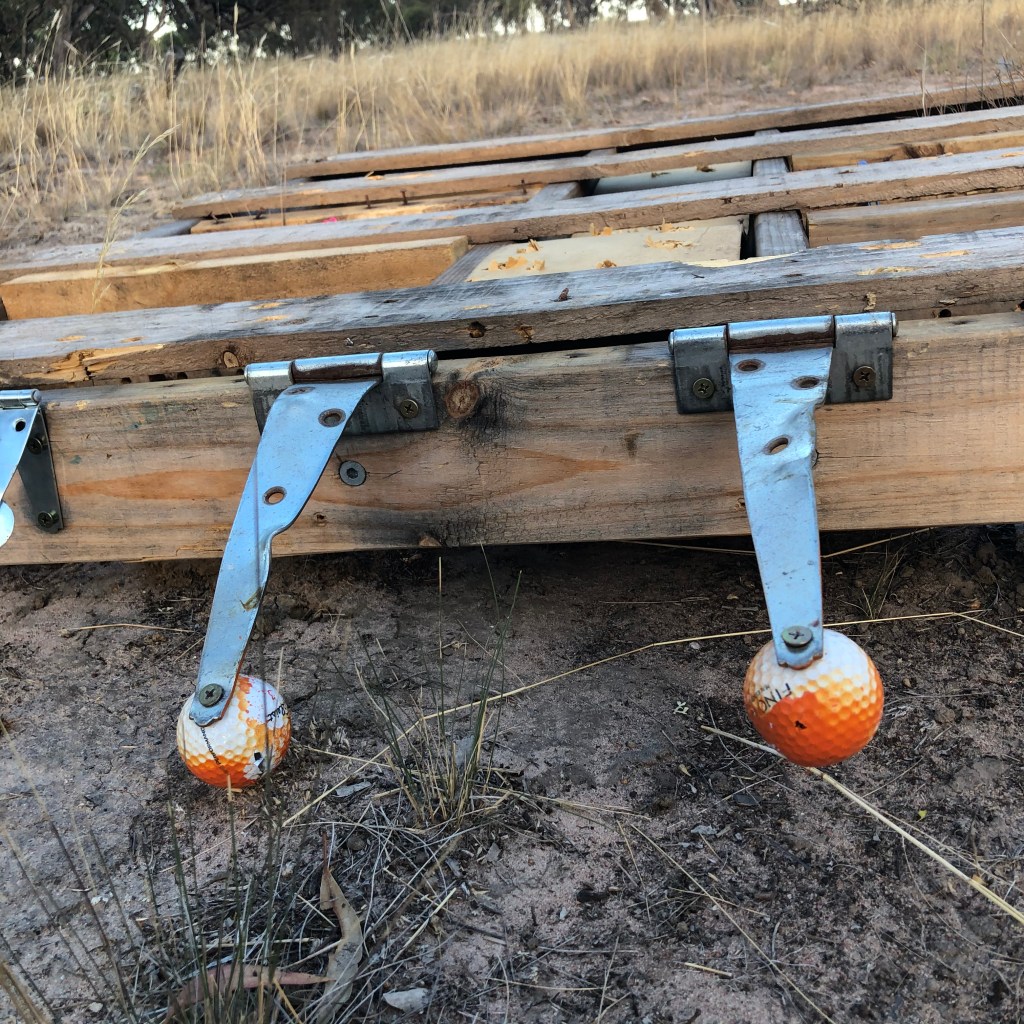

I come across a saw horse standing in a clearing and complete with an orange metal target and a few clothes pegs sitting on top. There is also so a seemingly abandoned model further which involved a packing crate adorned with golf balls. Almost looks artistic. I am wondering if there is a household in a 30km radius missing vital equipment for laundry and minor handyman repairs.
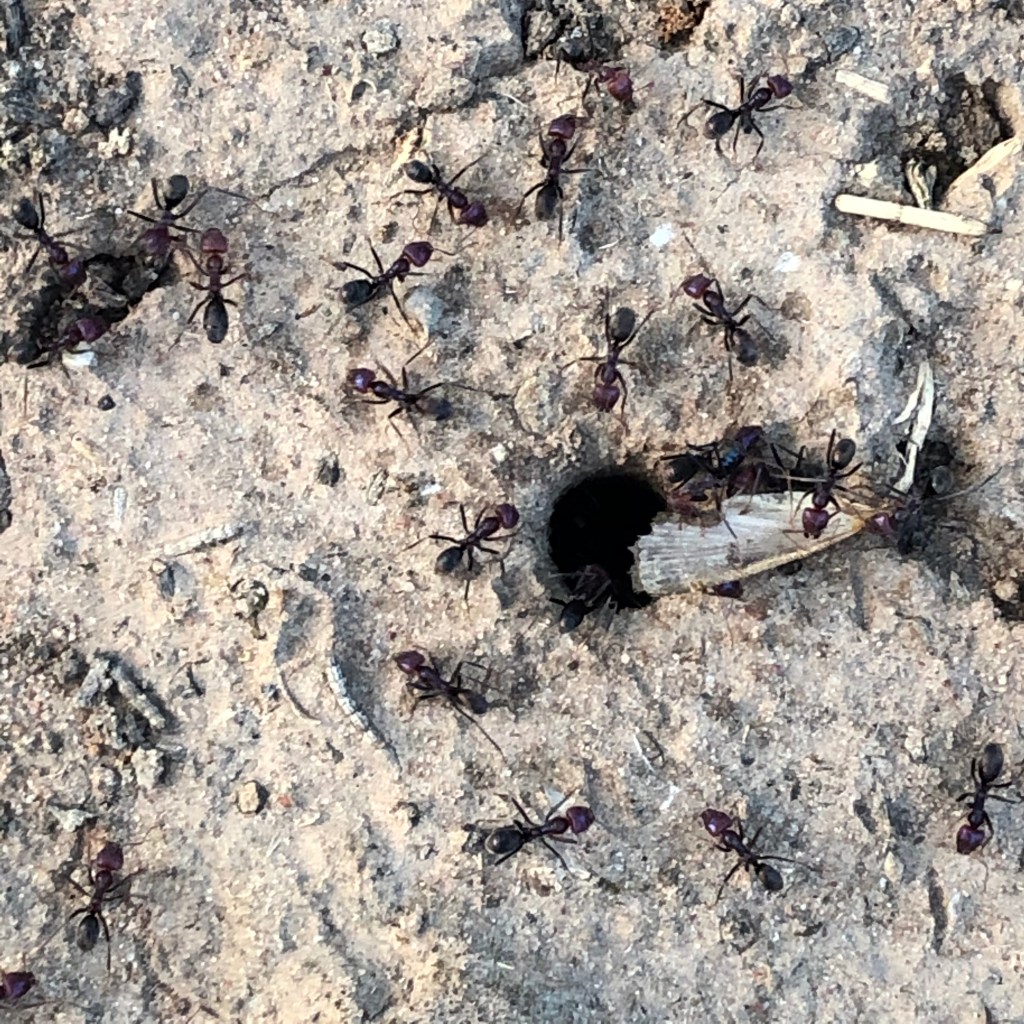
One bit of wildlife happy and active are the ants. I also find a few rabbit warrens and rabbit droppings but don’t see a lot of bunny baction. Maybe some of the target practice has been directed their way.
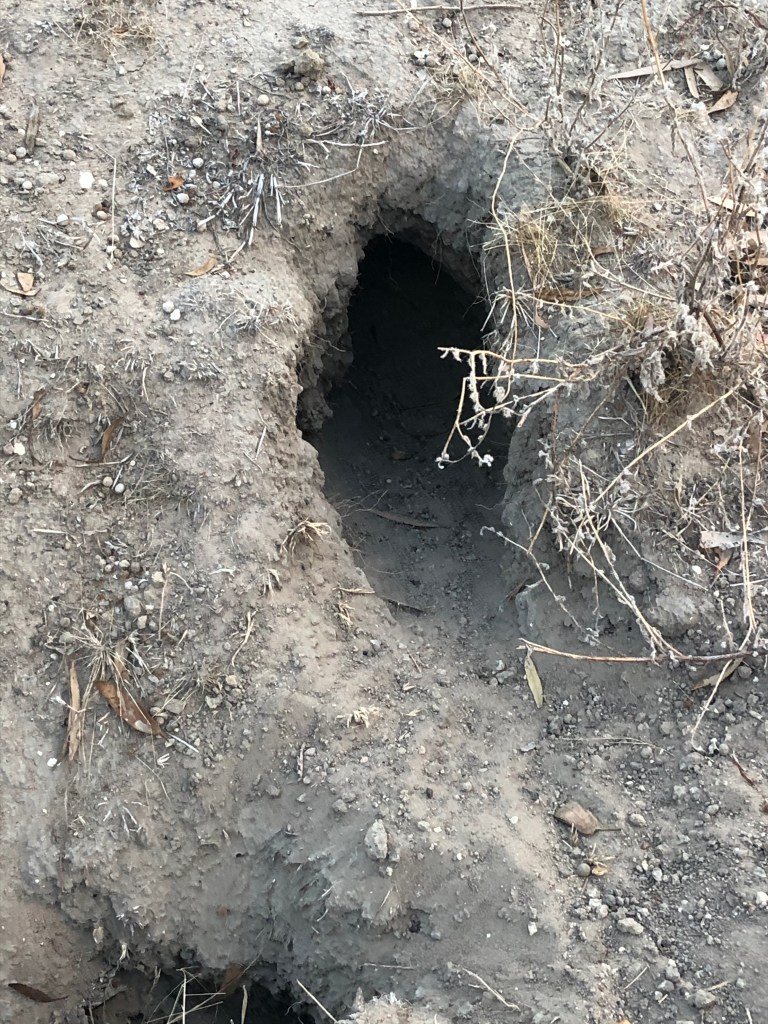
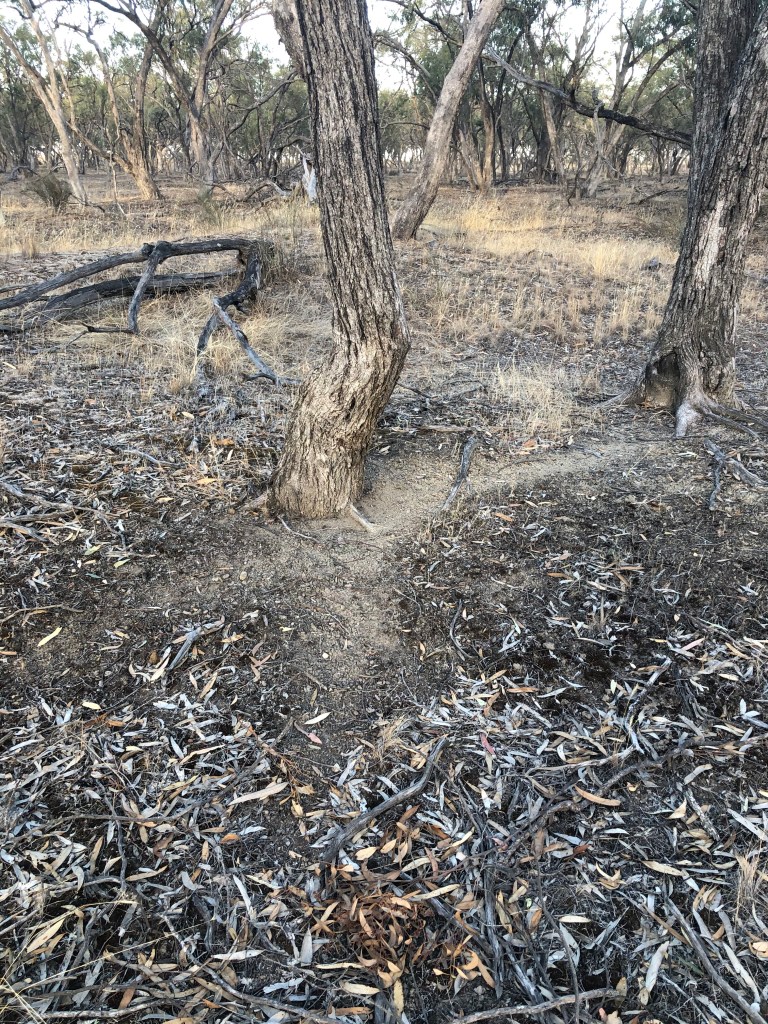
Finally I notice an animal-made path much narrower than kangaroo and heading from tree to tree.
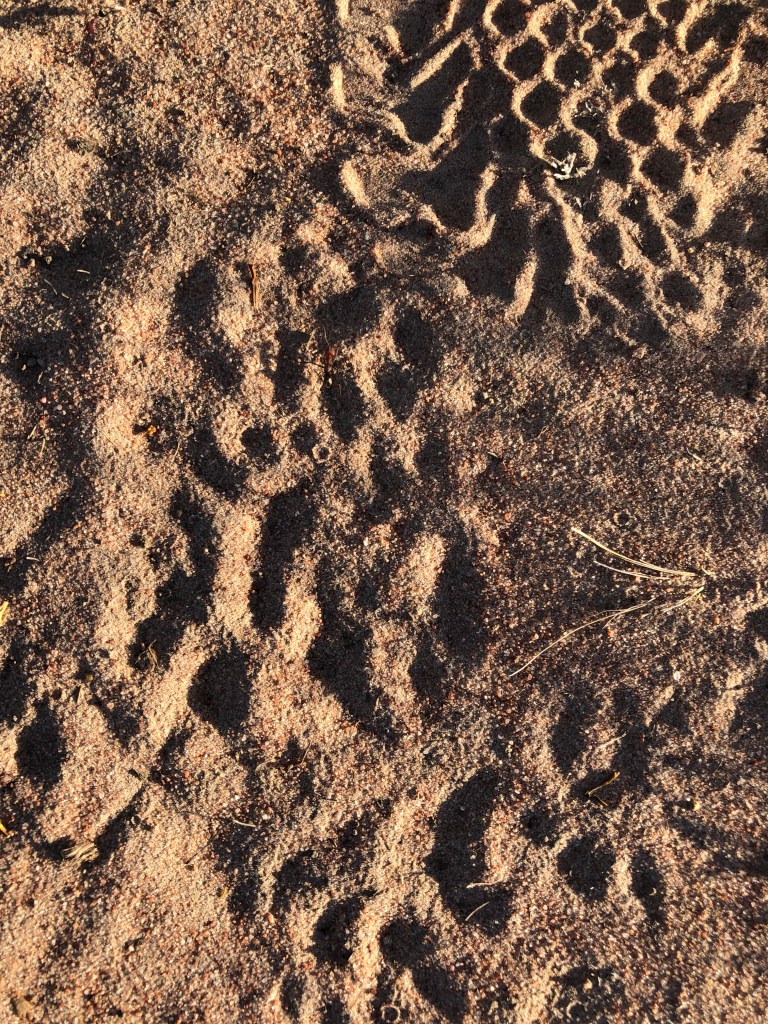
Looking at the trunk there are tell-tale scratches which suggest possums and I also see some possible possum prints in a sandy bit of the vehicle track. Finally some real signs of non-bird wildlife in this reserve.

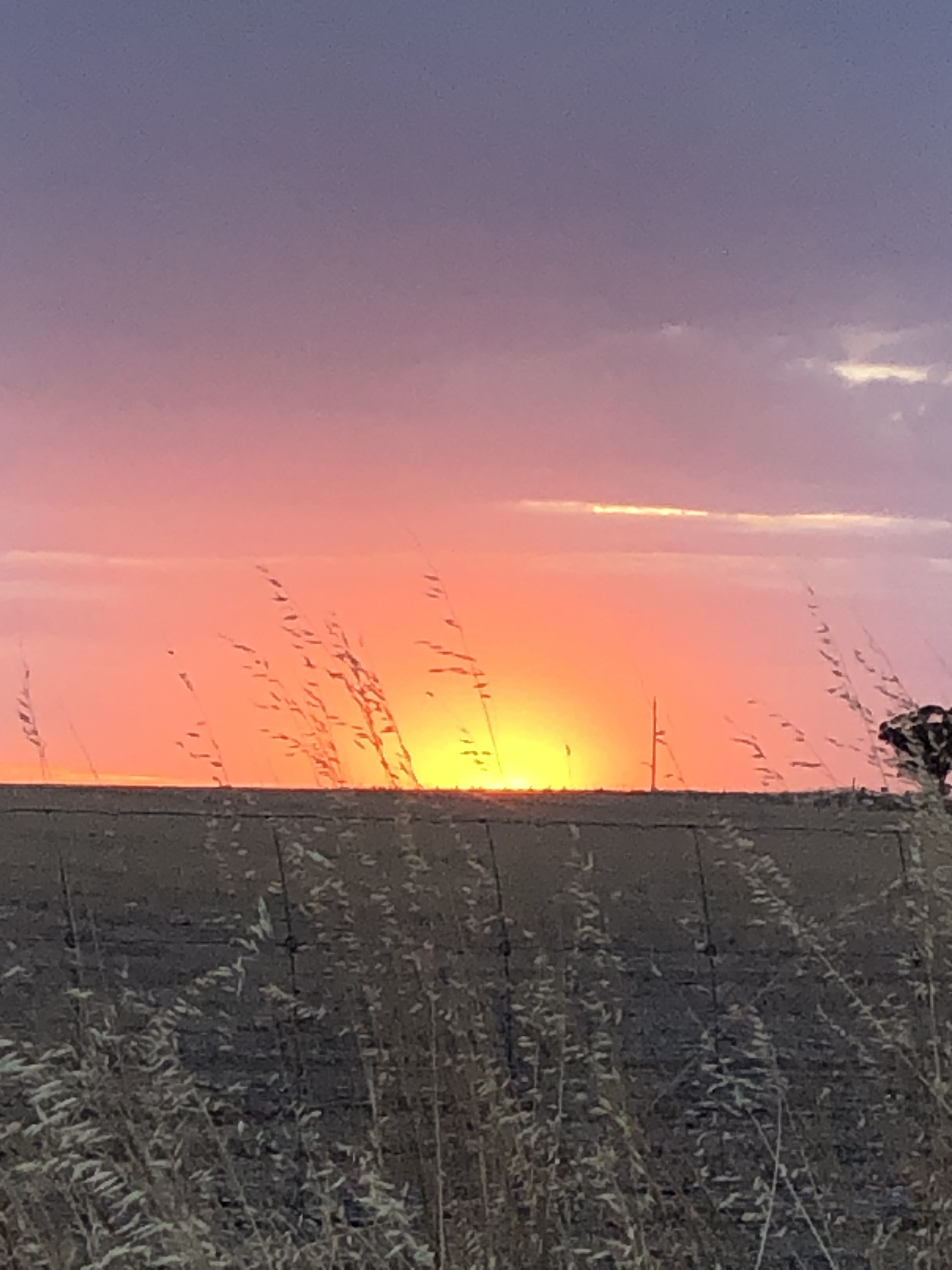
At the 3.5km mark there’s a burst of early morning sunlight. Where did that come from? Last time I looked at the sky it was grey.
Morning has broken – or been fixed.
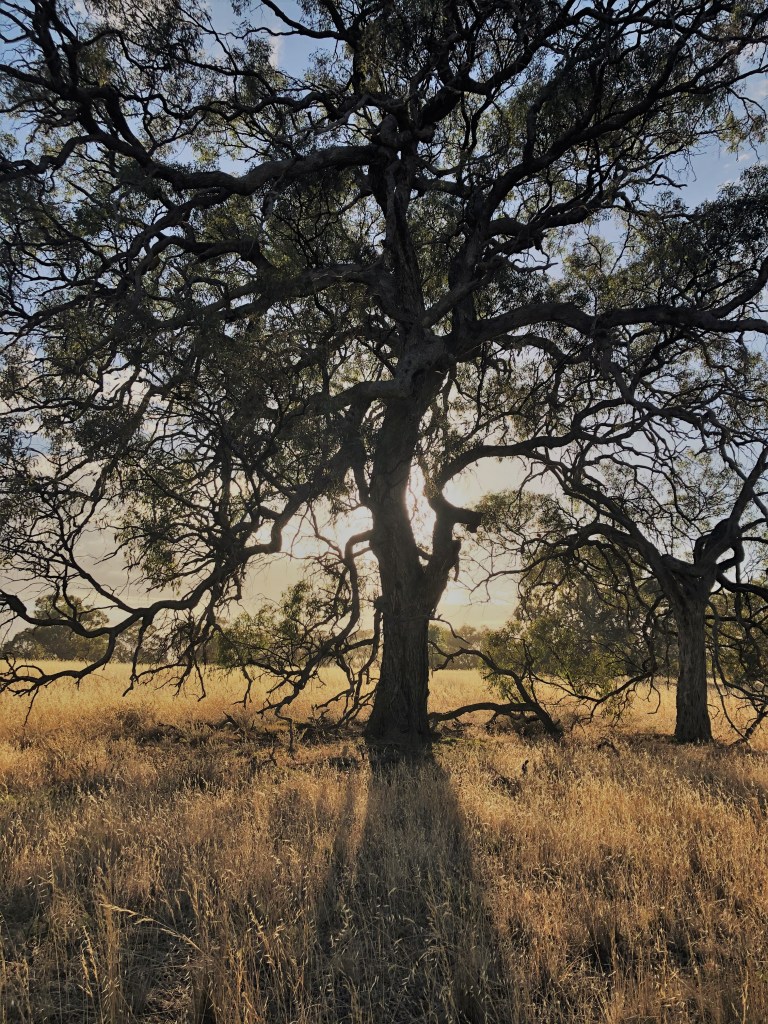
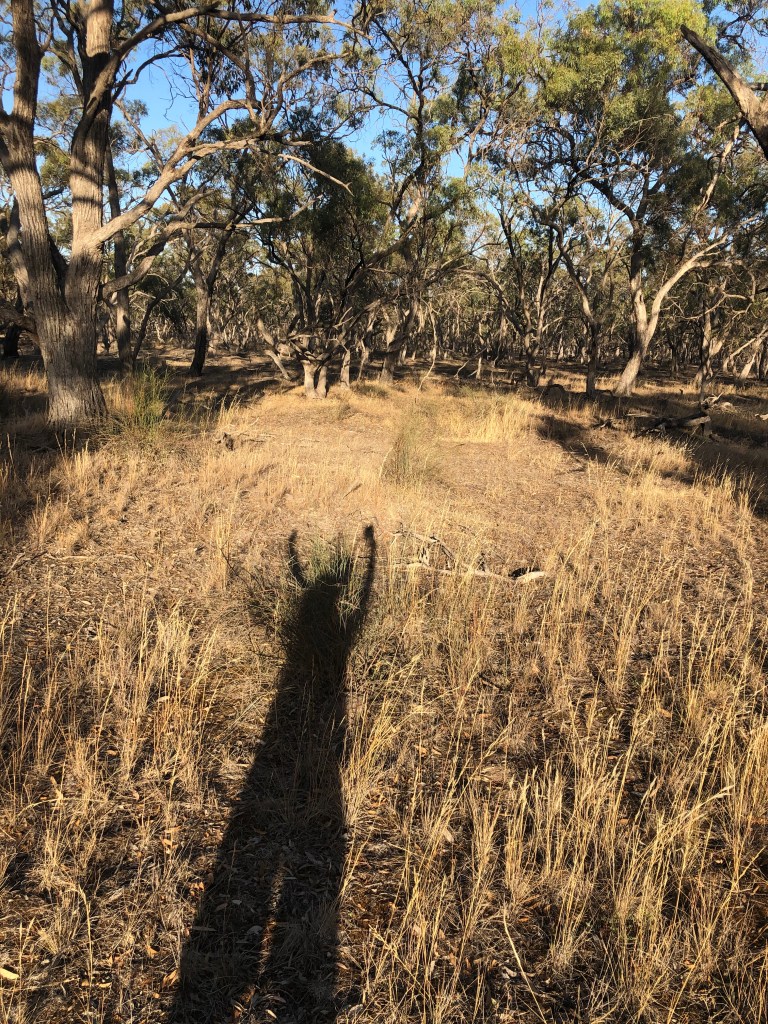
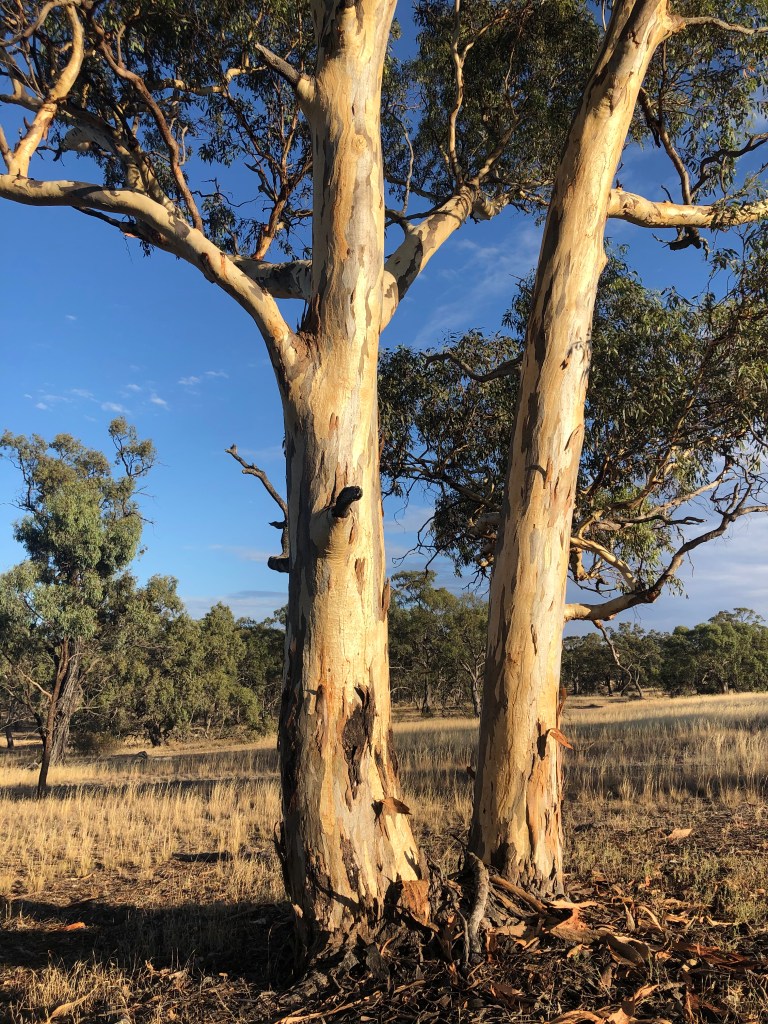
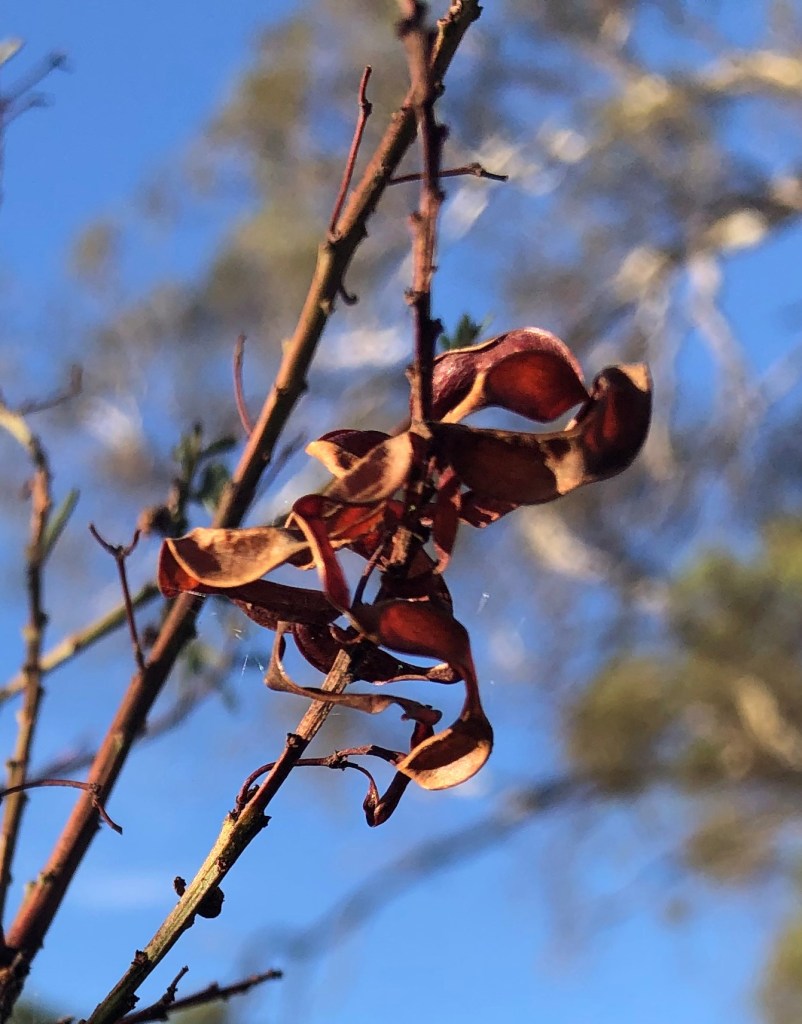
It is blue skies as I head back up the red dirt hill for the last part of the walk. The yellow gums are shining in the light and I find some flowering shrubs growing.
Back at the car, the verdict is clear. This swamp definitely ticks the box.
 52 weeks 52 walks
Well the legless lizards and the tiles?
LikeLike