What – Oliver’s Lake
Where – Duchembegarra, west of Horsham
How far – Lake is 400ha but we walk 7km part way around
10 word – Wide, flat, salty, dry, rare plants, bird haven, more questions……

The Wimmera really is chock full of lakes and wetlands.
Some with their name before the word ‘lake’ and others after.
Some have fresh water, some salty, some are big and some small.
Many are relatively shallow and also spend long periods of their life dry.
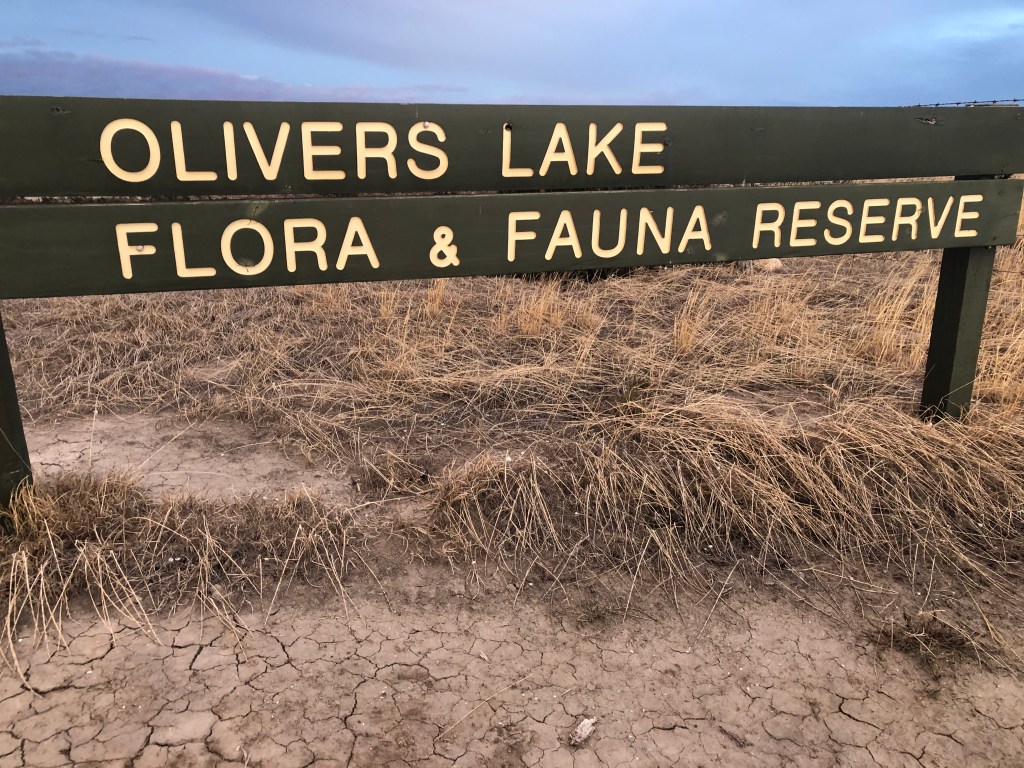
Oliver’s Lake at Duchembegarra is no exception. Today we will walk both around and across its salty bed.
It’s an interesting exercise that leaves us wanting to know more.
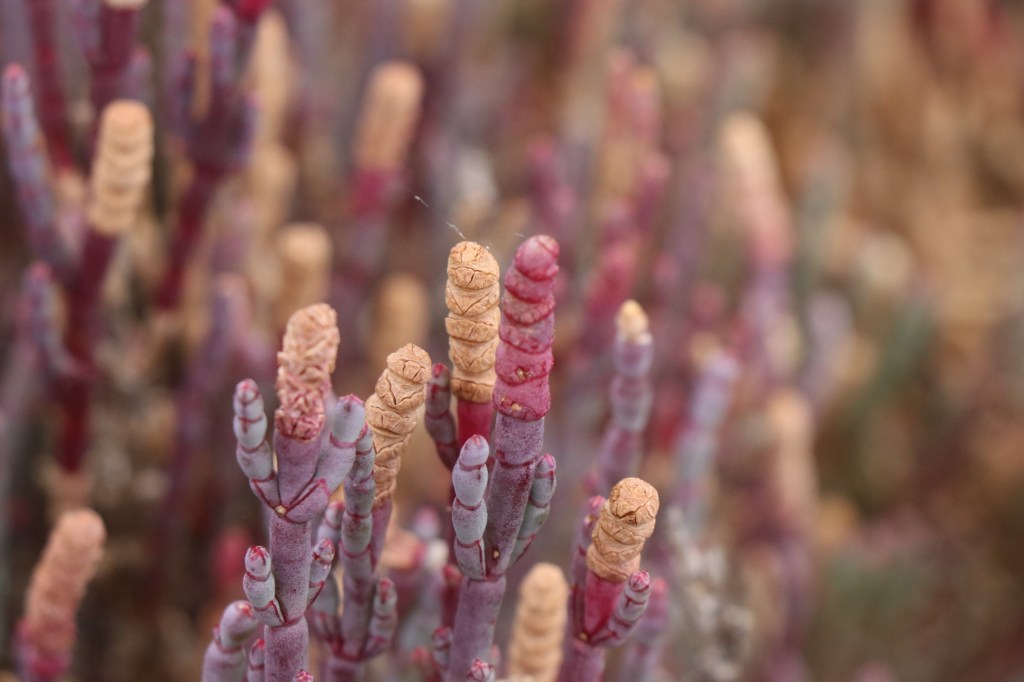
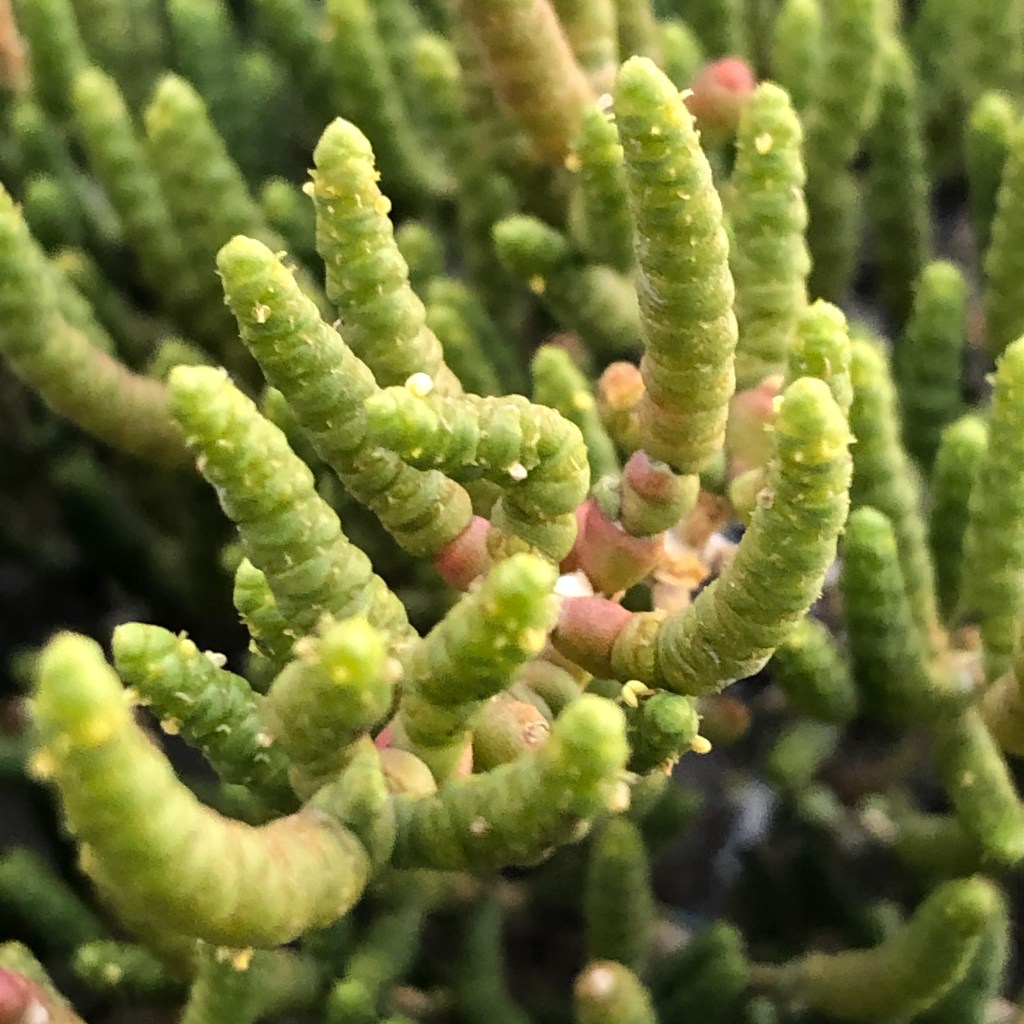
Measuring about 400ha or 1000 acres, it is one of only four sites in Victoria home to bead glasswort a small shrubby succulent. It is also an important habitat for banded stilts and other wading birds.
In 1986 a report recommended it be fenced off from grazing to protect existing salt tolerant vegetation and allow regeneration of salt paper barks and glassworts.
In 2011 it was all set to host a major title for blokarts – carts powered by sail – but was hit by the ultimate dry lake catastrophe – a flood.
I am not sure who Oliver was. But thinking it may well have been Mr L Oliver, or one of his relatives, who lived out this way more than a century ago and did quite well in the wheat section at Natimuk Show in 1910.
A bit of digging on Trove uncovered Frank Oliver who won a RACV prize for fuel consumption in the 1930s and the following decade lost his kitchen in a fire, He and another Oliver man won the father’s race at the school picnic and his son Vernon broke his collar bone at school. Then in 1951 Jack Oliver’s ewe gave birth to a freak lamb that had two mouths, four ears and four front legs. Not surprisingly it “died soon after birth”.
There is also an Oliver Schmidts Road in nearby Grass Flat.
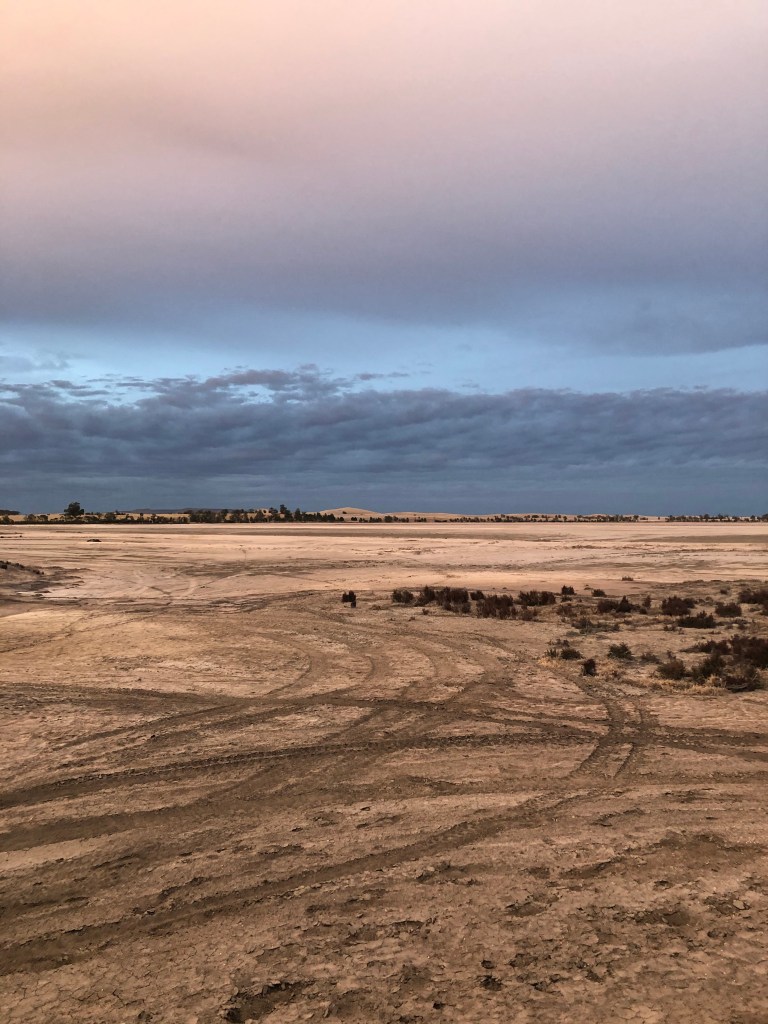
So we arrive at this lake via a powder-dry clay track, off Duchembegarra Road. After a bumpy few hundred metres we see the Oliver’s Lake sign. No water but a big expanse of white in front of us.
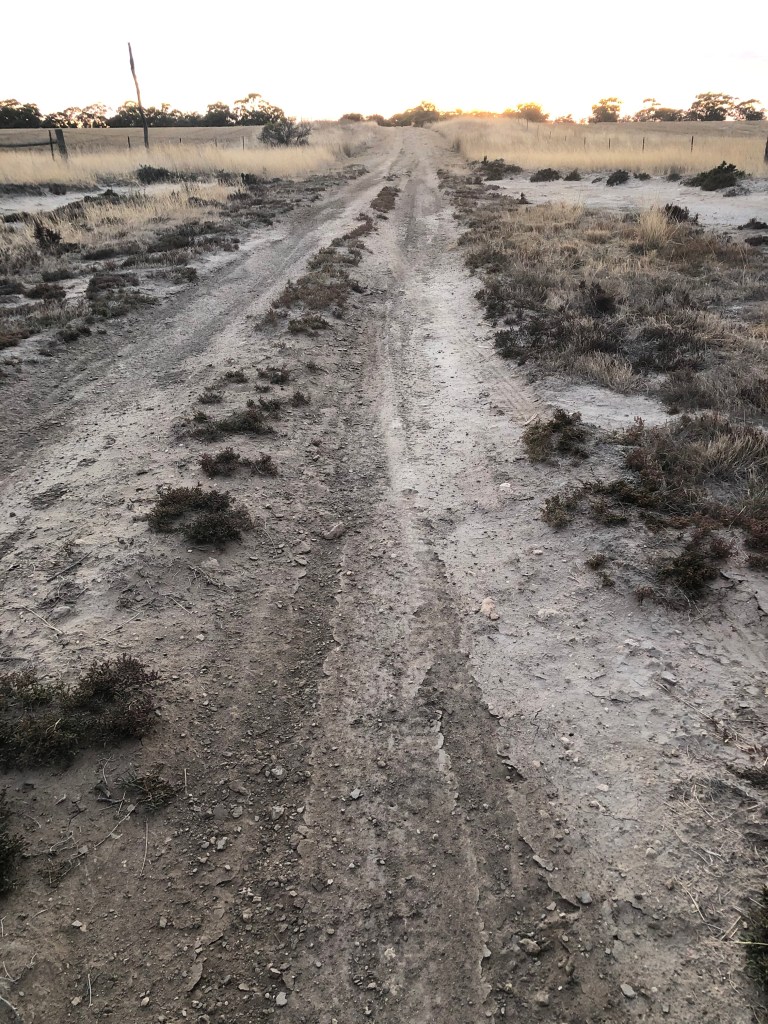
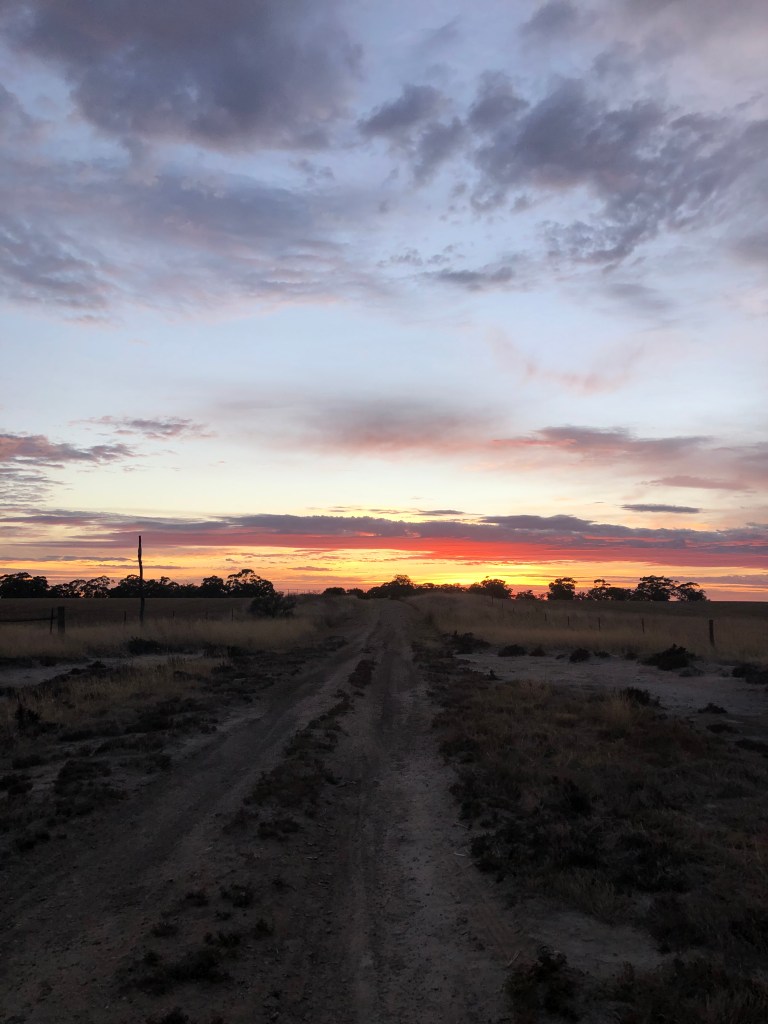
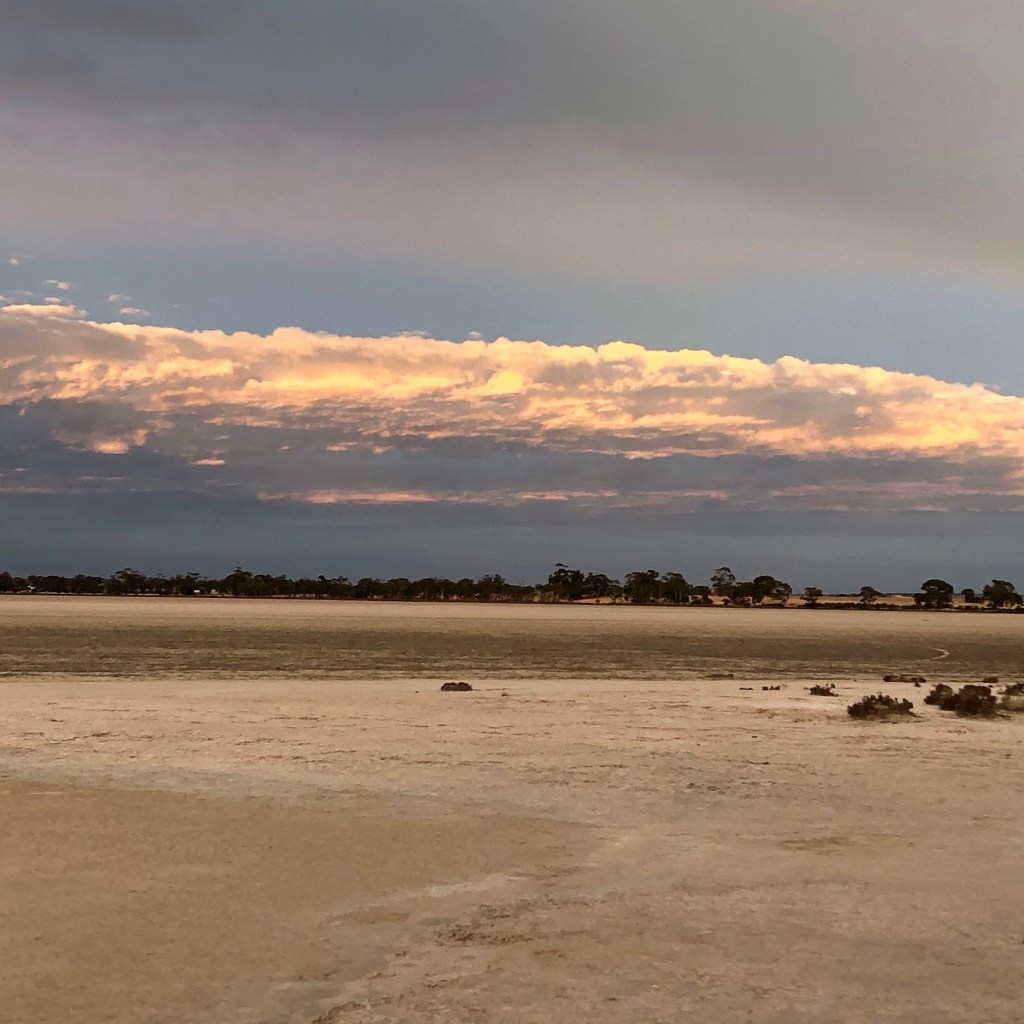
The sun provides a quick burst of fire, before disappearing into the vortex of grey and we head north following what appears to be an old telephone line.
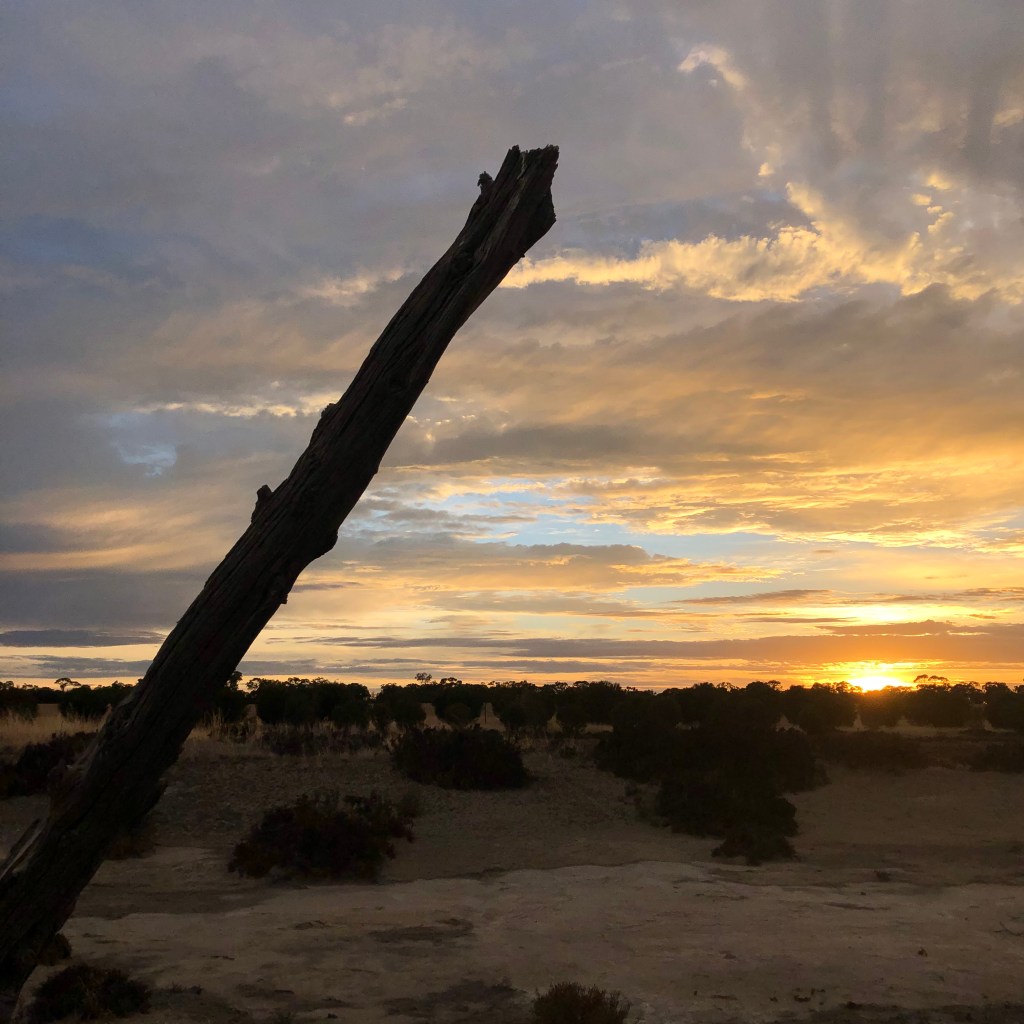

Out on the lake there are a few old stumps lying about and lines of disappearing wheel tracks suggest we are not the only people to hang out with Oliver.
A burst of sun creates shadows that transform our walking bodies to a daddy long legs crawling across the lake bed.
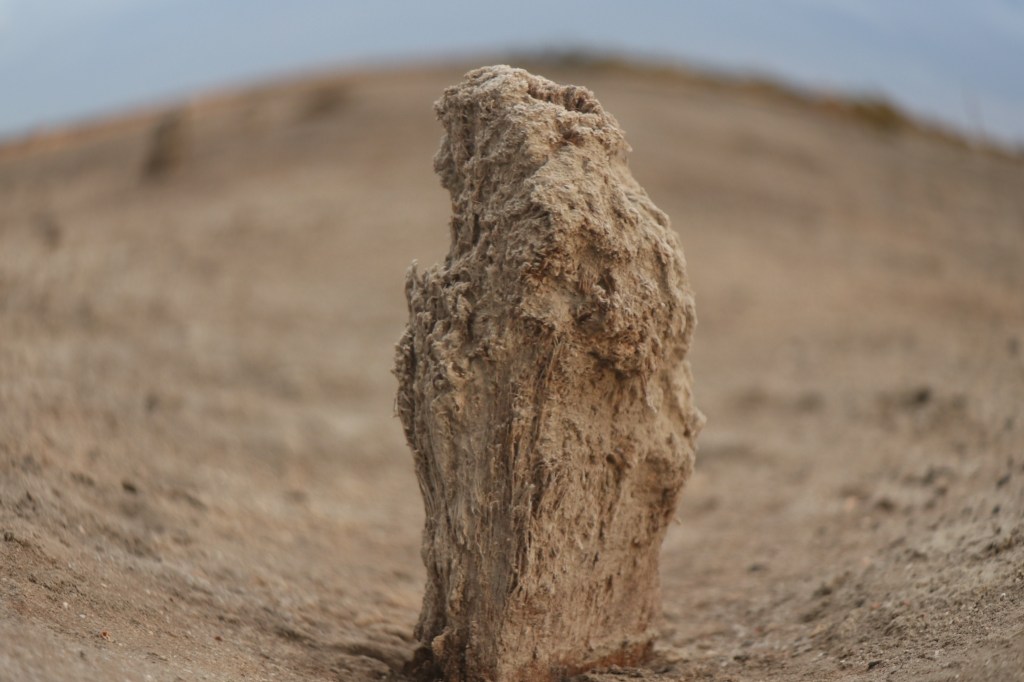
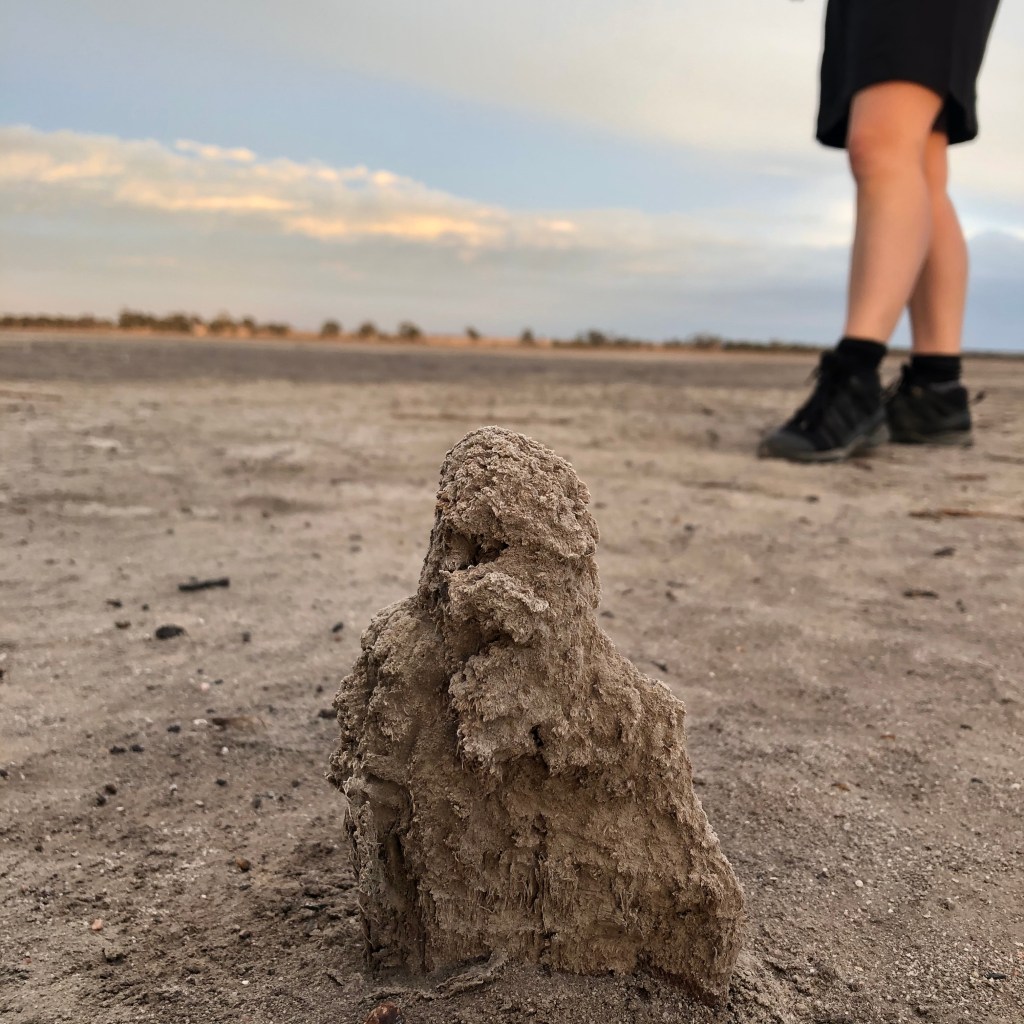
The spider stops when we see a little lump poking out of the sand. It’s about 20cm high and looks like rock or wood. We cast our eyes ahead see there is a line of them so they must have been a line of fence post which time and weather have whittled down to a fraction of their original size.
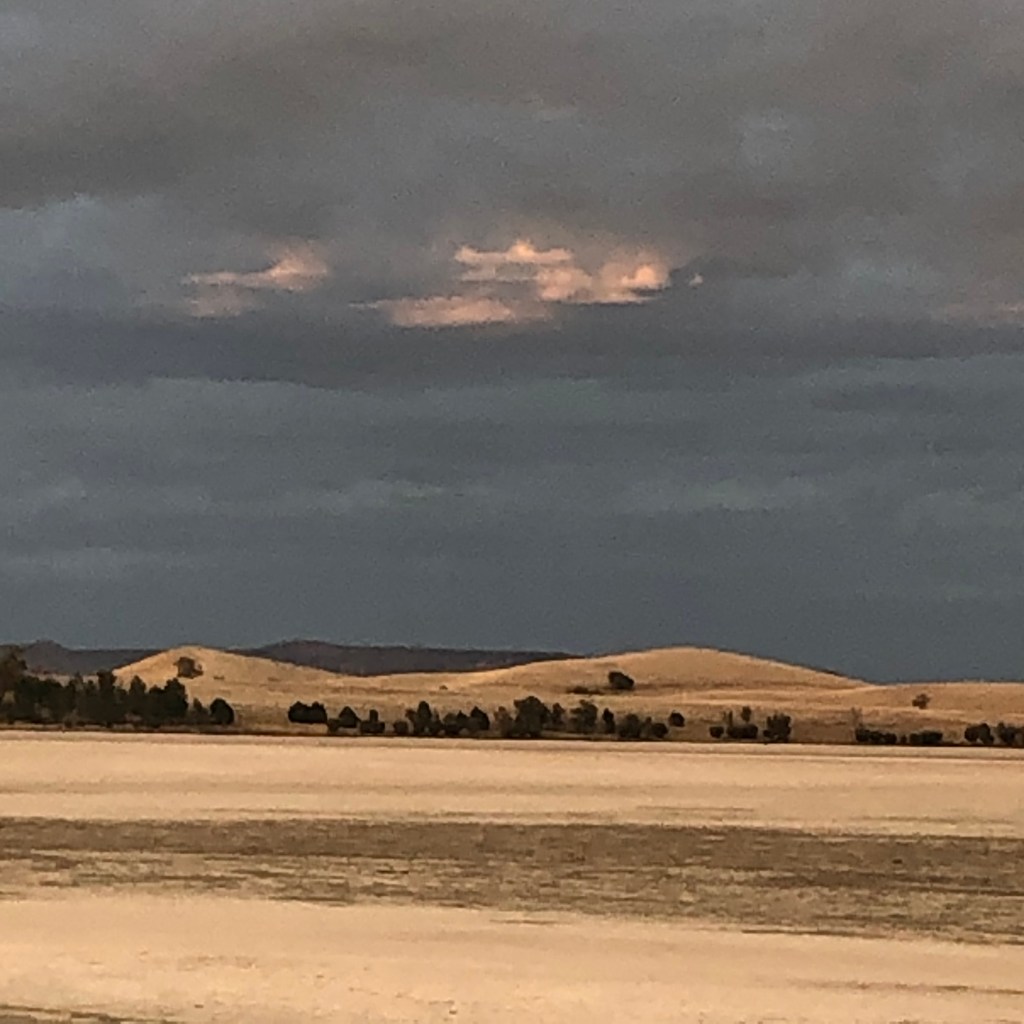
To the west the sun spotlights Mt Arapiles and the group of treeless hills sit just beyond the western side of Oliver. There were Olivers mentioned in 1908 when fire ravaged ‘Bald Hills’ and these naked mounds look like they might be the hiills in question.

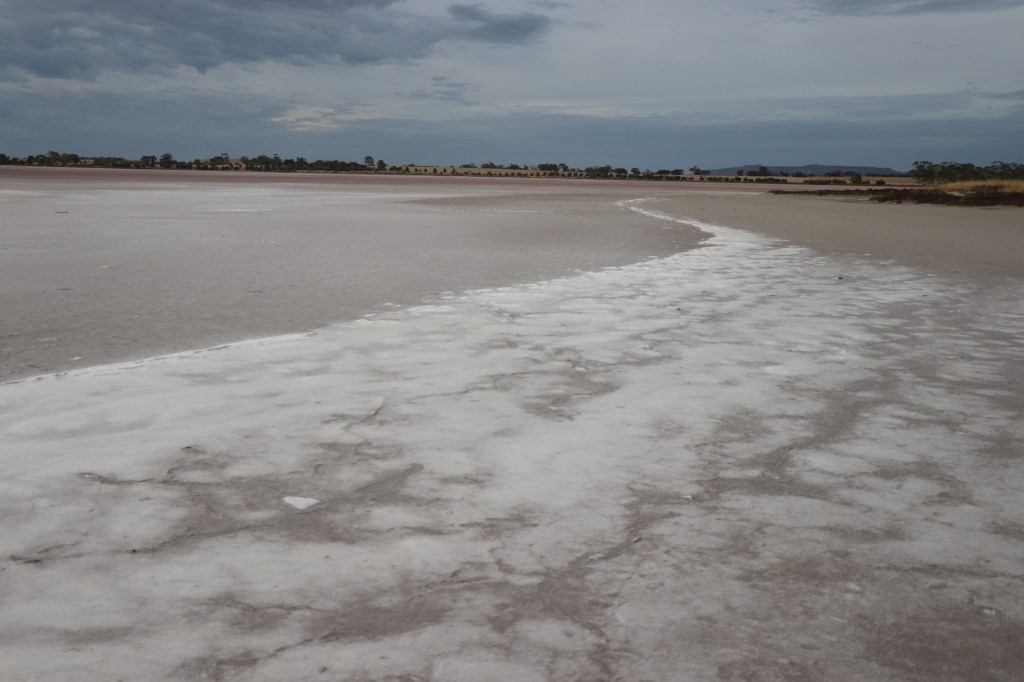
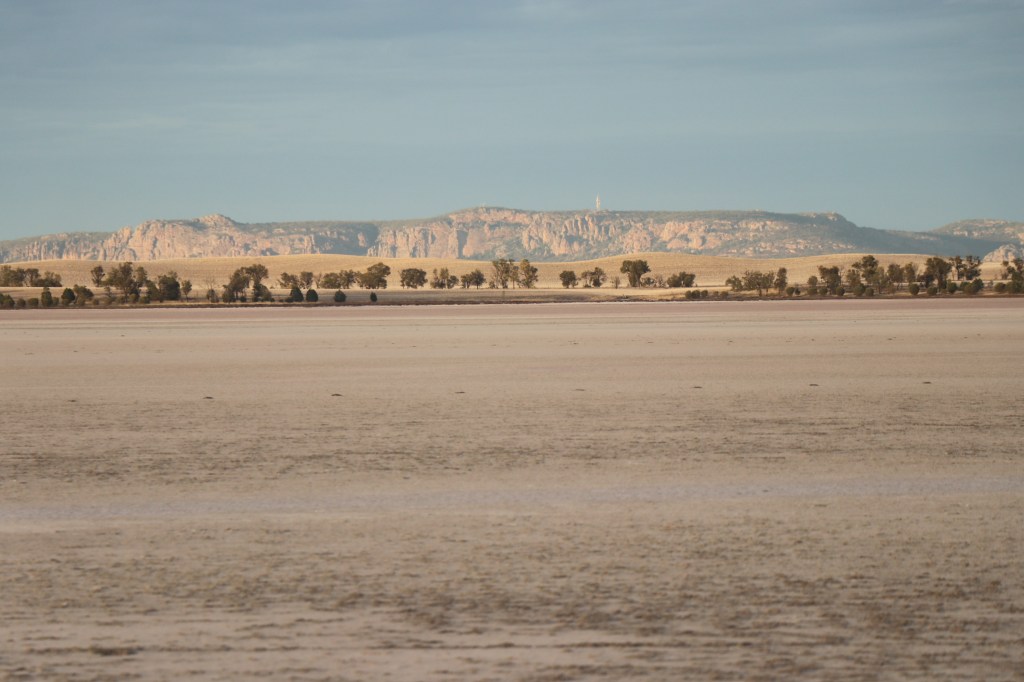
The sky turns murky blue grey as we reach Oliver’s northern end. A group of paper barks are clustered about 30m away from the shoreline and we notice our first signs of salt.
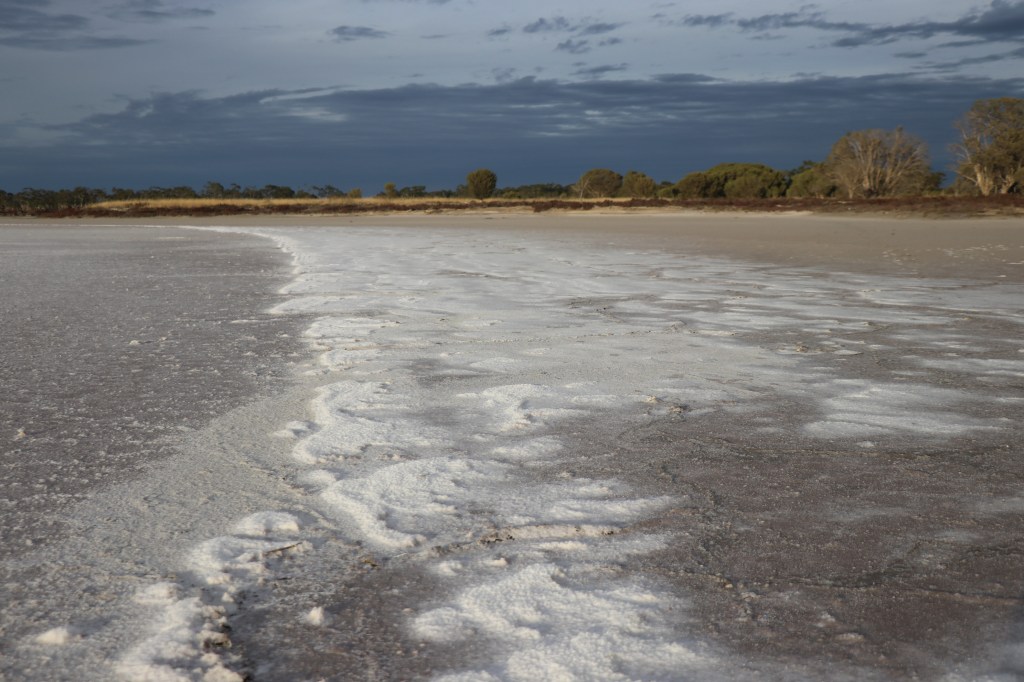
Looks like a white salty wave has washed up on the beach but is frozen in time. In places it is thick and the gentle curves and lines make it something to behold.
We see some kangaroo tracks but no kangaroos and we can’t see or hear any birds.

The salt wash gets wider as we head further on and then the lake bed changes to a sea of salty beads that are slightly pink in colour. On closer inspection it looks like an algae.

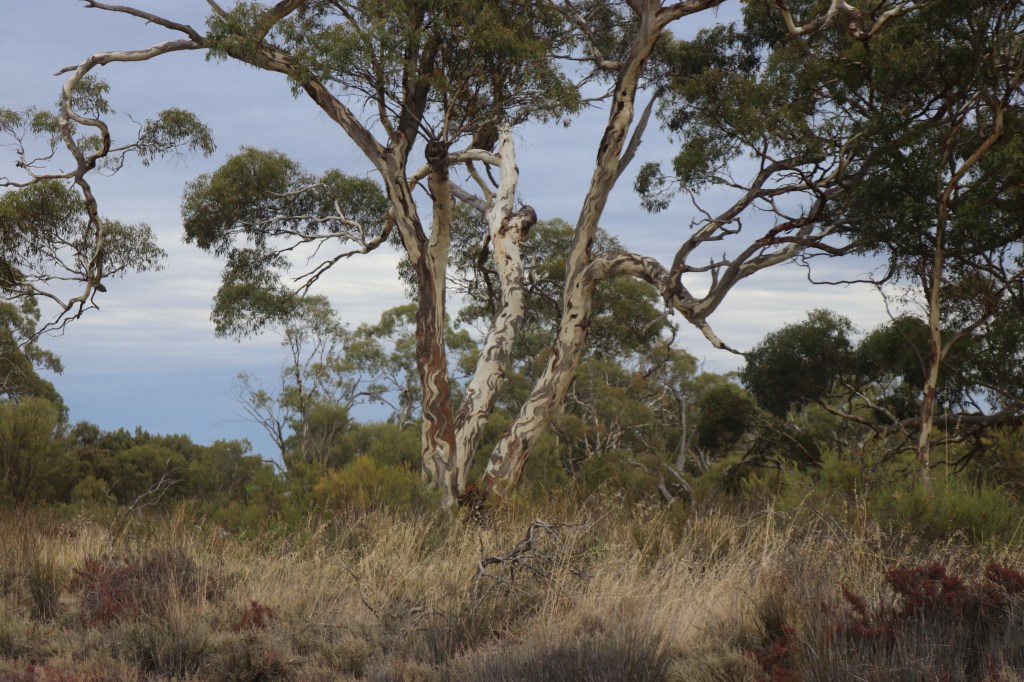
The trees change on the western side with beautiful eucalypts that are shedding their bark.
We see some deep pink pig face and are also loving the succulents. The beads are just beautiful with their worm-like form and tones of pink, green and
We are more than the half way around and have covered about 6km when suddenly the sky turns greyer. The temperature drops and a few spots of rain begin.
We see the car directly across the lake and know the clay exit track will turn to a boggy trap if there is a big downpour.


So we decide to bail and head straight across the middle to the car. It is surprisingly dry and easy to cover.
We get to the car and out the track before the rain and take time to look at the old Duchembegarra school site and the other side of the lake as we head home. Was this where the Olivers’ ran and learned and got injured?
By the time we get to Natimuk it is raining pretty hard and we are very happy to have cut Oliver short.
It’s a magical place and there is more to see and learn… so we will be back.


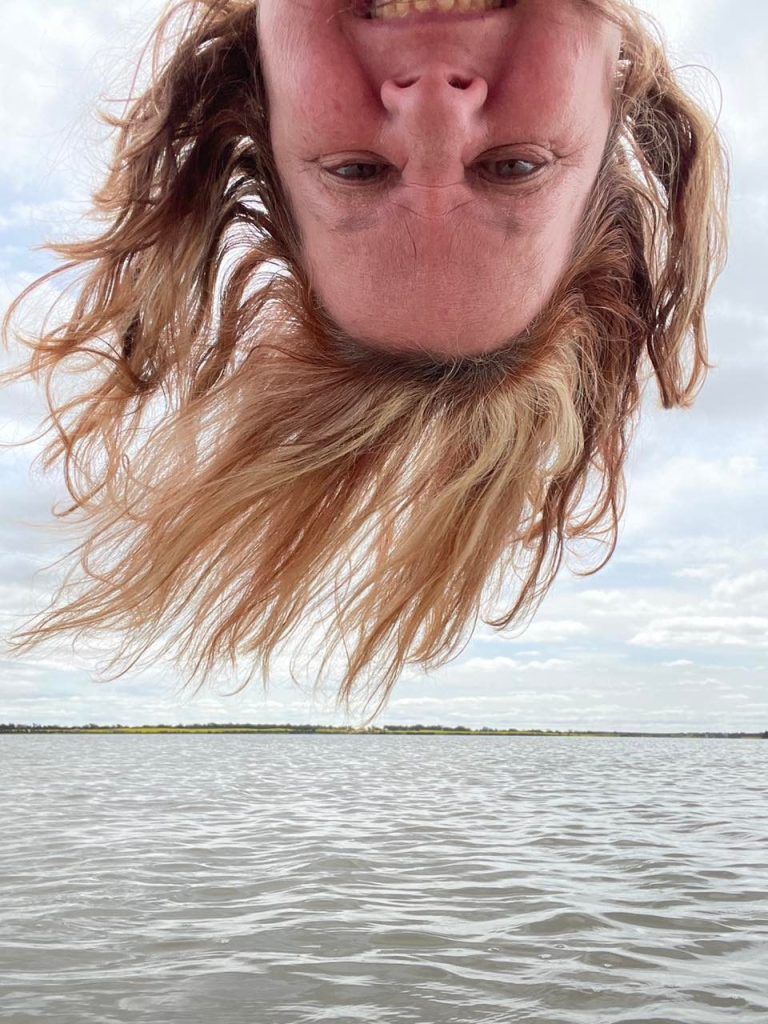
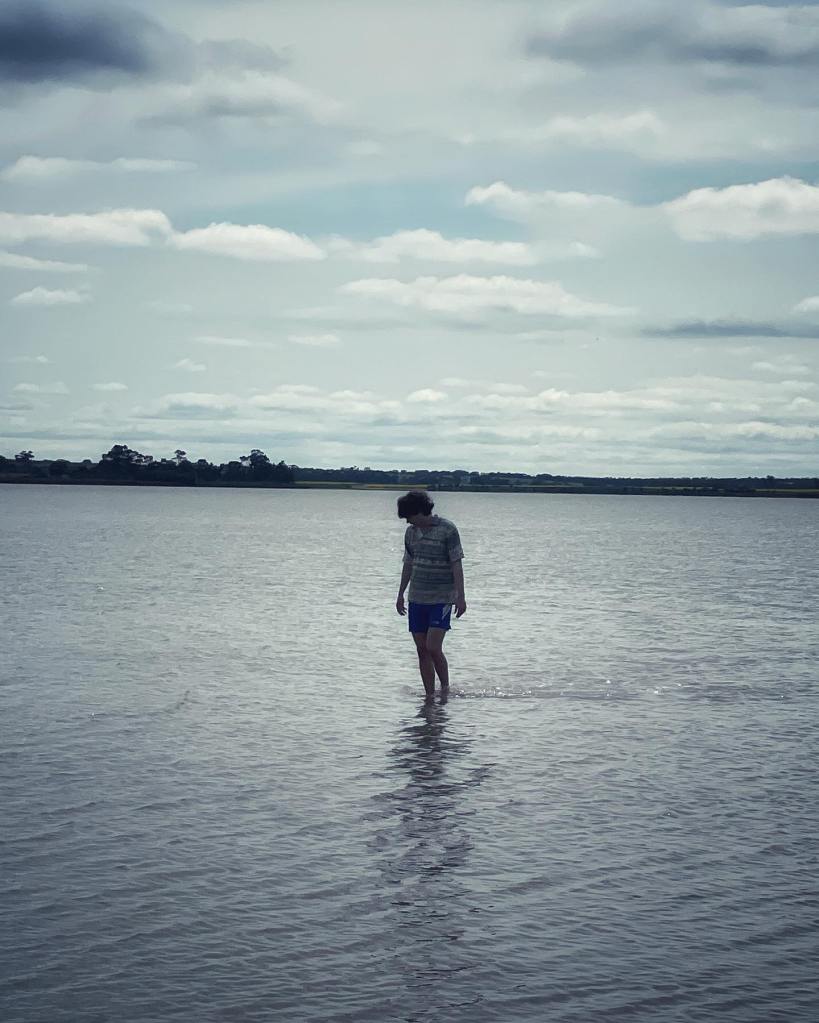
Update spring 2022 – Olivers Lake with water
 52 weeks 52 walks