- Where – Boundary Swamp Wildlife Reserve, 35km west south west of Horsham
- What – 154ha wetland which is part of Douglas Depression
- How Long – 5.4km to walk around its edge
- 10 words – Big skies, good memories, birds, trees, kangaroos, history, art, endurance
Today we visit an old friend.
We’ve caught up dozens of times over the past 14 years.
I have seen her struggle in the heat, get cold and wet in the winter and be knocked around by big winds.
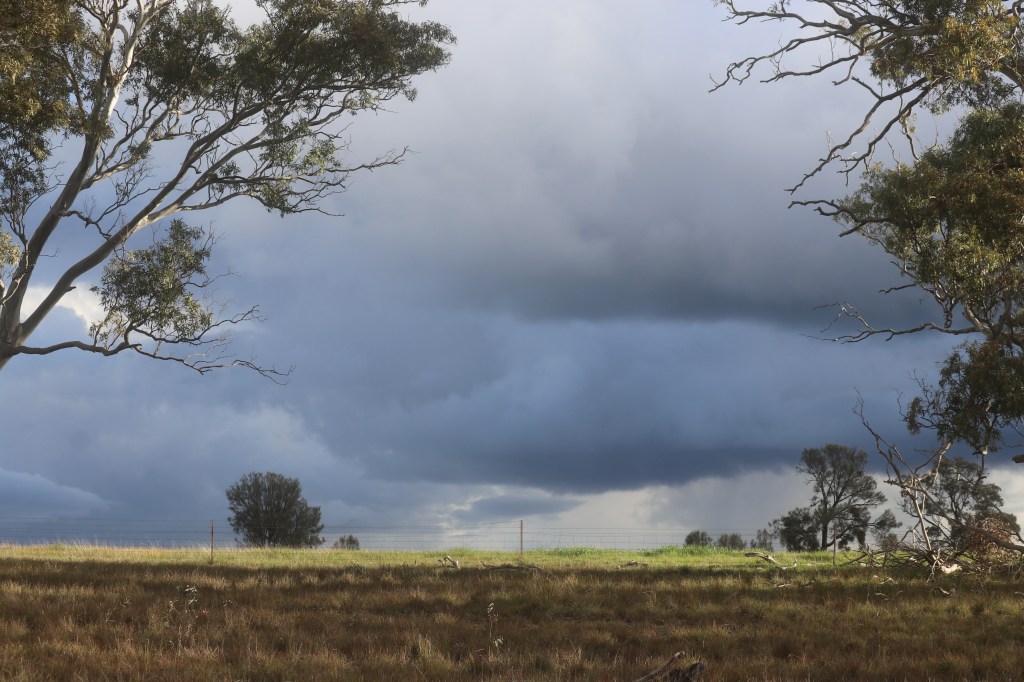

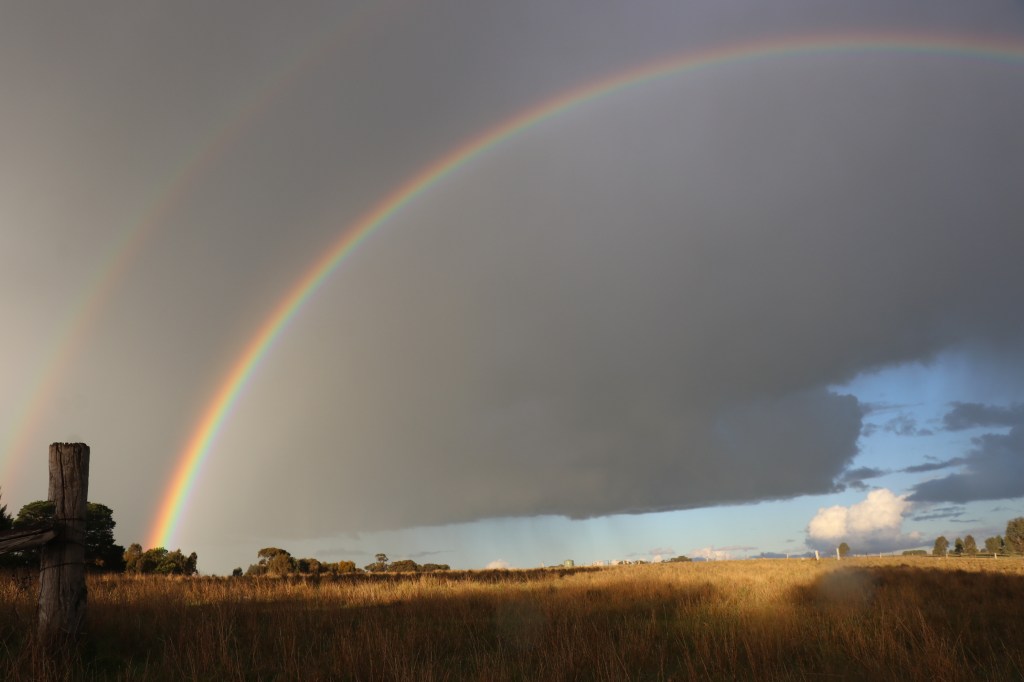
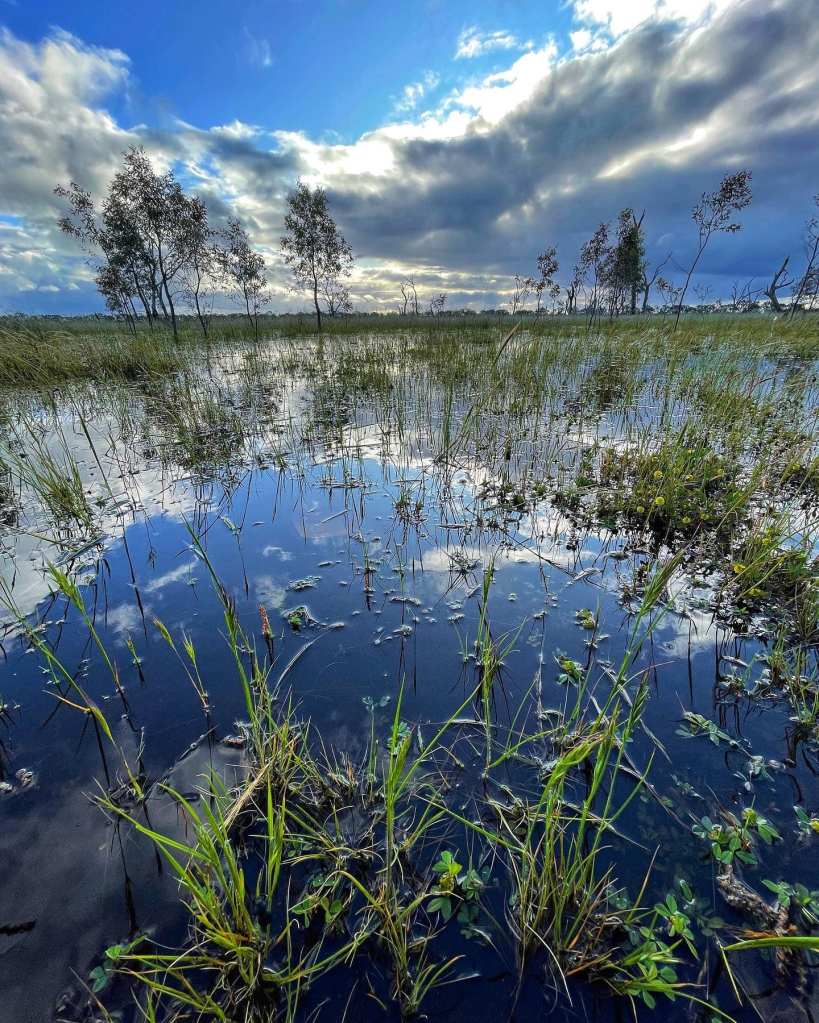
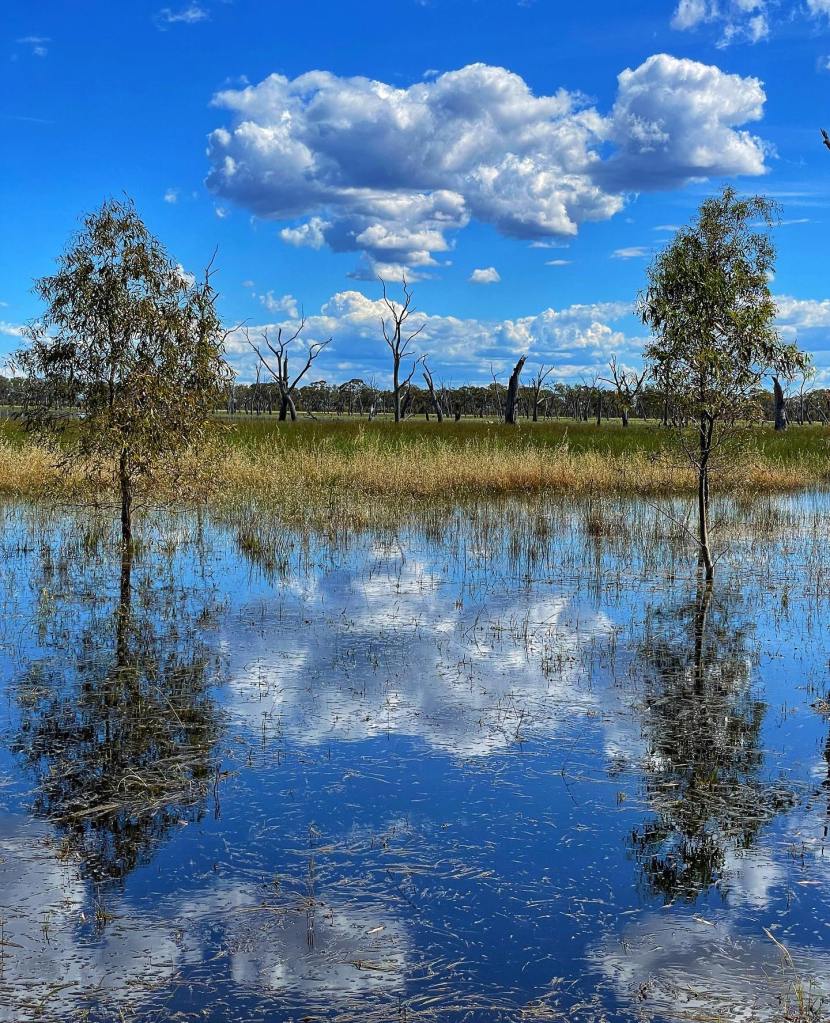
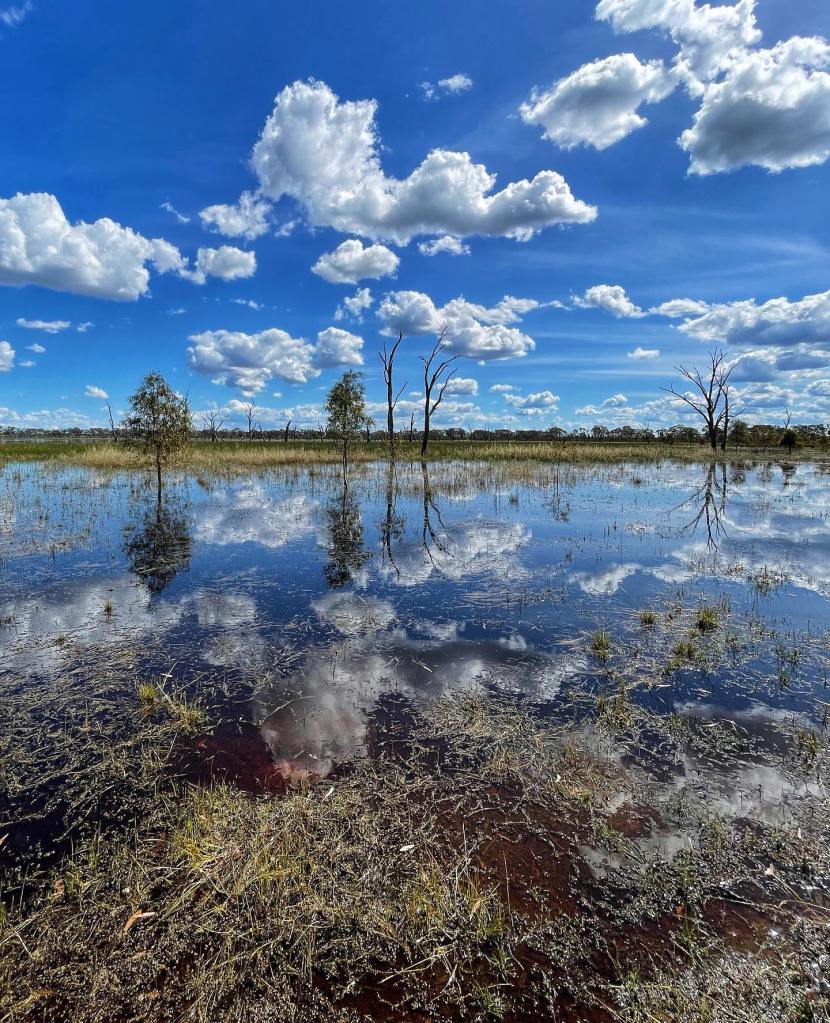
And once – just once – I saw her shine with metre deep-water which quietly sprinted from surrounding hills within hours of rain.
She is the 154ha Boundary Swamp, 35km WSW from Horsham and 10km south of Mount Arapiles.
Officially a Wildlife Reserve, Boundary lies on the Douglas Depression a long line of curved lakes and wetlands that may have helped link the Murray River to the sea.
This ancient drain starts at White’s Lake near Harrow and north east to Oliver’s Lake then, according to some, continues up through Lake Hindmarsh and Lake Albacutya to the top end of Wyperfeld.

On paper Boundary Swamp has few claims to fame. It’s dry, flat, remote and one of many local wetlands. There’s no town nearby but there might have once been a school at its eastern end,
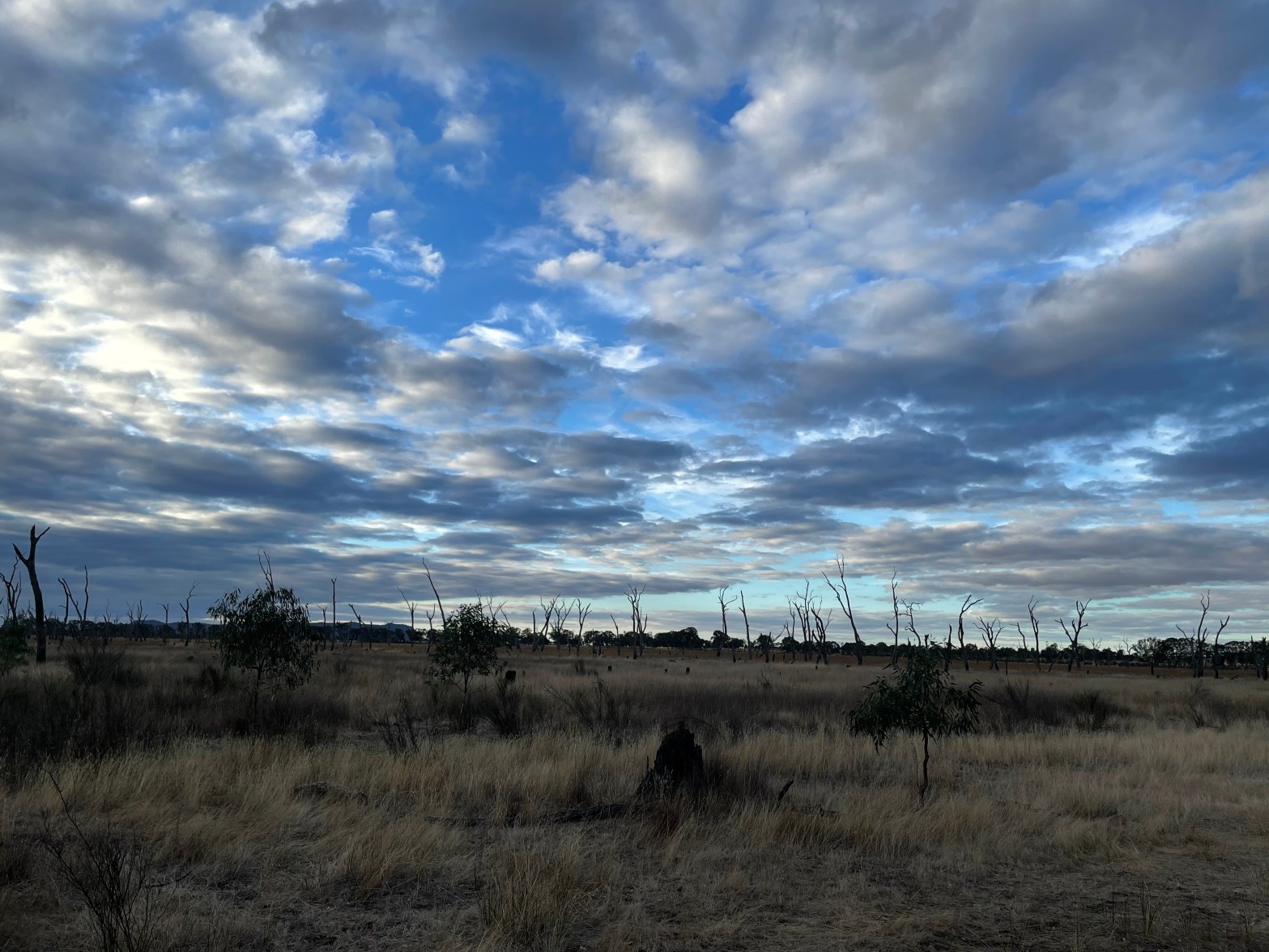
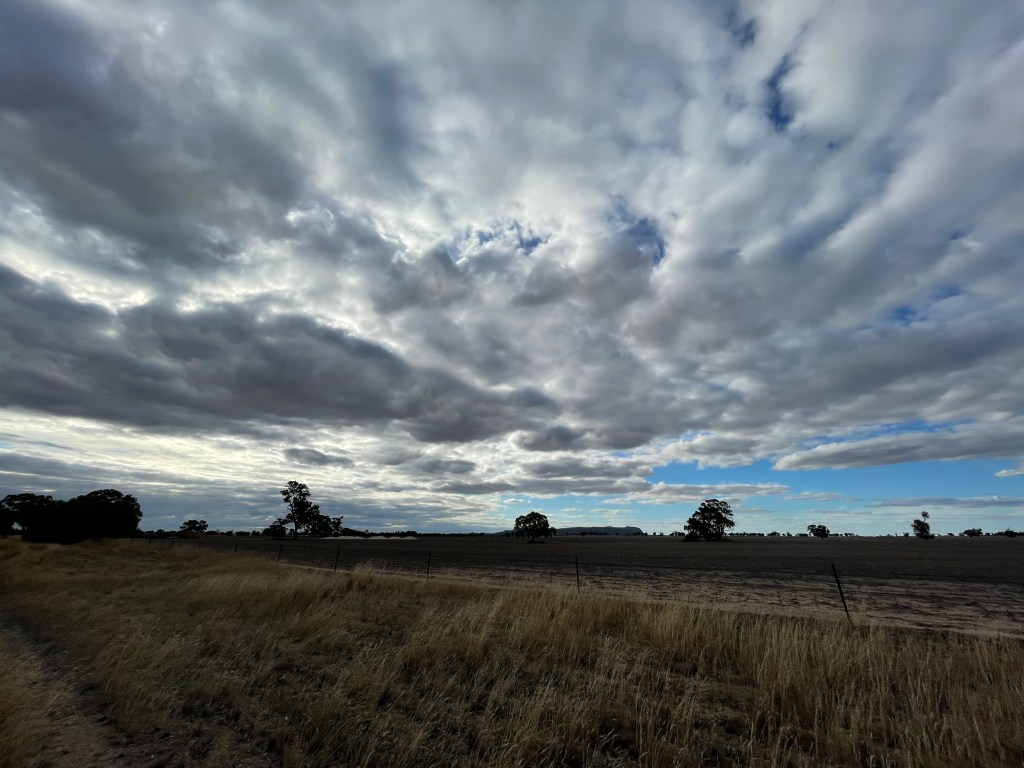
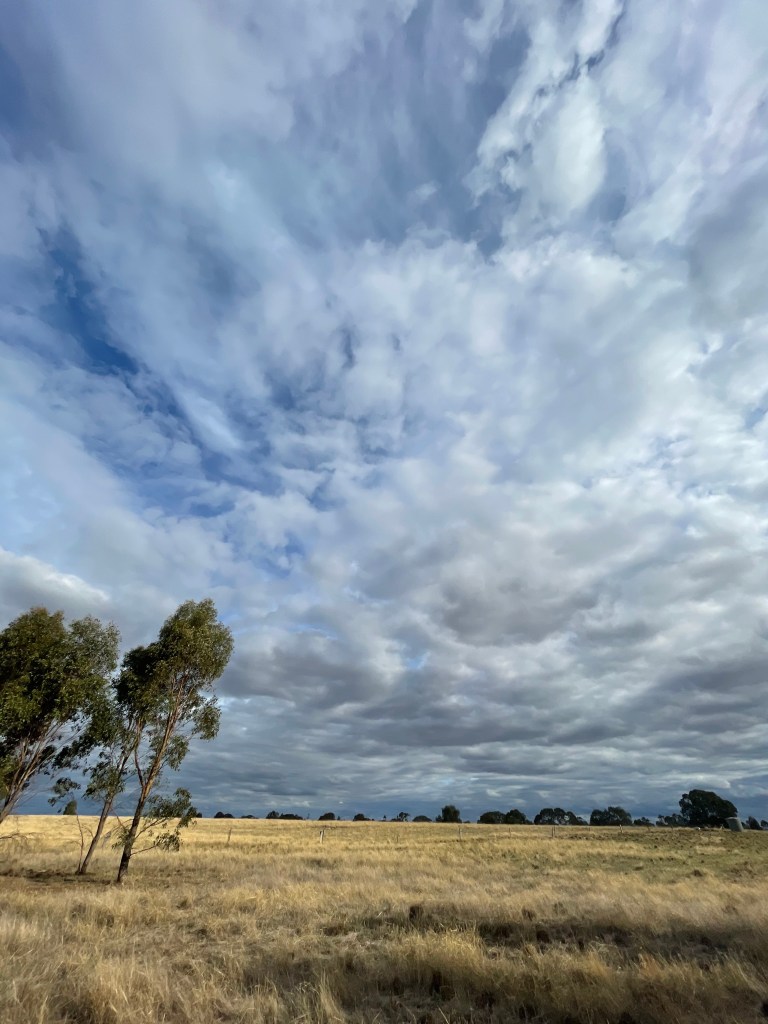
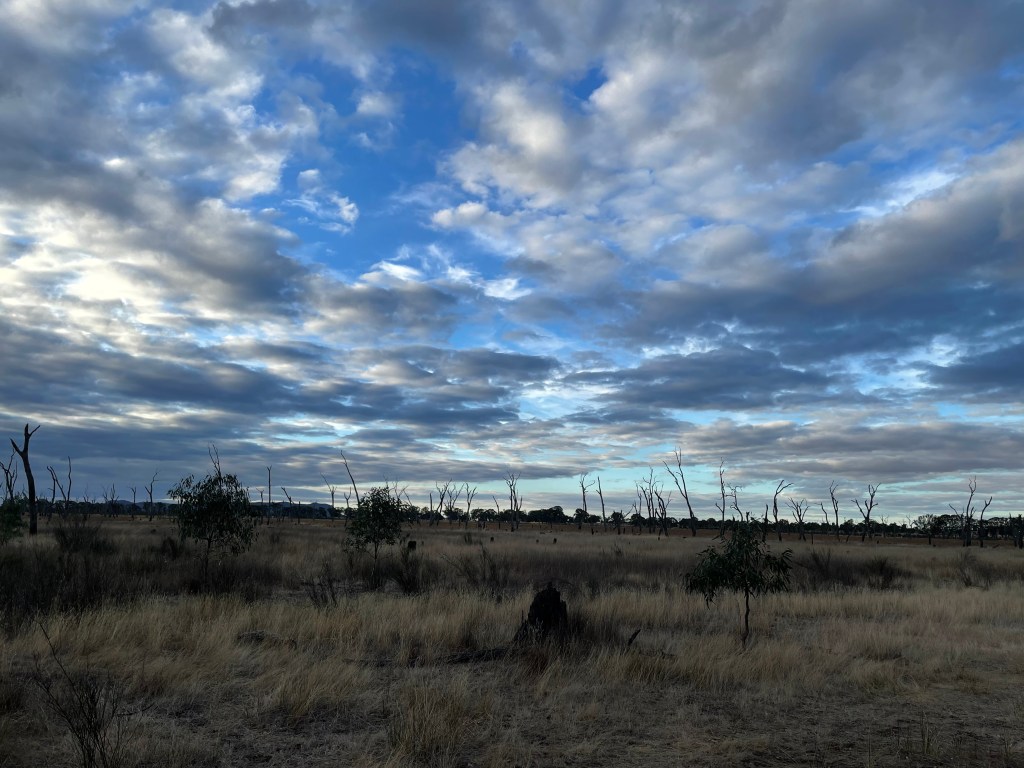
Our walk starts on the end of Rifle Butts Road under a big blue sky awash with wispy clouds. That’s probably its real claim to fame – boundary swamp does great sky.
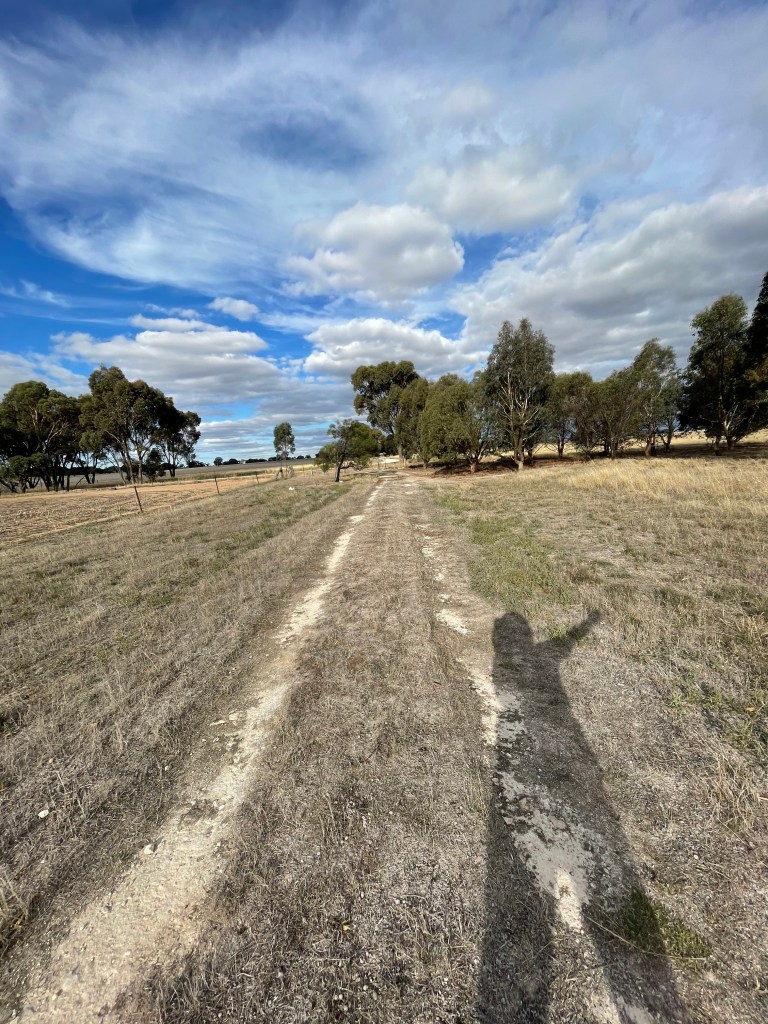
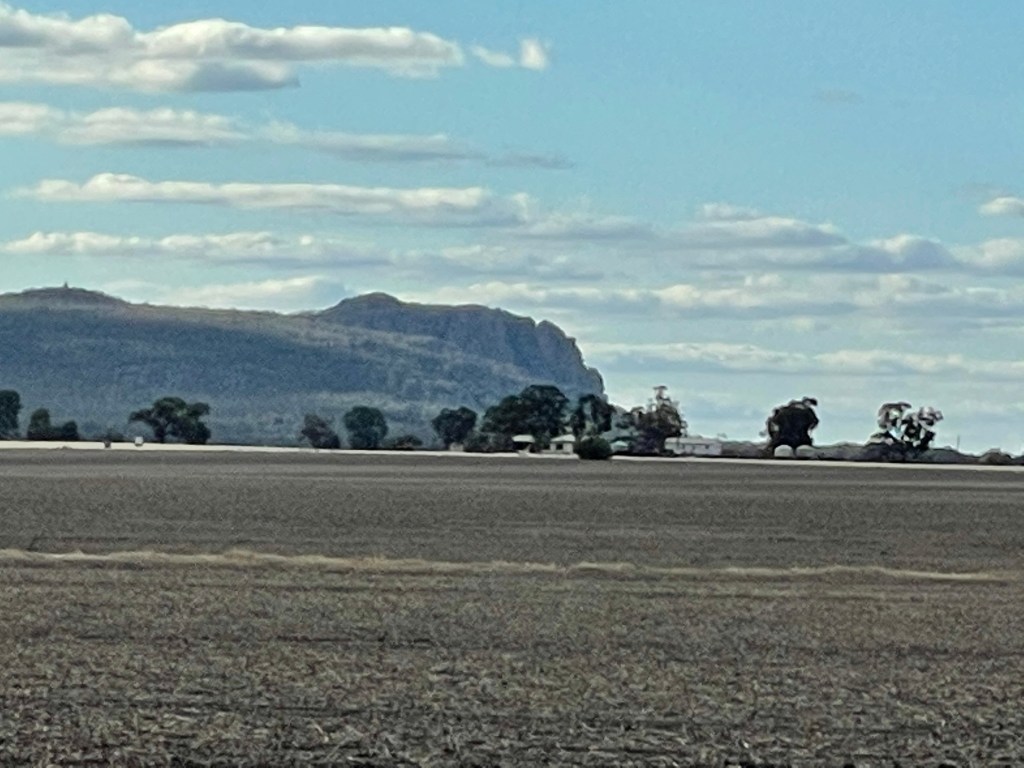
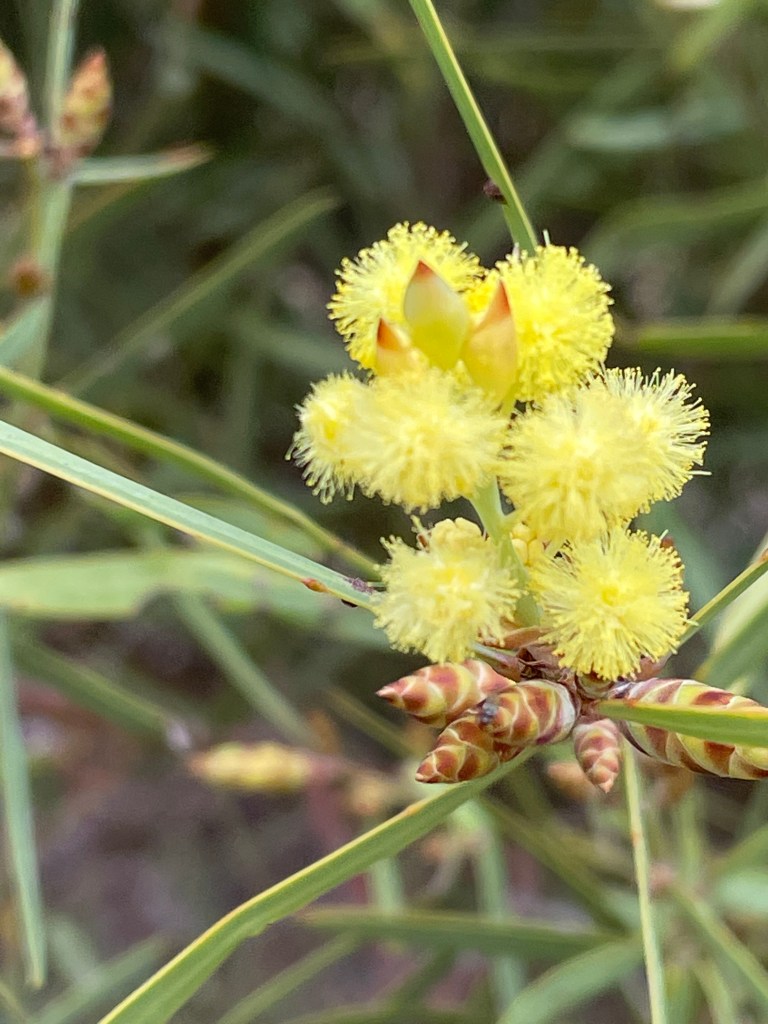
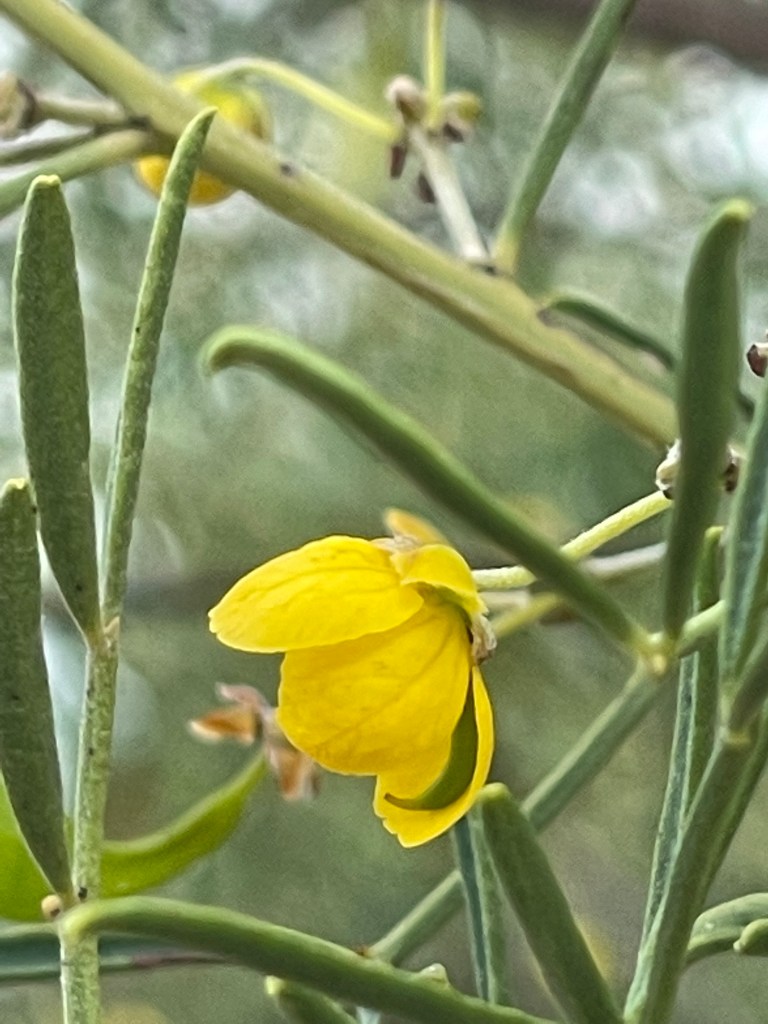
It’s autumn but we’ve had some summer rains and there are flowers on quite a few of the shrubs growing by the track.
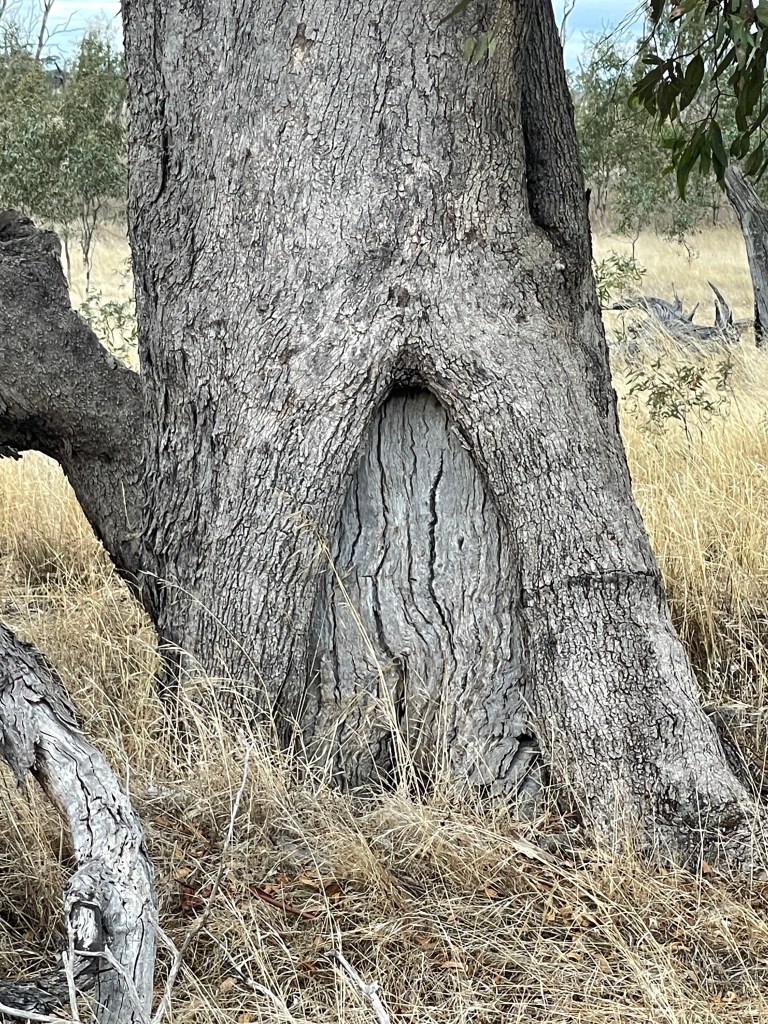
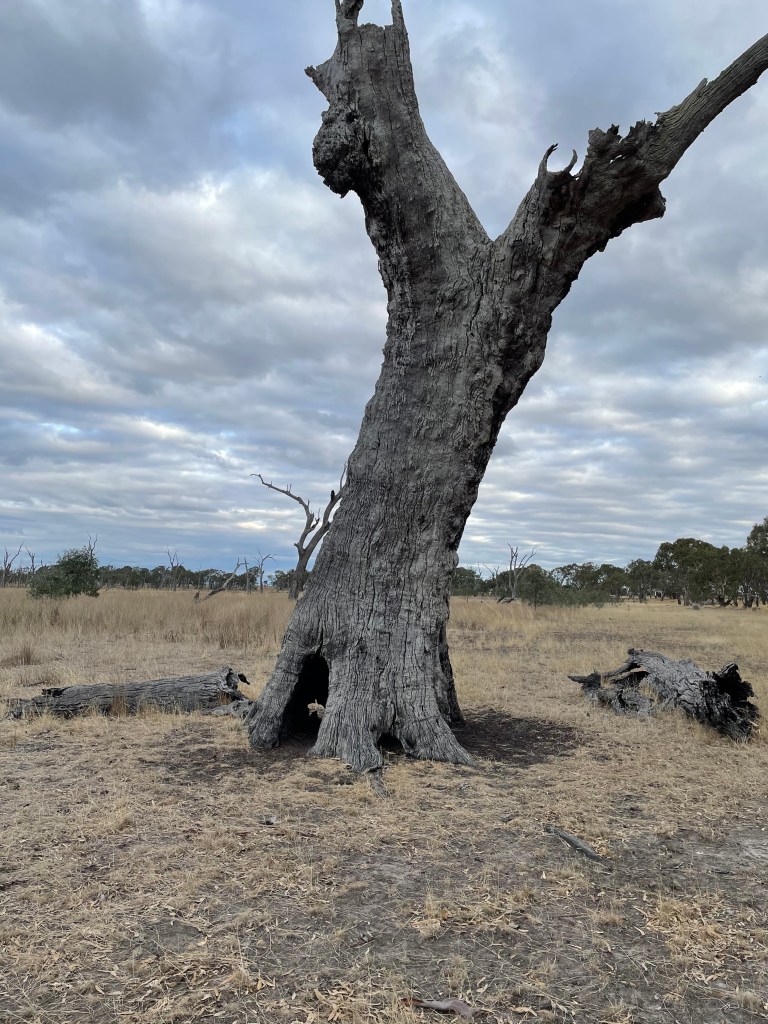
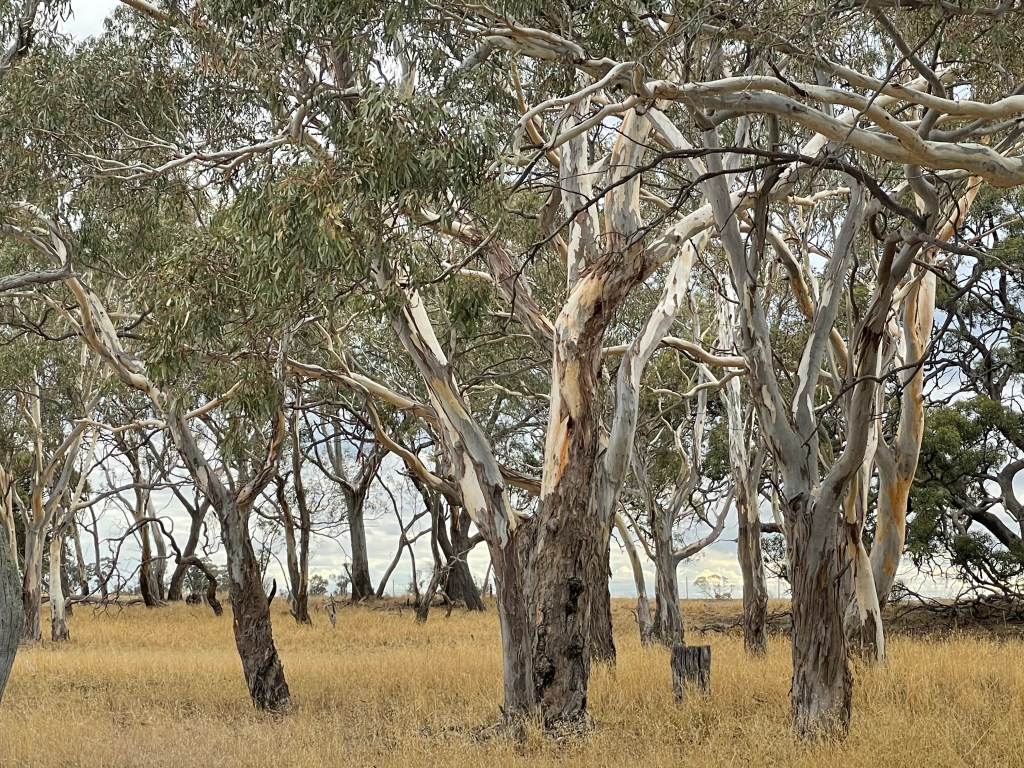
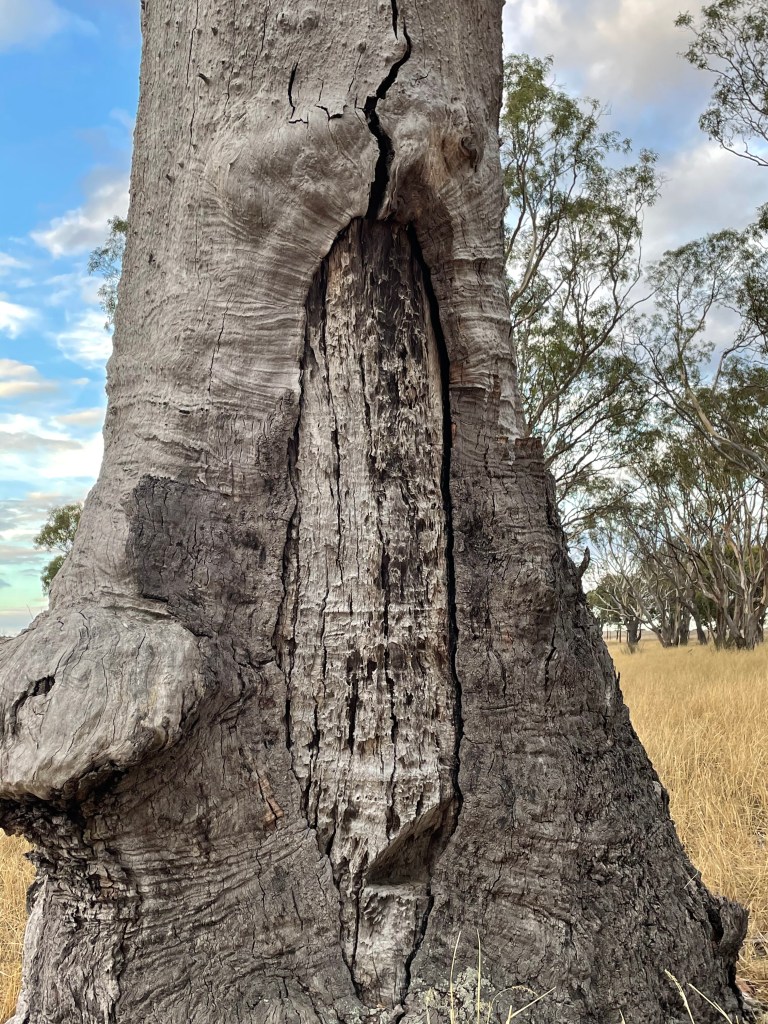
I pass some veteran red gums including a burned hollow trunk which may have also been scarred by a human hand in a long distant past. It is right near a dry creek that feeds the swamp after a downpour.

You never forget big Wimmera rains. Frogs started singing overnight and are soon joined by birds, dragon flies and mosquitoes.
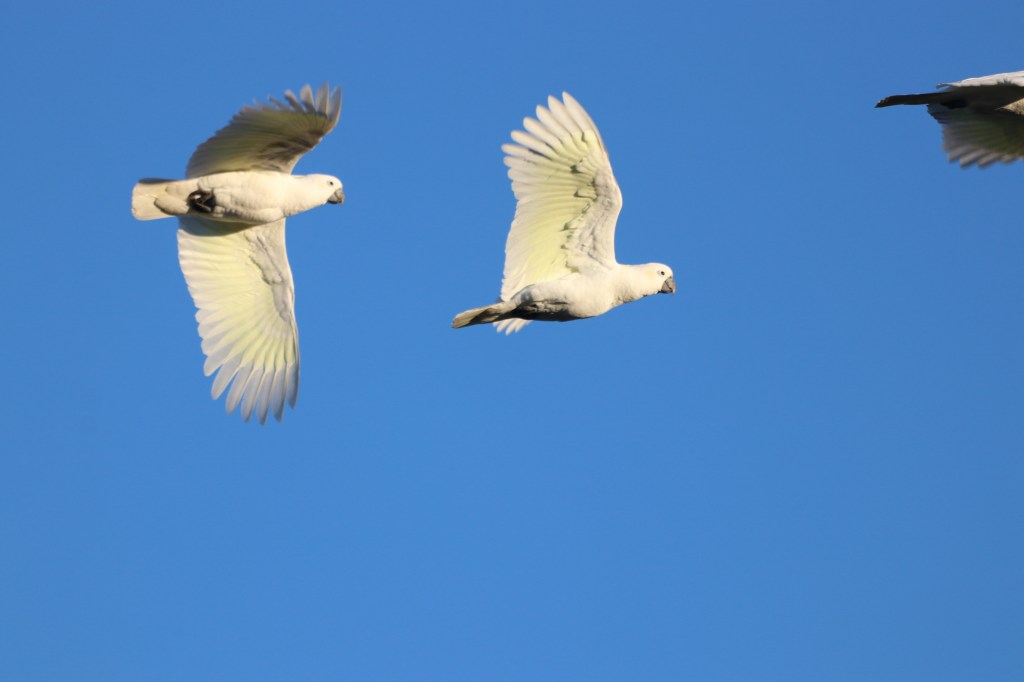
Boundary is a popular spot of galahs, sulphur crested cockatoos, magpies, blue wrens, mudlarks, swallows and fairy martins.
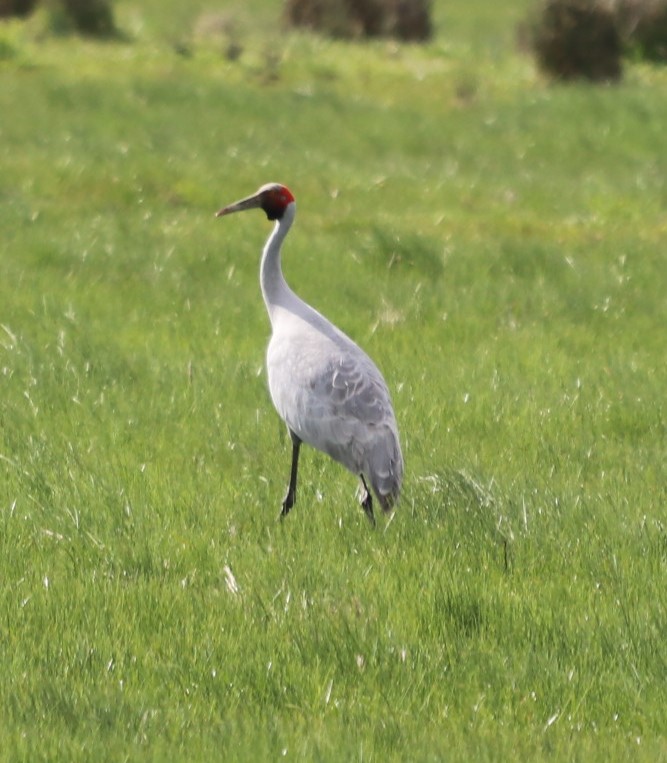
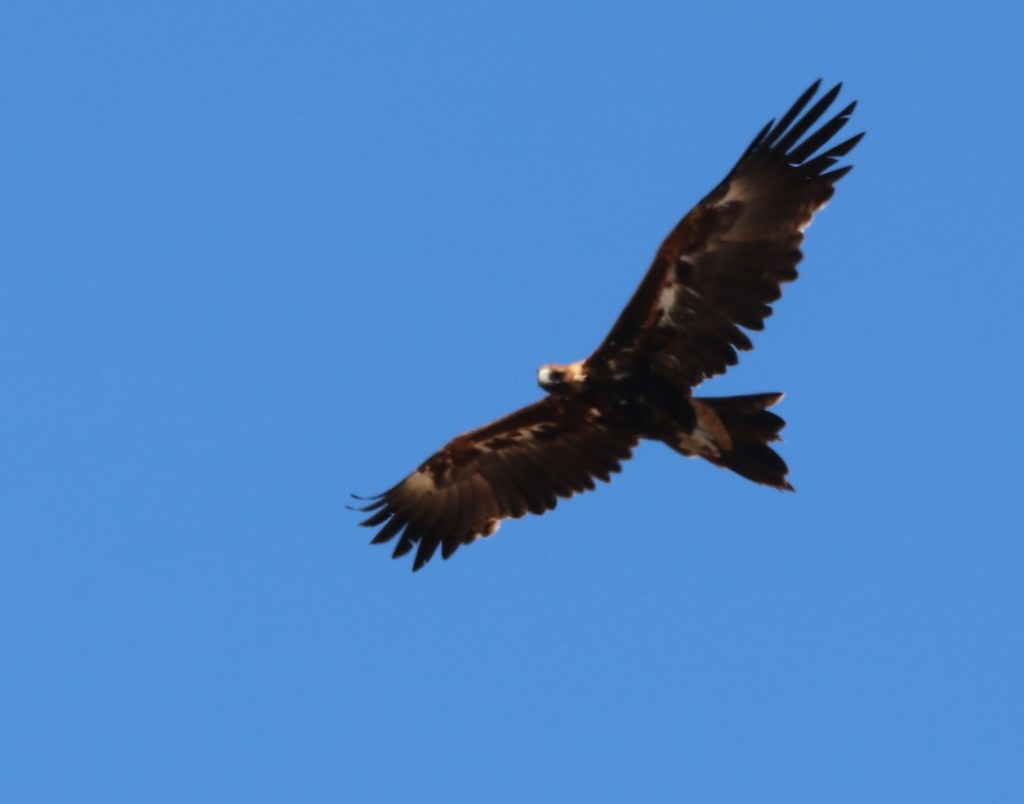
We’ve seen brolgas, yellow-tailed black cockatoo and, pairs of wedgetailed eagles, It made the 2018 Australian Good Birding Guide which also mentions spoonbills, Ibises, ducks and water hens.
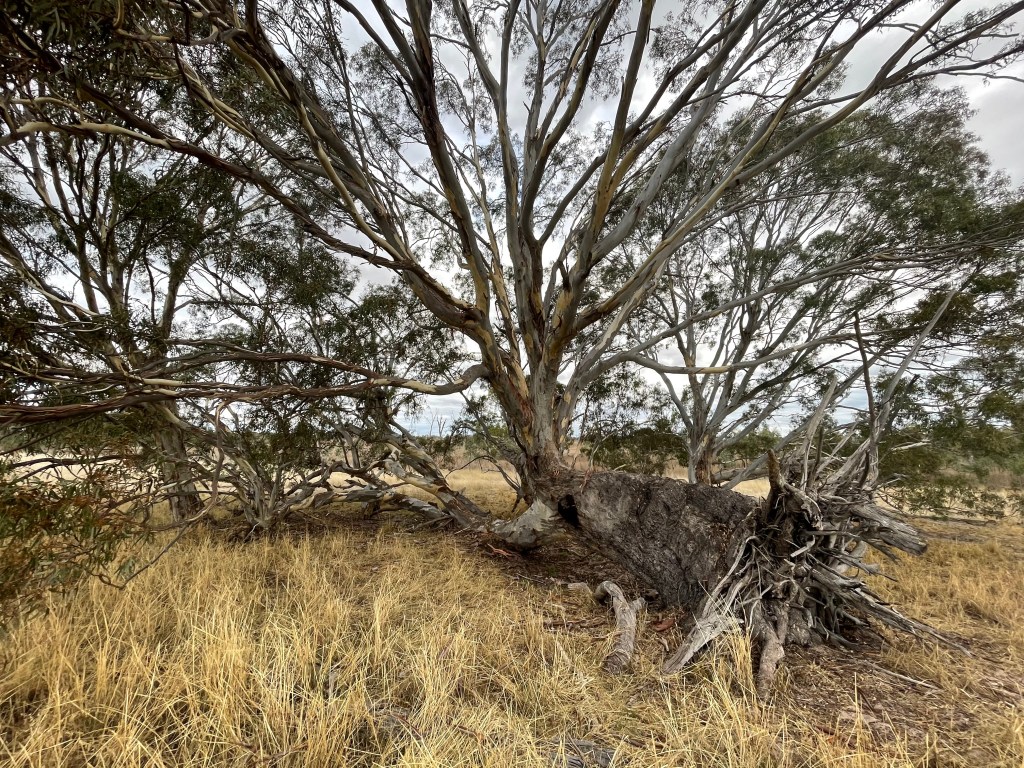
I leave the road to explore the northern bank and visit one of my favourite trees. It fell over years ago and while the exposed black roots are redundant, one side of the trunk now grows into the ground.
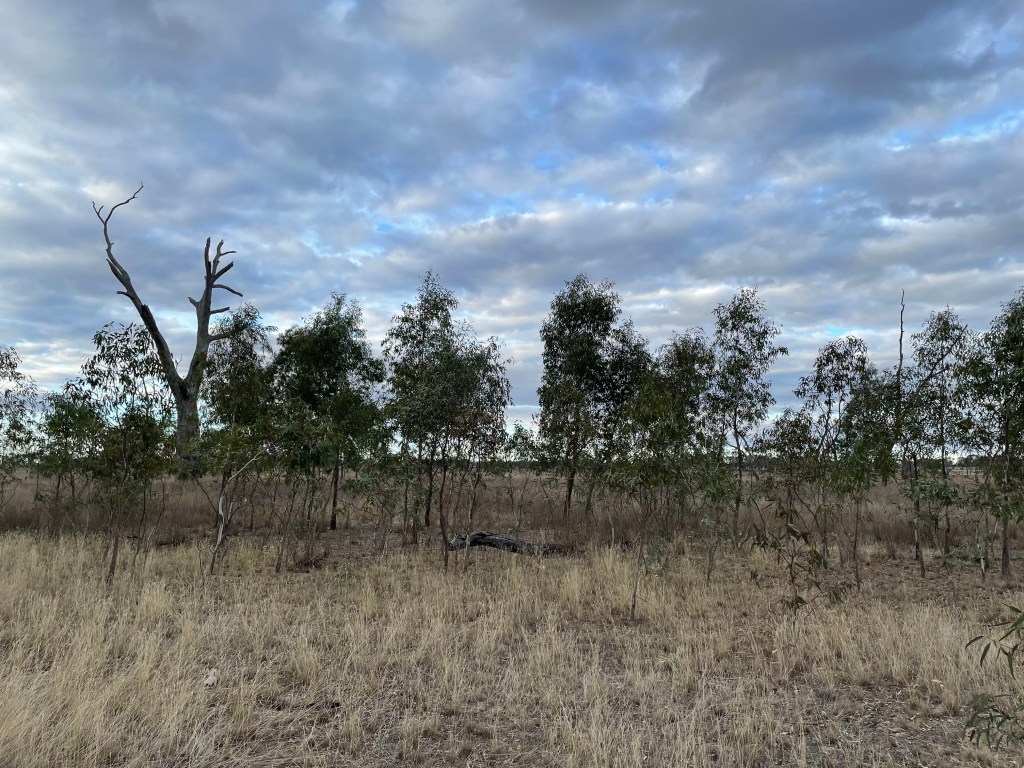
My presence sends a lone kangaroo to a cluster of saplings that emerged after the 2011 flood and grumpy cockatoos hurl abuse at me from on high. They don’t like visitors.
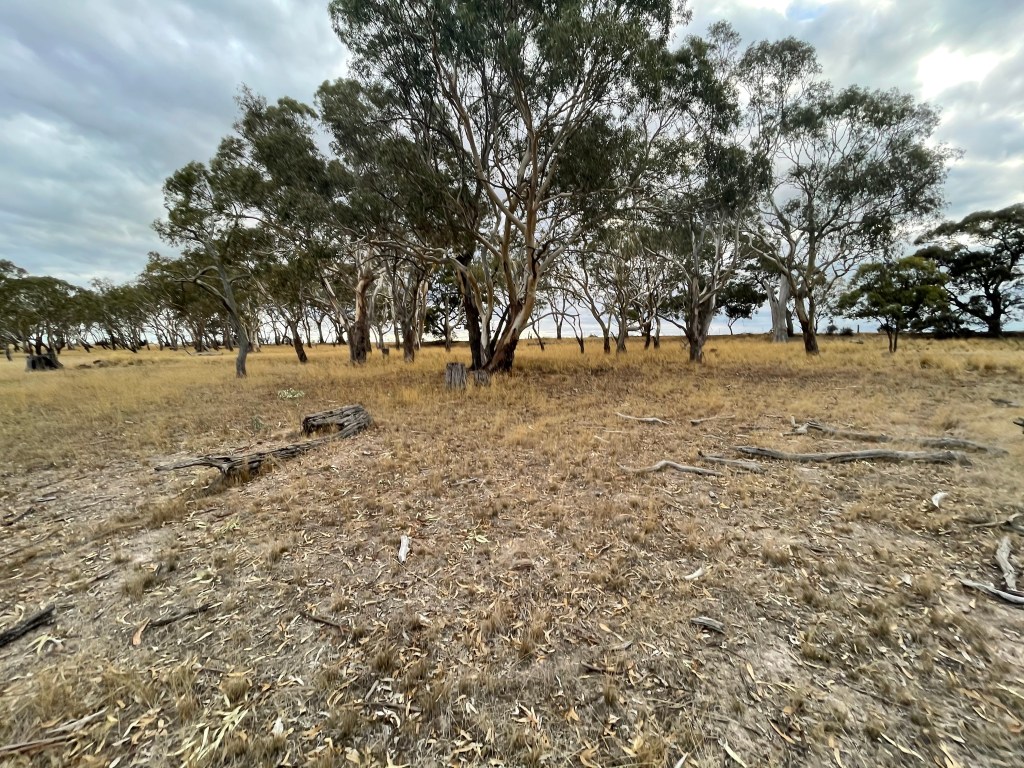
A patch of the northwest corner looks like an abandoned tennis court. Nothing grows on this high ground but you get a handy view in many directions. I pass one tree with a small scar as we head east, moving from tennis court to art gallery.
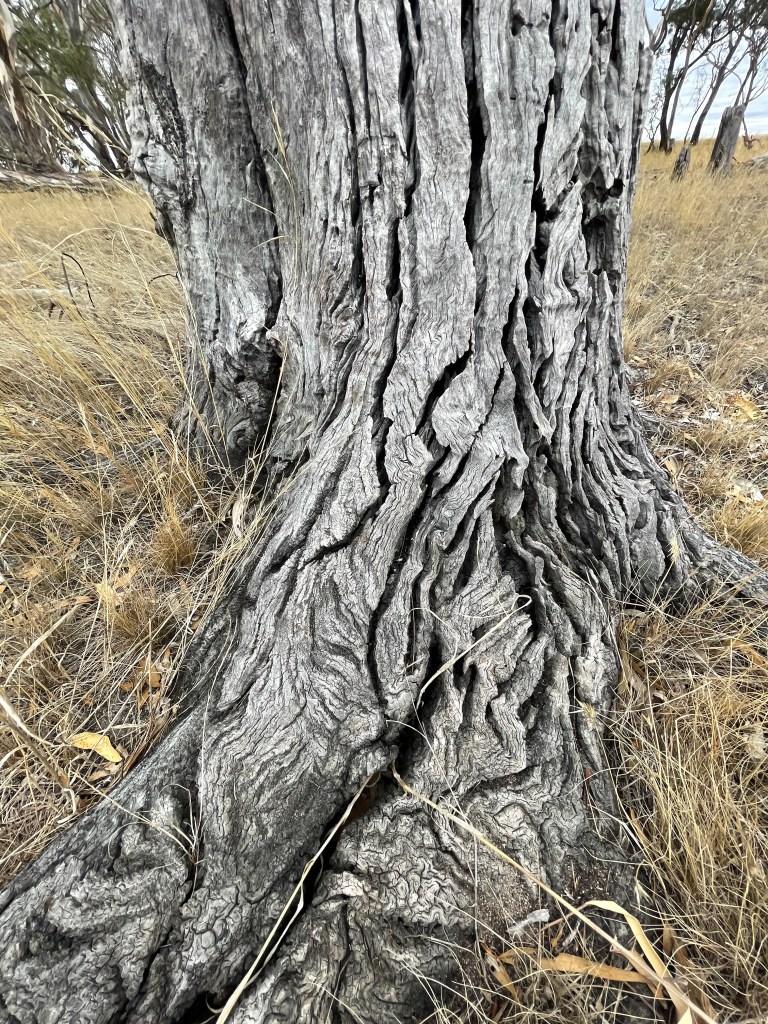
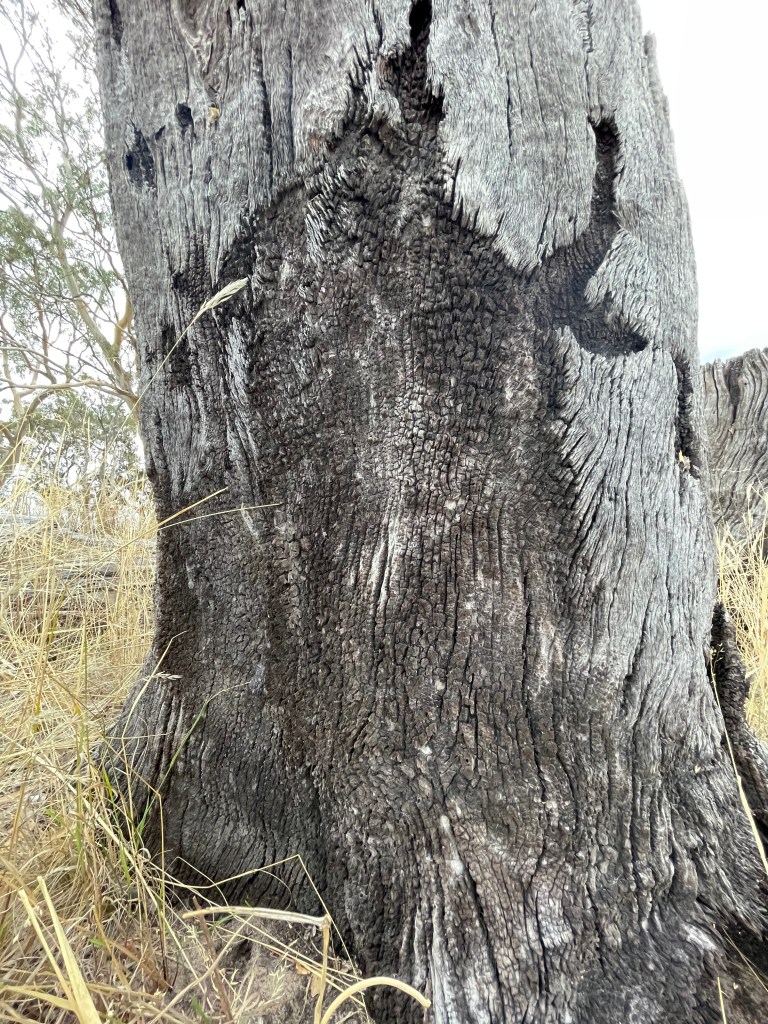
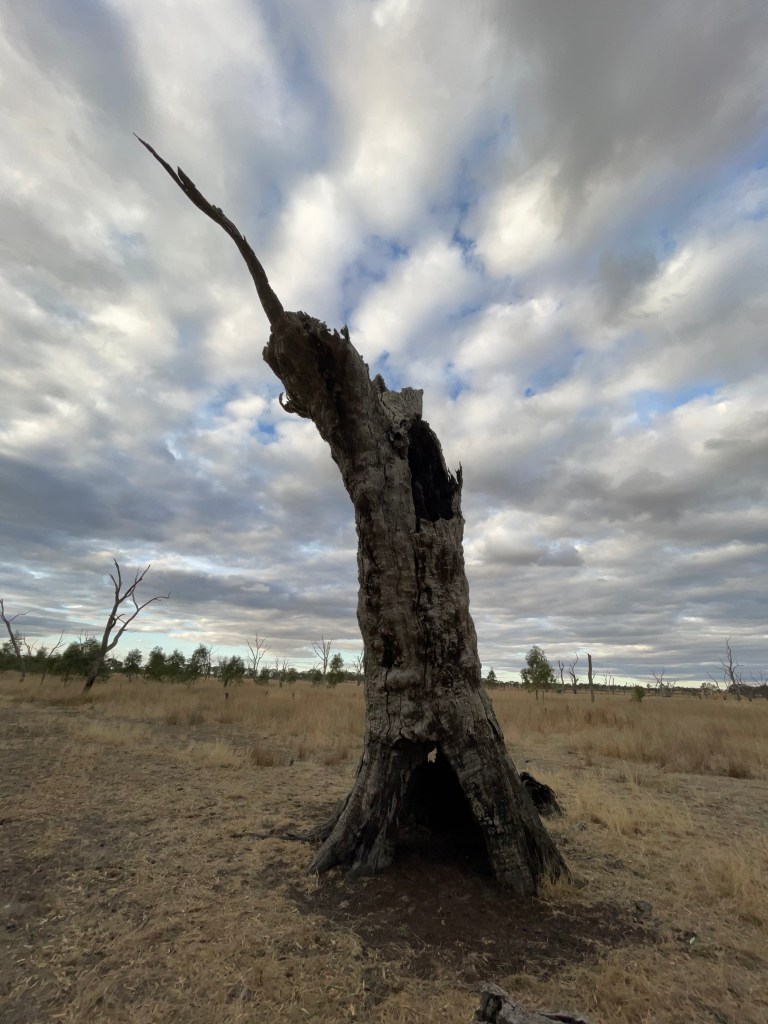
Lines on dead grey trees resemble lino cut designs, vertical tree trunks create dramatic sculptures and a stump sports natural black carvings.
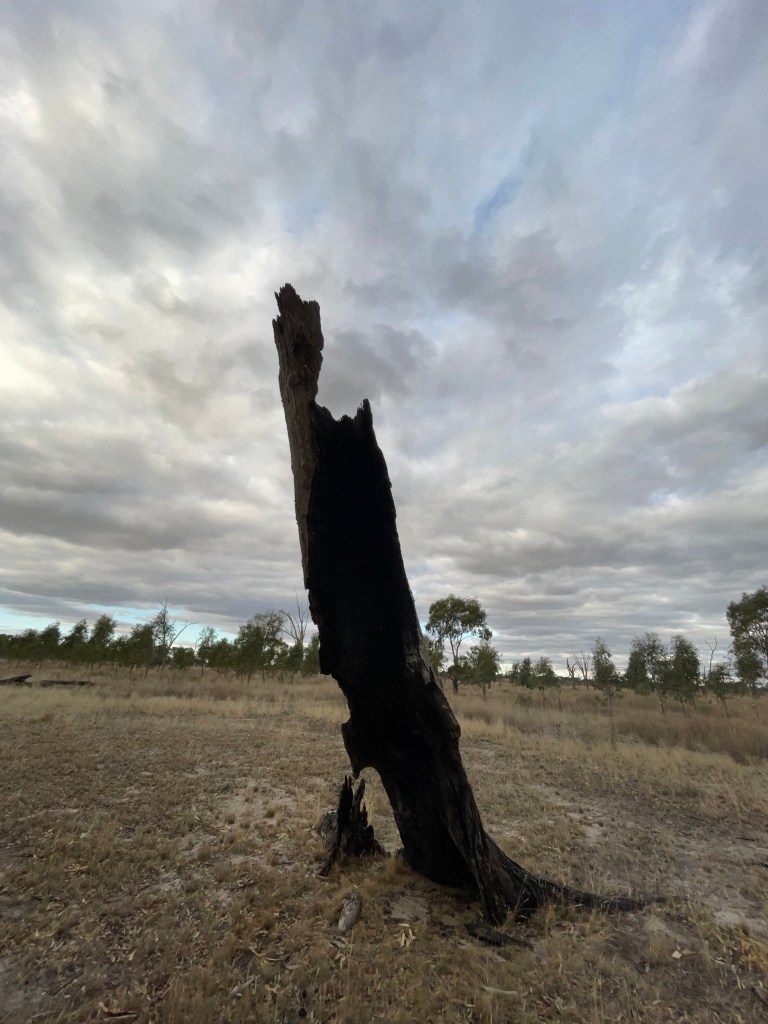
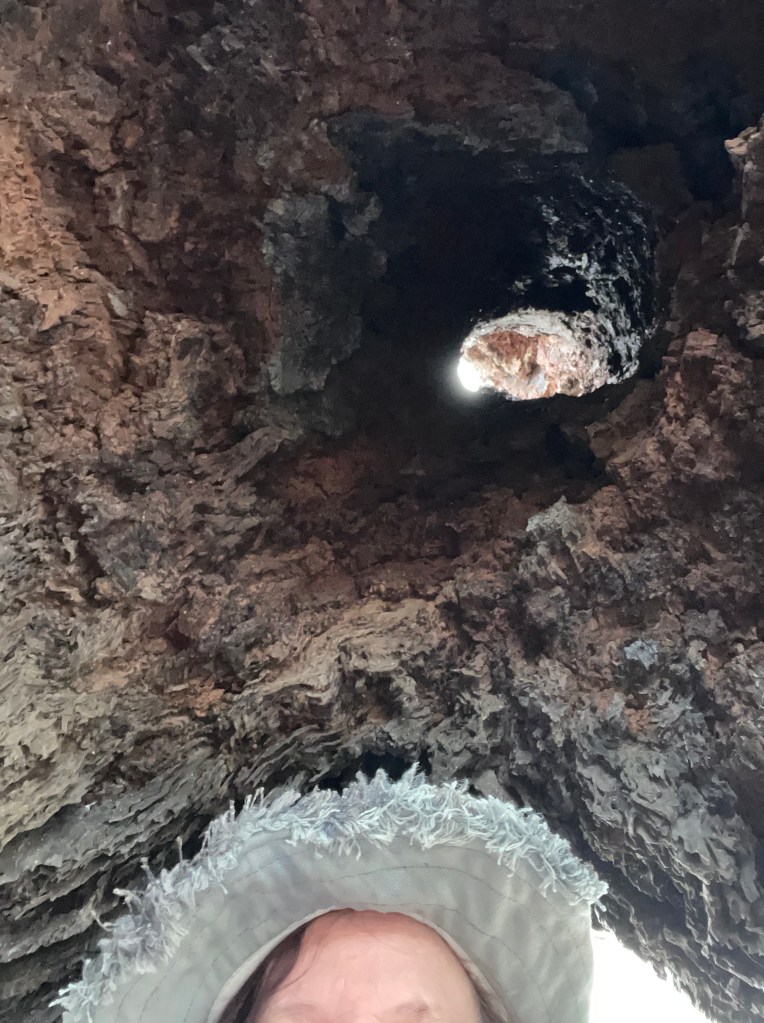
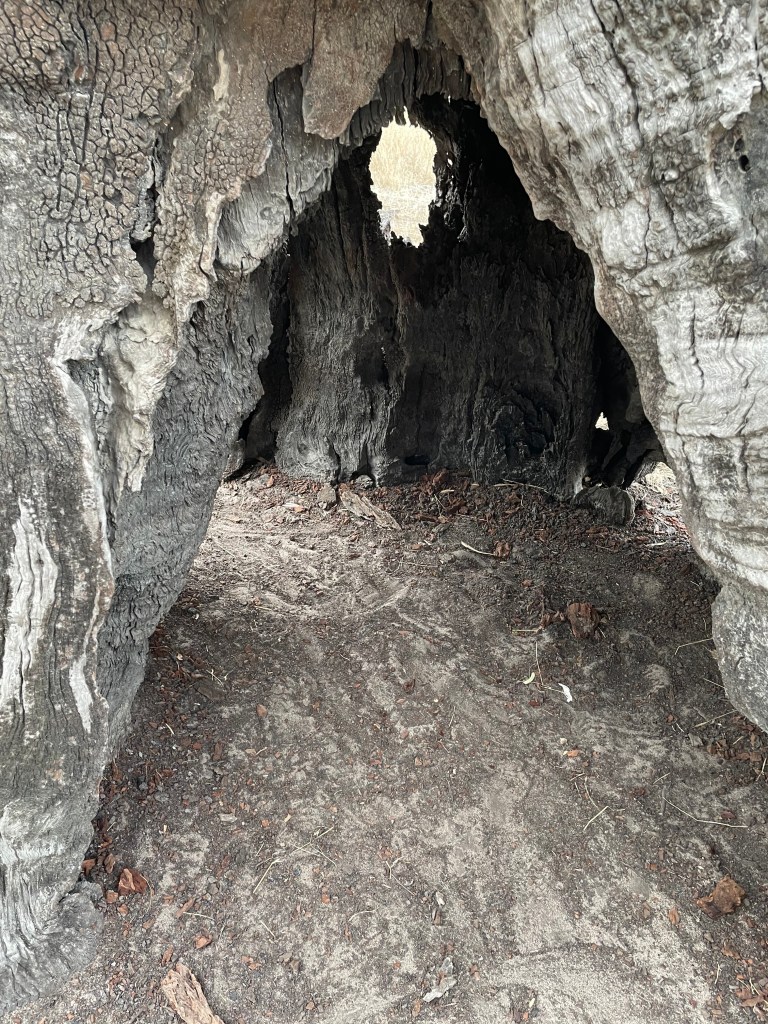
There’s a huge opening into one tall hollow tree that is almost big enough to stand in. Who might have sheltered here over the years?
There are plenty of live trees too, with graceful curved white branches that seem to be shedding their bark.

Evening is fast approaching; a kookaburra starts laughing at me and then I set the cockatoos off again.

I find another inlet creek at the southern end and more red gums, including some with scars.

The swamp’s access track is on the eastern side. In wet years this place attracts duck shooters and when it’s dry the targets are foxes.
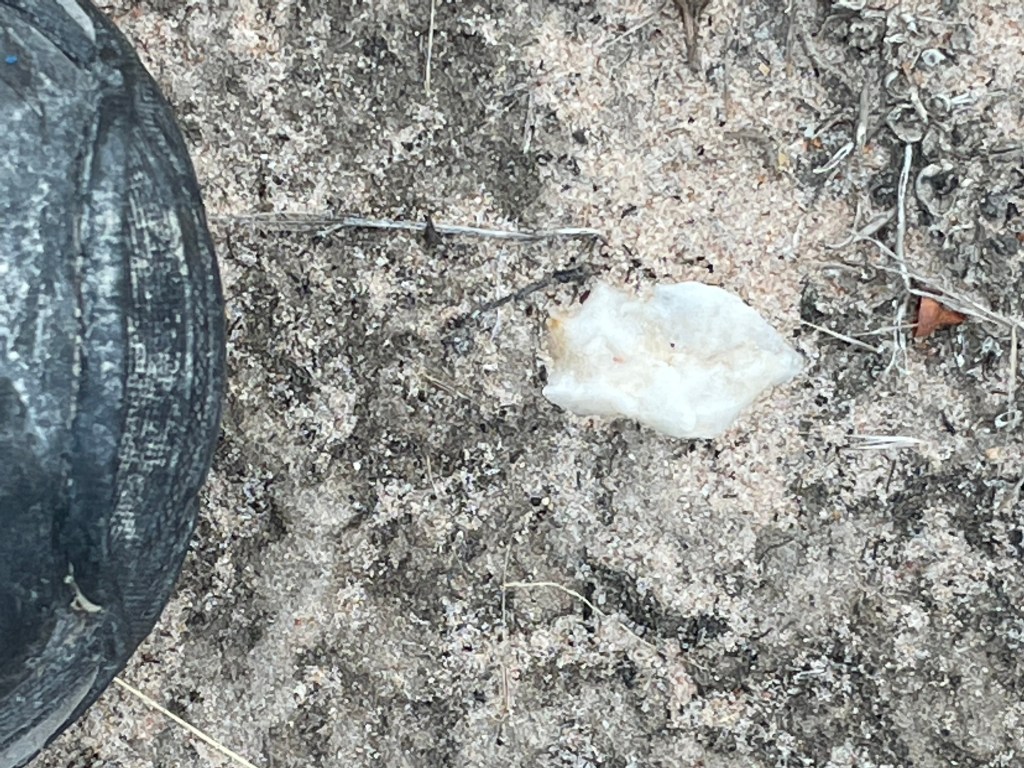
I find a few pieces of quartz in the track and some kangaroo tracks and pass a tree that burned a few years back when it was struck by lightning.
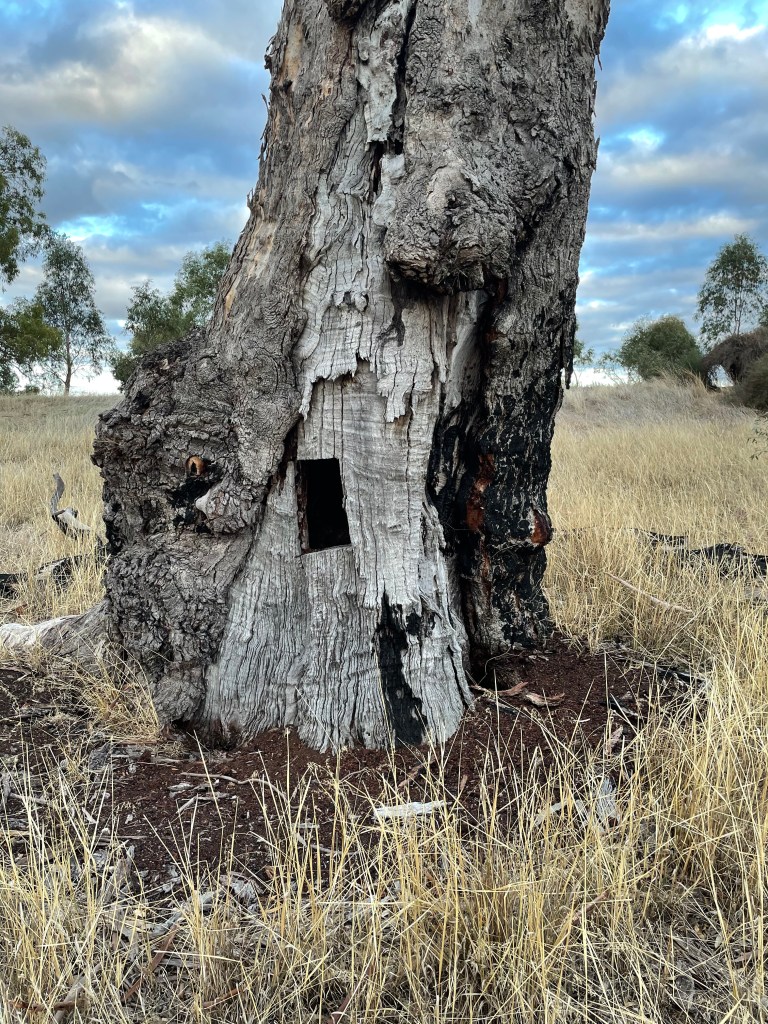
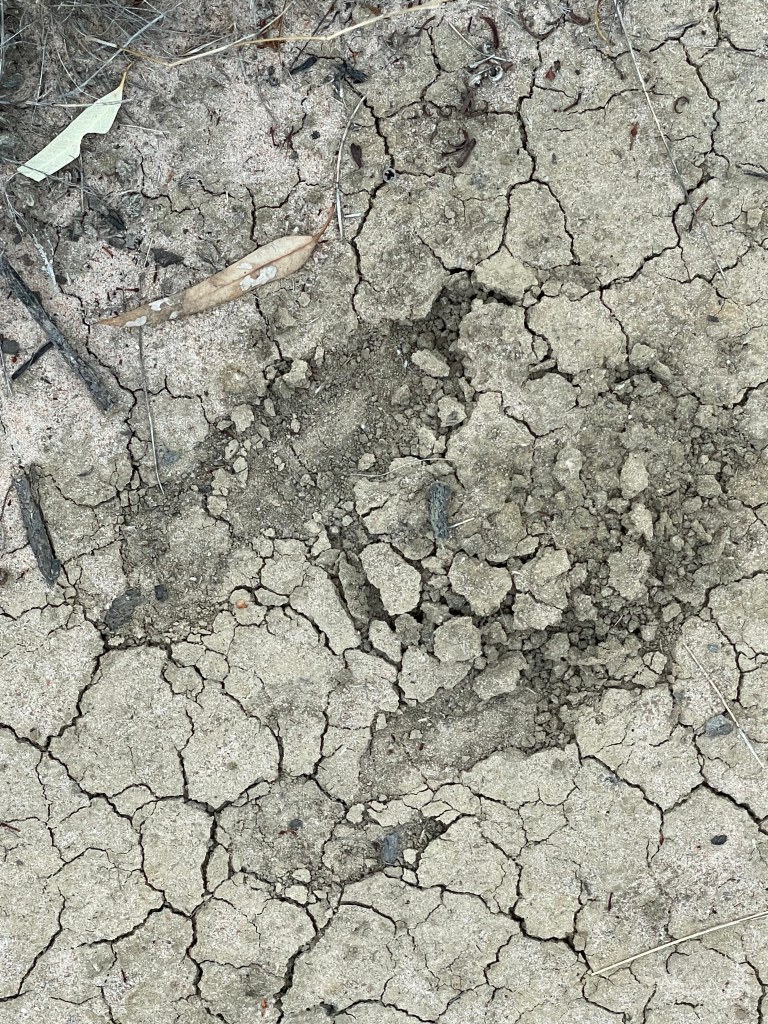
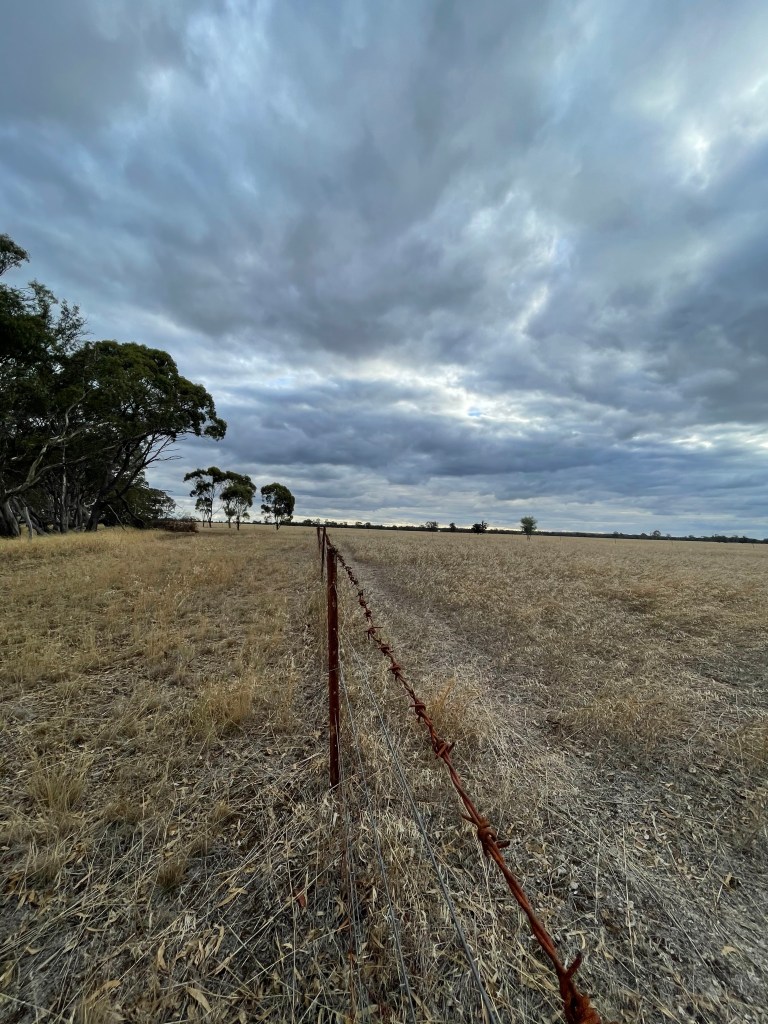
The big, grey cloudy sky gets a yellow glow on the western horizon as I reach the end of the walk, climbing through the fence to follow a lunette to Rifle Butts Road.
This sandy slope often gets willy willies that start with the rustling leaves in the red gums before swirling north as they grab unsuspecting objects in their path.
Tonight, it’s still and calm.
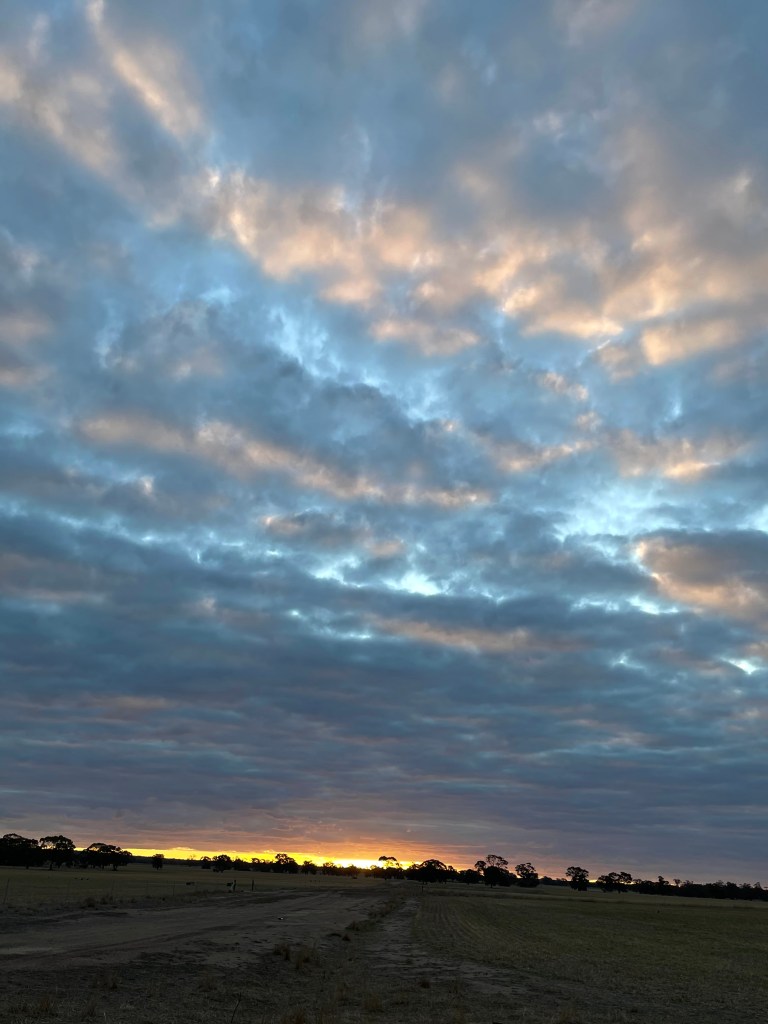
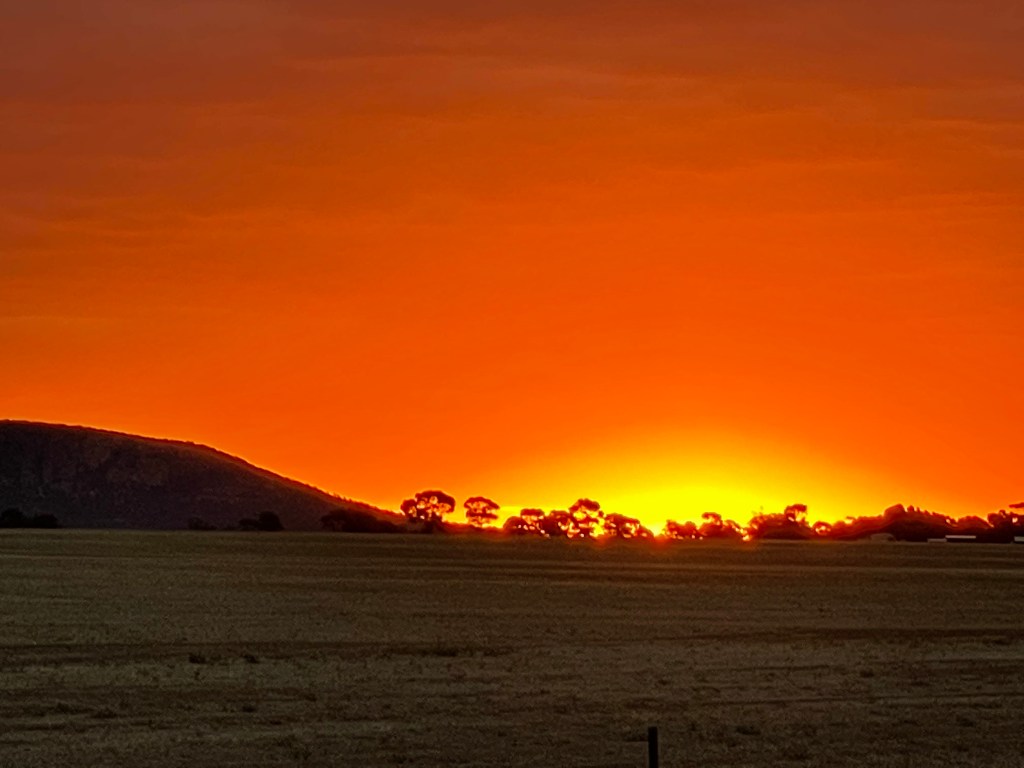
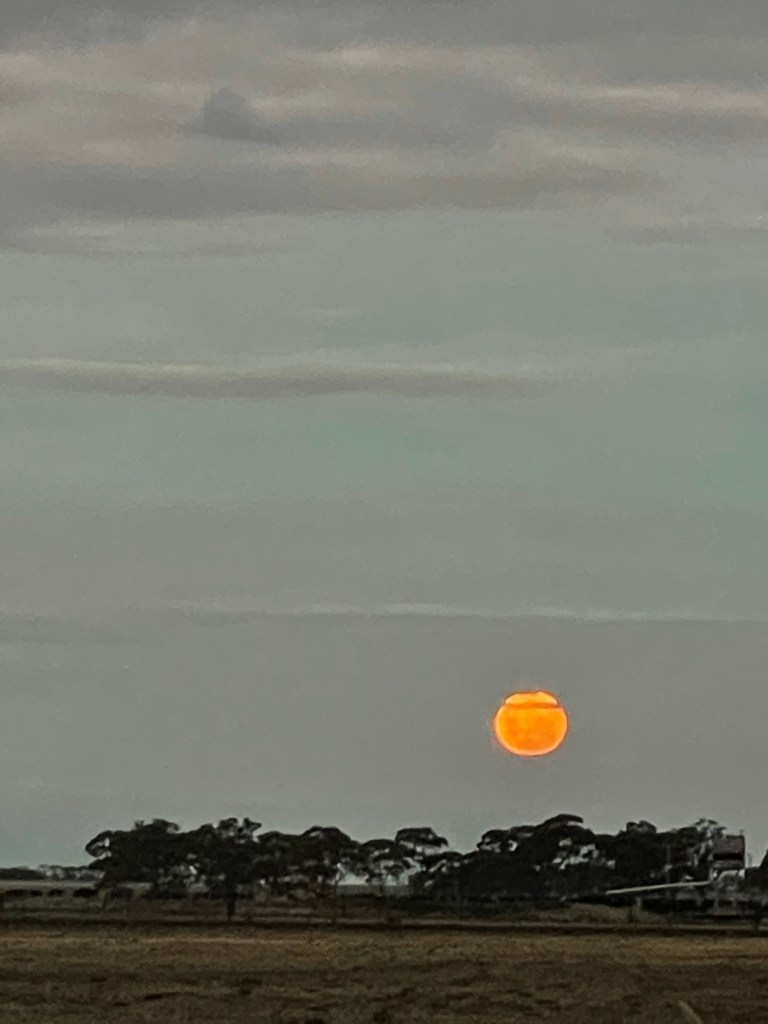
The sky puts on a brilliant orange sunset at Arapiles on drive back to Horsham and the moon smiles down over Quantong
Thanks Boundary Swamp – another great catch up, always something to see, appreciate and discover.
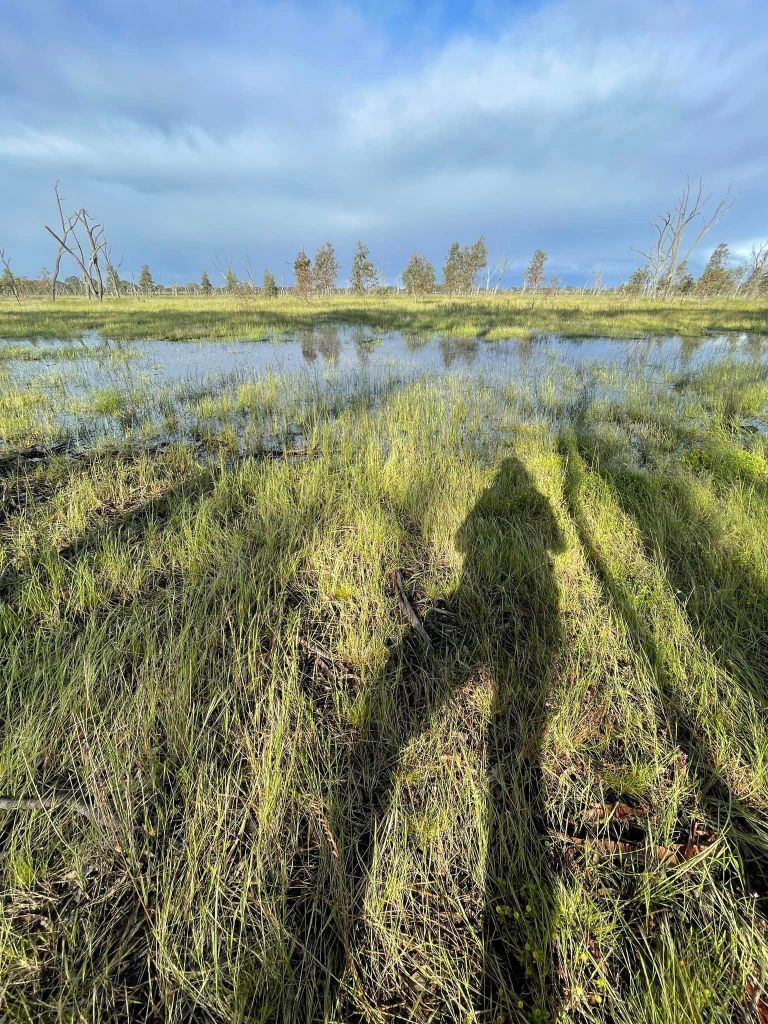
Update – spring 2022 – with water
 52 weeks 52 walks