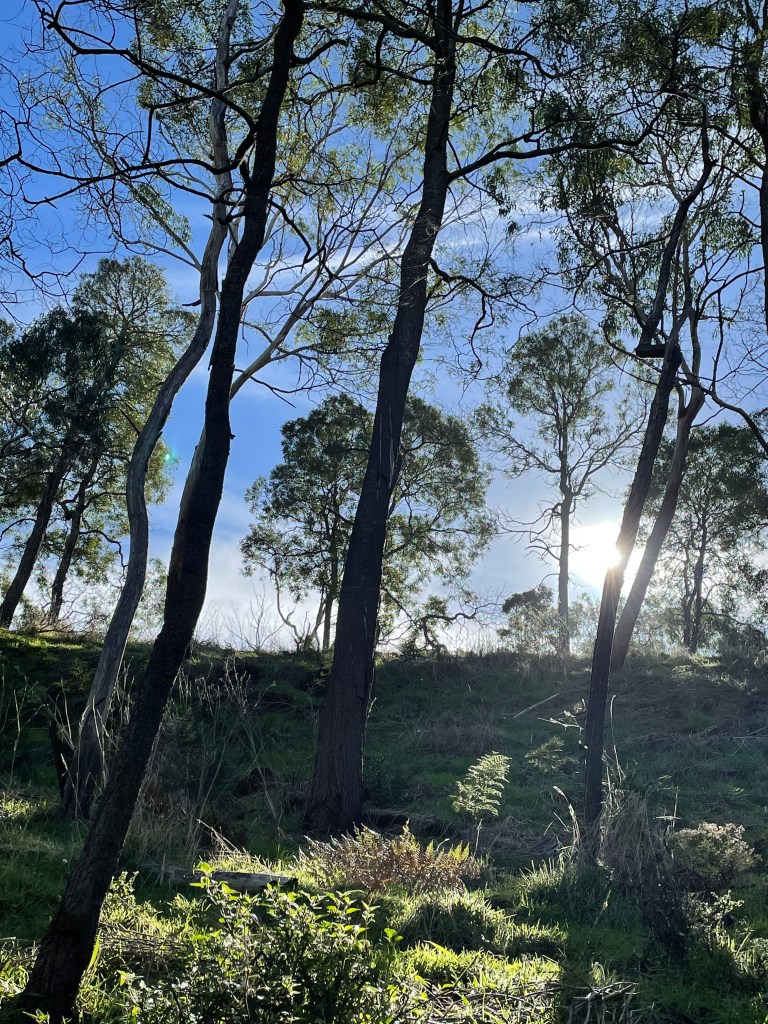
What – Budj Bim National Park
Where – 10km from Macarthur
How long – 9km walk around part of the lake and the Lava Canal Walk
In 10 words – Place of adventures, memories, tranquility, beauty and (sadly) burnt trees
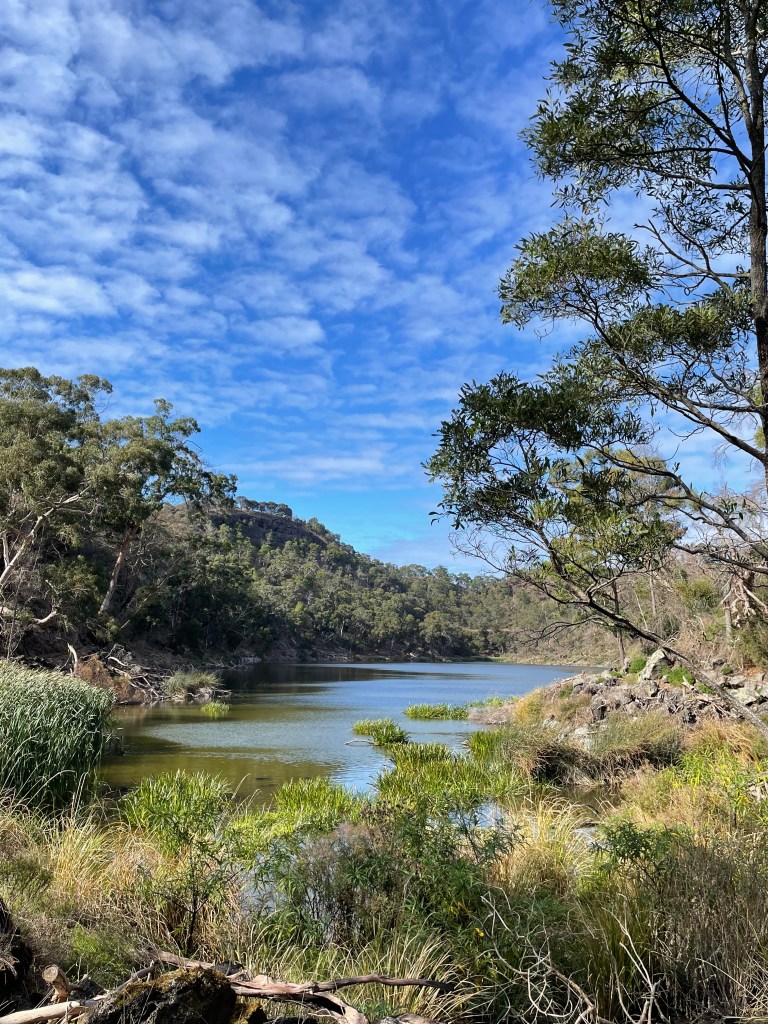
Budj Bim National Park, formerly Mt Eccles, is my favourite place.
It is 10km from the house of my childhood and has been a much-visited destination of inspiration, adventure, celebration and mountains of marvellous memories.
As a 6-year-old I stood at the crater searching for koalas who had been released to the bush – their arrival coinciding with the impending loss of resident tiger quolls – who progressively fell victim to predators including unhappy chook owners and foxes.
We regularly picnicked, barbecued and walked at Budj Bim. I also painted landscapes, explored caves and got married there.
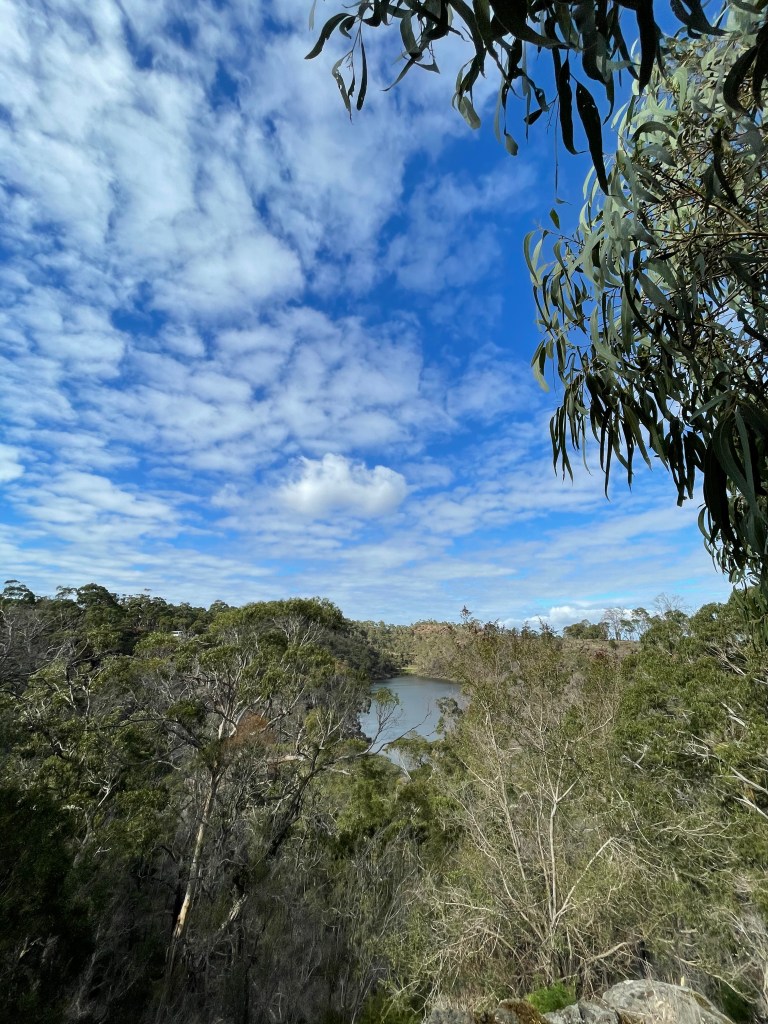
Obviously we are not the only one to be captivated by this magical place. Gunditjmara have walked its rocky landscape for years – 1000s of them.
Among their Budj Bim stories is a very old one – possibly dating back 37,000 years.
It tells how Budj Bim was one of three giants who roamed the southern part of Australia. One day he crouched down and was transformed into a volcano and his teeth became the lava the volcano spat out.
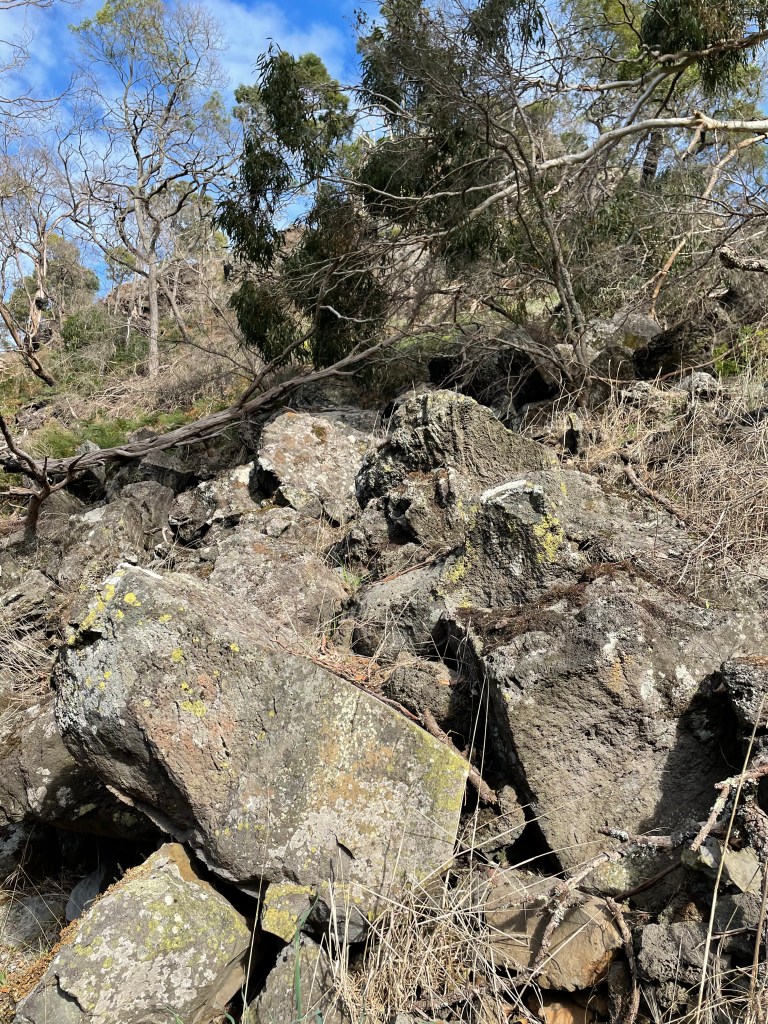
Budj Bim’s eruption formed a spectactular stony landscape that stretches from the mountain previously known as Eccles, through the National Park, along a couple of creeks and swamps and down to Tyrendarra and the sea.
This has been a long week and today I feel rather tired – so what better way to cheer up than by heading ‘home’ and reconnecting with Budj Bim’s and his ancient handiwork.
We start at the lookout area and picnic shelter which dates back to the 1930s So many photographs taken here, sausages burned on the barbecue and tentative steps taken down a very steep path that once led from here straight down to the lake.
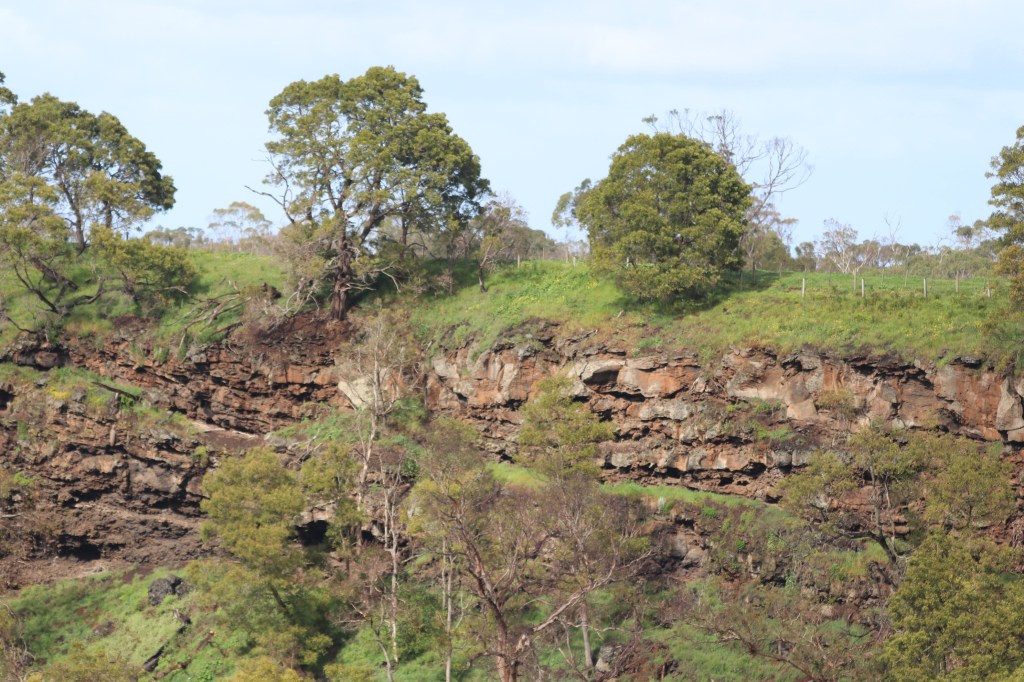
Safety issues probably saw the demise of this path but stories about it live on.
When wells went dry in drought times early settler Mary Anne Broadwood would head down the steep path – a load of washing in hand – and washing clothes in the lake, drying them on the rocks at its edge. Decades later one overdue pregnant apparently walked up and down the steep path try to bring on labour.
With no hint of the steps remaining, I head down a more gentle grassy path to the northern end of the lake.
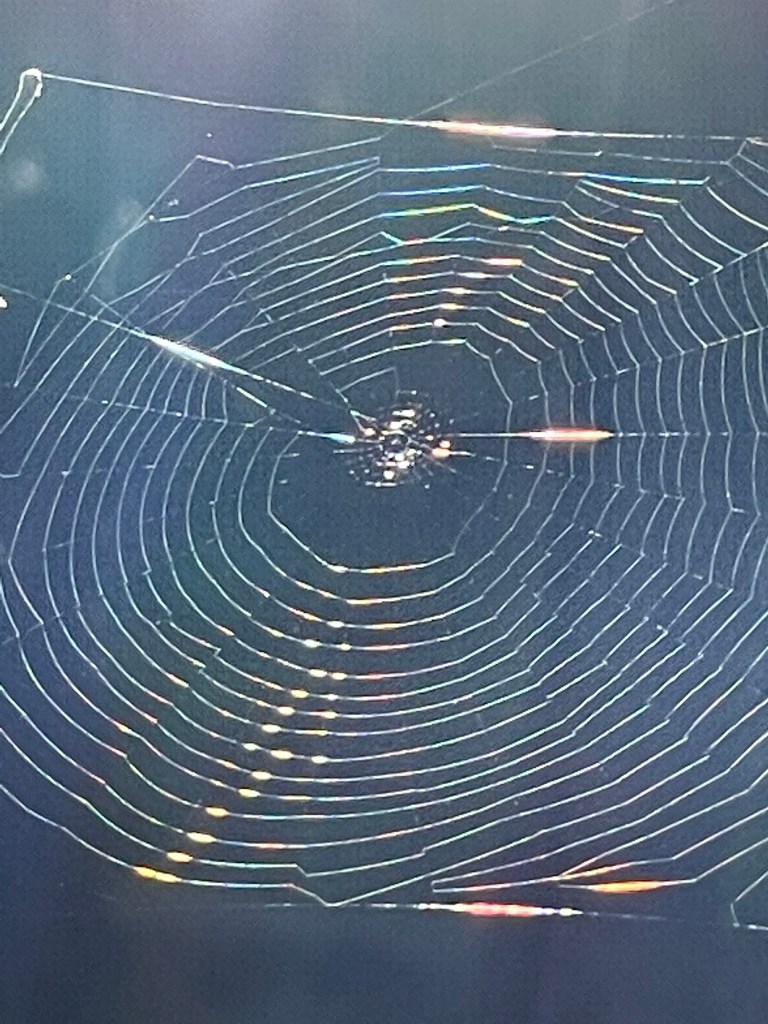
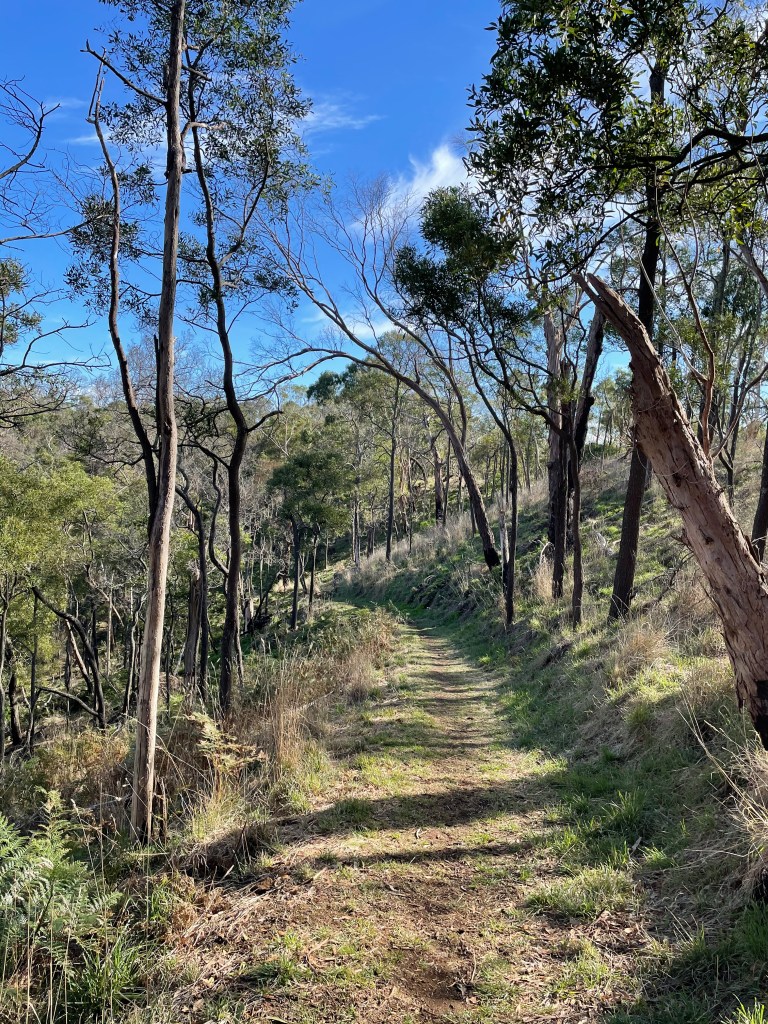
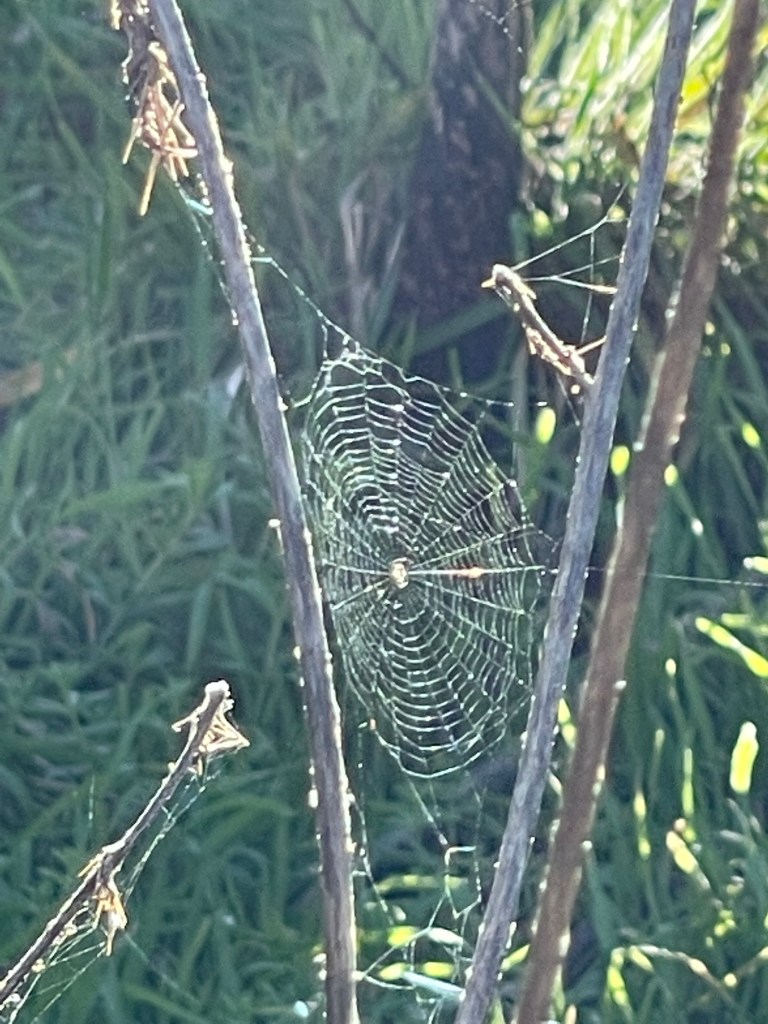
The birds are in fine song, wallaby eyes stares silently at me from behind thick braken and the morning sun spotlights tiny spiders webs.
This bit of the park is vintage Budj Bim – lush, peaceful and with a familiar damp, earthy smell . I am transported back to my childhood.
The lake looks low today, something that’s happened over the past few decades as well as more bouts of blue green algae.
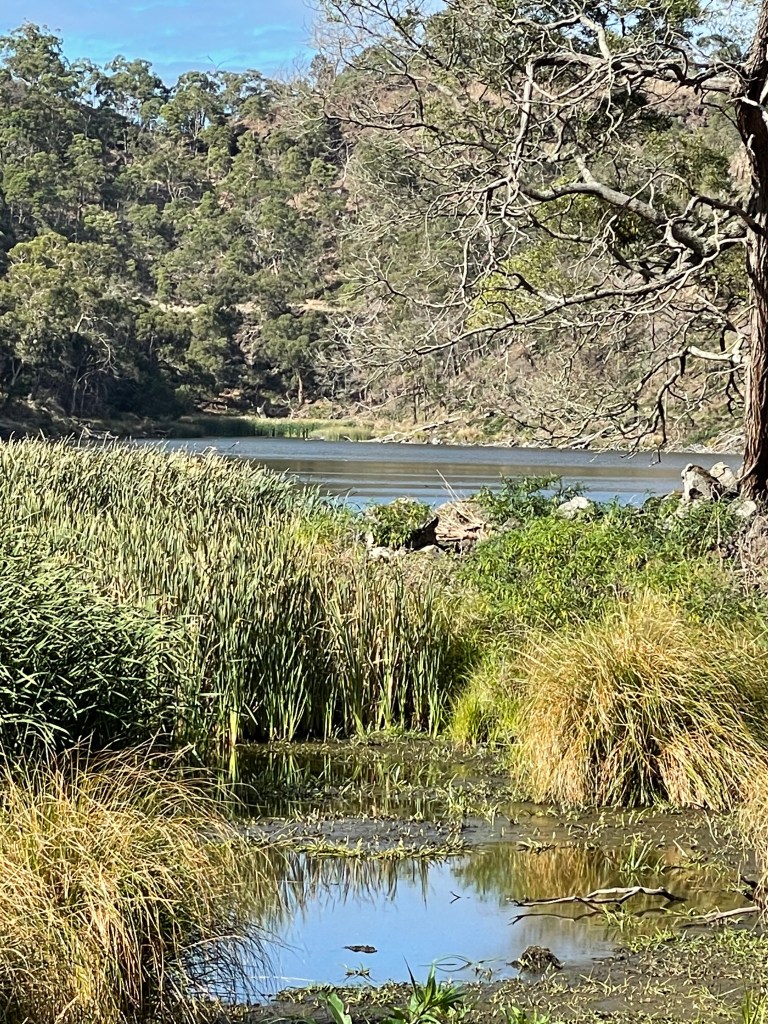

After many years visiting, photographing and painting this lake I notice the reeds have exploded at the end of the lake.
Look how few reeds there were in the 1960s painting by Port Fairy’s Irene Bartlett.

It was during one of my own painting sessions that I came face to face with snake walking up the path from here to the cave. No snakes today but no path either – this one too has been lost to the bush.
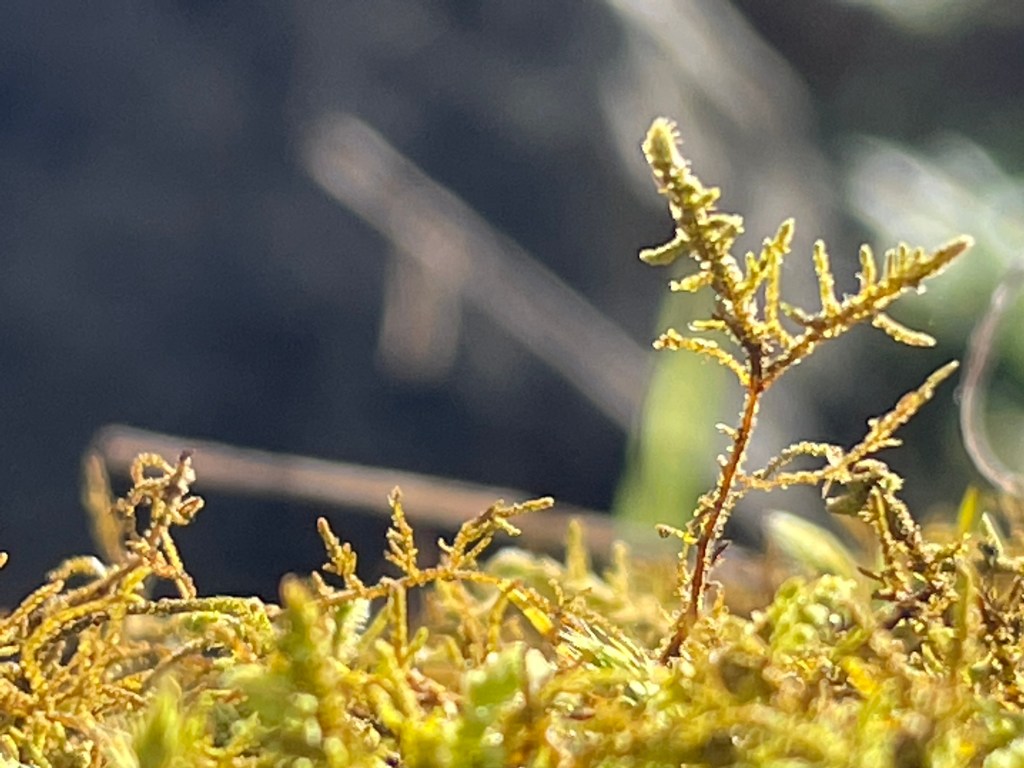
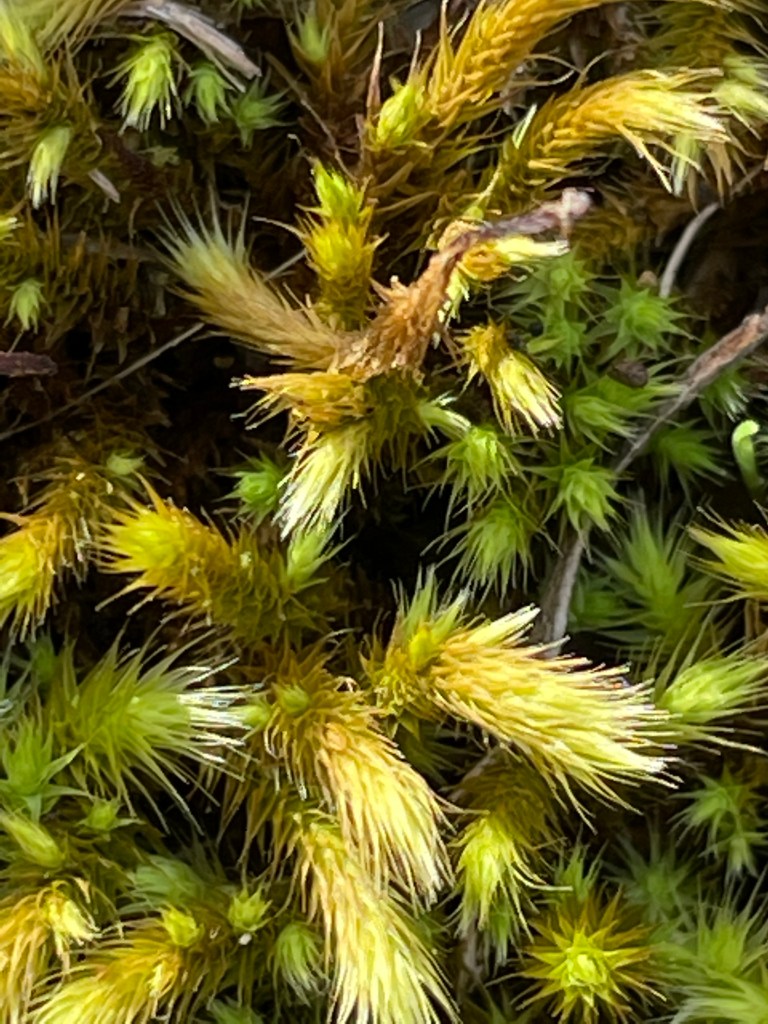
I retrace my steps, checking out some pretty awesome mosses on the way up, and then head towards the cave, stopping at the lookout along the way.
Much of the view is now blocked by trees and the 2019 fires have burned access steps to the caves so it is off limits too.
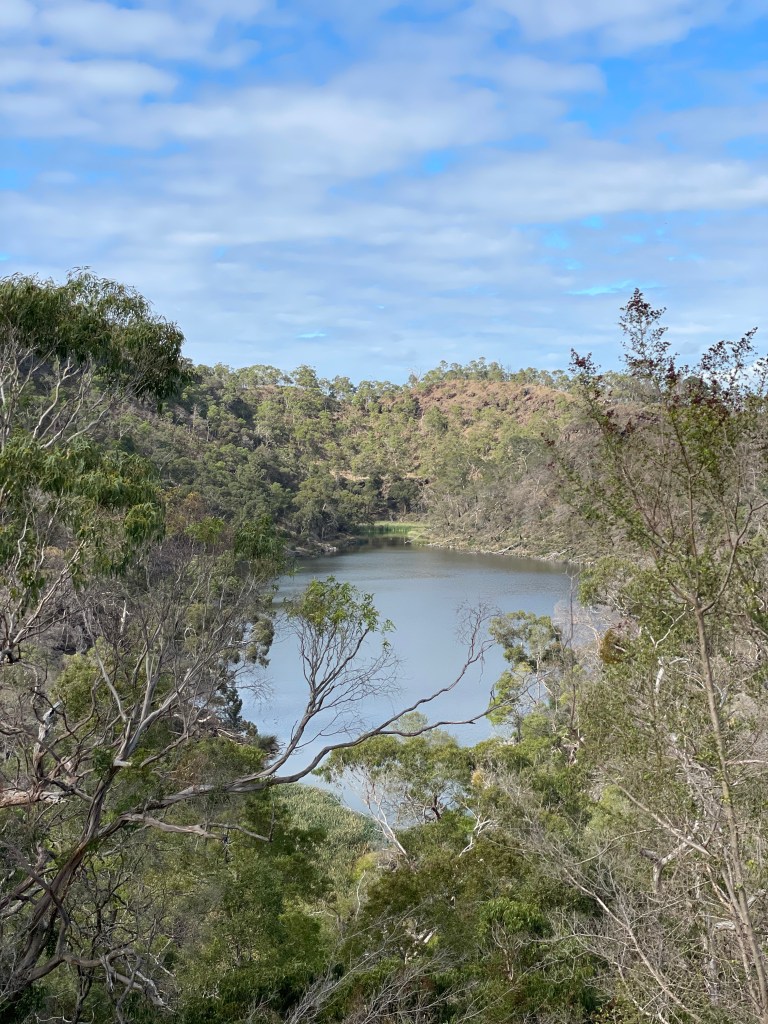
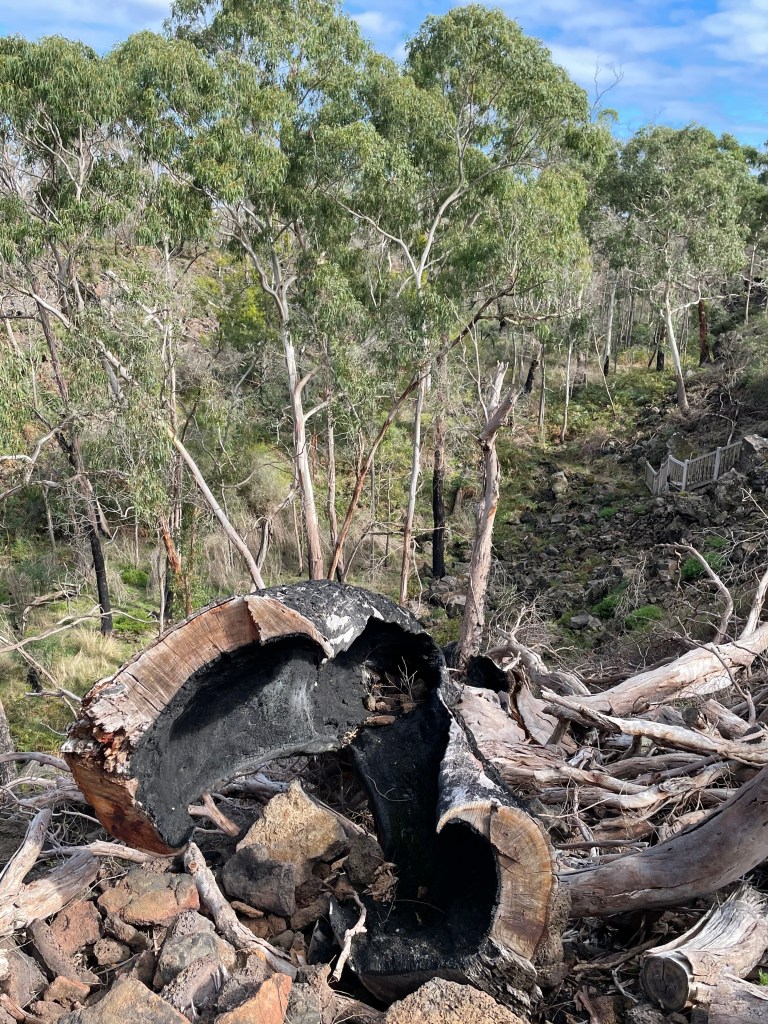
Two years on and poor Budj Bim is still licking his wounds.
I double back again and follow paths beside the camping ground and along the park boundary towards the Lava Canal walk.
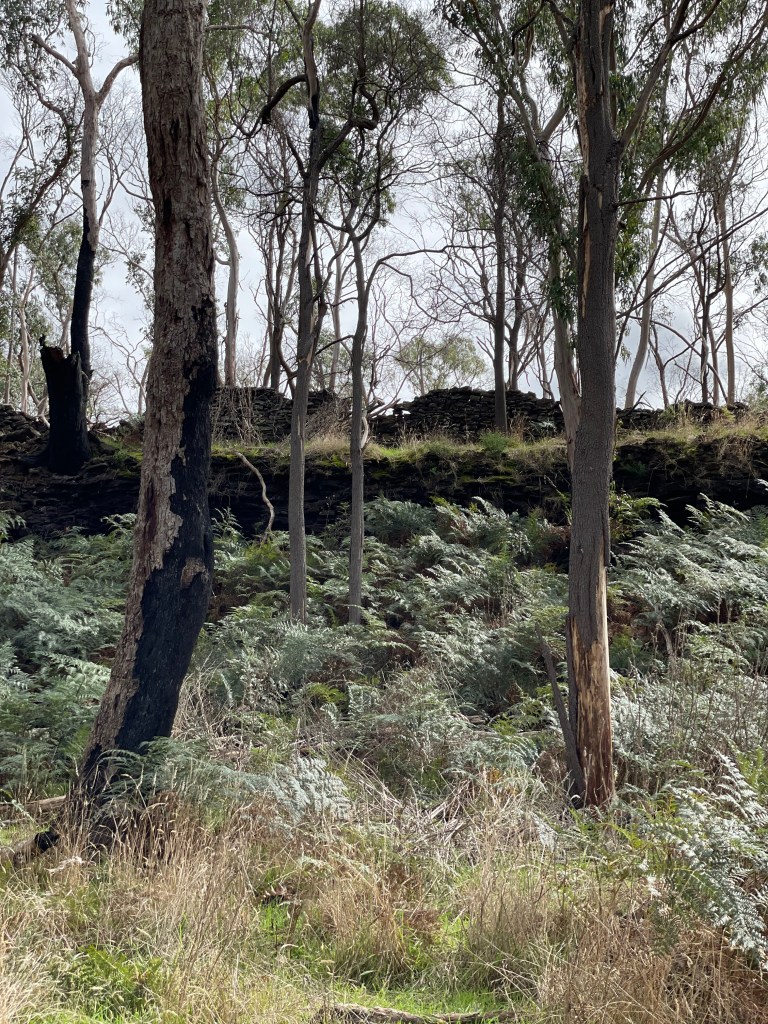
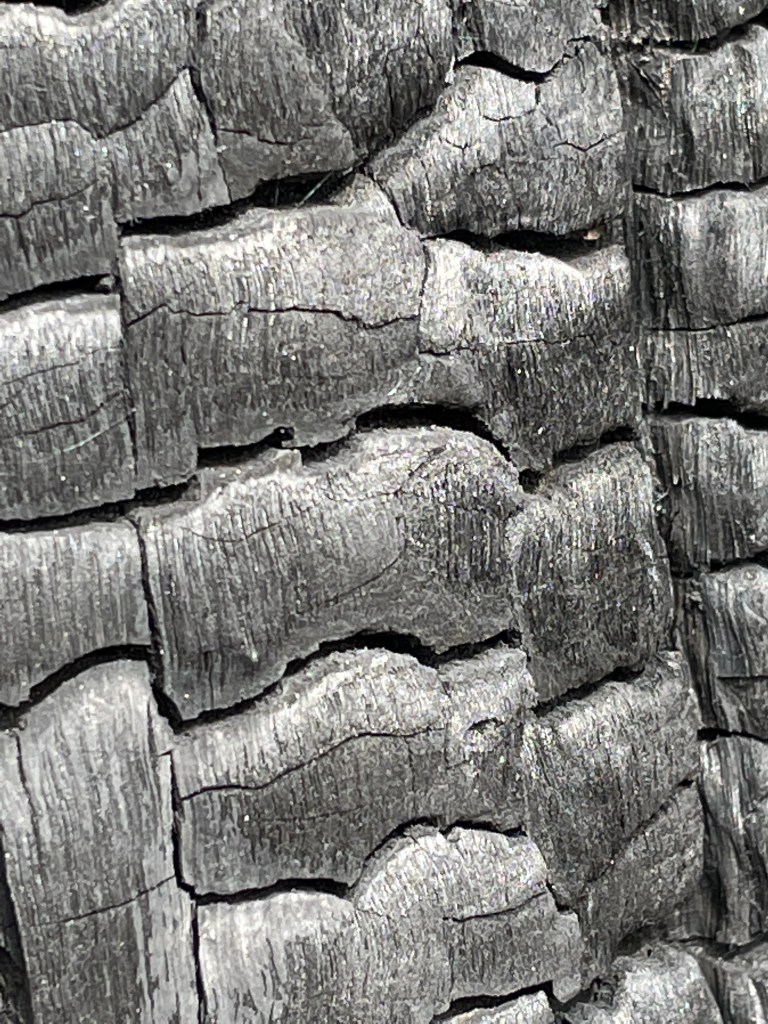
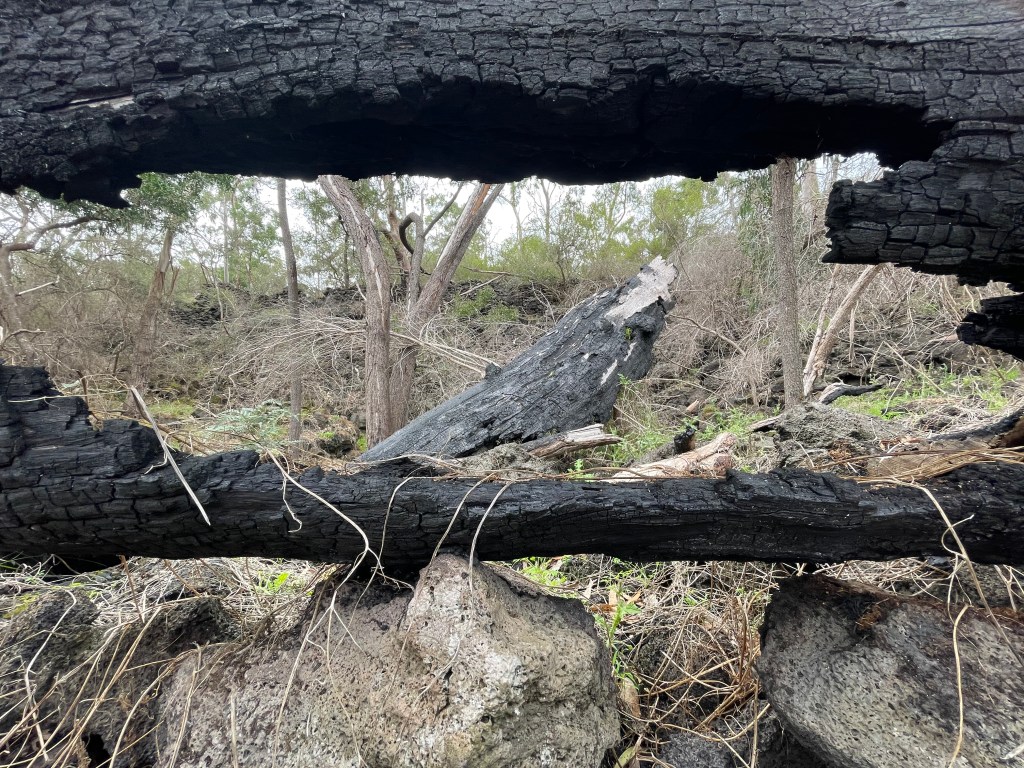
You start to get a real sense of the fire’s impact. Lush bush is replaced by a mess of grey and blackened limbs which stretch as far as the eye can see. Sooty tree trunks resemble tyre tread while others are caste on the ground, with roots defiantly clutching rocks and soil.
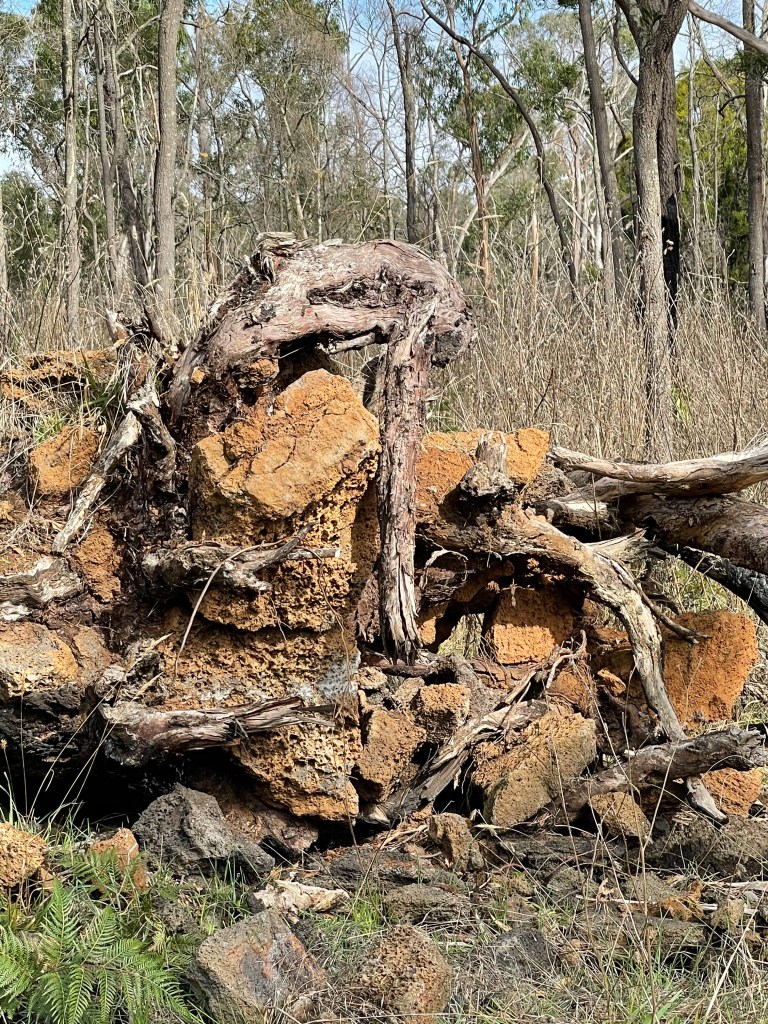
Wimmera farmers talk of red dirt, but this track holds the red dirt of my childhood made 37,000 years ago with compliments of Budj Bim’s teeth.
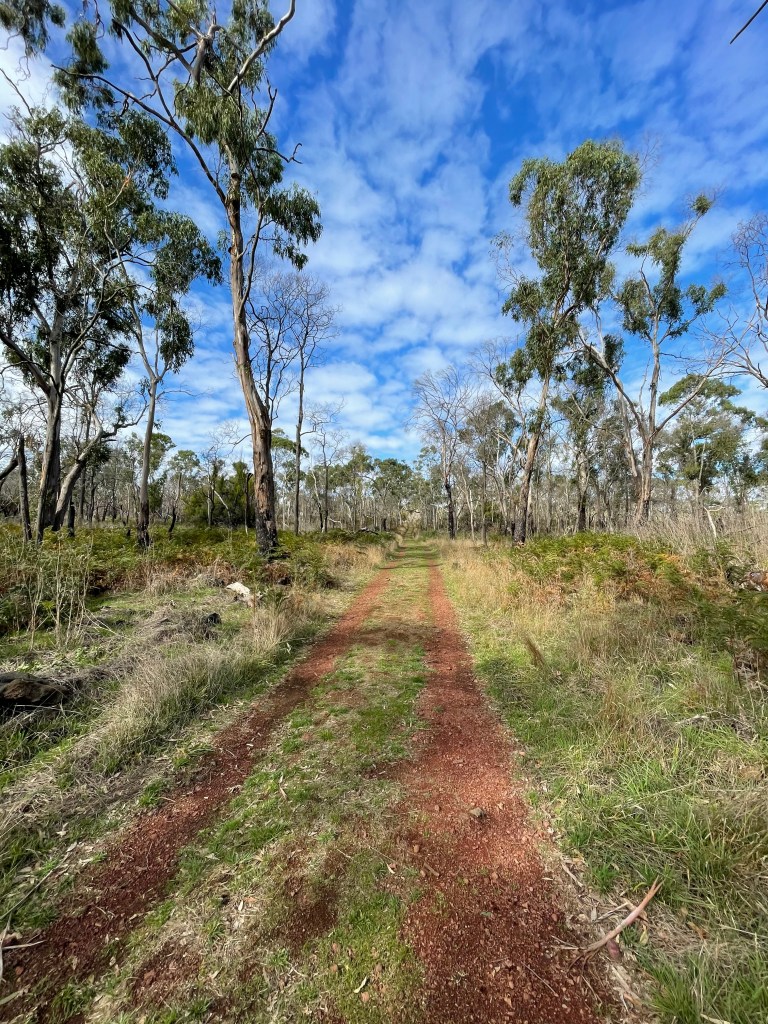
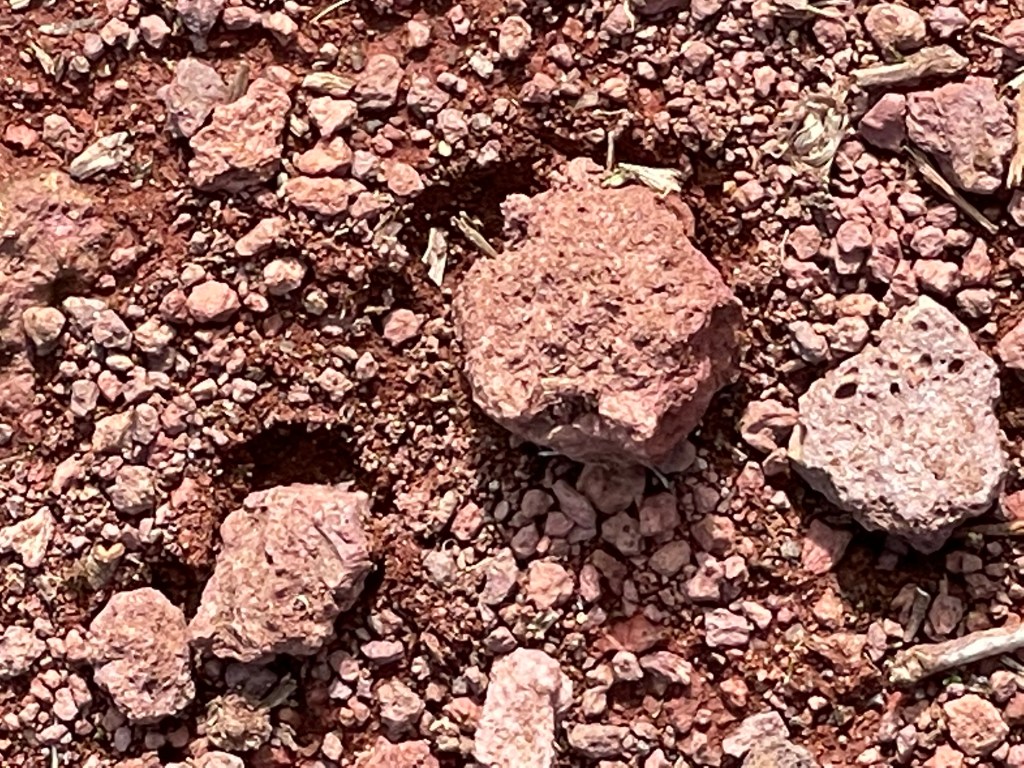
I soon reach the Lava Canal which is up to 100m wide and bordered by high walls.
I am suddenly a human boat sailing – or bouncing – along the sea of stone that stretches pretty much from here to the sea.
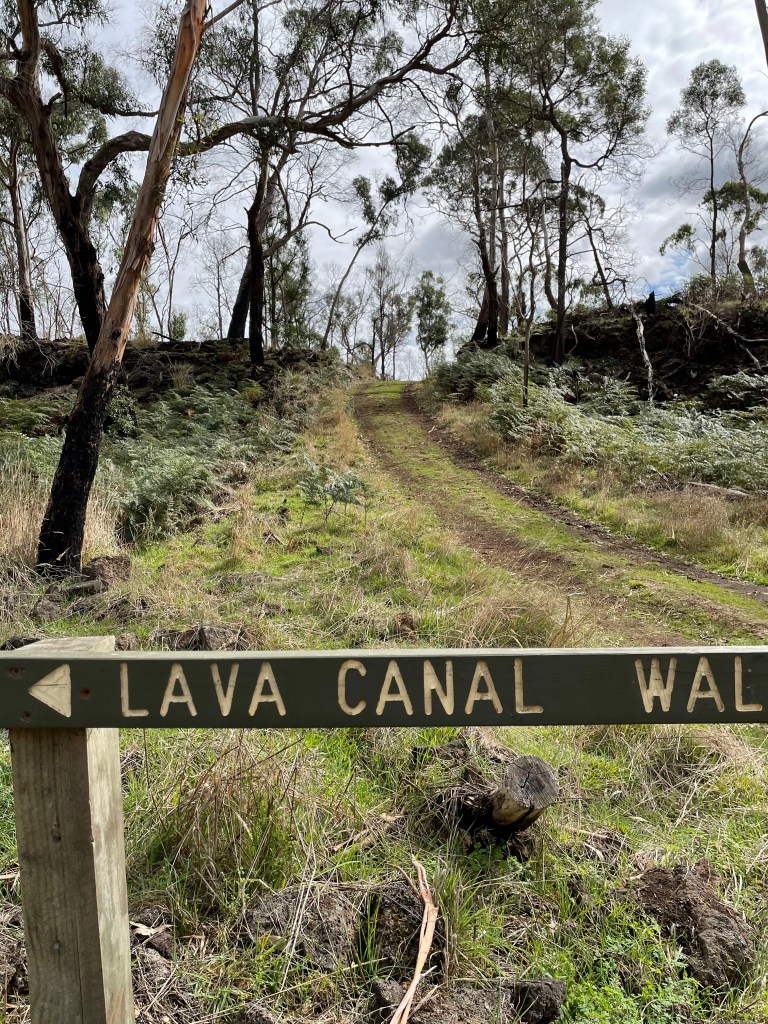
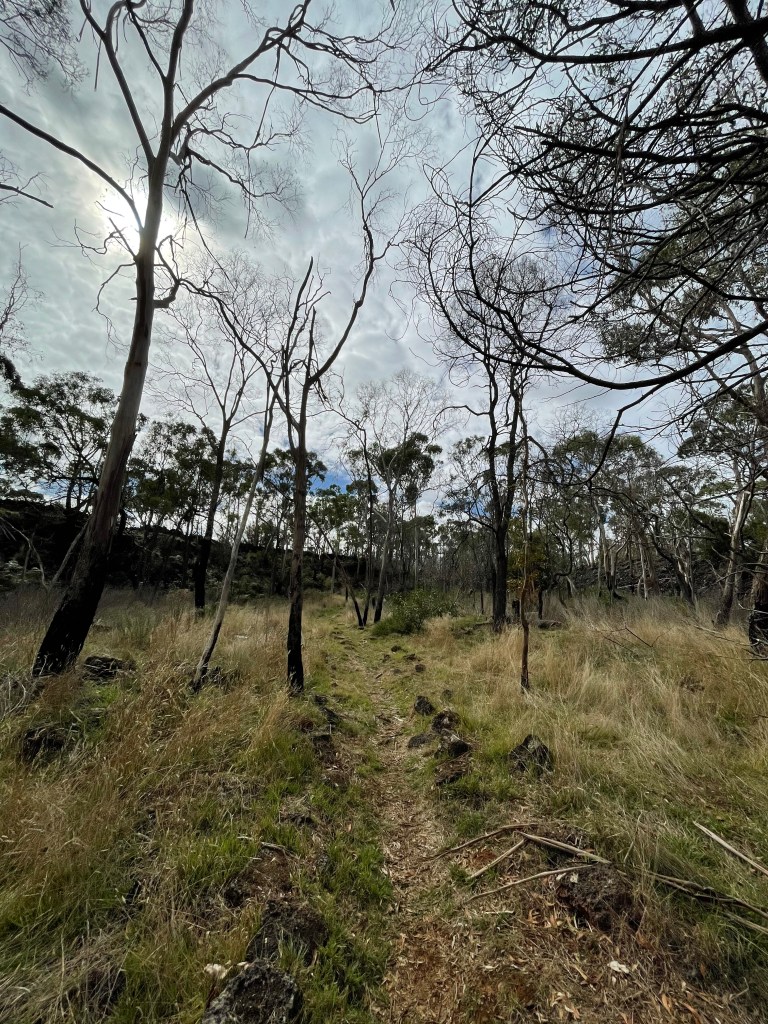
It is a sheltered and almost eery place with very little wind, a warmer temperature and dead quiet.
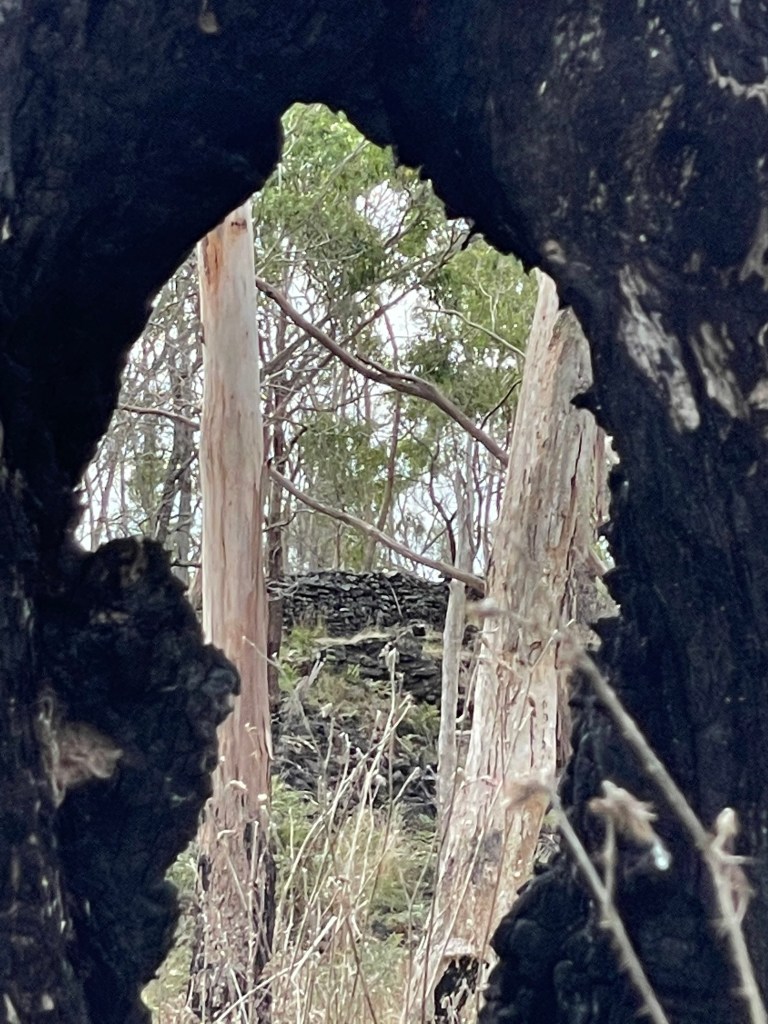
Of big walls can’t stop the fire which has torched the trees and undergrowth, exposing the full extent of this rocky this landscape including some wierd “faces” watching from the wall.
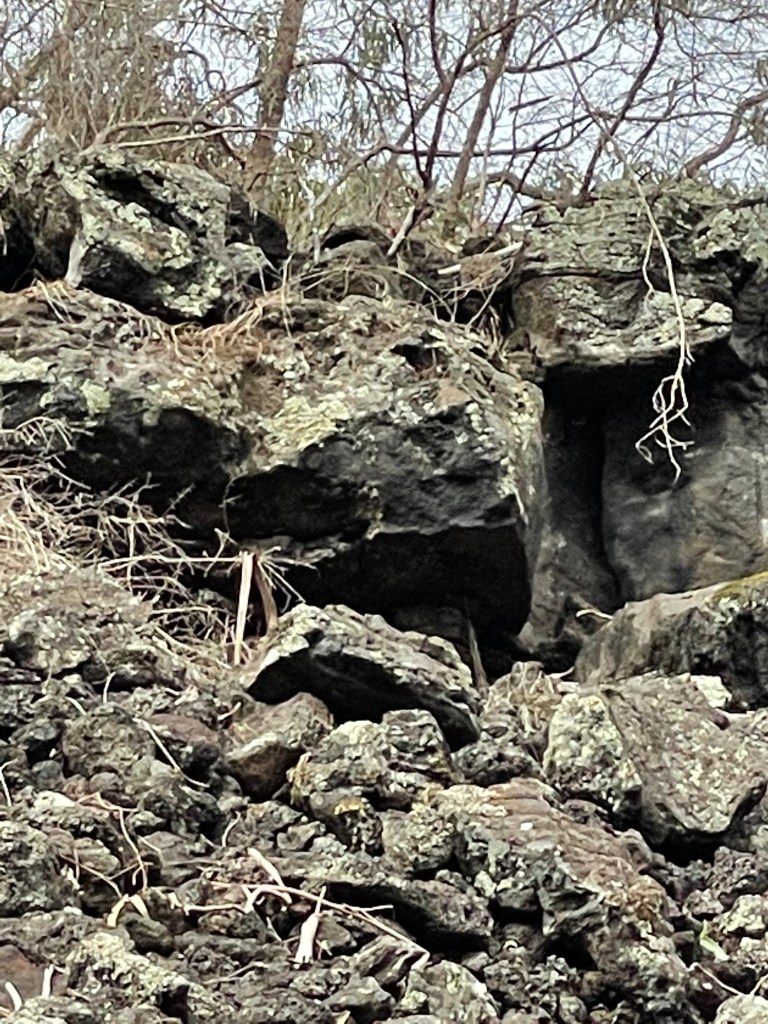

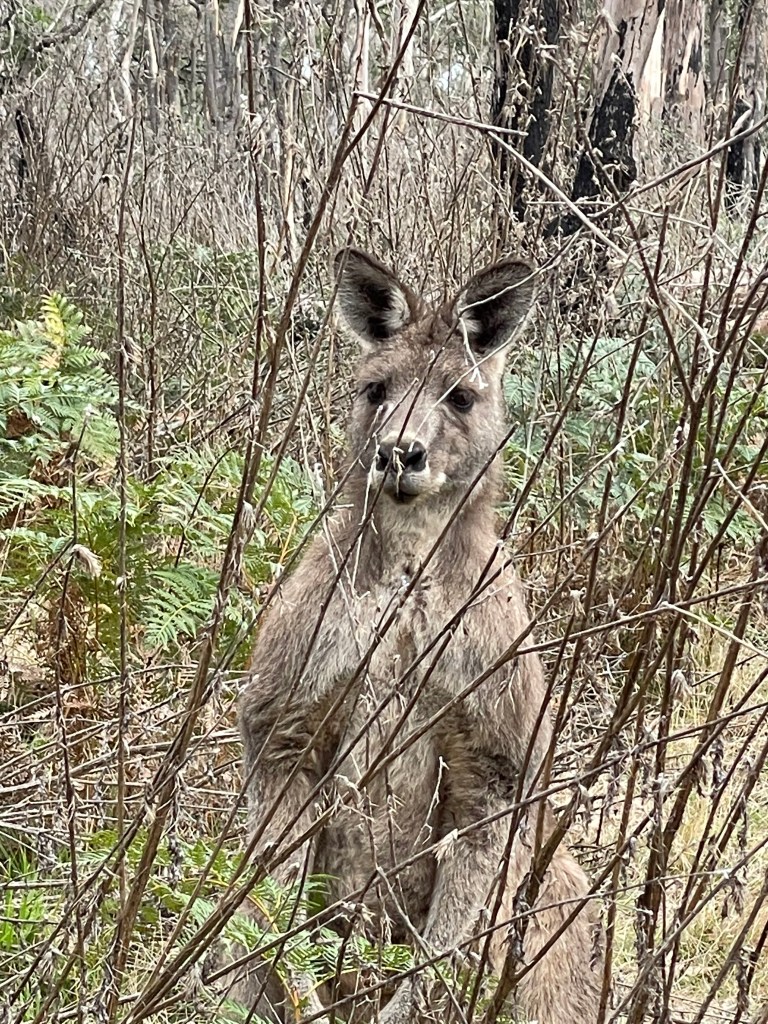
Little lizards flash across the rocks and a crack in the bracken reveals big kangaroo, virtually beside me. We say hello, he poses for a few photos and then he is off.
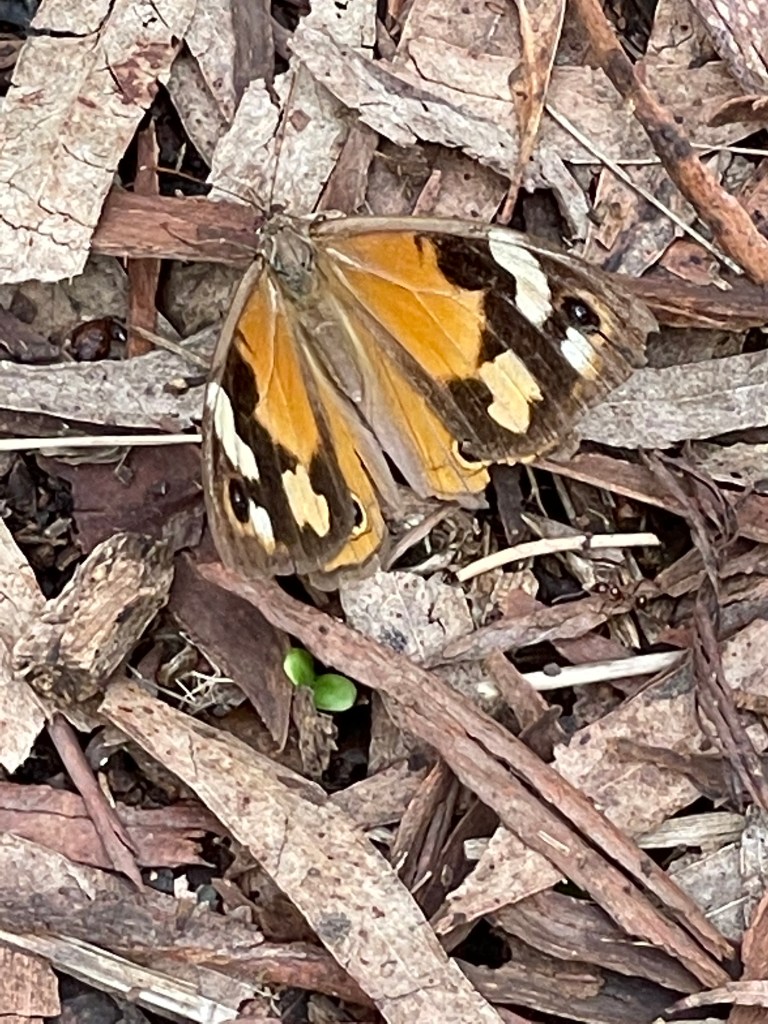
I am also sharing the path with two ochre-coloured butterflies that periodically stop and pose on the ground in front of me. Throughout the whole 9km pairs of these butterflies are a constant – well probably not these two but them and their friends.
I also find a survivor – possibly the cherry ballart tree – which appears to have miraculously withstood the flames. One green plant in a forest of grey and black.
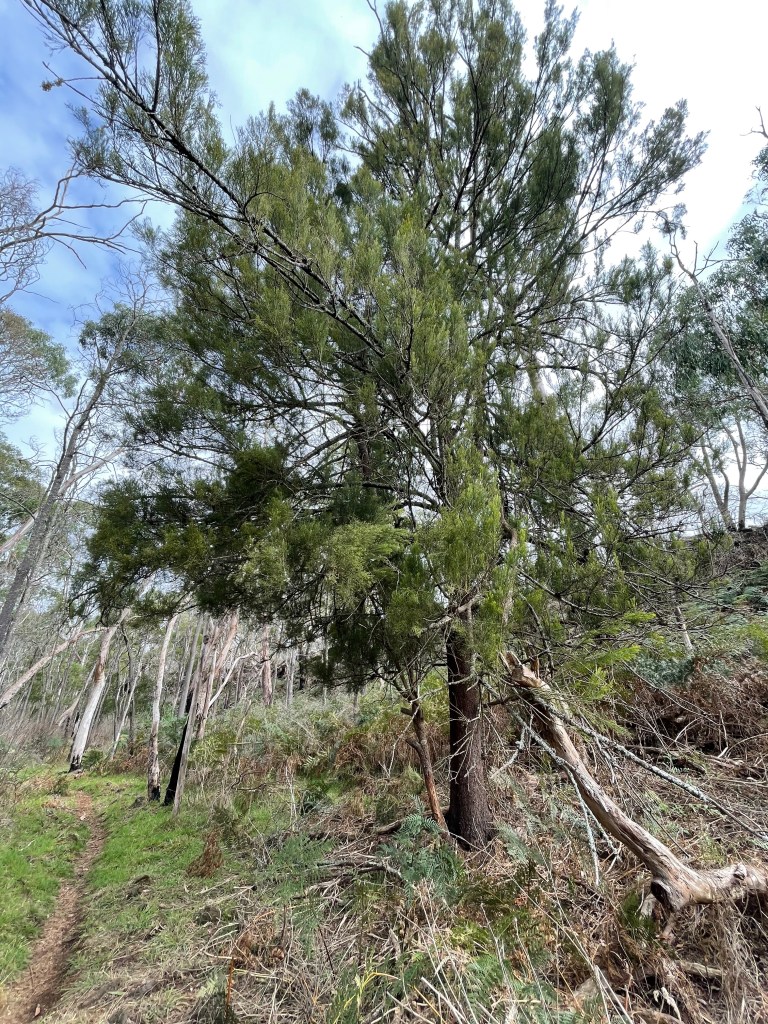
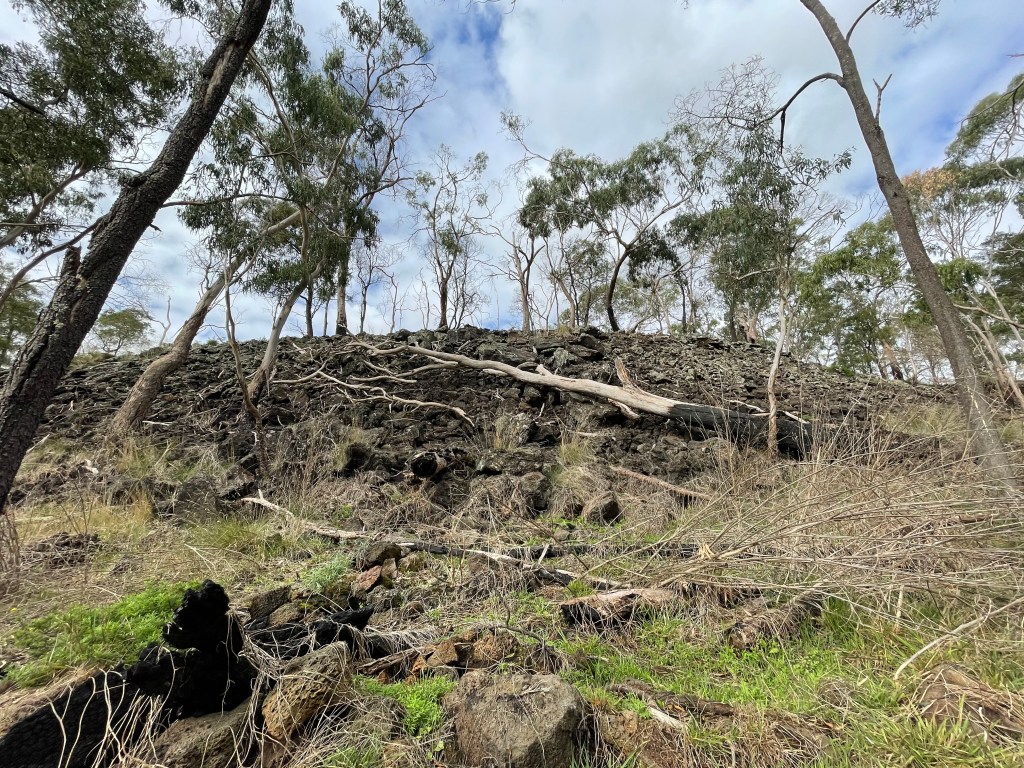
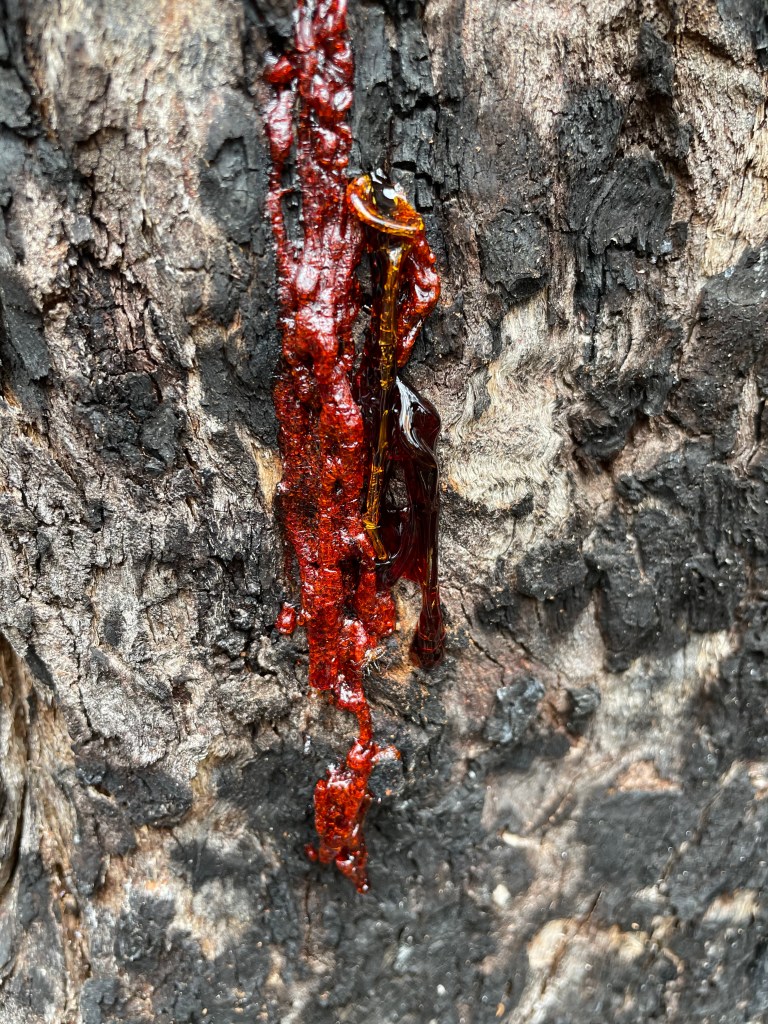
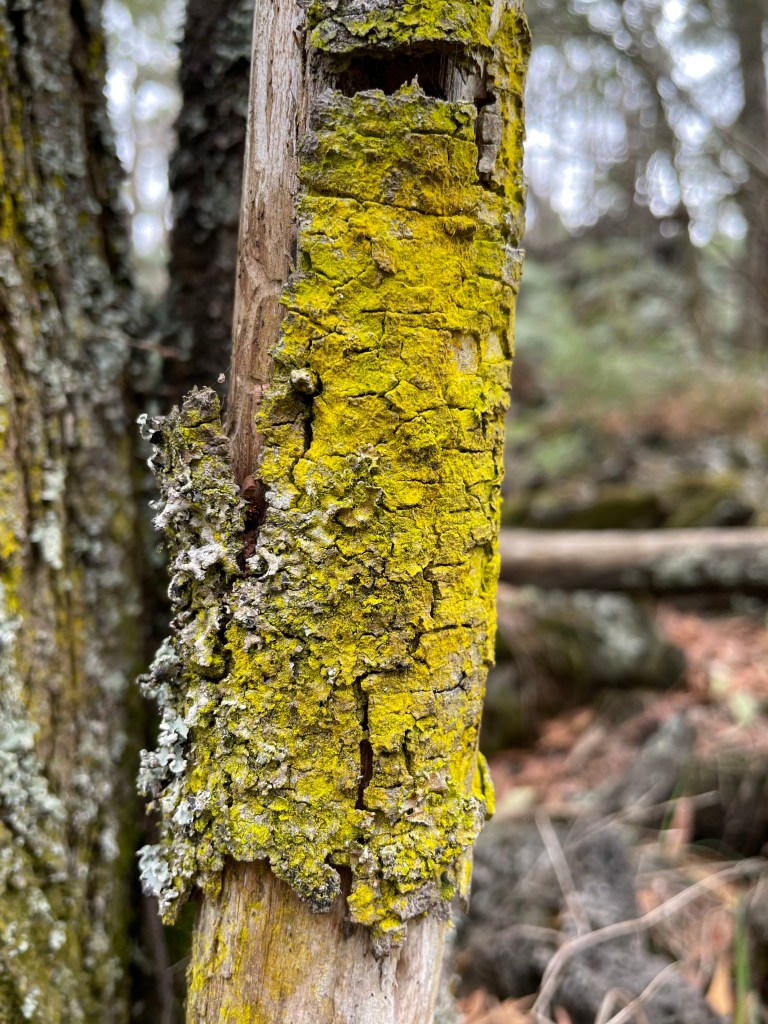
Then everything changes as I reach an unburnt patch. Amazing mosses, fluoro lichen, blood red sap and thick bracken that almost hides the path.
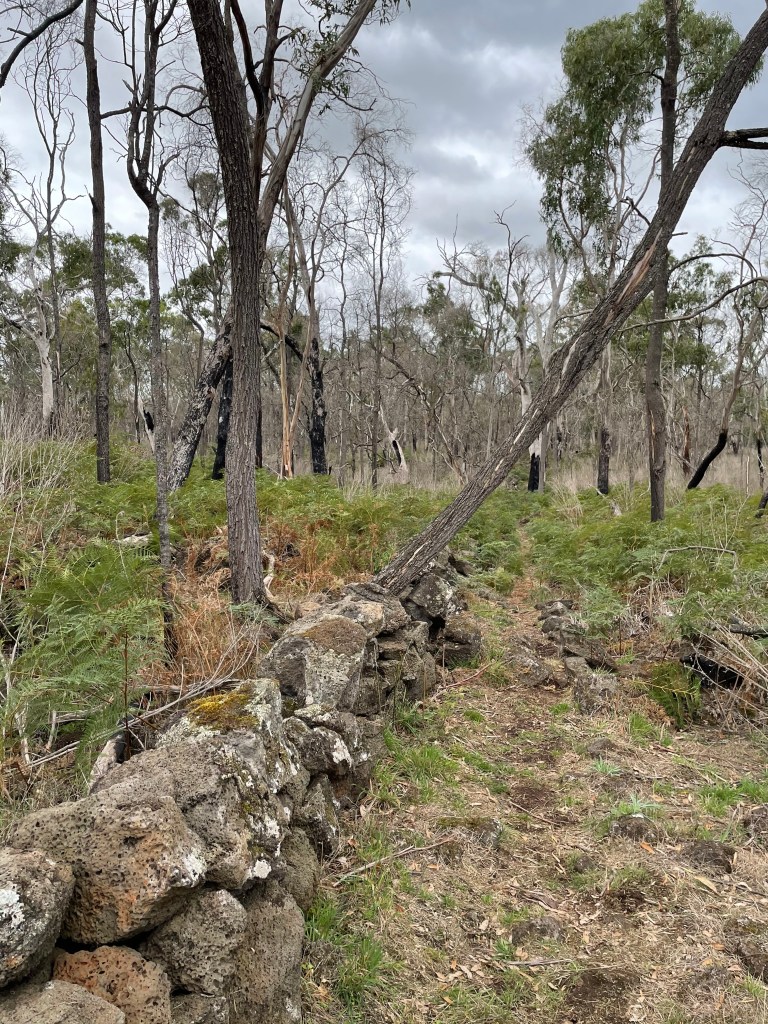
This feels like wild and remote country – then we come across old drystone walls stretching across the canal and probably built by early settlers to hold their stock at bay.
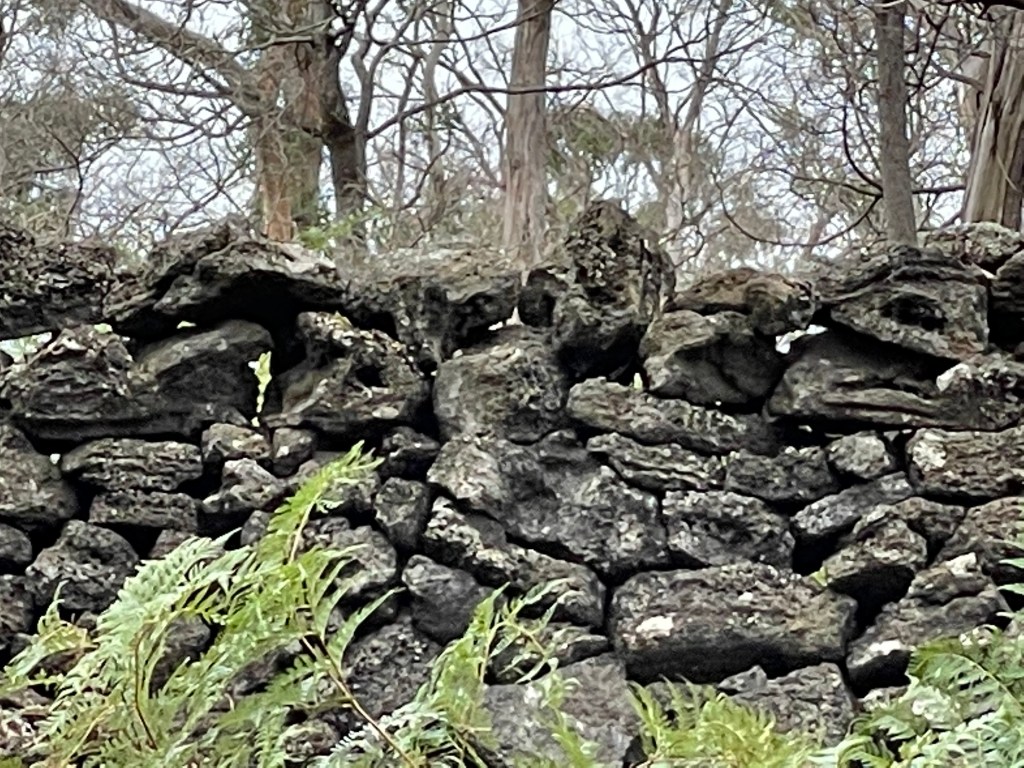
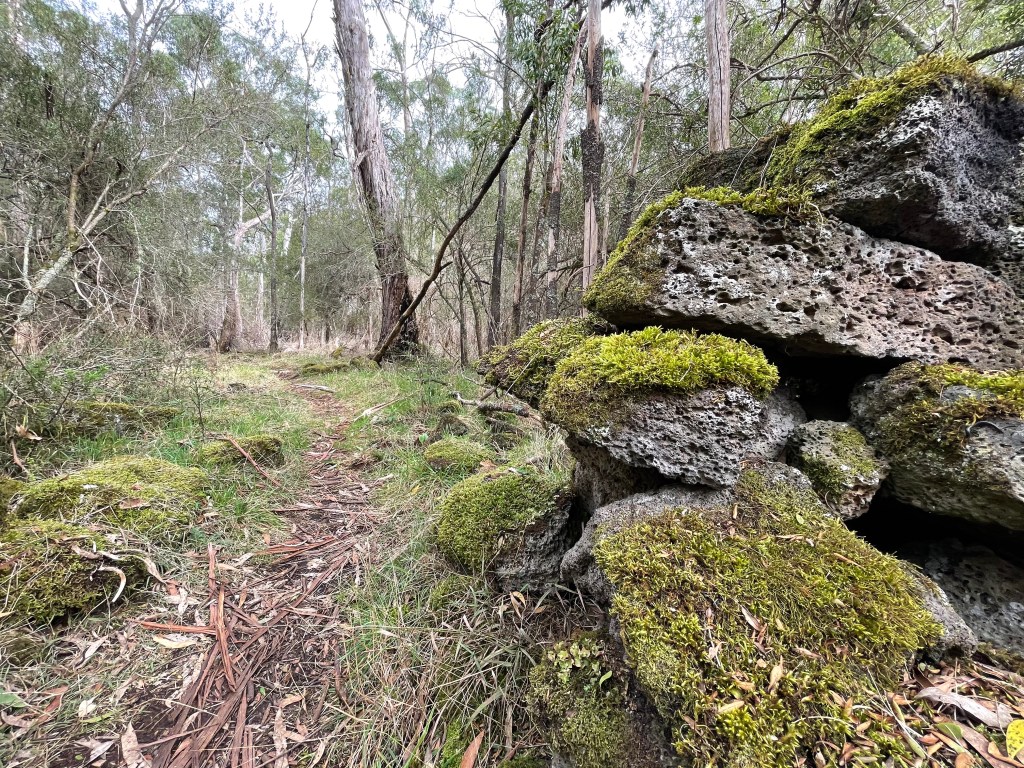
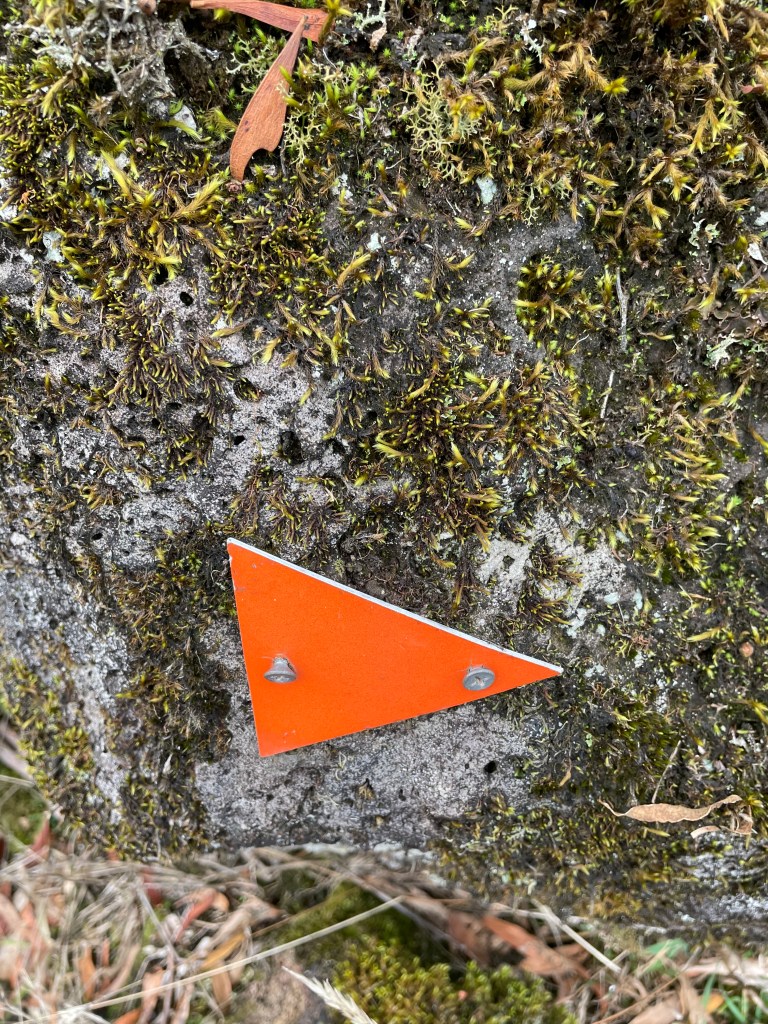
At the last of these walls that we leave the canal and follow red arrows up the rocks to follow a low stoney path towards the lake via the Natural Bridge.
In my 20s I spent many hours out in this country searching for and exploring caves – often with mixed success.
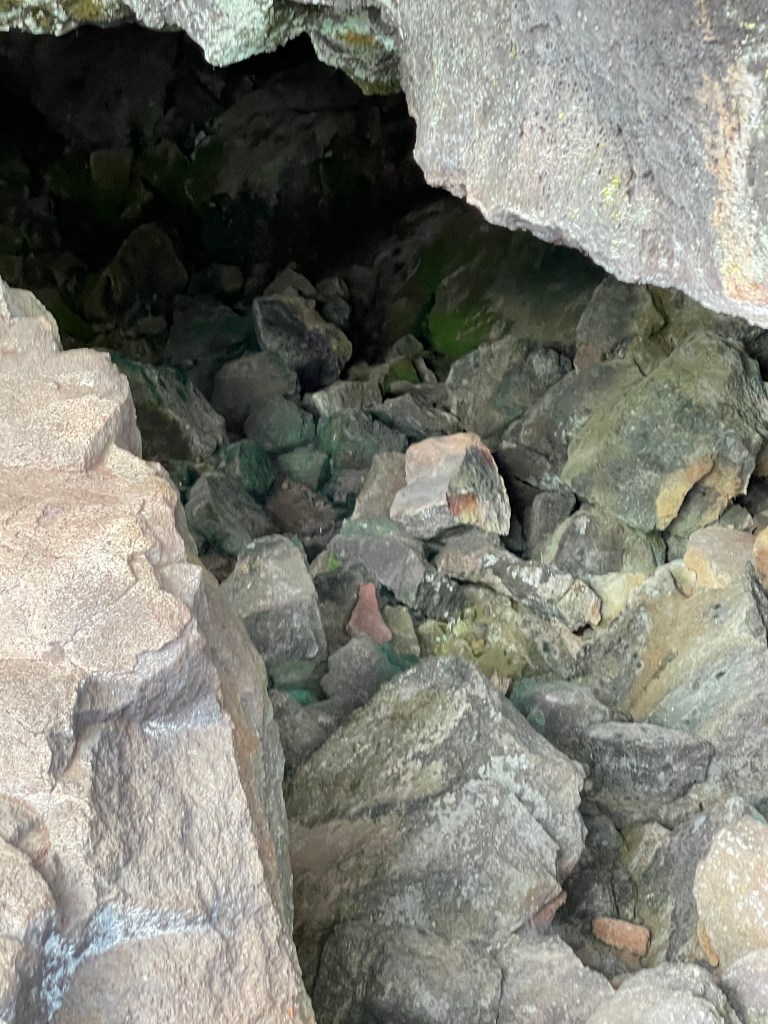
Today without even trying I find one on the path up the canal wall and then pass another along our trail to the Natural Bridge.
This bush has also been smashed by the fires.
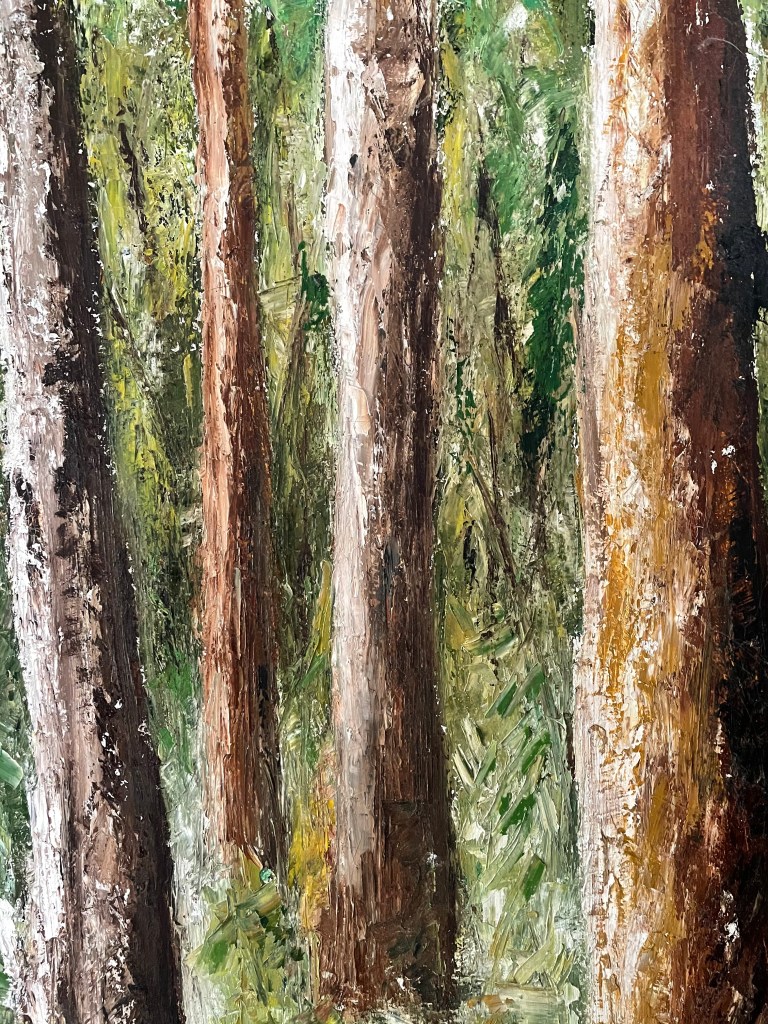
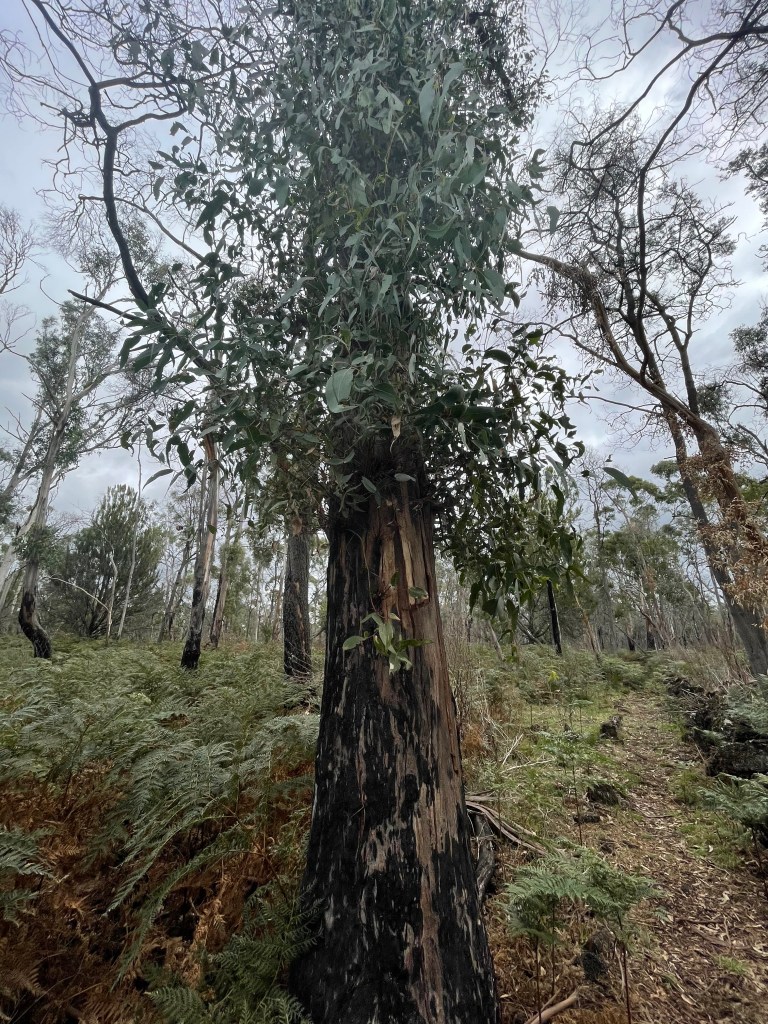
I think of the painting I did here in the early 1980s when the bush was so alive – lush and green. Today it looks dis-shevelled – stripped, shivering and waiting for its blanket of leaves to return.
The Natural Bridge has not changed, except that it is way easier to access. We used to clamber over stinging nettle-infested rocks to get in and now there are steeps all the way.
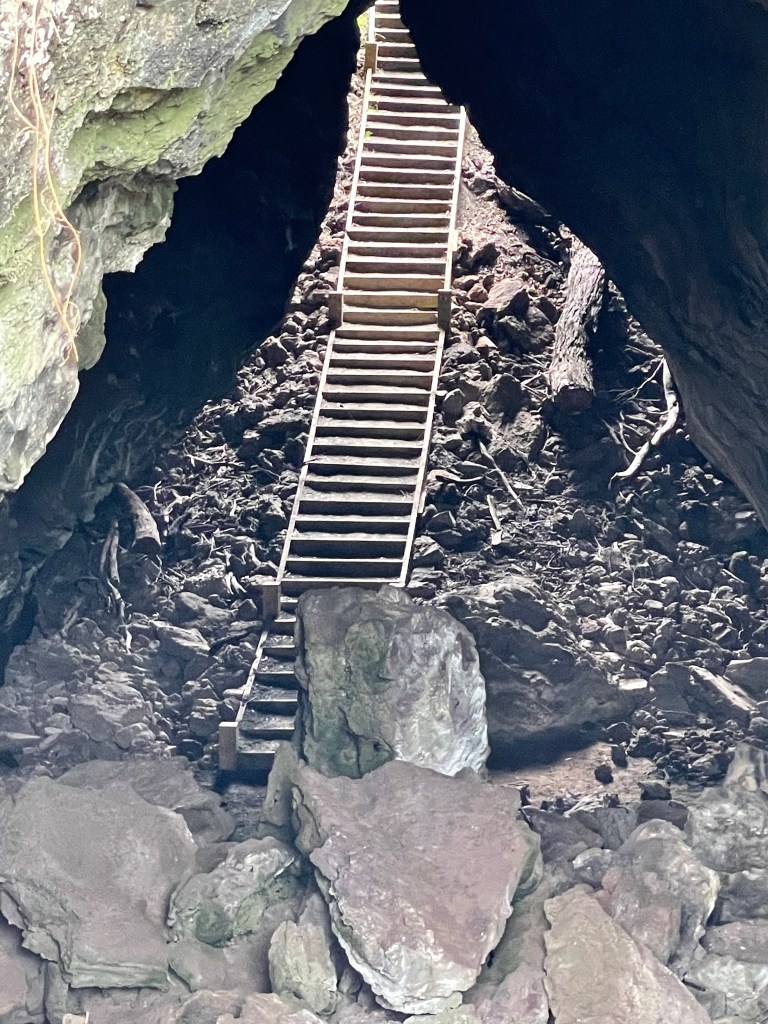
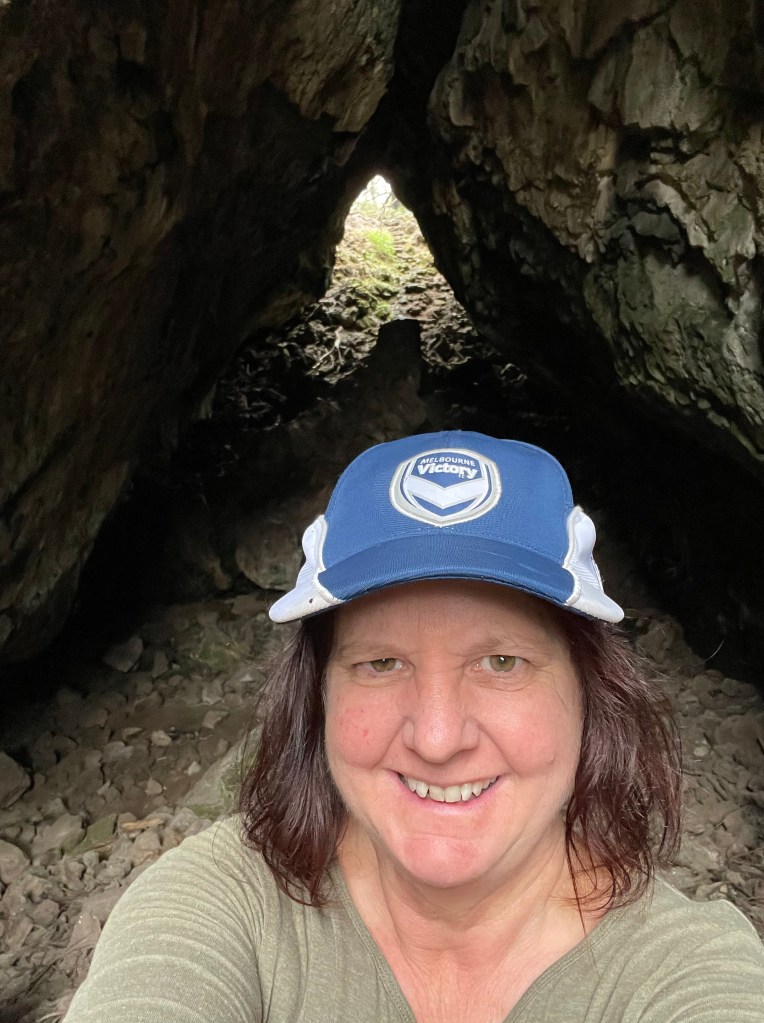
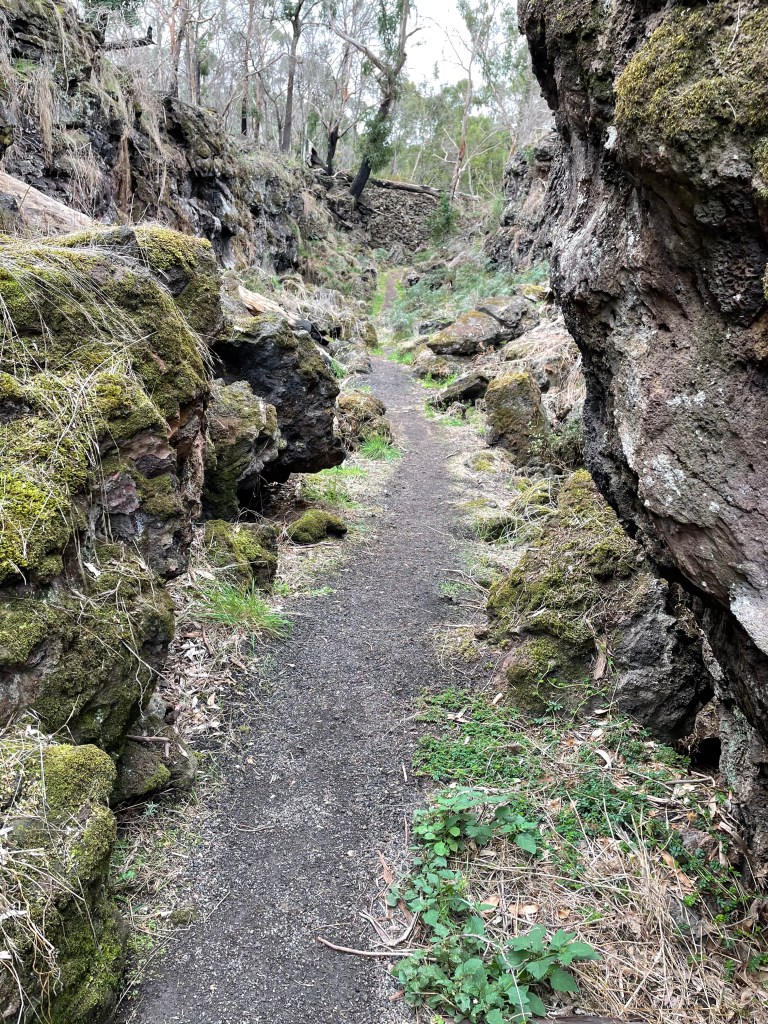
The ‘bridge’ is actually the ground covering a long skinny cave with two entries and a big pile of stones in the middle.
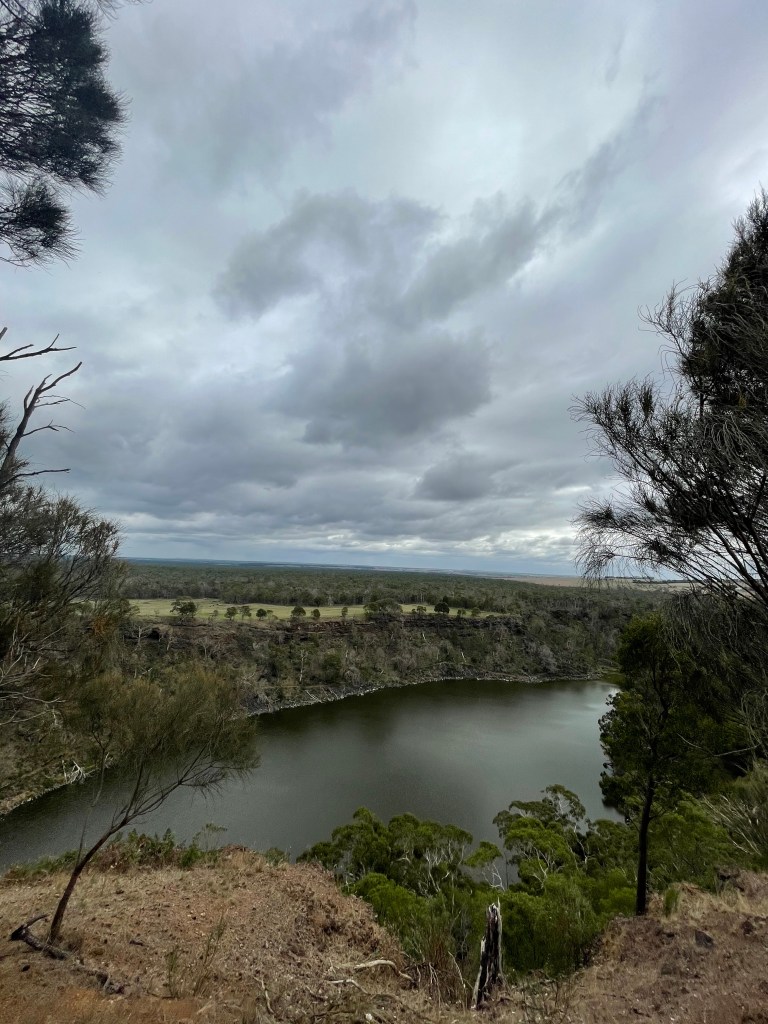
Beyond the bridge we pass another crater filled with trees instead of water and then begin climbing up the hill which I assume is the crouching Budj Bim.
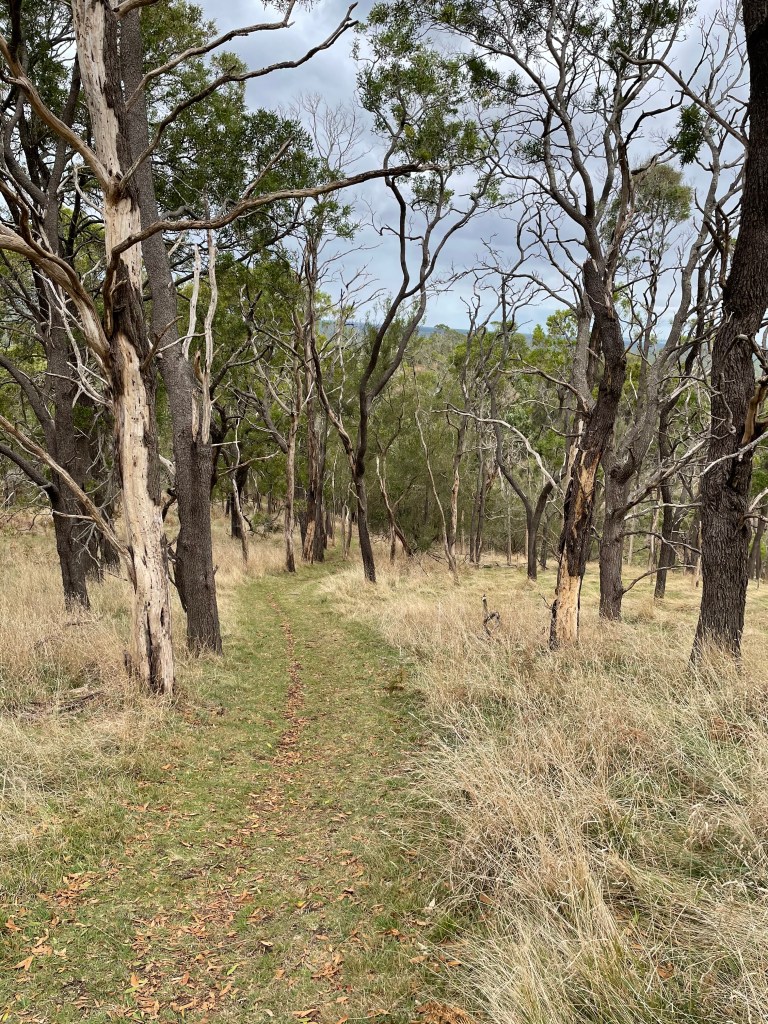
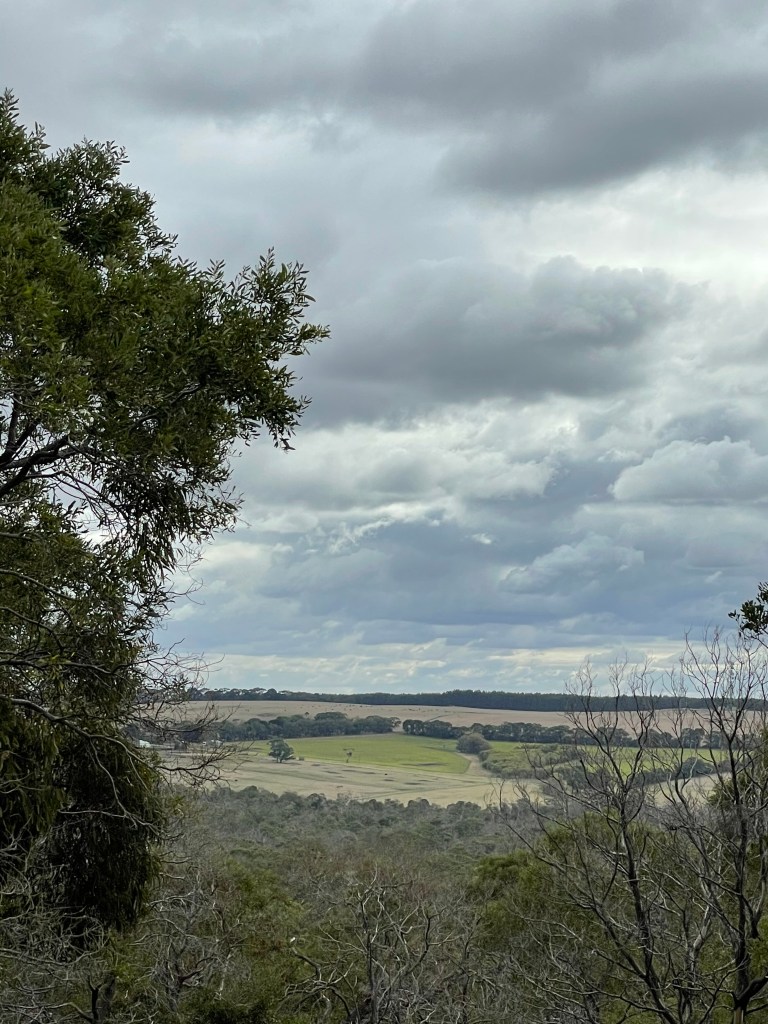
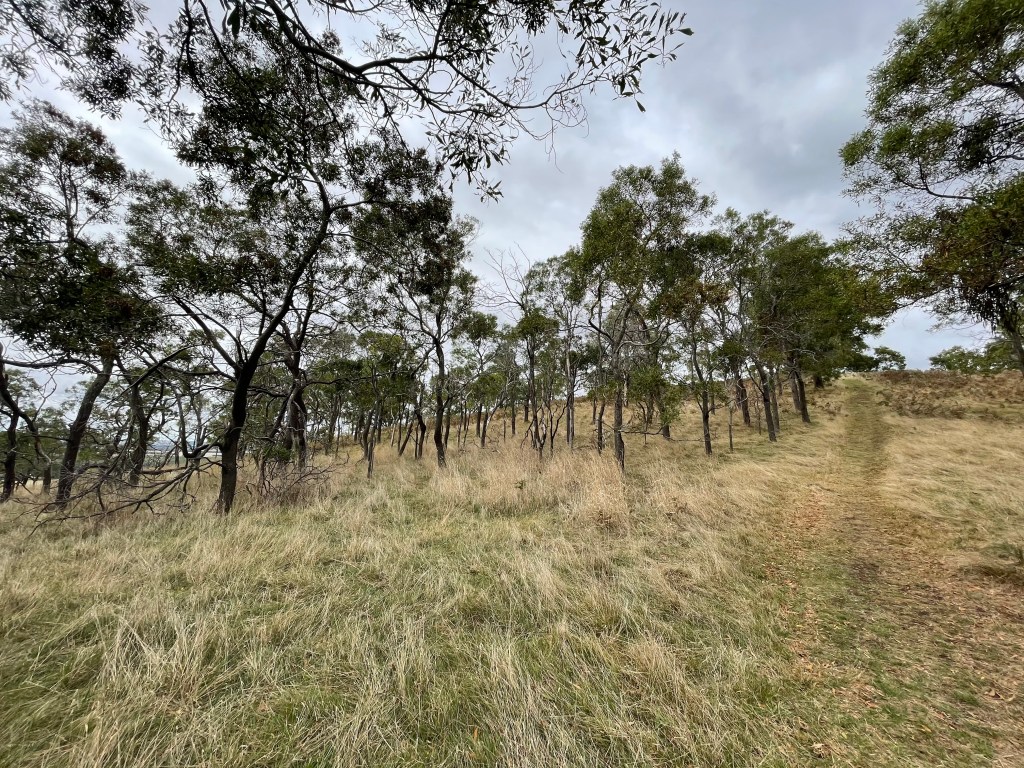
In my childhood the mountain was still being quarried and was a treeless bump. Today there is a veritable forest on top which cover some of the views we used to get.
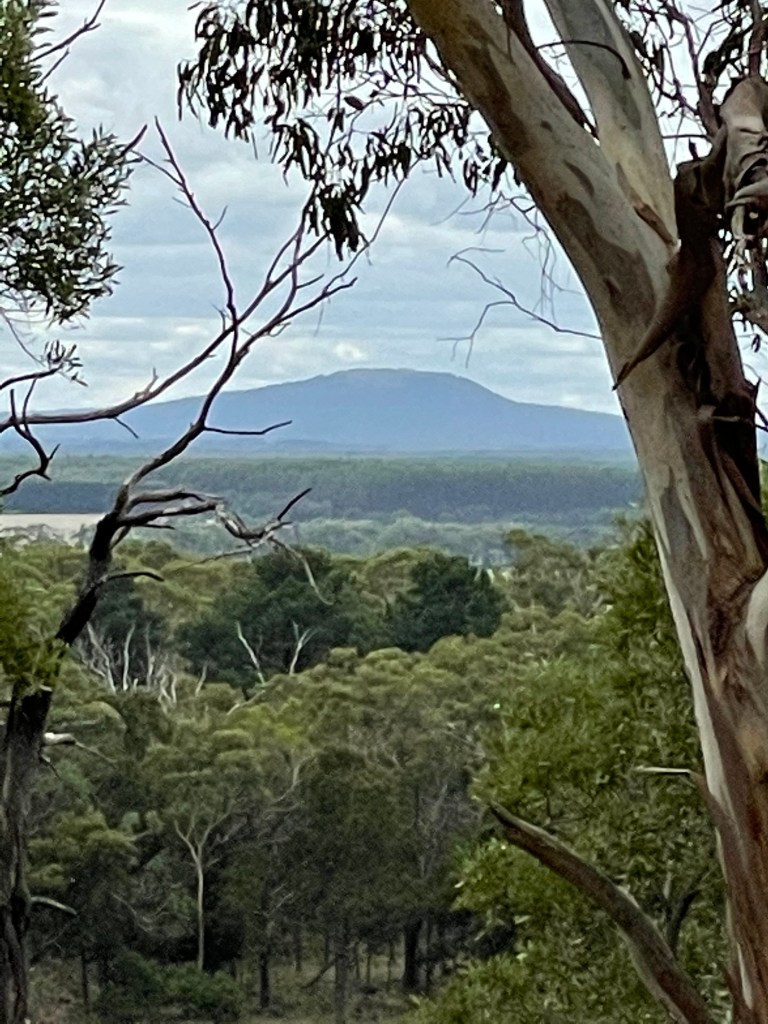
On a good day we’d look for the silos of Portland or Lady Julie Percy Island (Deen Maar) and Mount Napier (Tapoc) but it is not that easy any more.
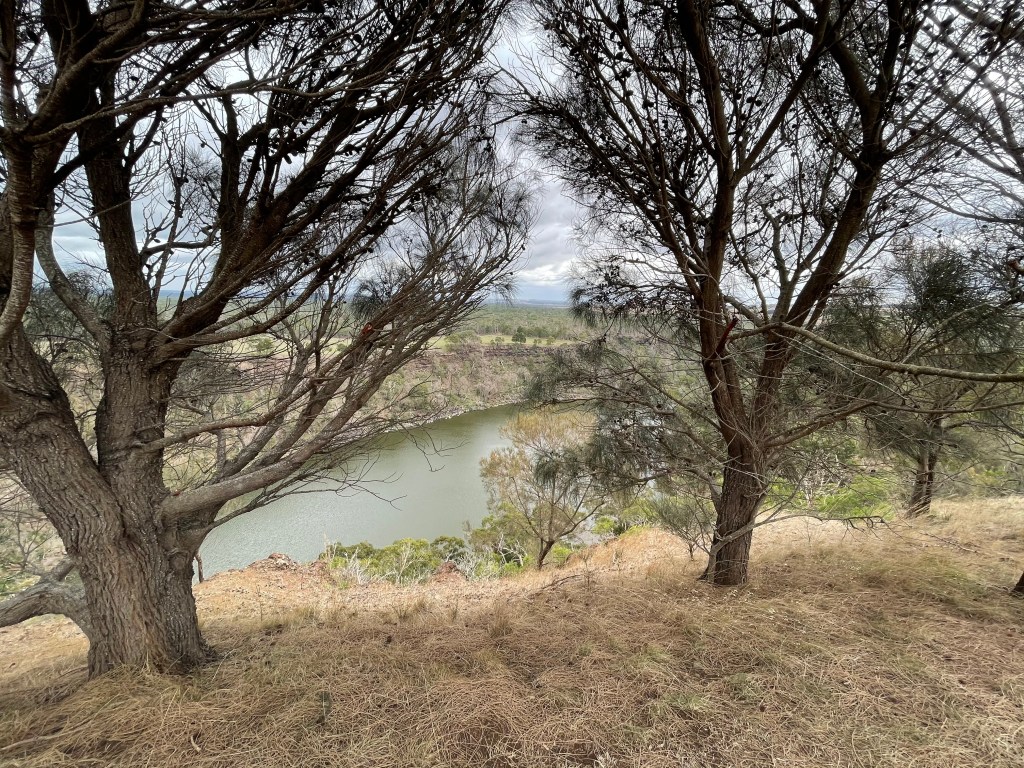
On the way down I am greeted by a line of bulokes – singing beautifully in the wind – and some wattles and blackwoods.
I also get to see Tapoc too – through the trees.
Back at the car park and I am exhausted but happy. I have had my Budj Bim fix and the world is definitely a better place. Thank you Budj Bim and may your burns continue to heal too.
This week’s walk is dedicated to Mountains.to.climb – a fundraiser on Instagram started by my son Noah Talbot to cover 2502 km of hiking and climbing over a year – one kilometre for each man who lost his battle with mental illness in 2019
Noah wanted to highlight the benefits – mentally and physically from getting out in the bush – exercising and reaching new peaks.
“The mountains we face differ from person to person. For some, a mountain might be dealing with a breakup. Others might just be getting out of bed. No matter how big or small, your mountain is still a mountain. Give yourself credit for overcoming these, because the view is always better at the top.”
A few days before this walk Noah had a climbing accident and was in hospital waiting for surgery when I went to Budj Bim. He broke his ankle and wrist and it will be a long recovery. He obviously can’t complete the required average of 48.11km each week so here is my 9km contribution to help his tally. Others are also welcome to contribute their own walking tallies.
Check out https://www.insta gram.com/mountains.to.climb/?hl=en
 52 weeks 52 walks