Week 19 – Billimina rock art SHELTER
Where –Billimina Rock Shelter
How – From Horsham – 50km south on Henty Highway and turn off at Bilywing Road and head to Buandik Camping ground.
What – Aboriginal rock shelter and artworks. Walk is only 2.2km
10 words – Amazing place, living museum, witnessing history going back 100s of years.
We know it is beautiful, peaceful and magical but there is more to Gariwerd, Grampians than trees and kangaroos.
It is a living museum with 90 per cent of Victoria’s known rock art sites, some dating back more than 20,000 years.
So what better way to spend a spare hour on the way home from a workshop in Hamilton than to check out some of this art.
And it is not just art that graces this living museum – there are also shelters, ancient quarries and other important cultural heritage sites developed and cherished by our first nations people.
Today we veer off the Henty Highway at Billywing Road, Glenilsa to head 9.5km to Buandik camping ground for a quick 2.2km walk to Billimina Shelter.
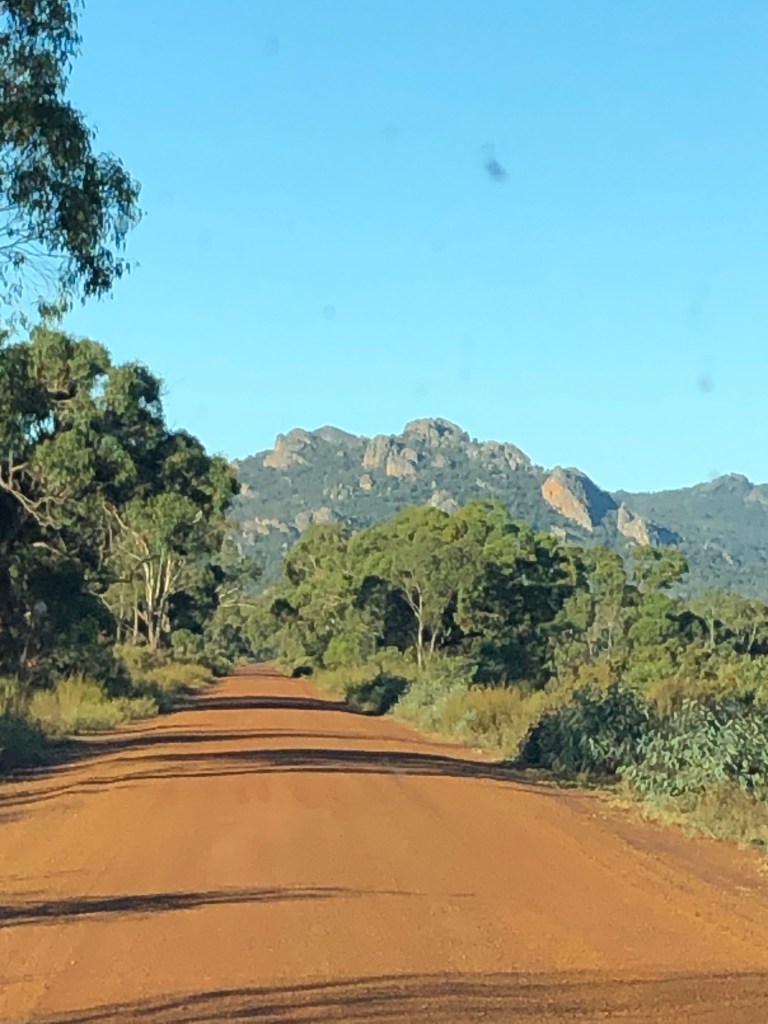
It is late afternoon so we carefully dodge the many kangaroos busy grazing and bounding along the edge of the ochre gravel road.
Ochre is the colour of the hour as the late afternoon sun makes an impressive encore before leaving the stage for the night.
We twist and turn along Billywing and few other gravel roads before hitting the aptly named Goat Track and the turning into Buandik camping ground.
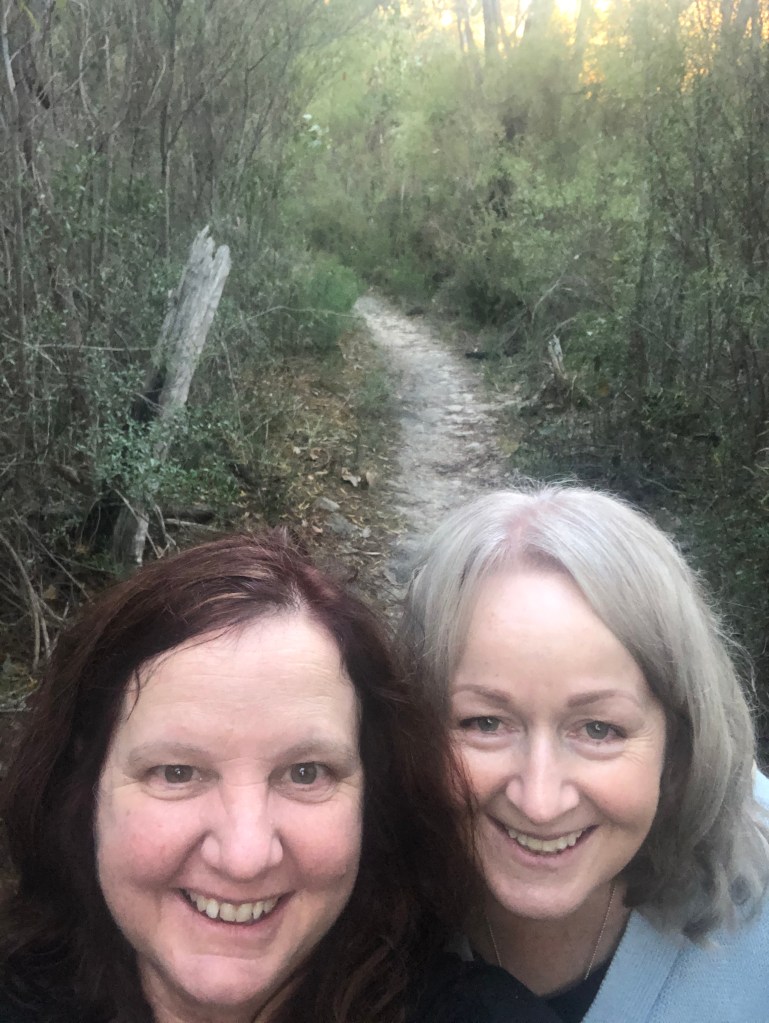
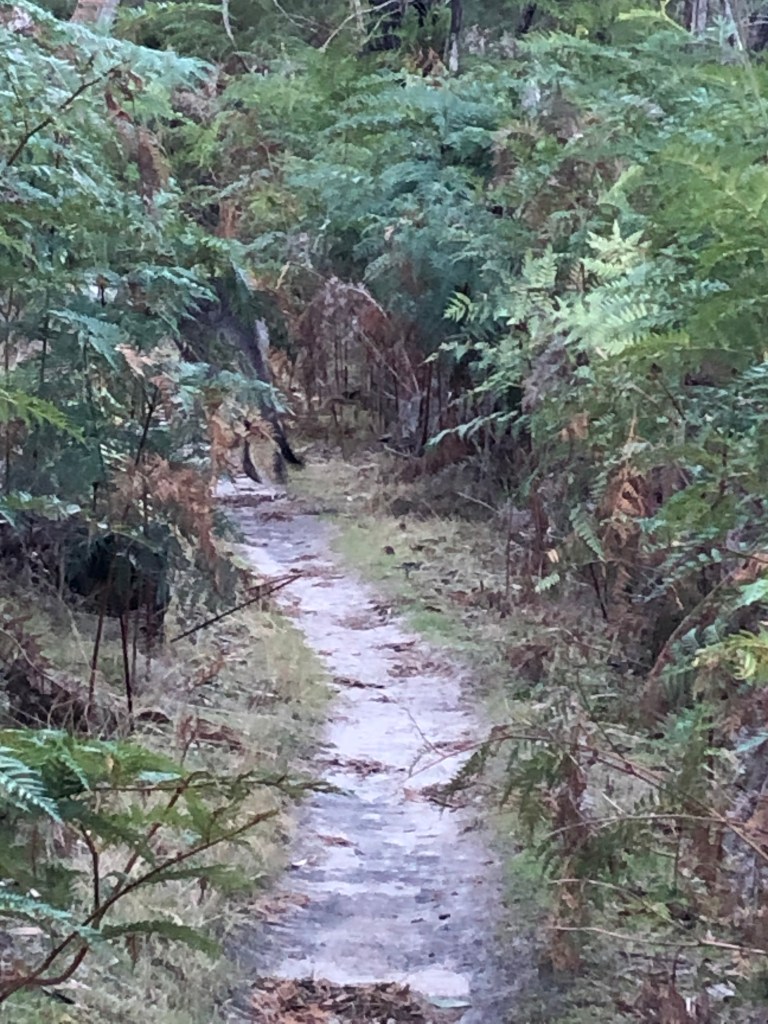
We are in a valley and pass over a stream with some water, which is surprising considering how dry the autumn has been so far.
At the camping area we make a bee-line for most distance picnic spot – where our walk up the side of the mountain begins.
It is really pretty country and the camping ground looks worth returning to but this evening we are on a mission.
It is 1km to the shelter and we will also do a little detour to the Buandik falls. The track follows Billimina creek which you can actually hear flowing.
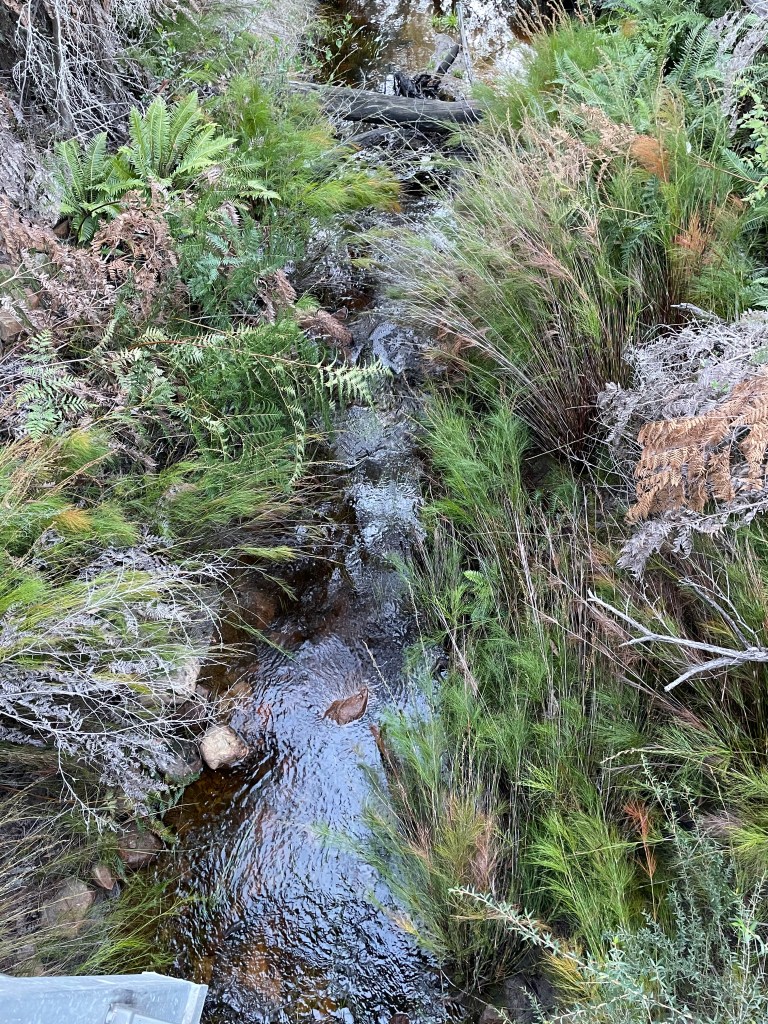
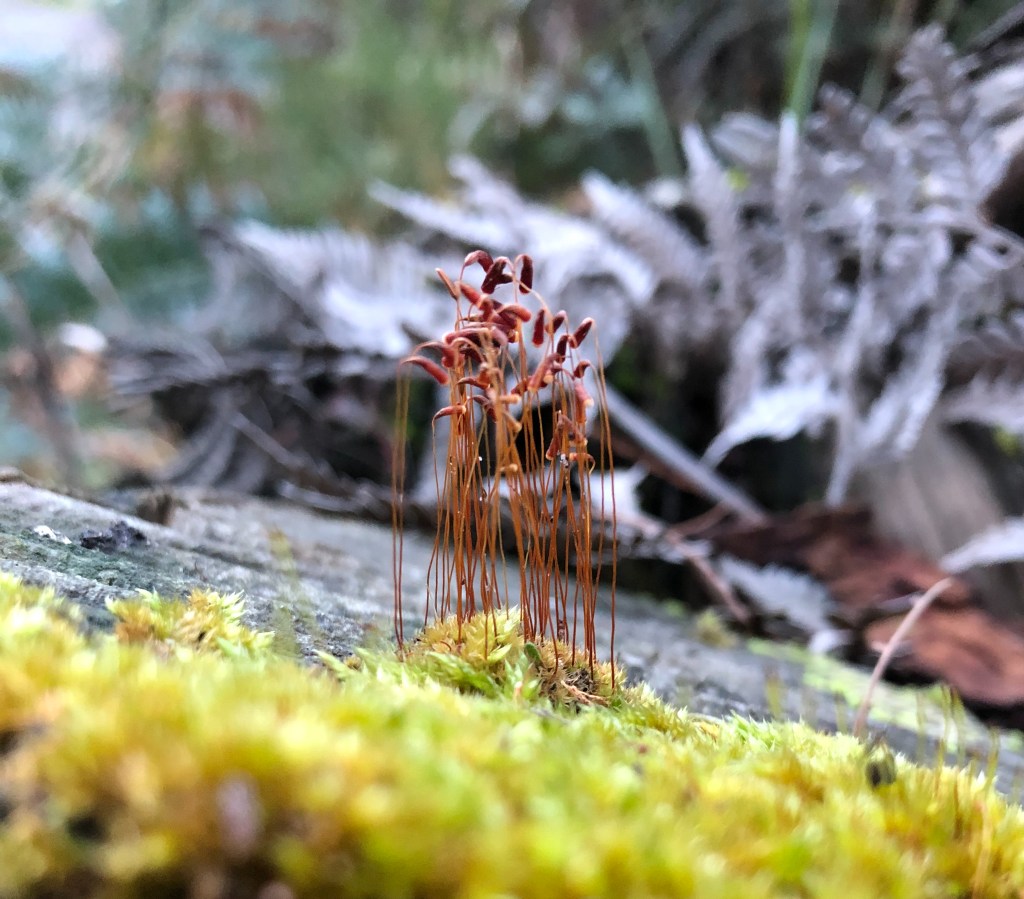
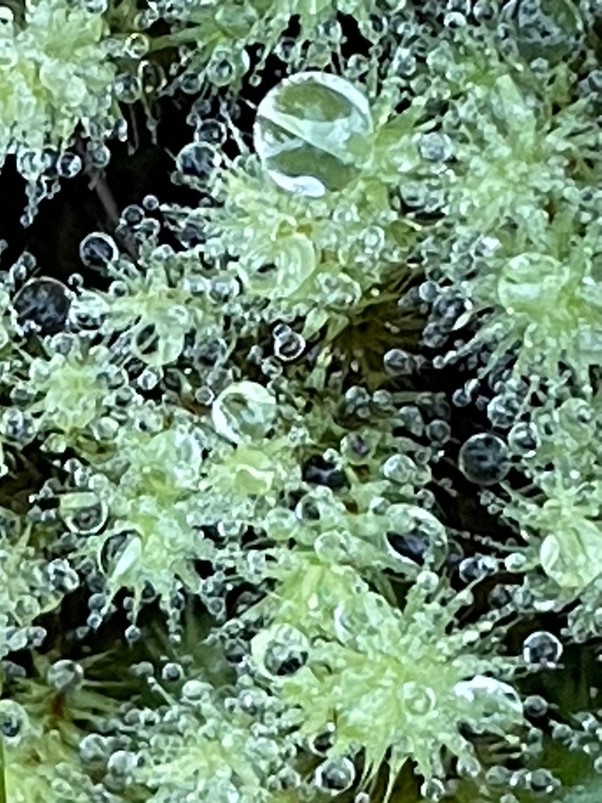
You can tell this area does not get heaps of light as everything seems so lush. We disturb a roo resting in the bracken and also see some magical tiny plants growing in the damp.
The stream which gets even more noisy and impressive when the veer off the main track to view the Buandik water falls.
It is more of a dribble than a fall, but that means I can get pretty close without the risk of falling flat on my face. I am not wearing walking boots and Maureen has made it clear she is not carrying me out.
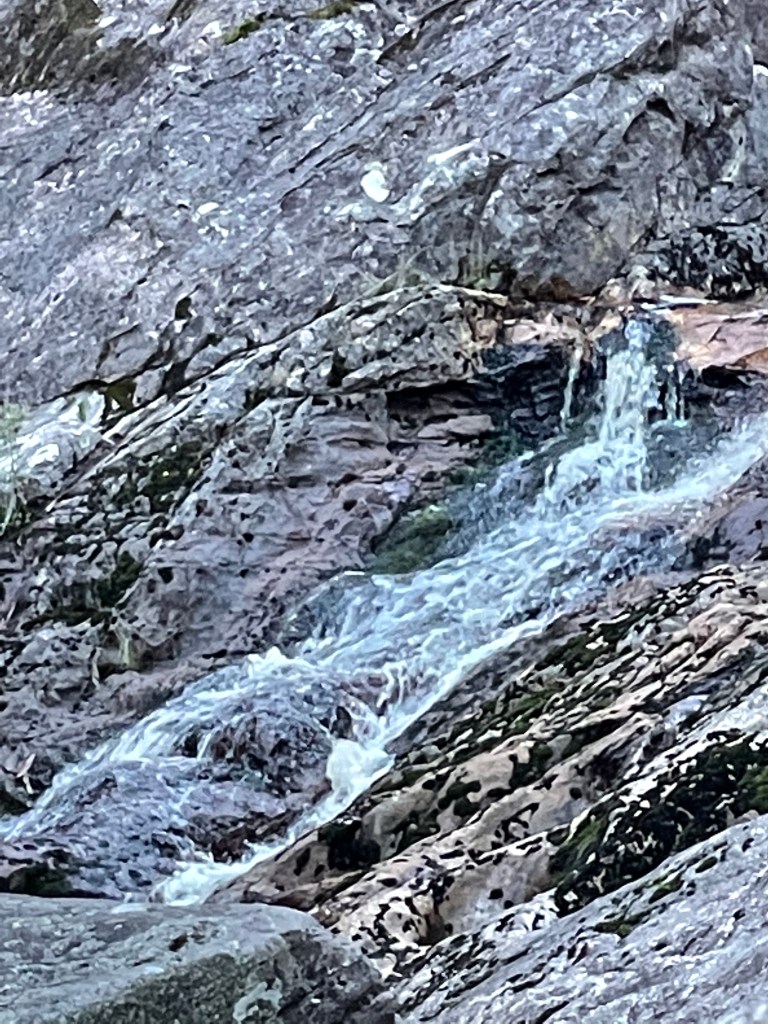
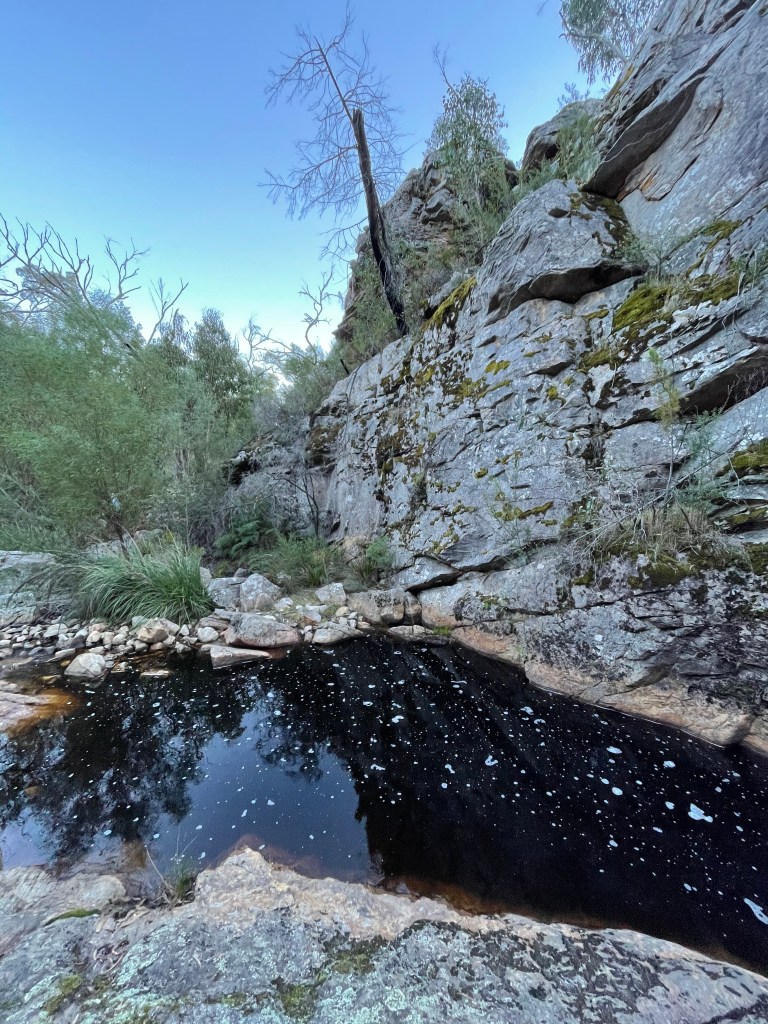
I do a bit of scrambling but with my heavily plastered son in mind, am very very careful.
We return to the track and start going up hill to the shelter. It is cold and dark on this southern facing track but we can see the sun just bathing the mountains to the south in light.
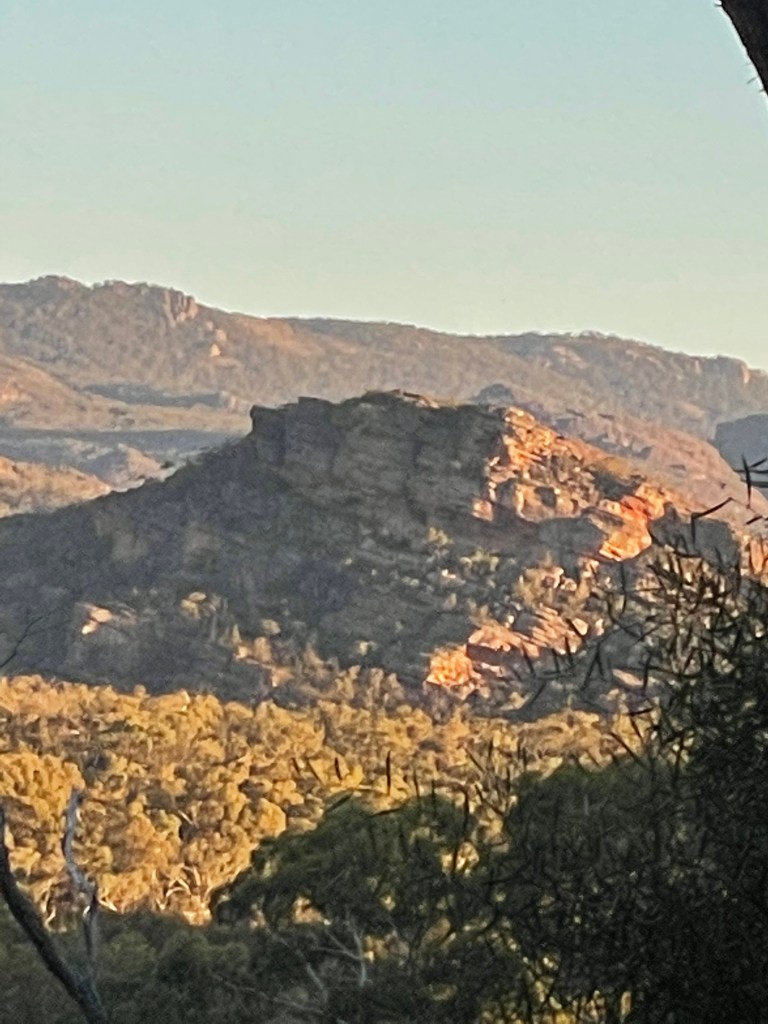
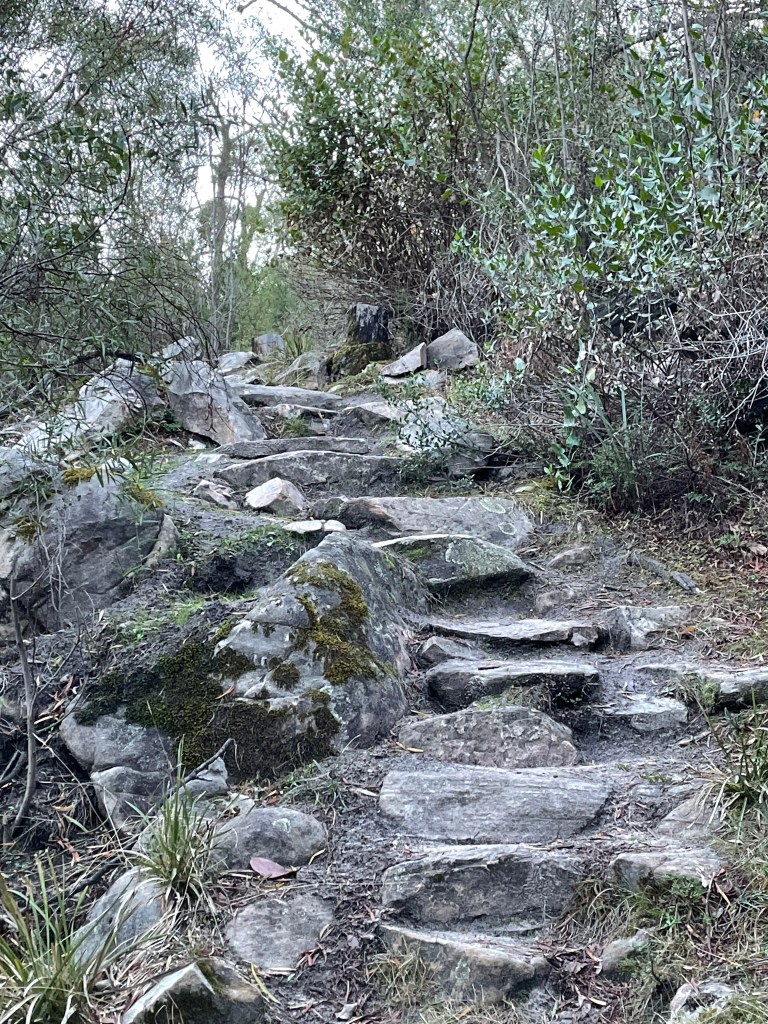
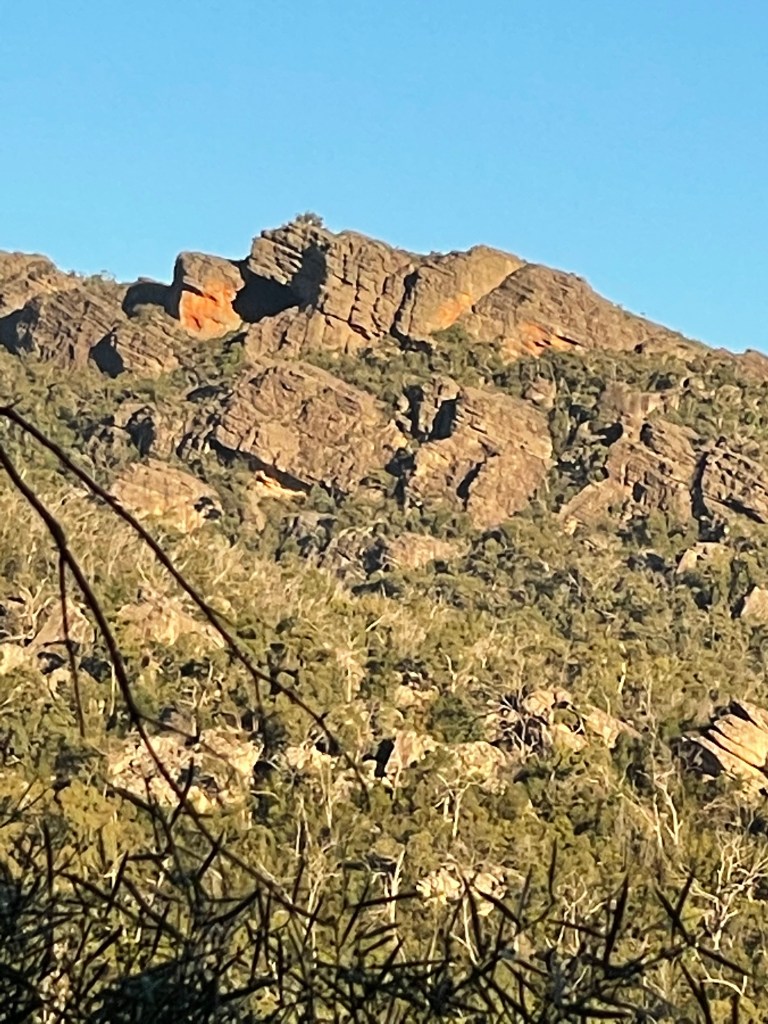
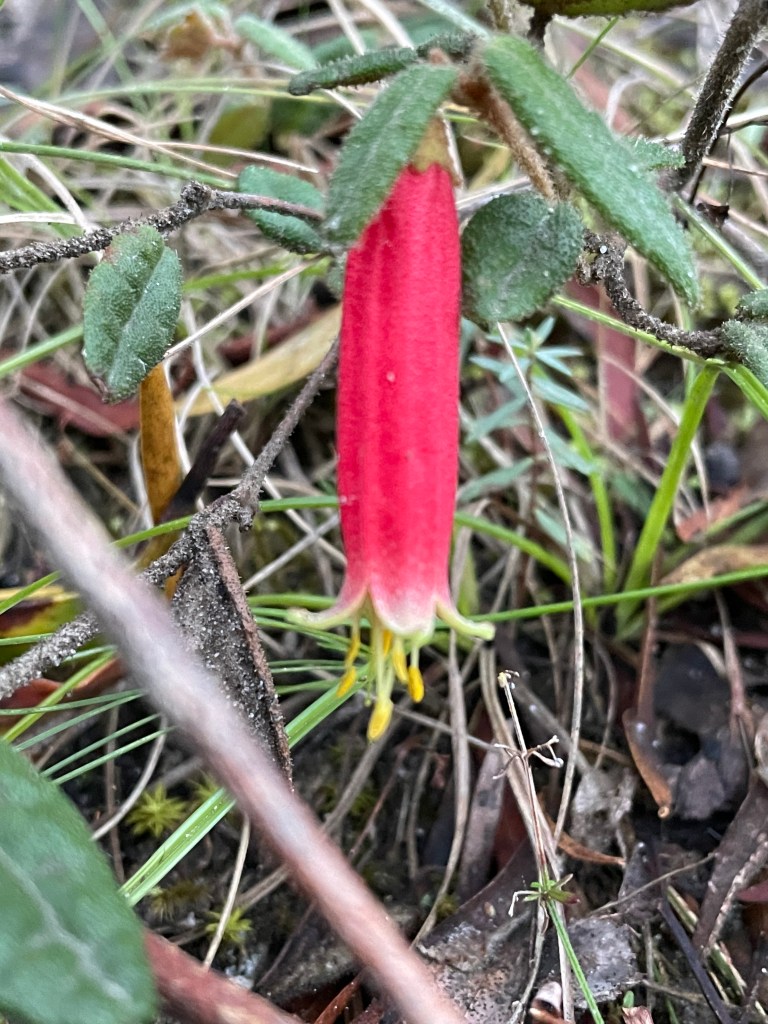
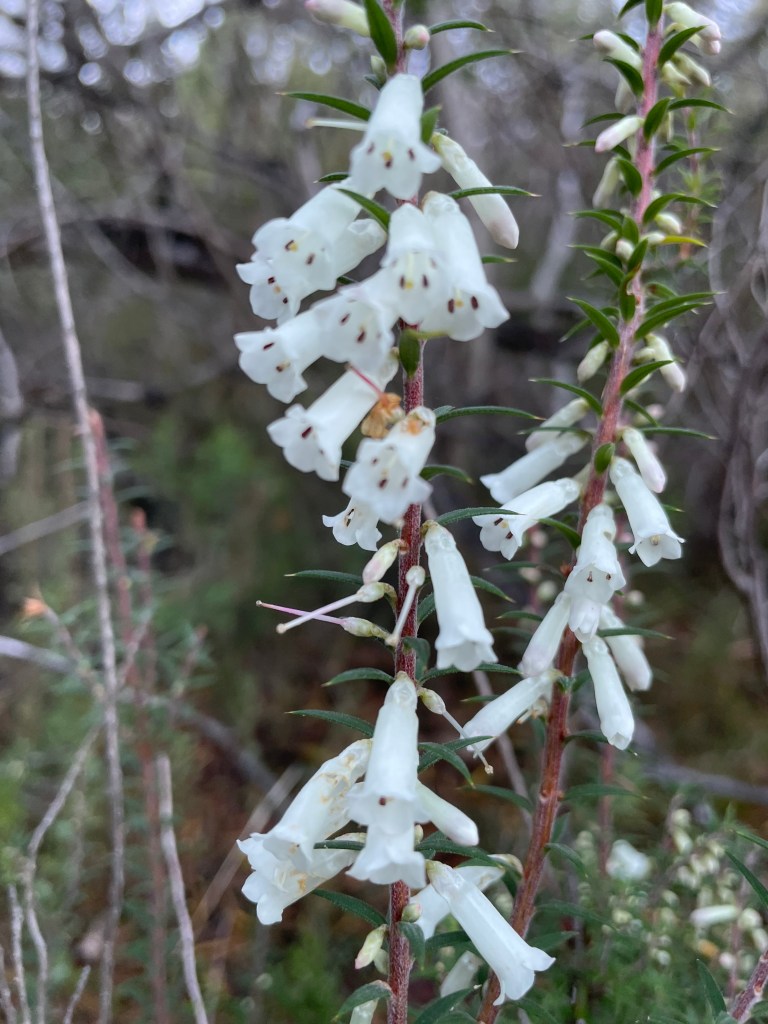
We pass some pink and white heath in flower and a Correa..
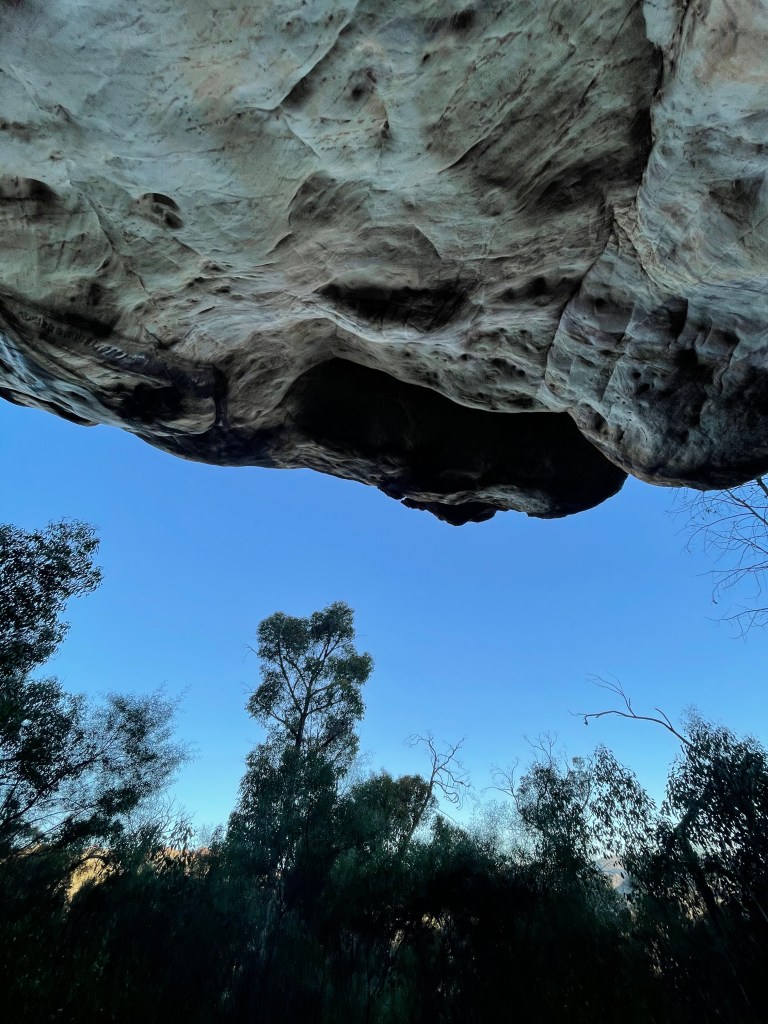
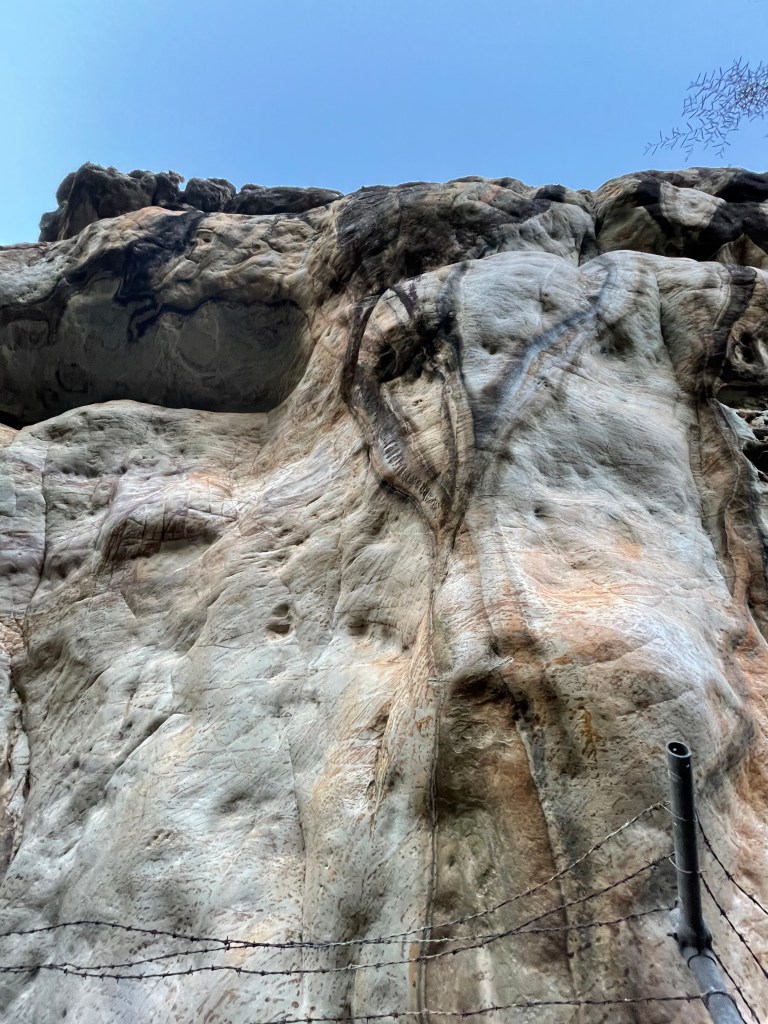
A bit more climbing and around a bund and we are confronted with a giant fenced off rock overhang.
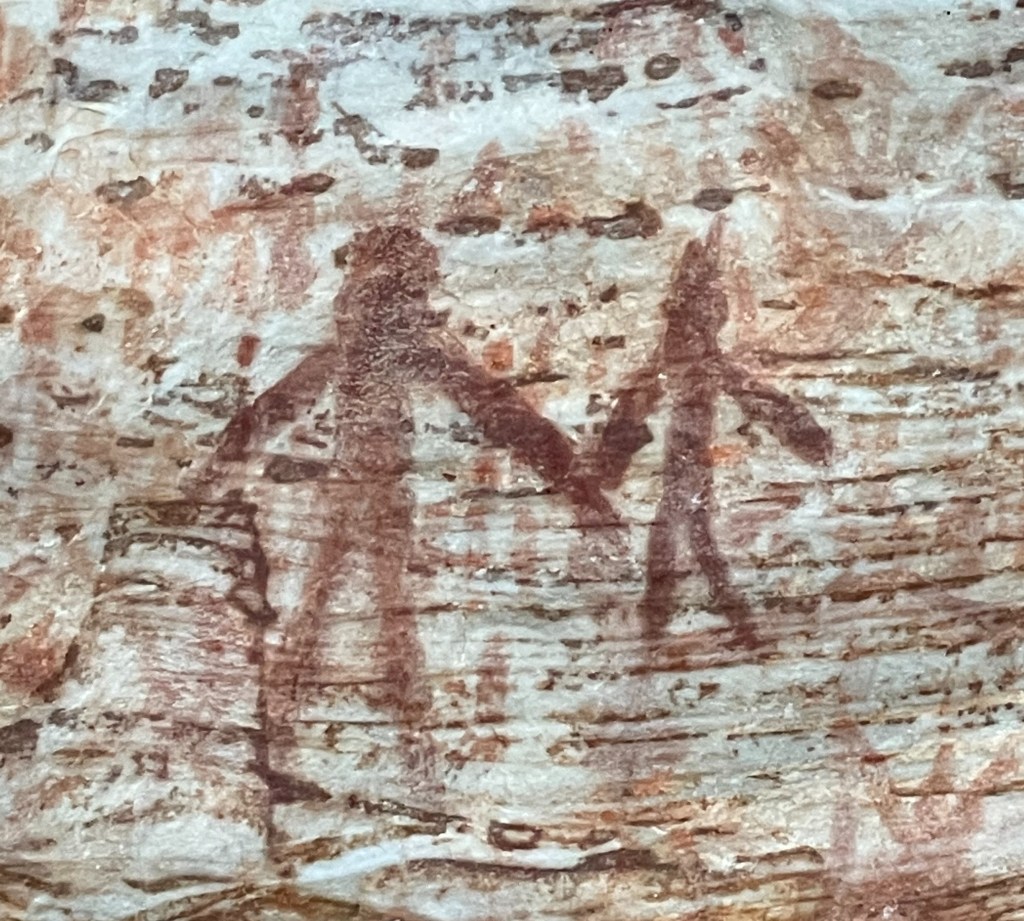
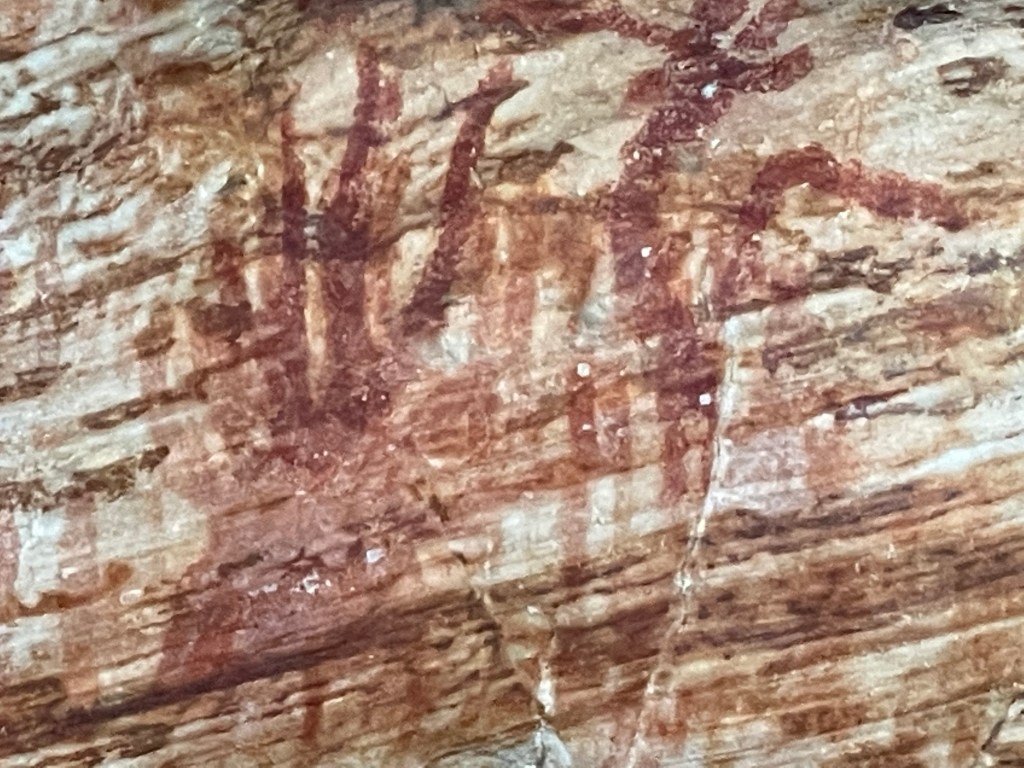
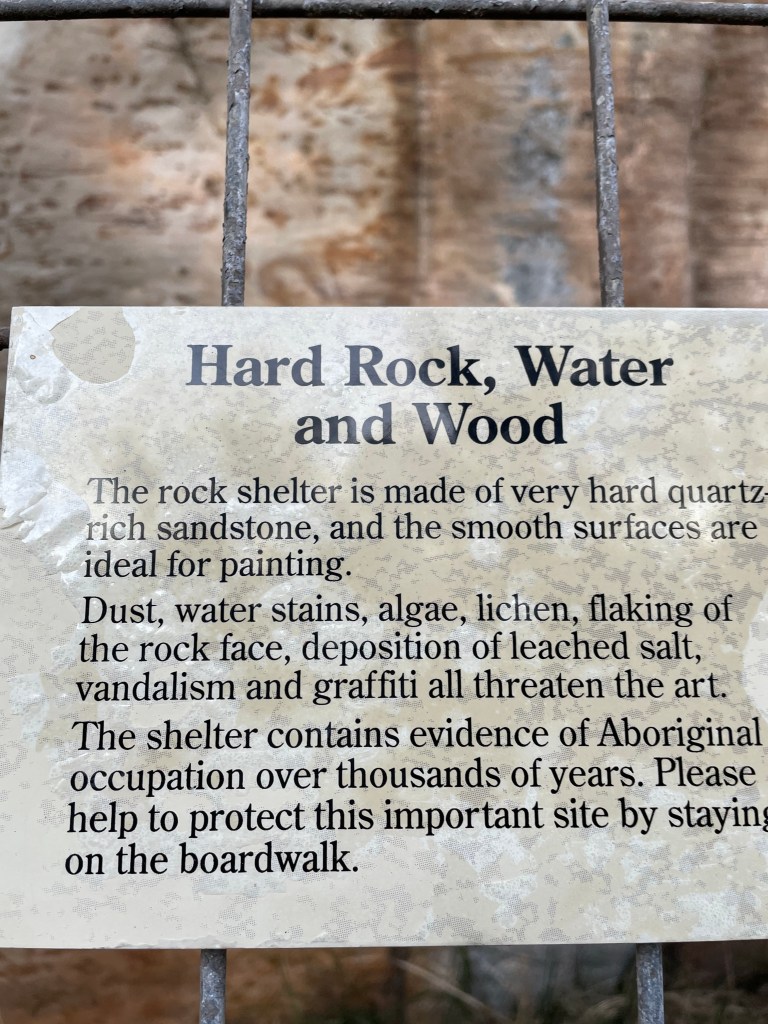
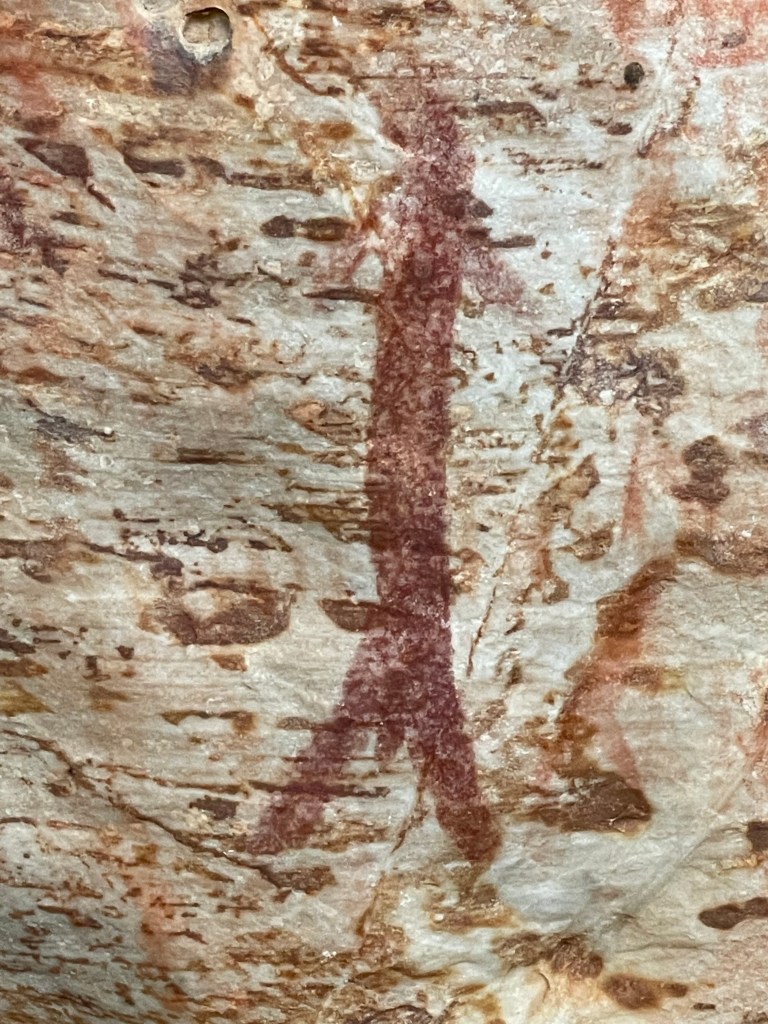
It is covered in more than 2000 red ochre paintings and would have been a great vantage point across the valley below for the Jardwadjali people who lived here from time to time.
In the 1970s archaeologists found stone tools and the remains of plant and animal foods which suggested groups camped here from late winter to early summer.
The Jardwadjali did tool repairs and caught kangaroos and small mammals such as bandicoots, possums and bettongs. They also collected emu eggs and freshwater mussels.
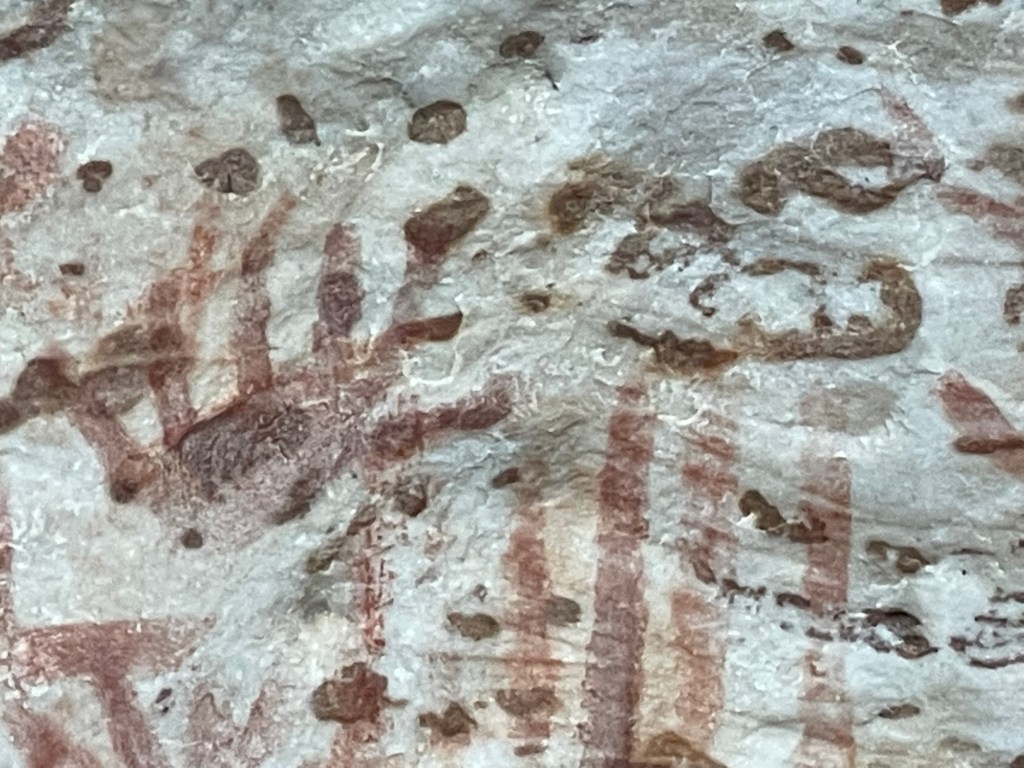
The rows of bars in the paintings are believed to be marks used to count events in retelling stories or to record the number of days spent at a place.
While they are not easy to find there are pictures of emus, kangaroo and emu tracks, and 55 human stick figures on these rocks
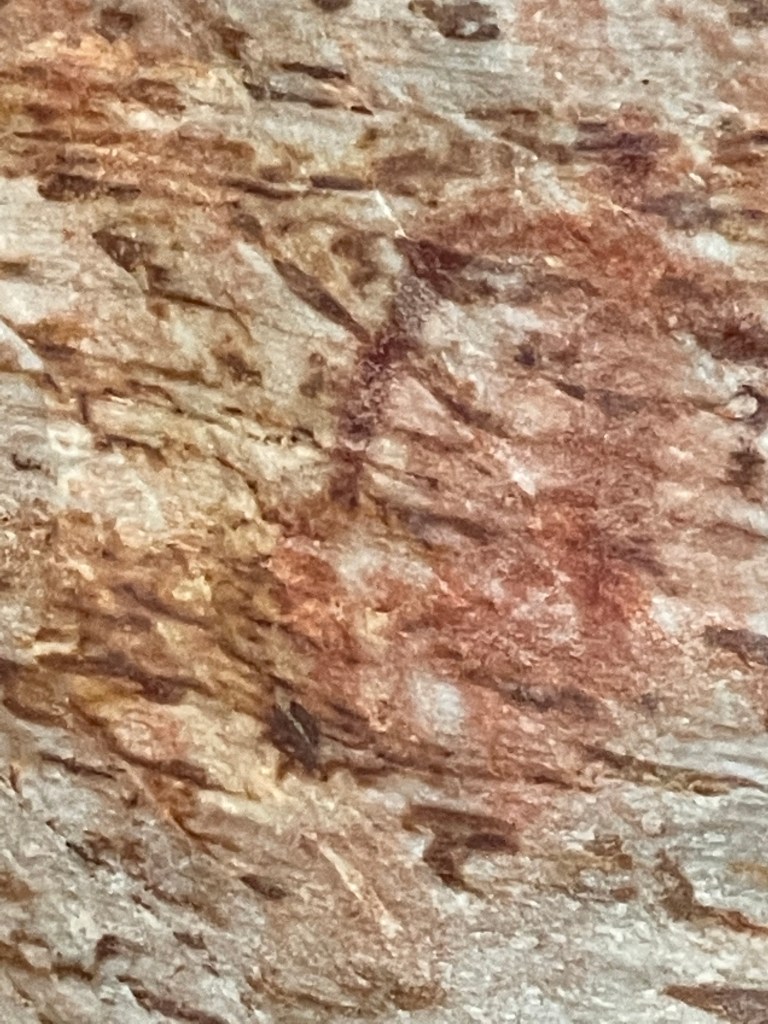
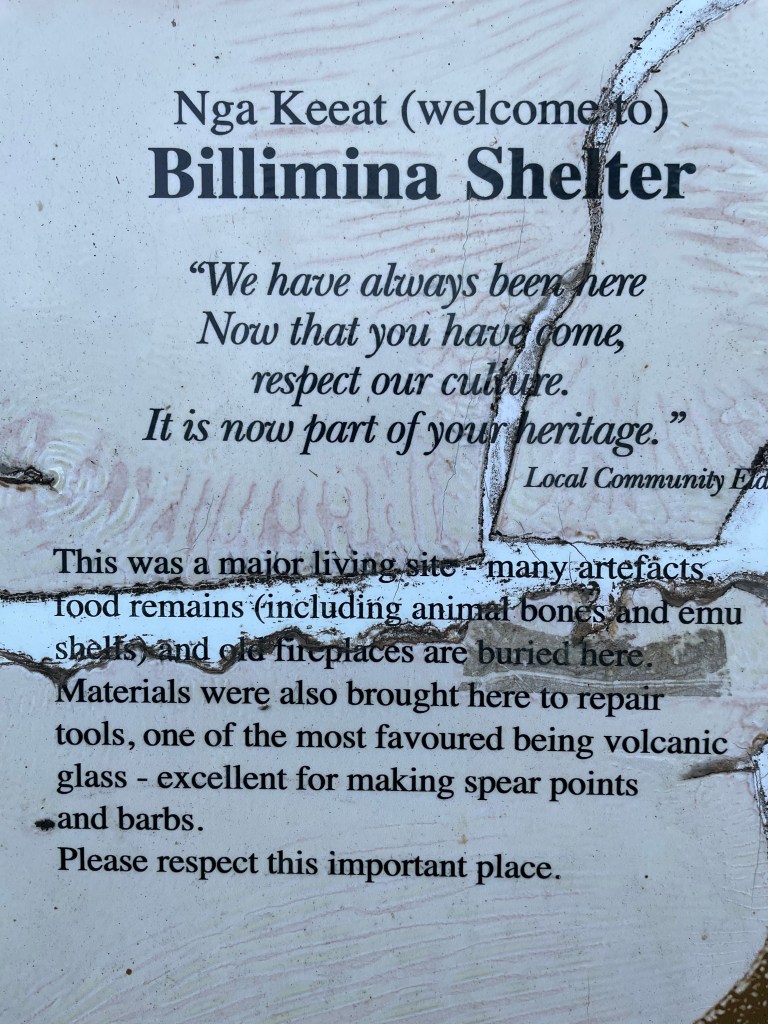
It is an amazing thing to behold and you can only imagine how many stories were told and retold under this mighty rock, possibly over 1000s of years.
But with the temperature getting lower and the sun giving one last burst on the range to the south, we hightail back down the track to the car to get out of the bush before it is dark.
There are plenty of roos on the way home and we take it very easy but we all get home in one piece happy we took the detour into our region’s rich and long indigenous history.
 52 weeks 52 walks