
What – private bush block
Where – between Arapiles and Clear Lake
How long – 6.5km
10 words – Relaxing, diverse, great banksias, angry bees, amazing history, resilient landscape
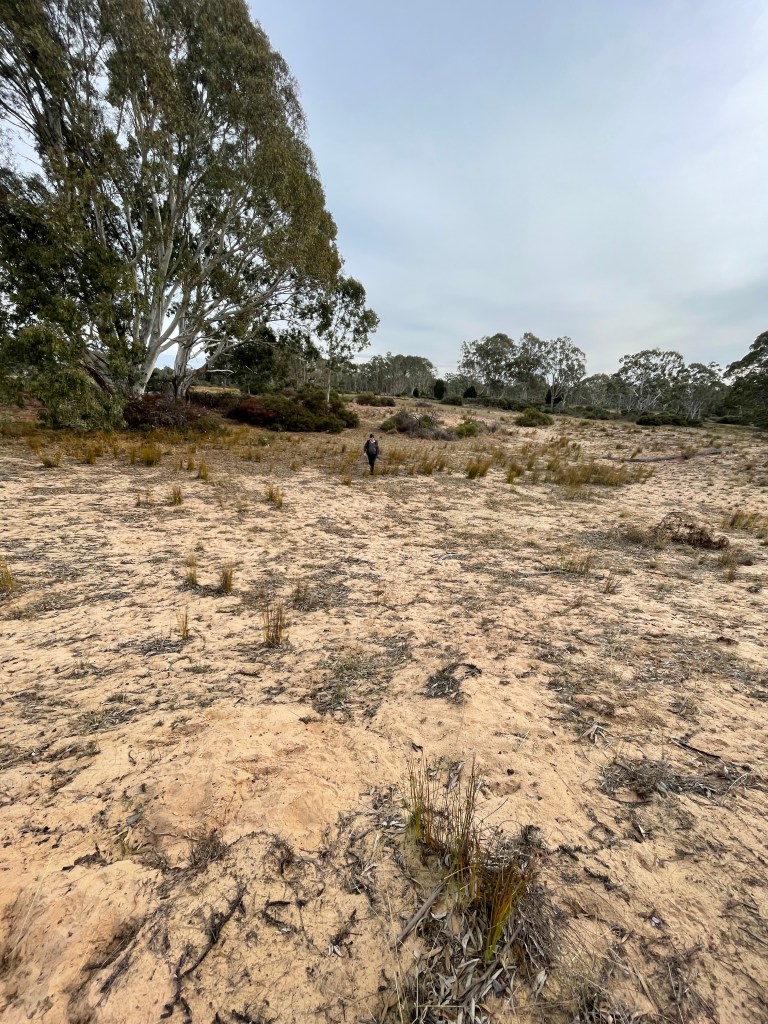
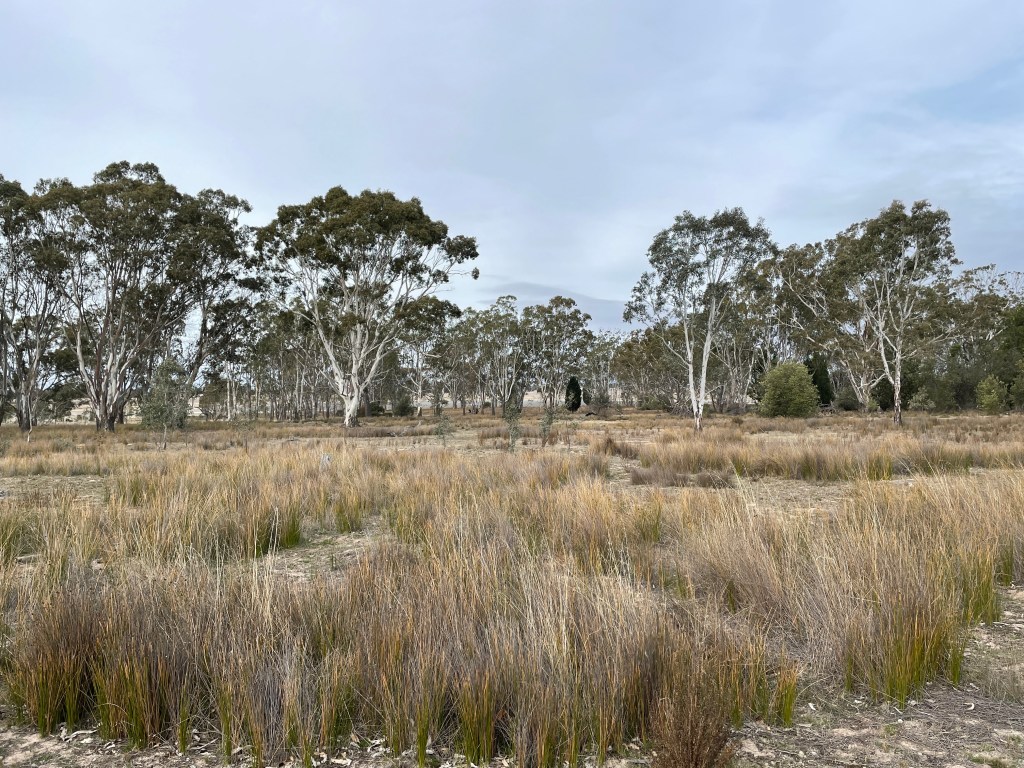
Farming defines much of what many Wimmera people produce, earn and do every day – but it has changed the landscape forever.
What was once a wild tangle of bush, is often now neat lines of cereal and pulse crops.
Many trees are gone or stand as grey skeletons, chopped down, ring barked or drowned in the occasional swamps that became more permanent when the disappearing bush allowed more water to flow.
But all is not lost and today we will visit a survivor. An oddly shaped chunk of bush that was probably too sandy and deemed too marginal, to fully clear and crop.
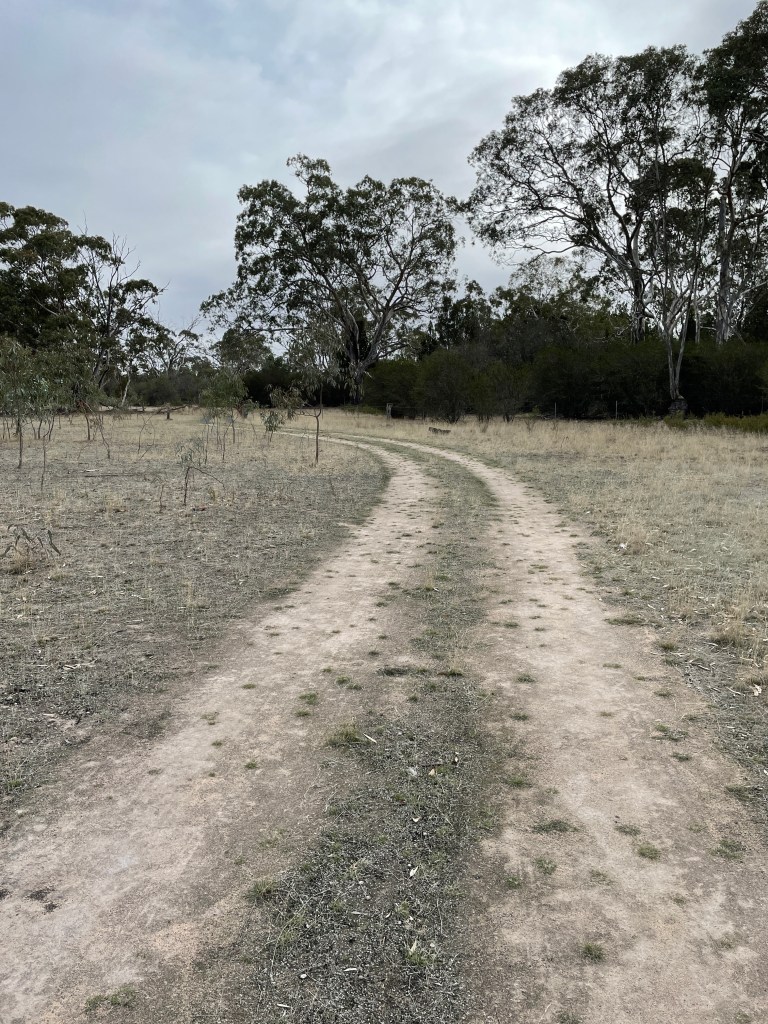
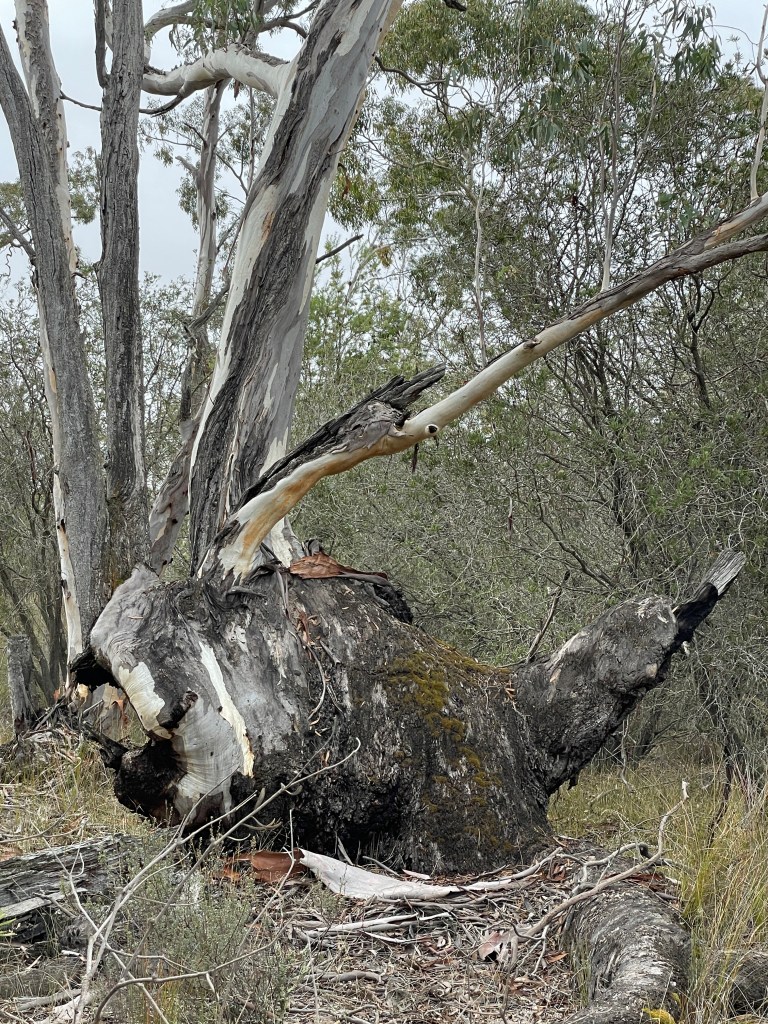
We are down near Clear Lake on Wotjobaluk Country at the block of my friends Deb and Tom. For almost a decade and a half they have cared for this land. Removed the sheep, fought battles against rabbits and weeds and triumphantly watched the land slowly recover.
We are exploring the North Western end of this block, starting at a highlight, two grass trees happily growing on the block, one tiny remnant.
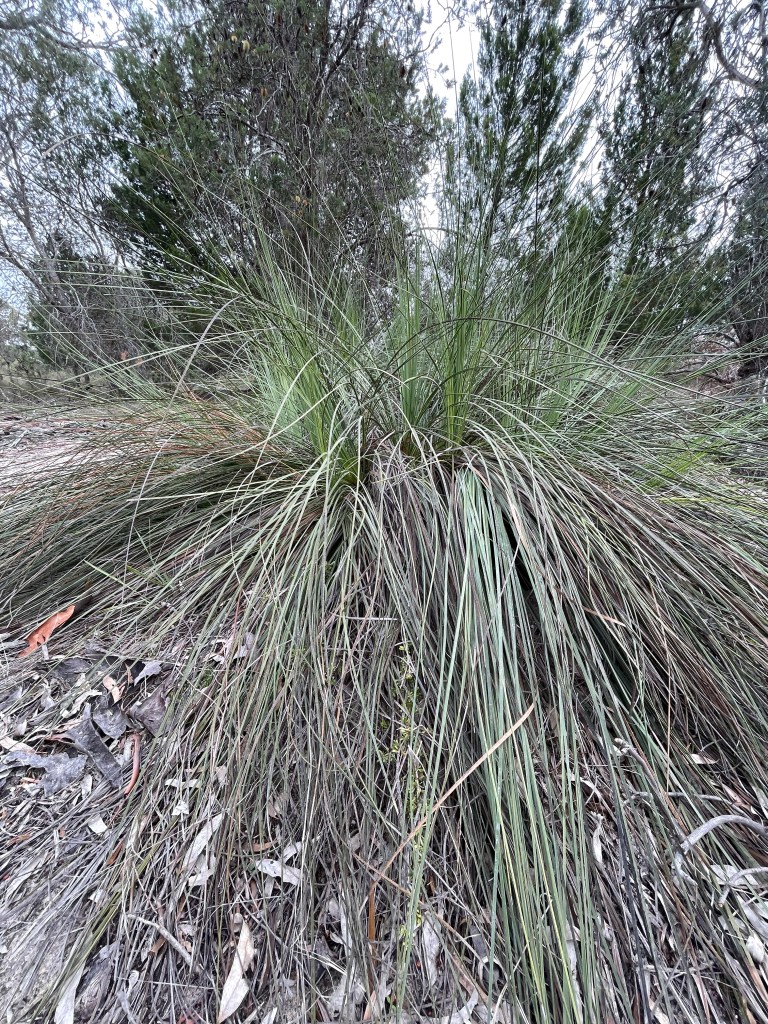
It is hard to imagine such sandy ground not being a home to a host of these hairy plants but for some reason this is a rare site.
It sits in a veritable garden of lemon and gold banksias and daphne heath and under the watchful gaze of a resident black wallaby who hardly moves as we pass.
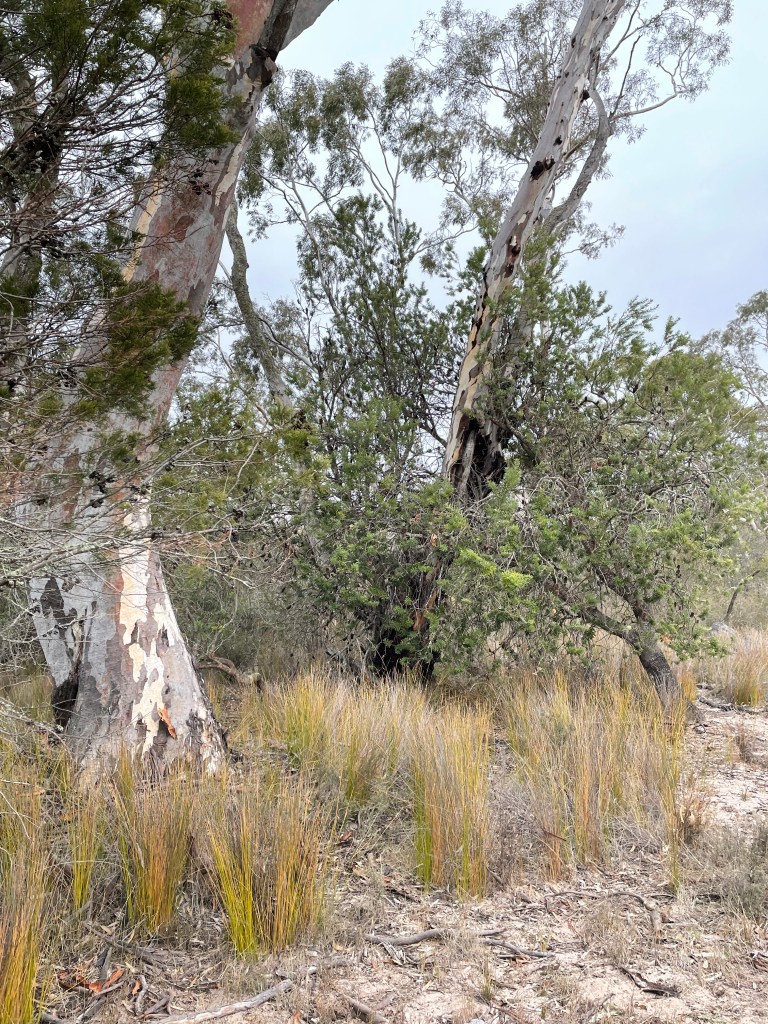
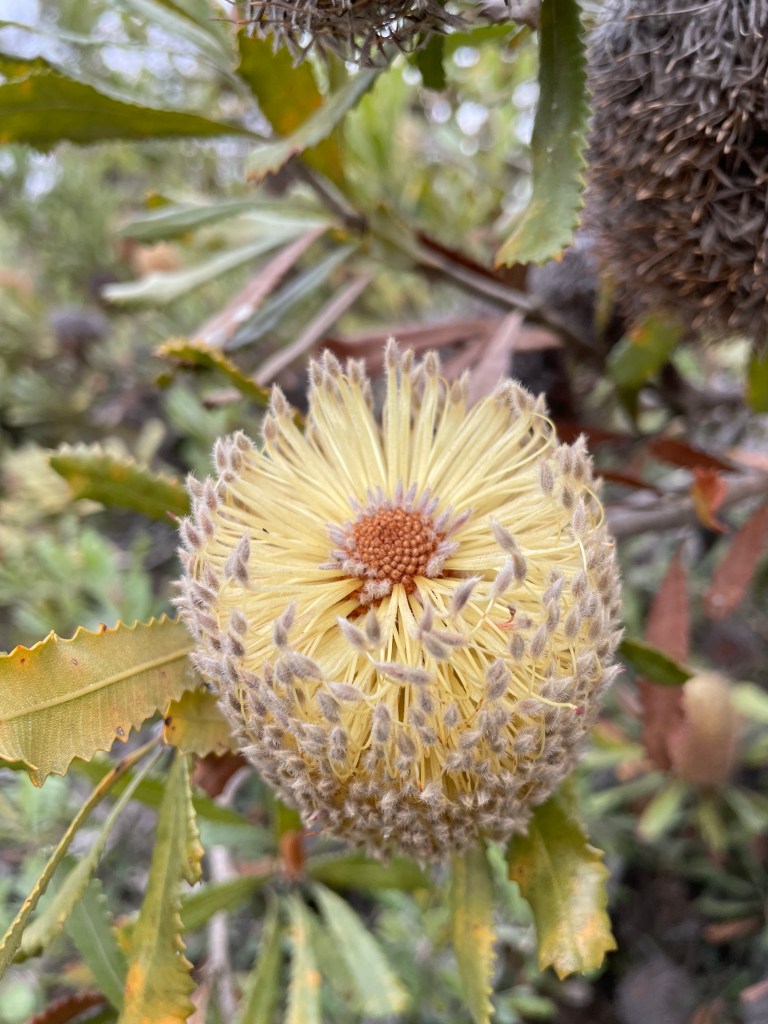
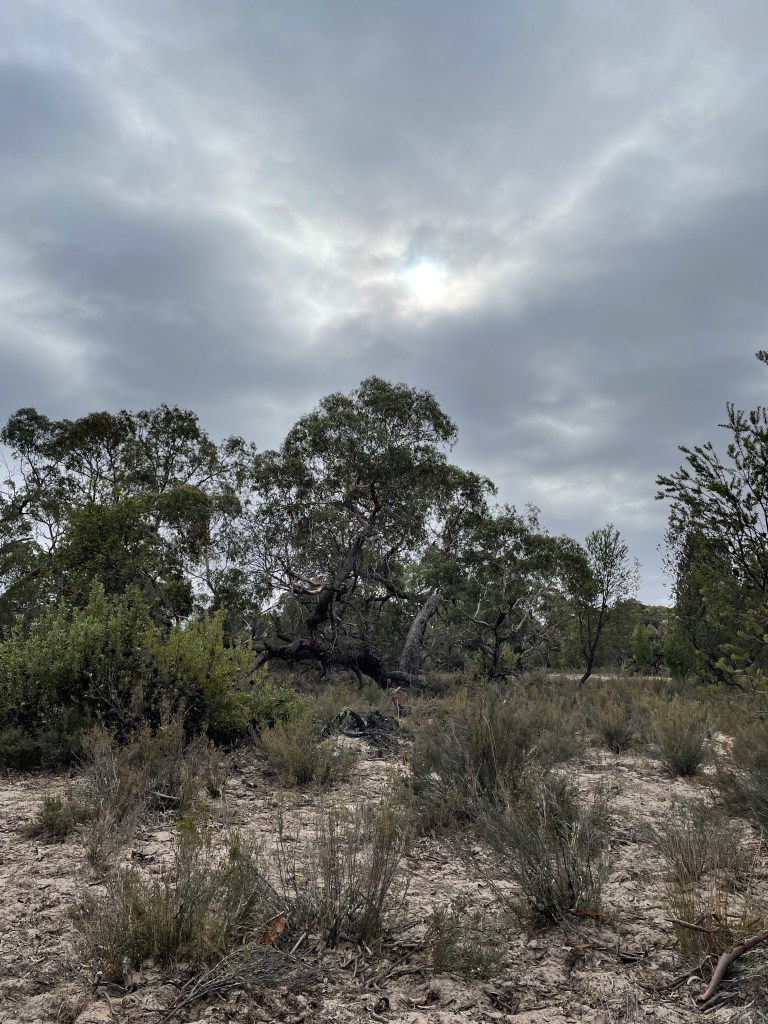
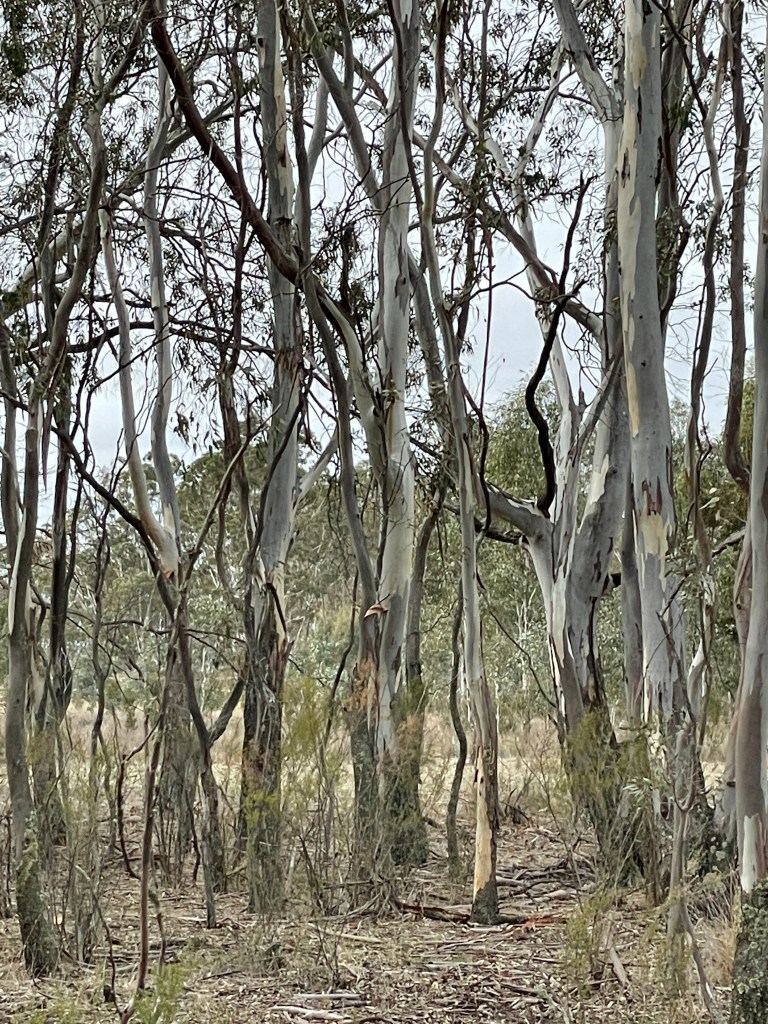
The ground rises slightly and we pass a few more yellow gums, stringy barks and banksias before descending to a seasonal swamp flanked by old thickets of Callistemon (Scarlet Bottle brush).
Like the swamp, they are looking pretty thirsty. A pack of thin grey brown trunks huddled together with their ‘bad hair’ branches of sparsely covered foliage rising sticking up all over the place.
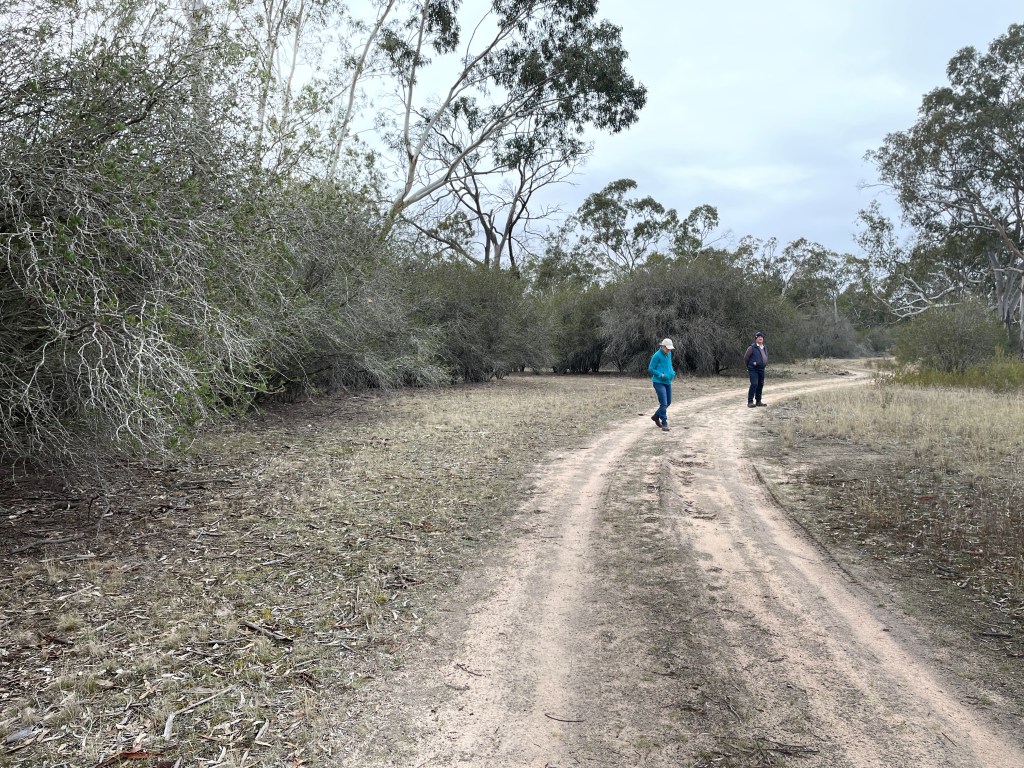
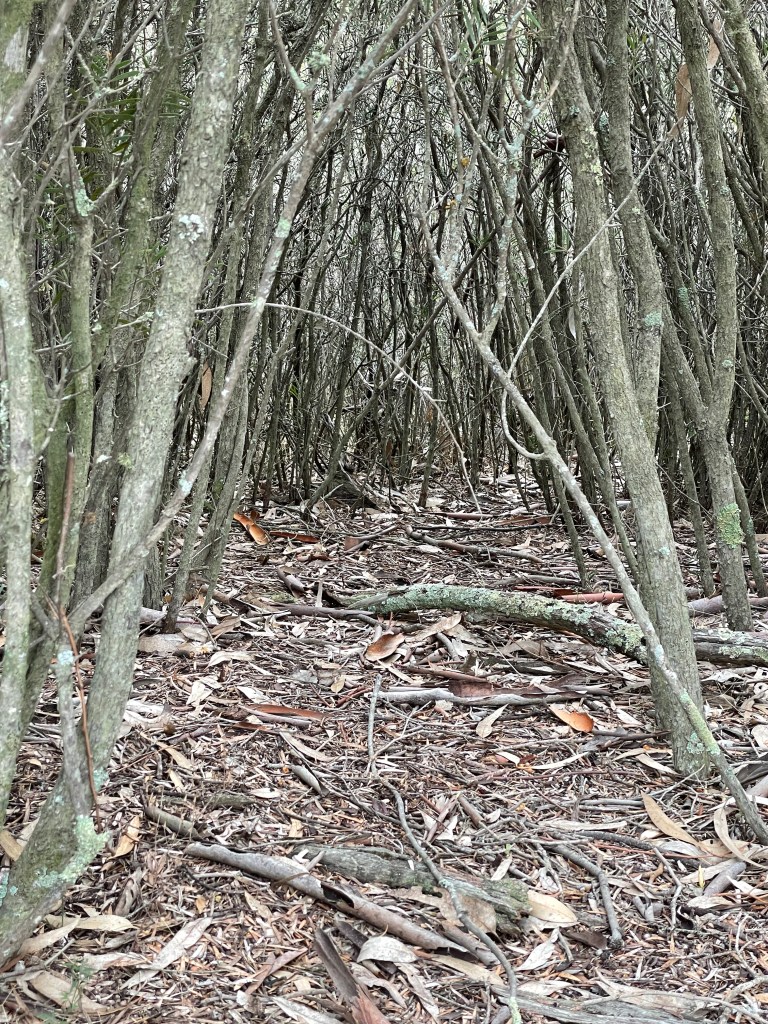
It has been a long time between deep drinks. This swamp was filled to overflowing in the 2010-11 downpours but normally only gets gumboot wet after spring rains.
A small dam dug in the middle of the swamp for long gone stock holds the last bit of local water. You can see a community of wildlife footprints at one end and the turtles which normally bob around in the muddy water are still today. Not a good sign.
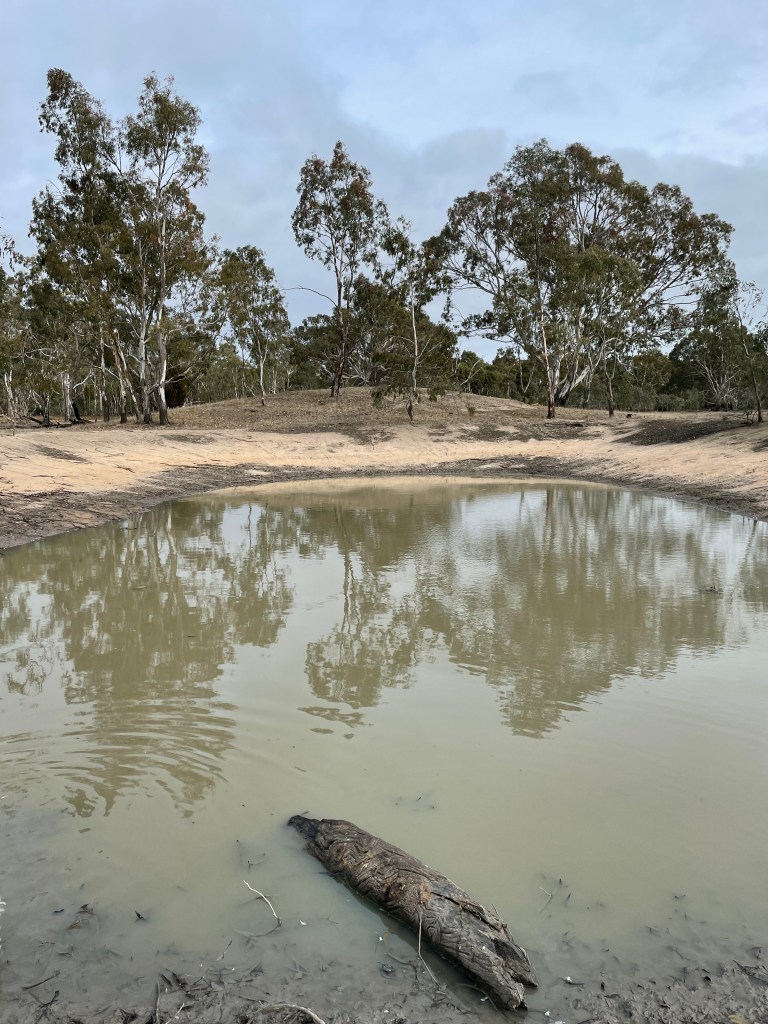

Then in all this winter grey and beige we find an explosion of tiny golden mushrooms, that somehow found enough moisture to break out from sandy soil.
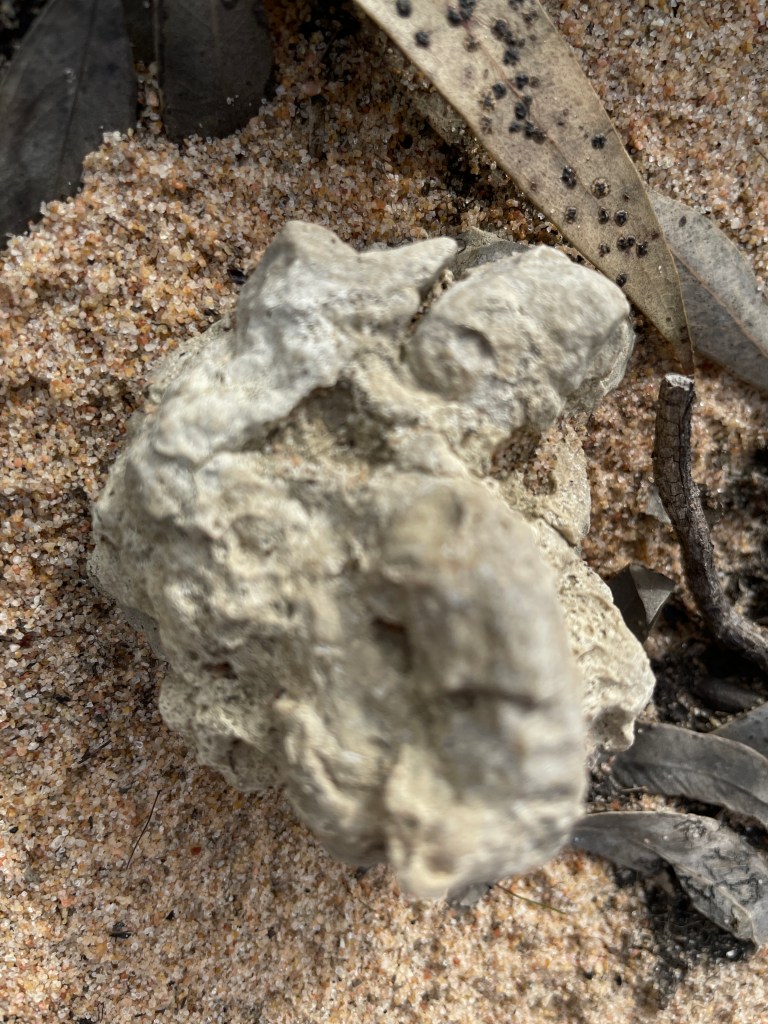
There is quite a bit of limestone around the edge that must have surfaced when the hole was dug. One bit looks like a big ram.

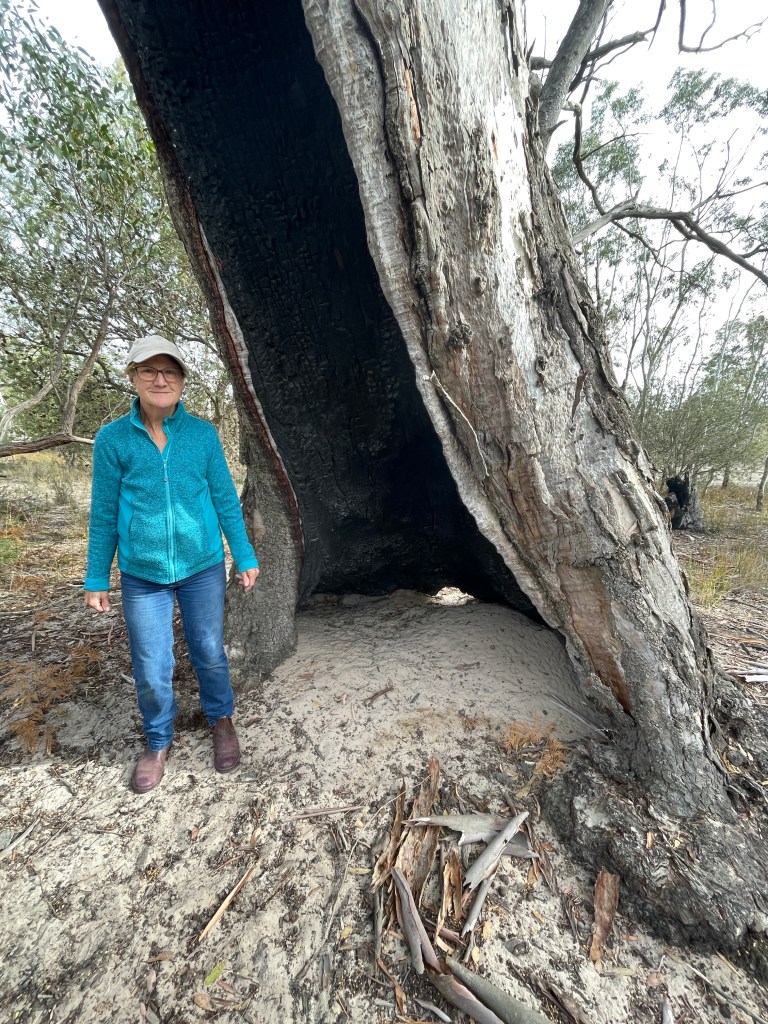
At the Eastern swamp bank is a big tree with a hollow trunk that would provide fantastic shelter against a nasty Southwester. We wonder who may have sought refuge there over the years.
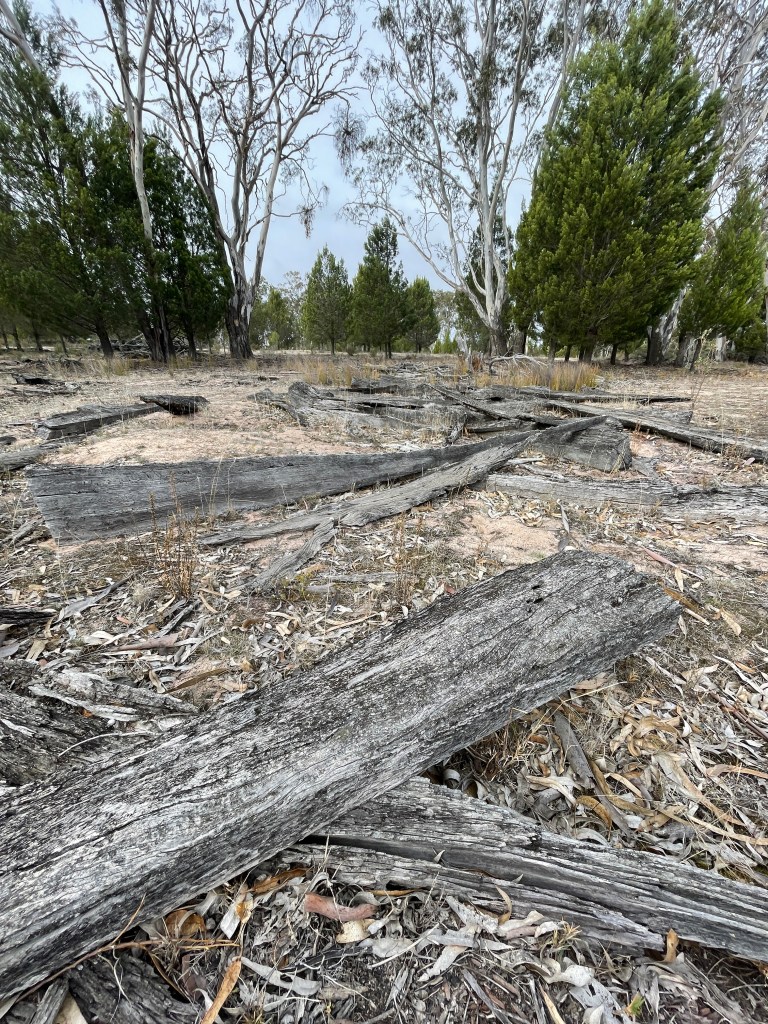
Other trees are not so lucky and sit cut up and abandoned on the ground – cast offs of fencing or sleeper projects in the distant past.
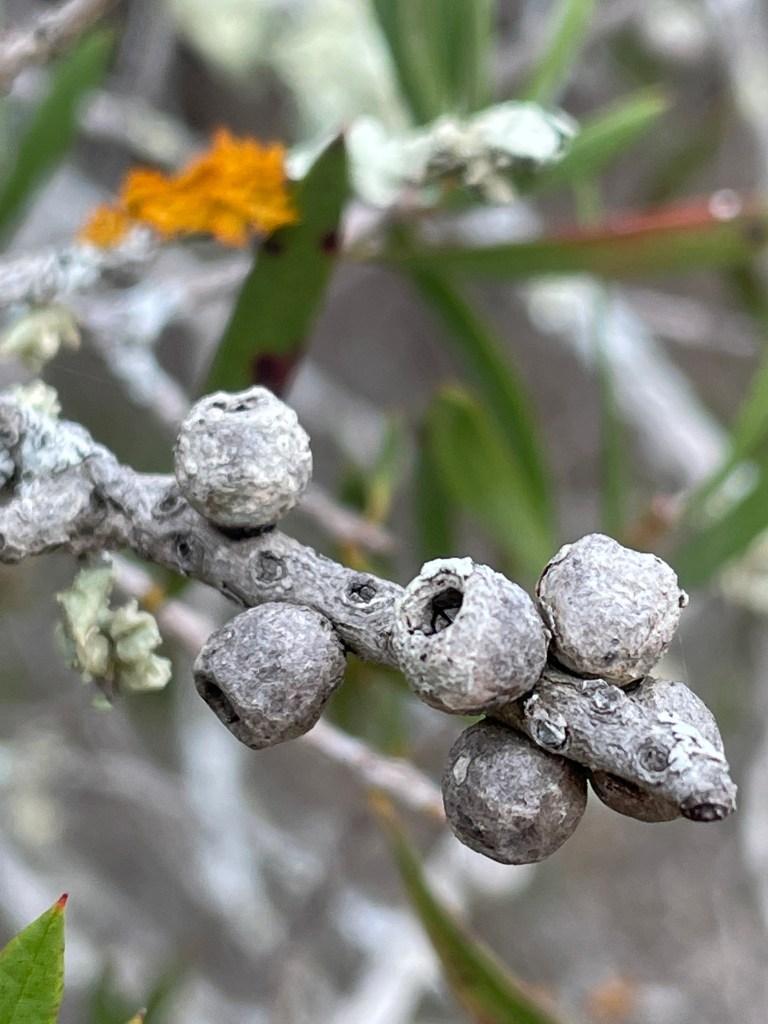
Heading South we come across beautiful mosses, lichens, seed pods and several feathers caught on plants.


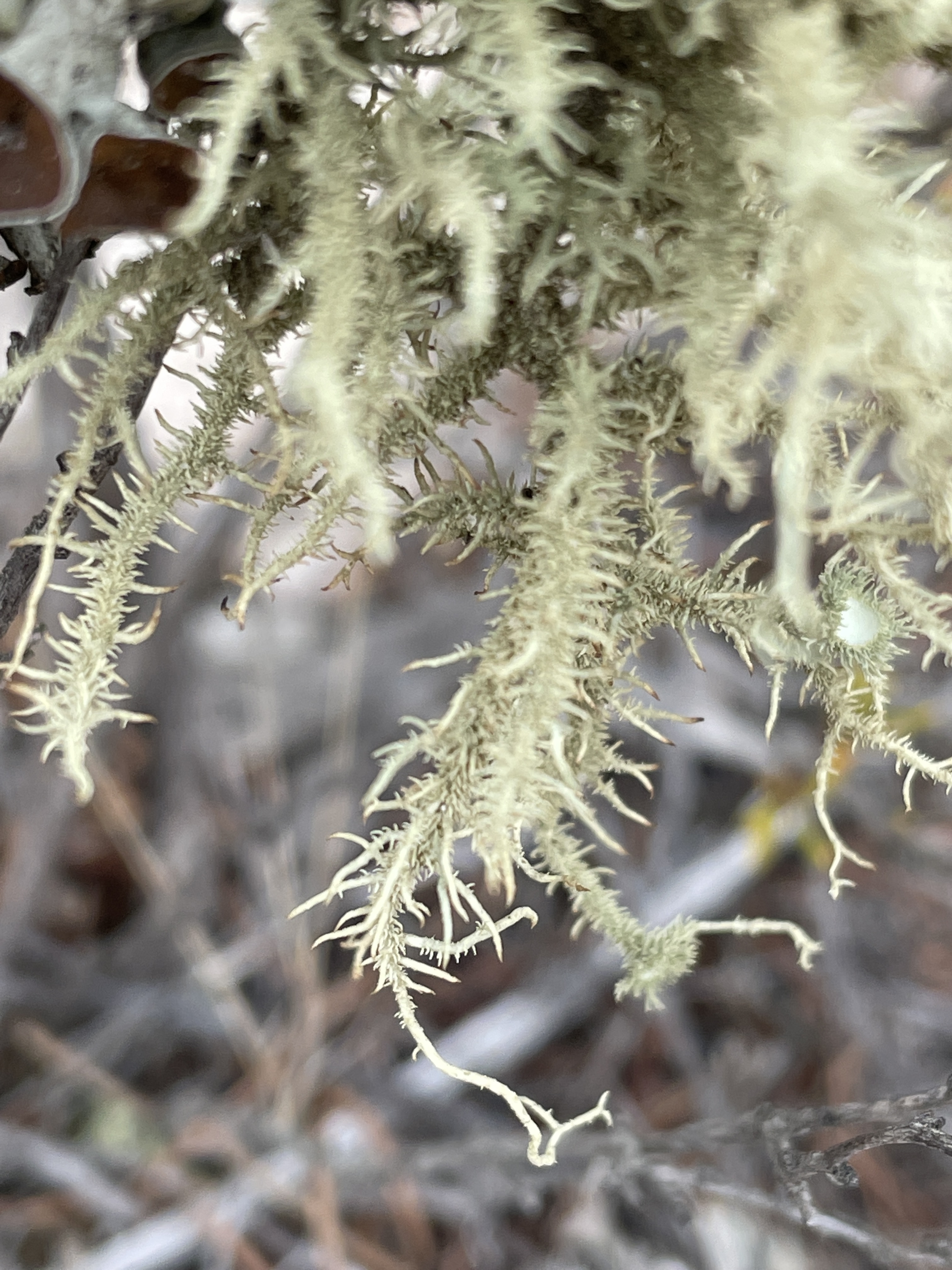
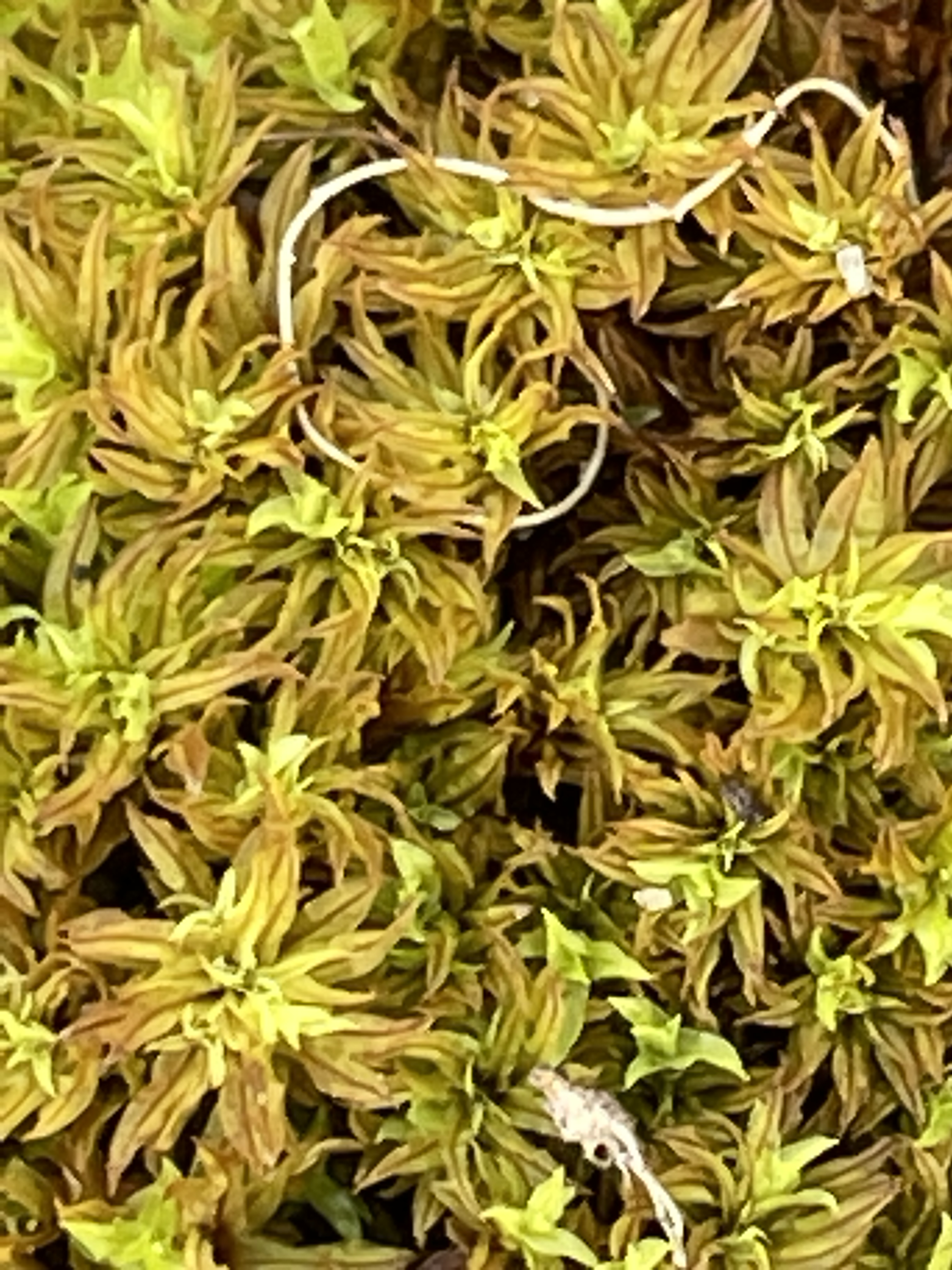

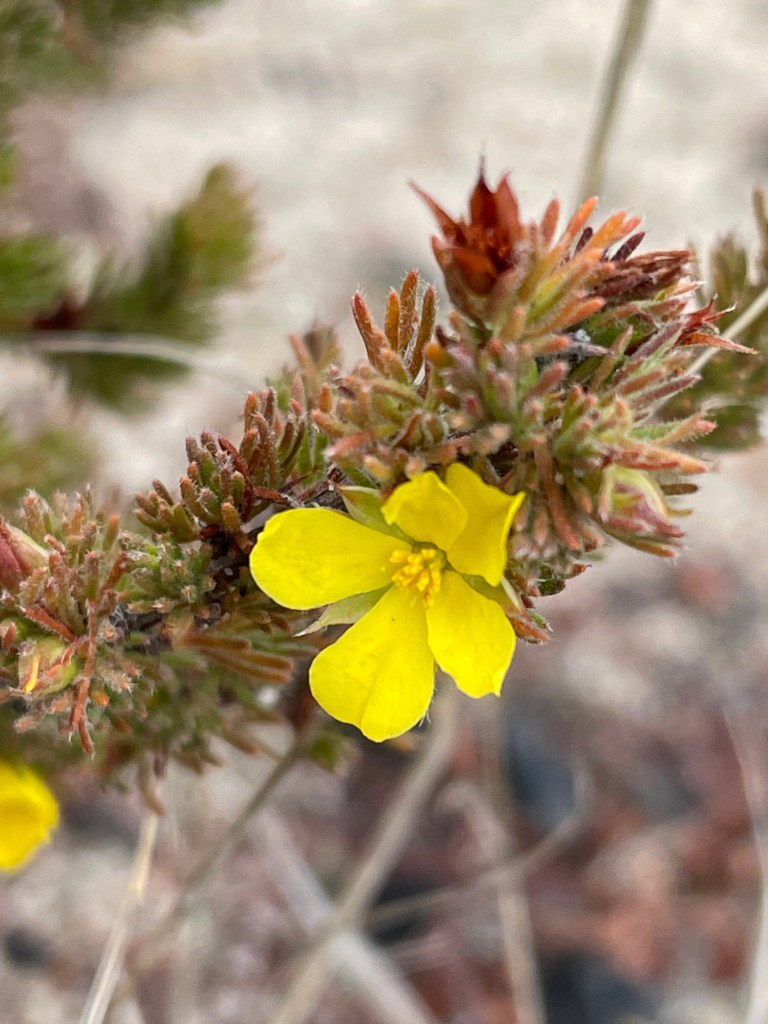
And despite it being a cold but dry start to winter, there is an amazing array of flowers underfoot.
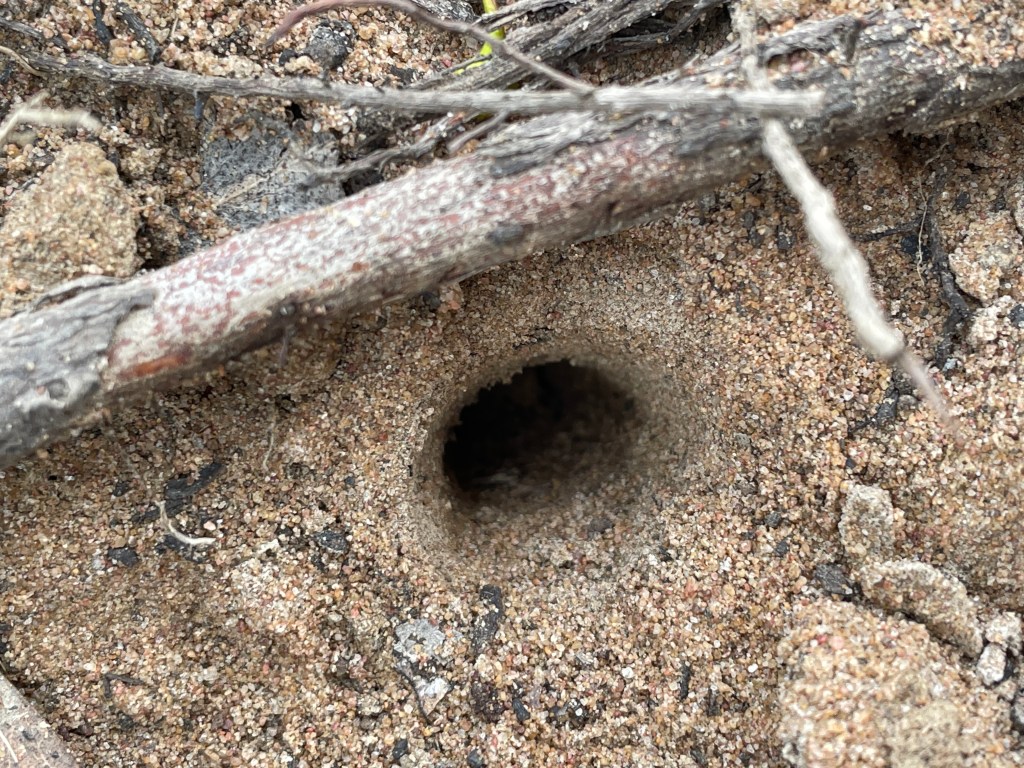
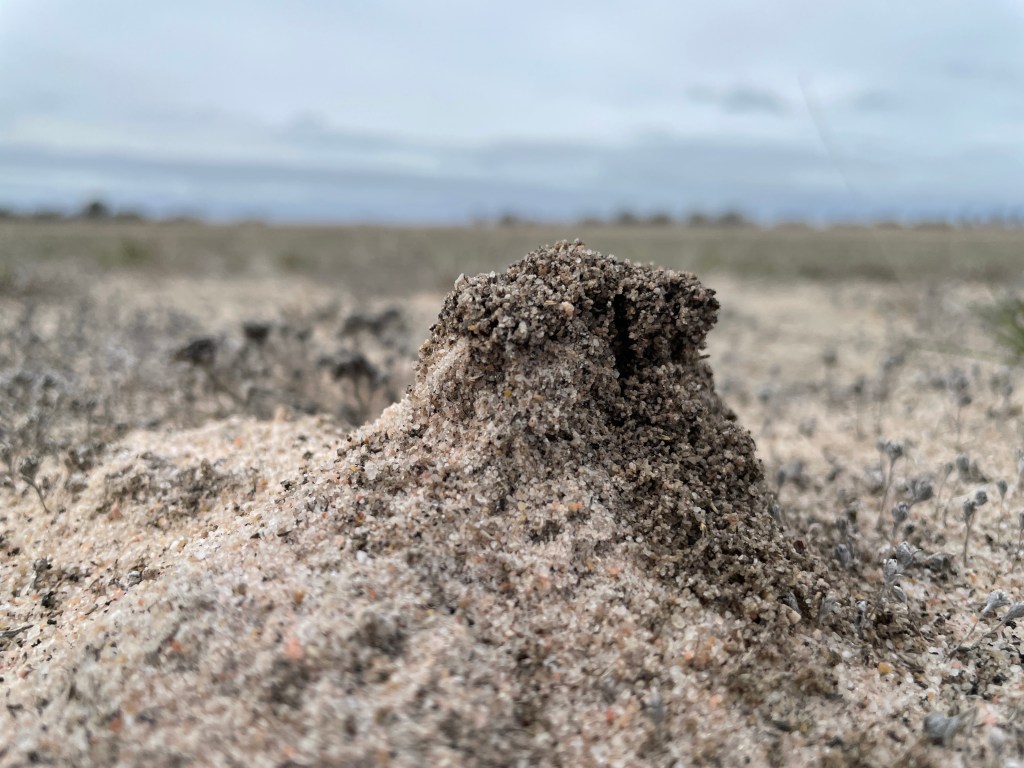
There are also some freshly dug holes around in the sand, courtesy of the resident echidna, whose distinctive nose hole tells us he been hunting ants.
Tom and I head over to a big old gum that looks like it has been ring barked and then he starts running, an angry bee in pursuit. I laugh until the bee’s mates take a liking to my rainbow hat.
I am running, the hat is flung off and we hope the rest will stay put. They do, but Tom gets stung on the face.
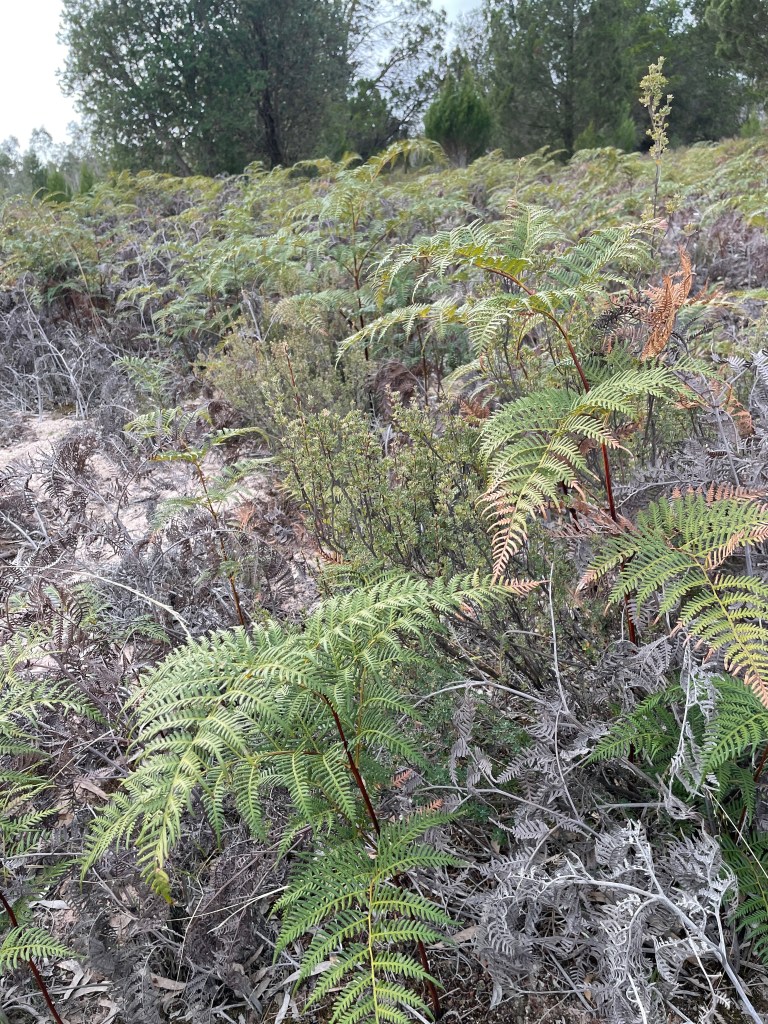
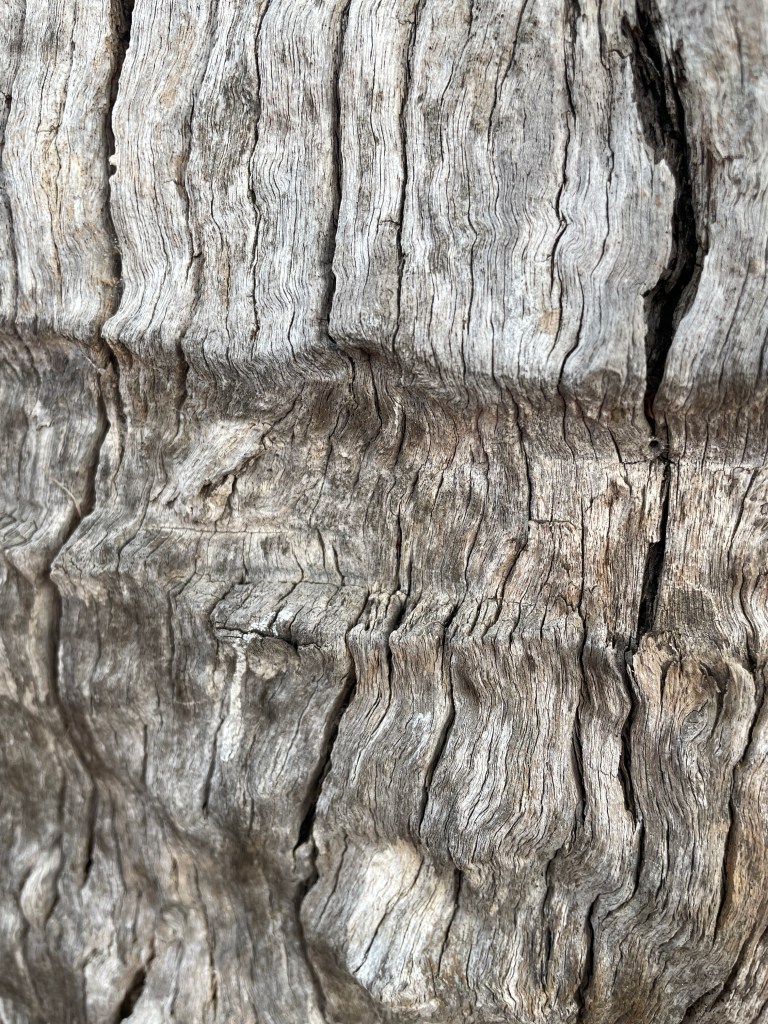
We head to a stand of bracken and put some sap from the stem on his face.
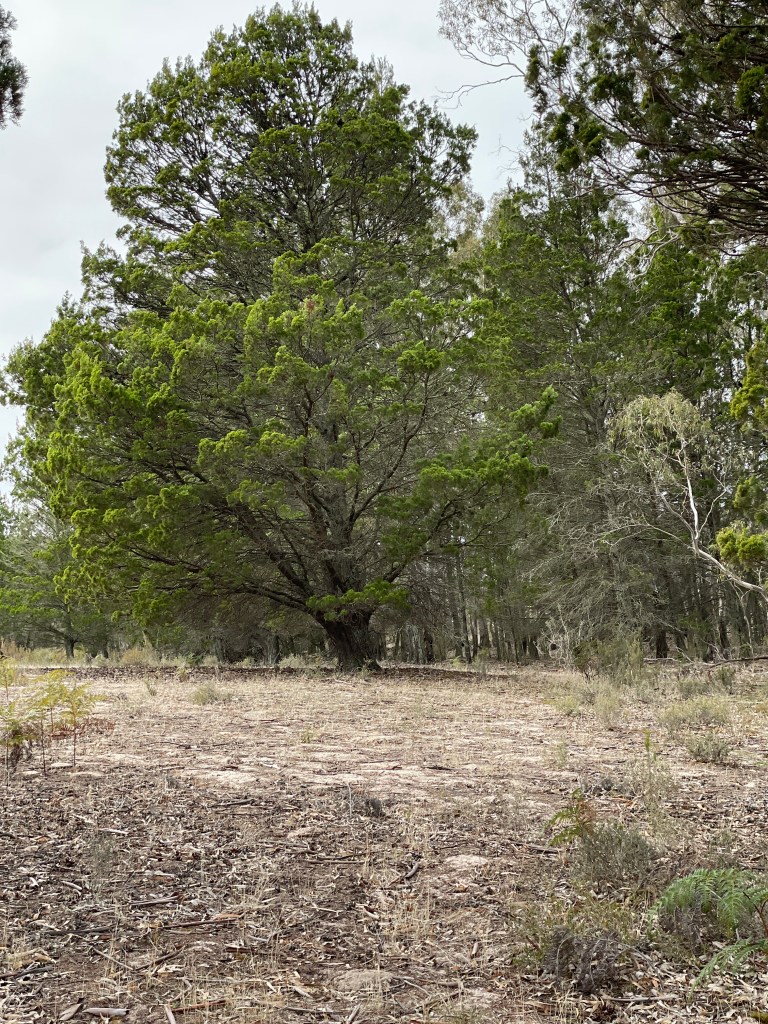
After another swampy area the scrubby heath gives way to taller gum trees and a cleared patch home to a several kangaroos.
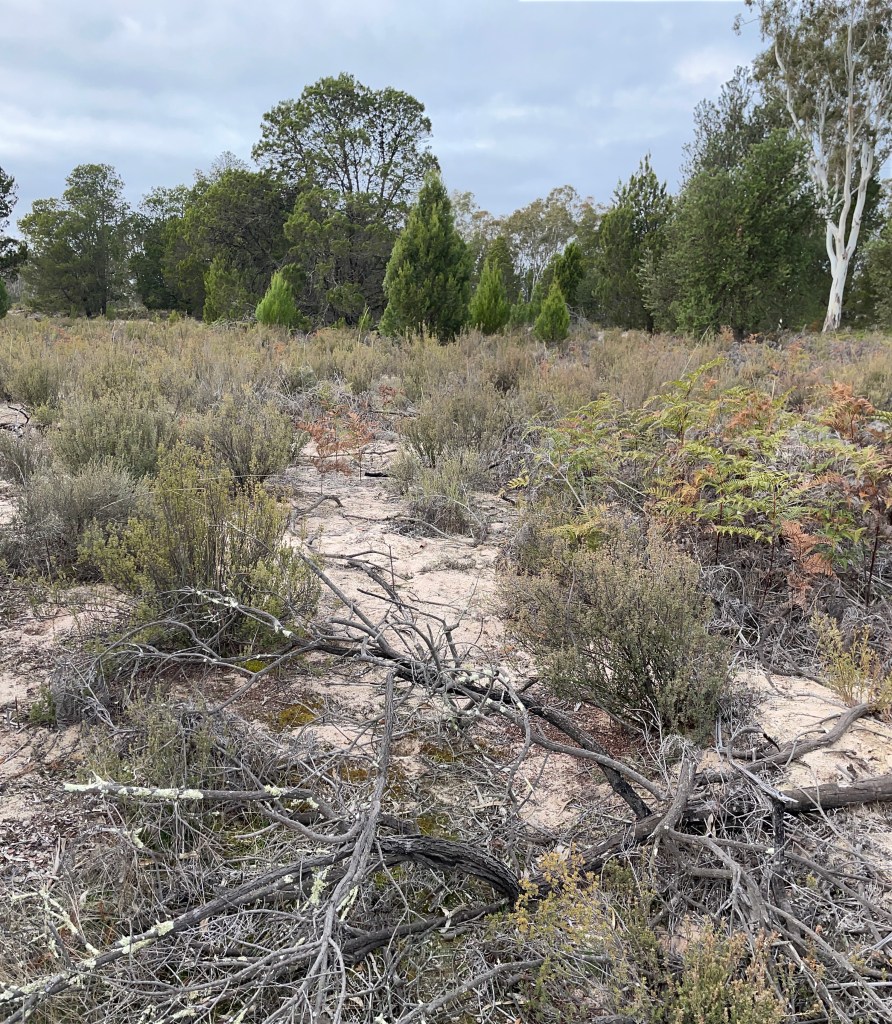
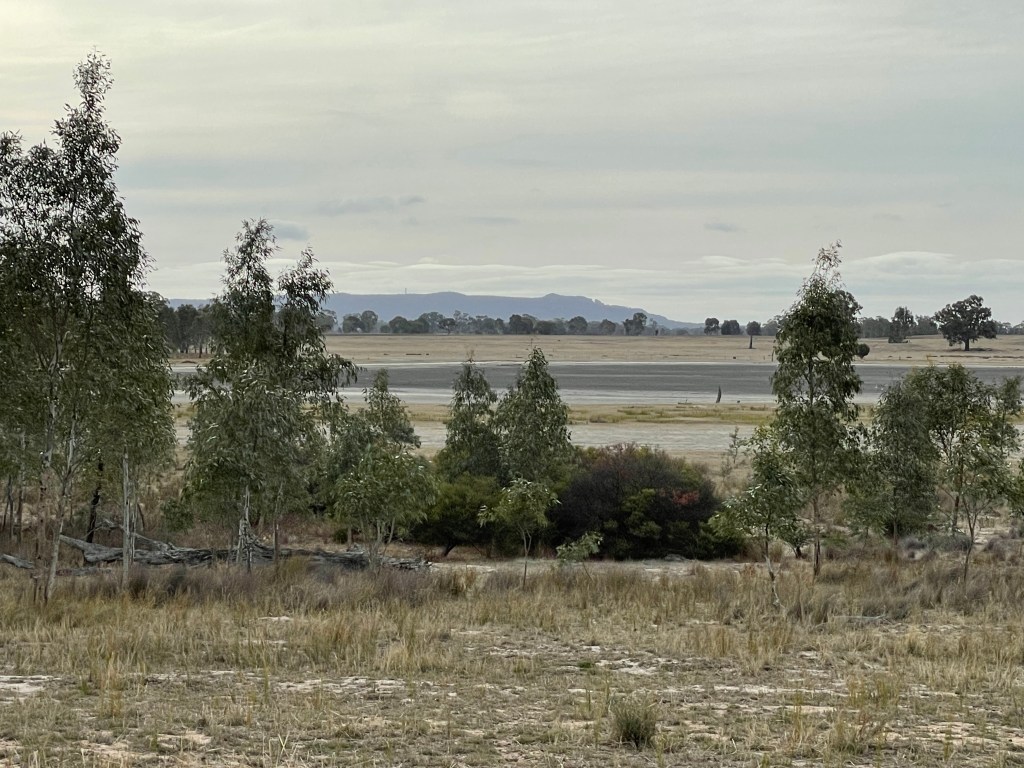
Near the South Eastern boundary we reach a lunette looking North over Hectors Swamp, a spring fed ephemeral lake also awaiting its spring fill.
Among the sand Tom points out lumps of ochre, a sharpened stone tool and some quartz pieces probably used by this the block’s original residents.
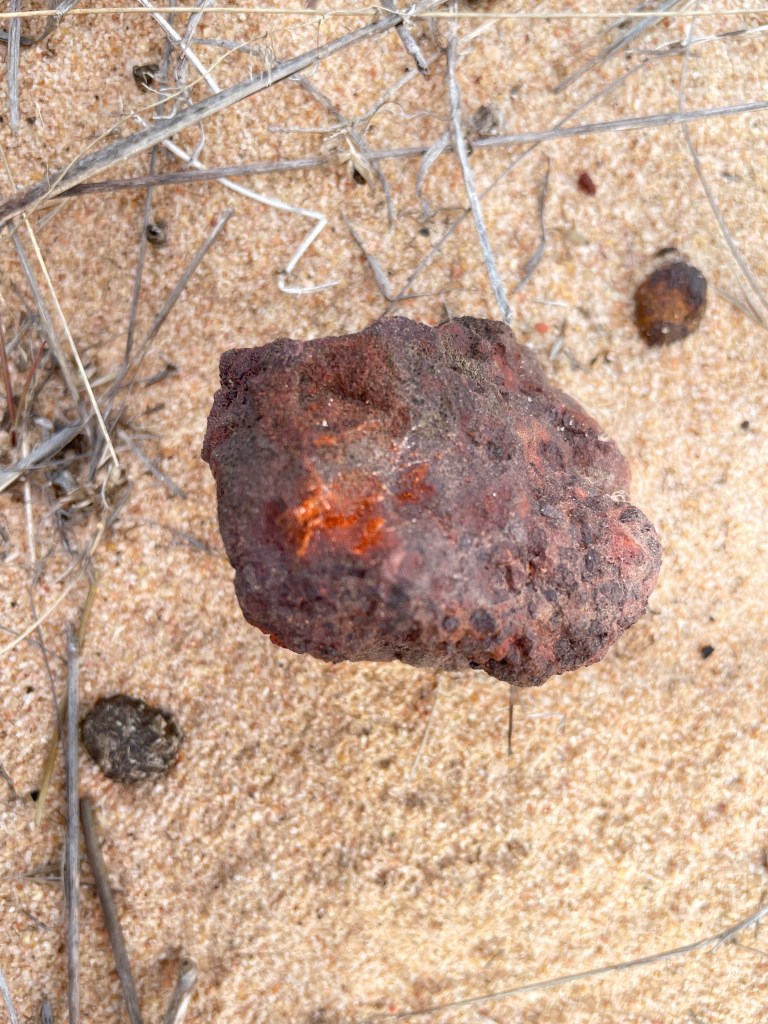
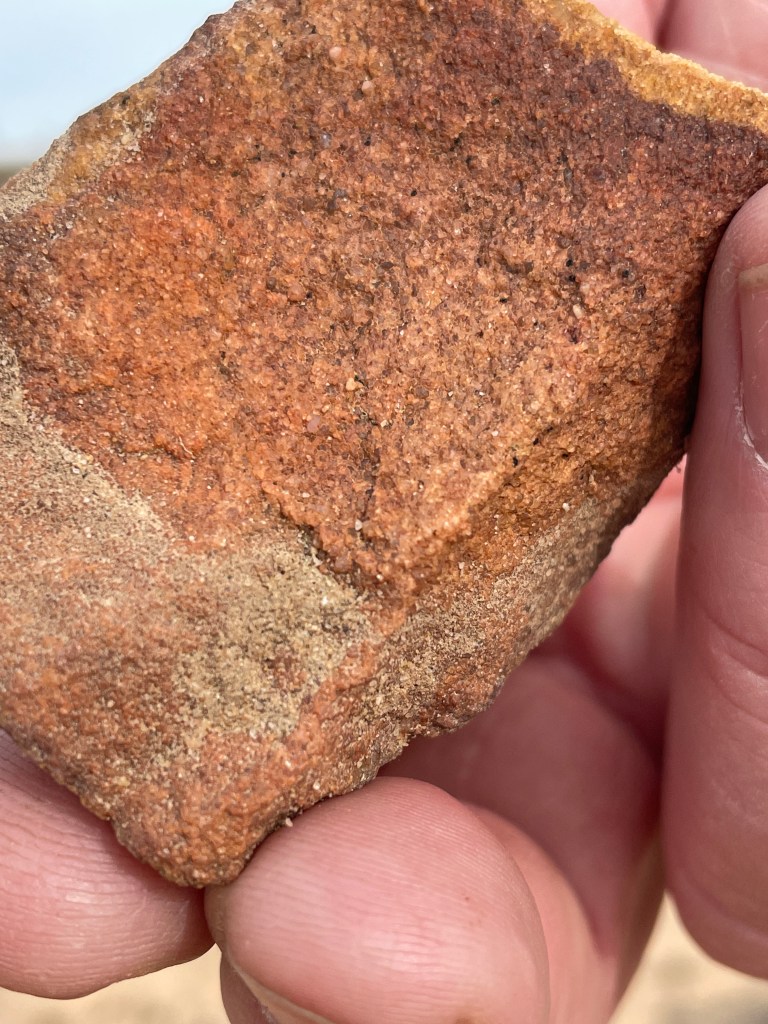
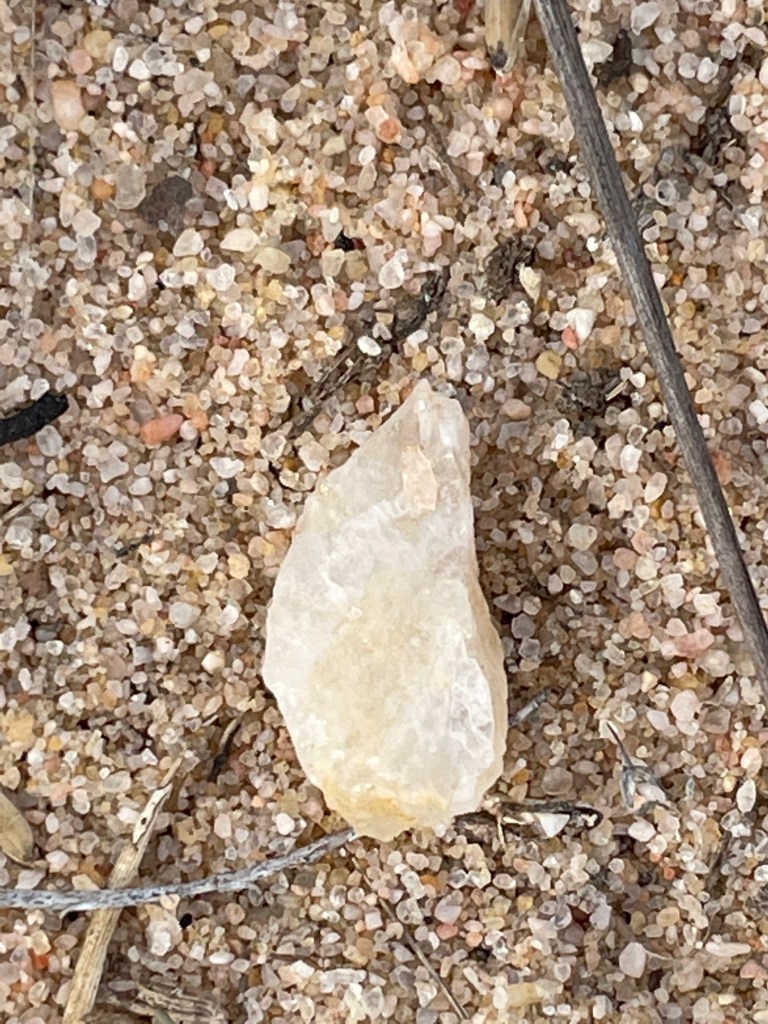
It is pretty amazing seeing all these bits of history which we leave exactly where they were found.
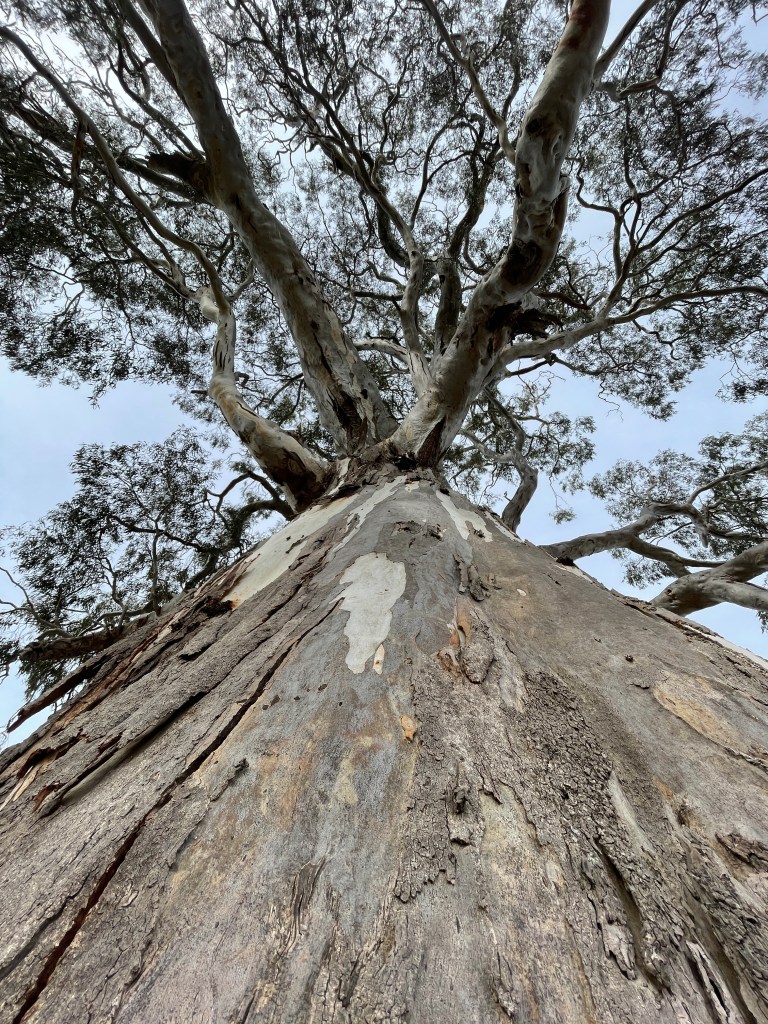
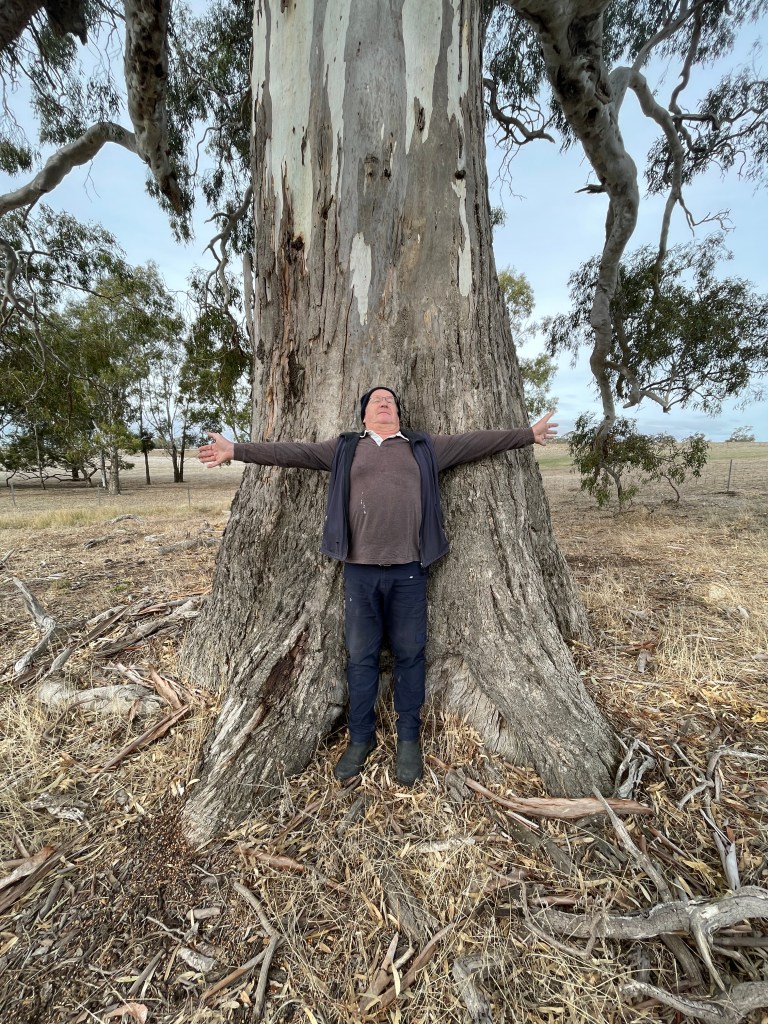
Watching over us during our search is the biggest tree on the block. A mighty red gum that would have some stories to tell and also enjoys a magical view of Hectors Swamp and Mt Arapiles – Dyurrite.
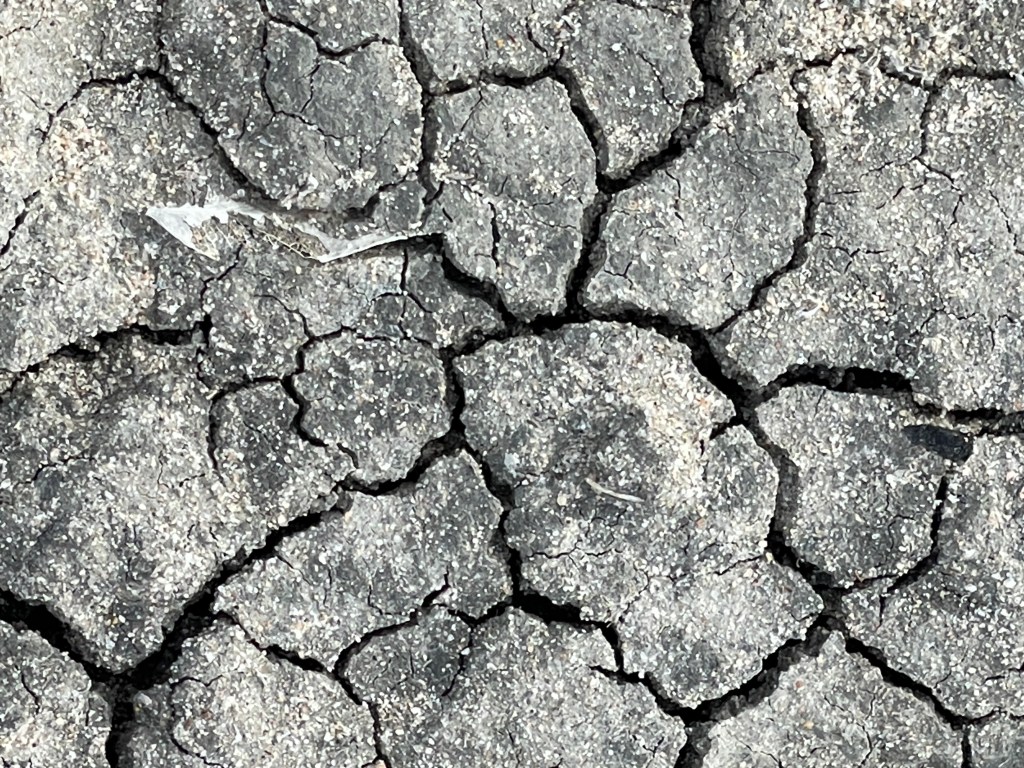
We move from this tree down to the lake. Deb reckons it has filled every year since they bought the place but not last year.
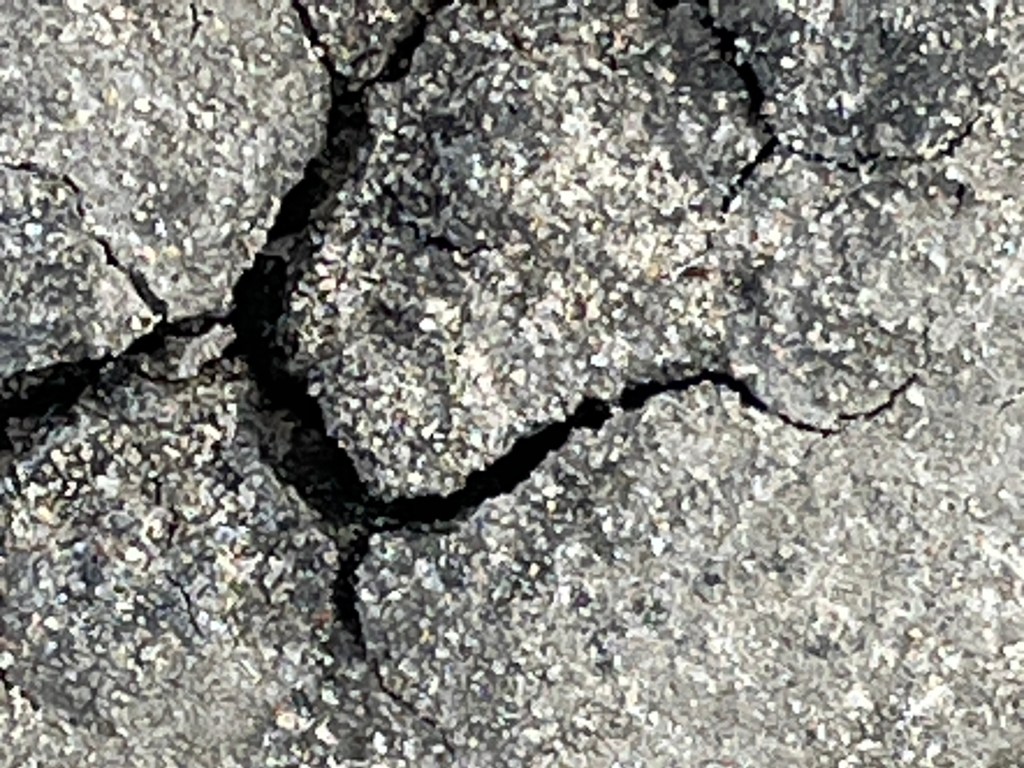
The cracks are plenty and there is no risk of sinking when we walk over the surface.

From here it is back to the scrubby heath and through some more trees and sand and until we reach the another interesting tree.
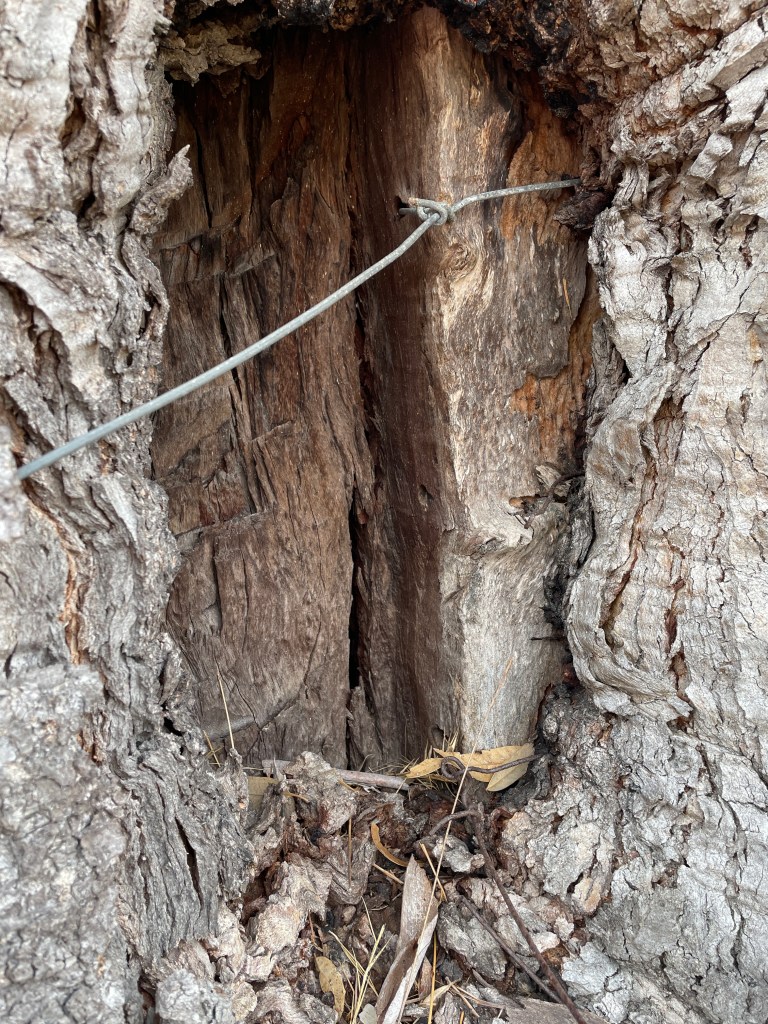
It seriously looks like the trunk has grown around a fence post. A hollow reveals a post with wire right inside the tree. So we will end with a mystery.
Thanks Deb and Tom for our Clear Lake – uncleared block adventure – it might have had a bit of a sting but also showed what wonderful non-cropped things do grow in the Wimmera.

 52 weeks 52 walks