Week 29 – Norton crosses
What – Parts of Norton Creek
Where – Around Wonwondah, off Henty Highway, south of Horsham.
In 10 words – Gentle walk, nice creek, roos, moss, red dirt, unusual scar.

Week 29 and it has rained. Things are wet so we must carefully pick our roads.
Signs saying ‘dry weather road only’ don’t lie.
I settle on a couple of parts of Norton Creek around Wonwondah, just off the Henty Highway.
About 50km long, Norton is not the most famous Wimmera waterway.

MacKenzie river boasts waterfalls and platypus; Yarriambiack shares its name with a shire and is a distributary – flowing out of – instead of in-to the Wimmera River; and well know Burnt Creek joins the Wimmera in Horsham township.
Fame is often over rated and unassuming Norton turns out to be an impressive quiet achiever.
It begins its watery wanders 250m above sea level near the northern tip of the Black Range and drops about 120m on a journey north through Mockinya, Wonwondah and Lower Norton ending at the Wimmera River between Horsham and Quantong.
Today we will visit the creek at two sites around Wonwondah, about 20km south of Horsham.
Wonwondah – which is possibly an Aboriginal word for a small bush or swamp, was the name used initially by white settlers for a large station and then for the settlement that followed in 1884. Places have been referred to East, North and South Wonwondah over the years and hosted several schools and a football and cricket club.
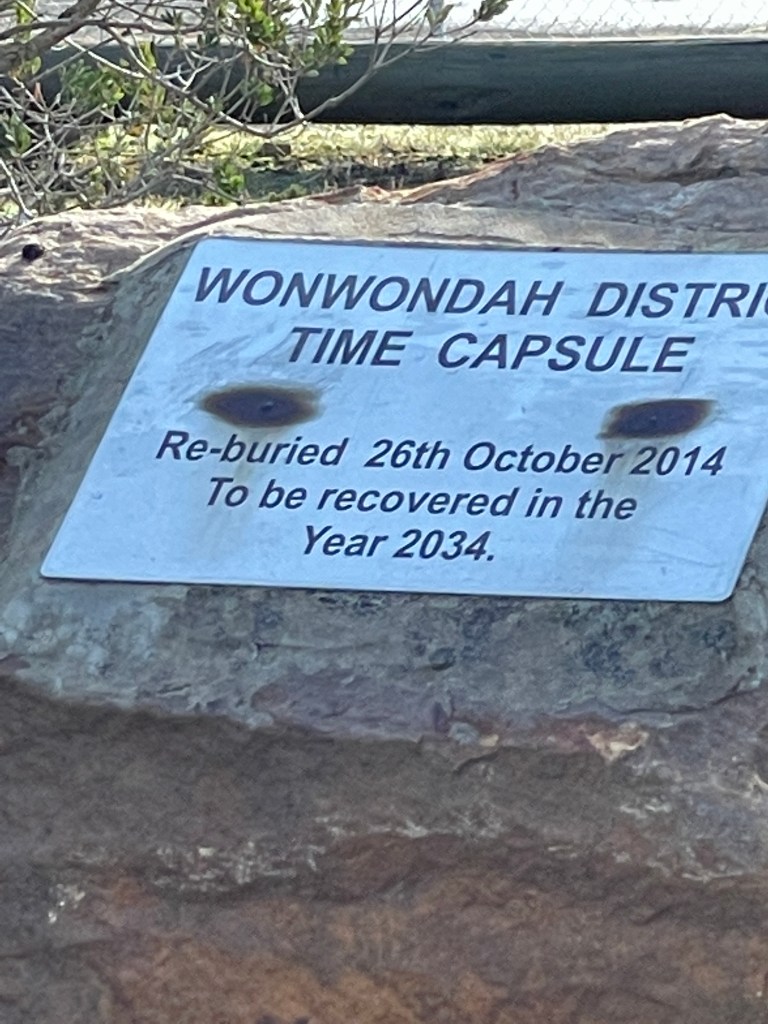
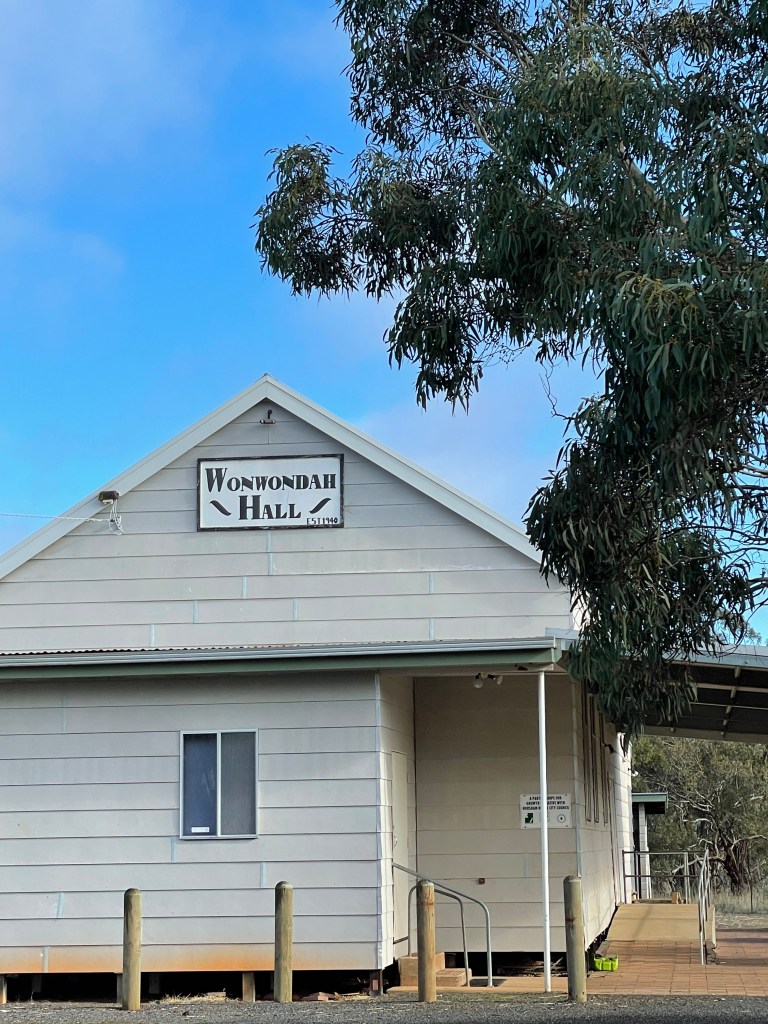
Today Wonwondah Recreation Reserve, which has the hall and the tennis court, is around the corner from the CFA shed and former Wonwondah North Primary site.
The local hall committee boasts well-tended gardens and is renowned for its catering with one visiting Premier particularly impressed by their homemade lamb shank soup.
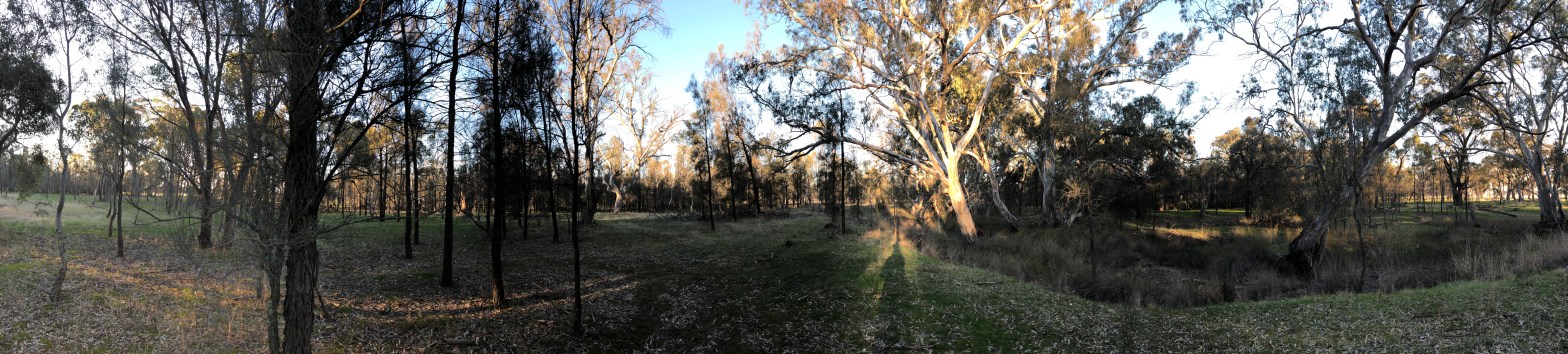
Our short walk takes us through a gateway near the Hall and into the bush along the creek.
There looks to be a pond, possibly created to help sustained the frog population when the Wimmera Mallee pipeline replaced the open channel water supply. I don’t hear any frogs but see a series of roo torsos bobbing up and down between the trees as they make a run (or should that be a bound) for it.
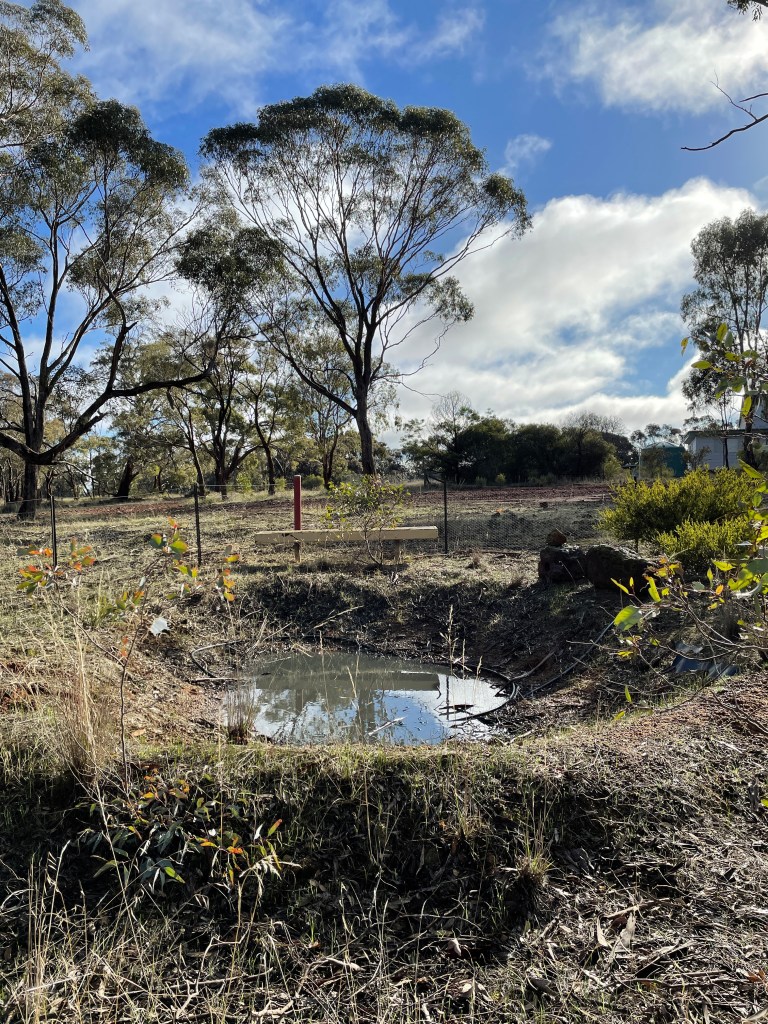
It is a nice bit of bush which I assume is a Crown land reserve. Norton Creek skirts along the edge and while virtually dry, its big holes suggest Norton would spring to life with good rains.
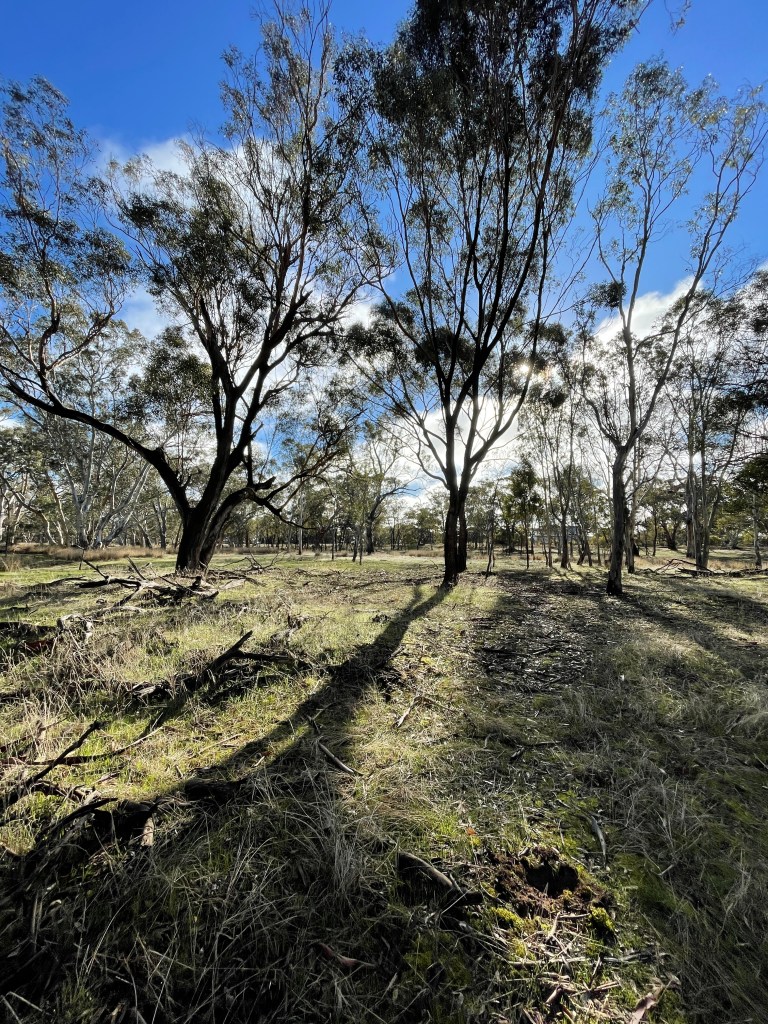
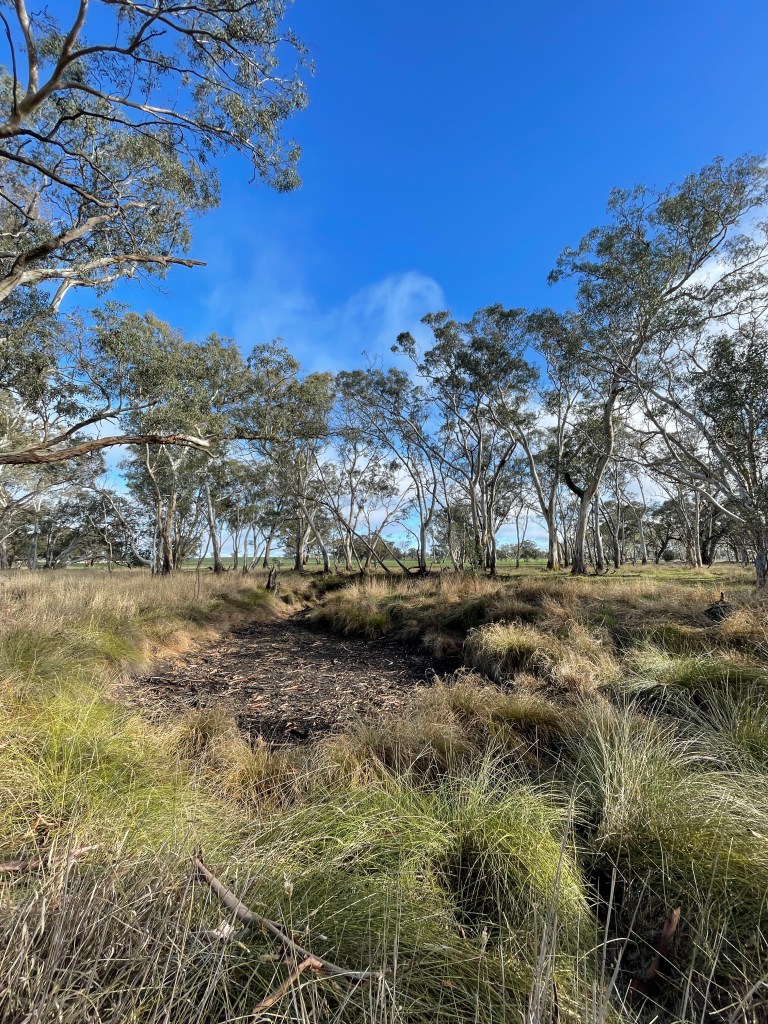

This obviously happened in 1935 when the swollen creek put the Wonwondah football final on hold until visiting players could cross the water to get to the ground.
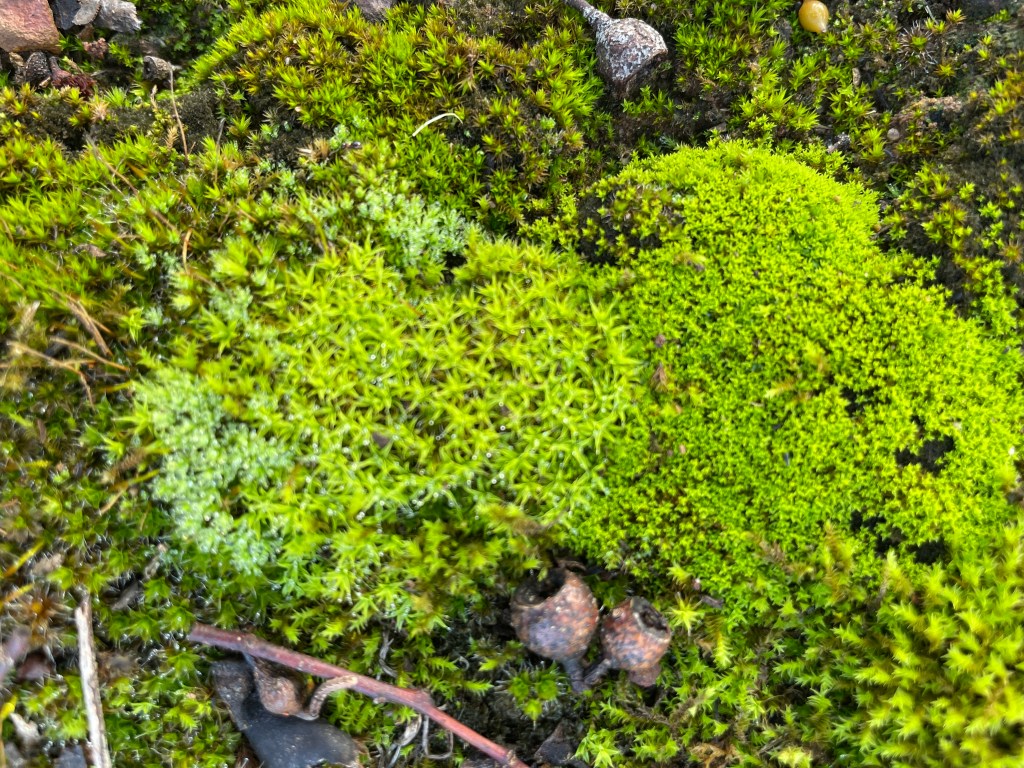
The soil here is an interesting buckshot and there is quite a bit of vibrant green moss about. It is a short but nice walk.
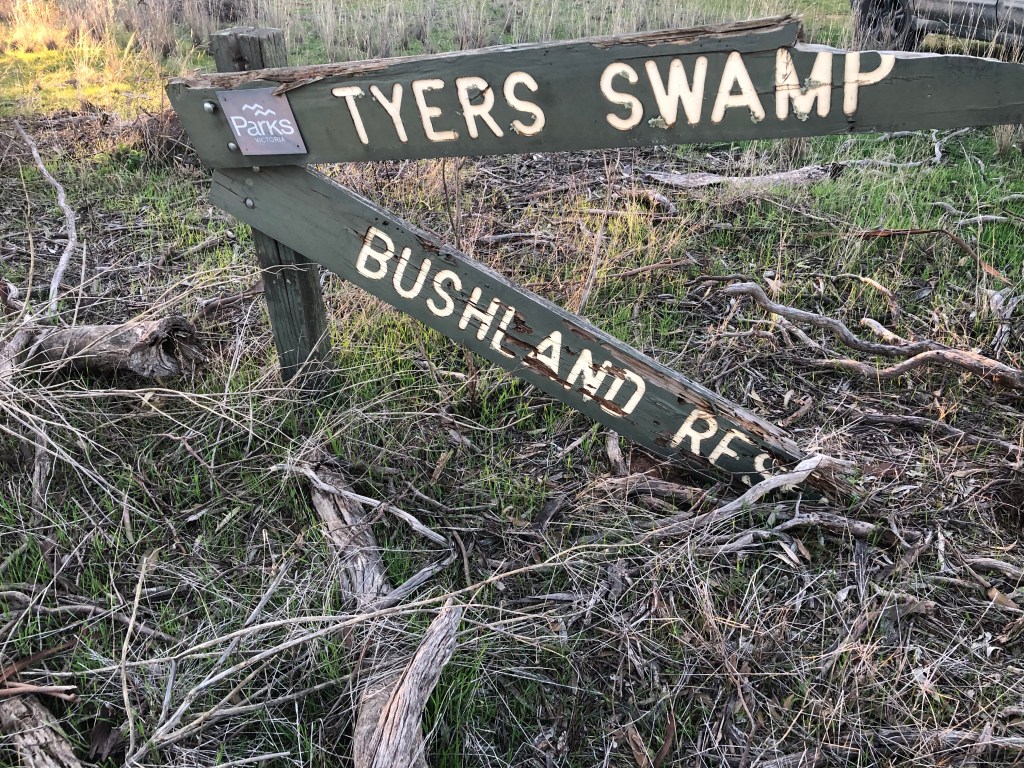
A few days later and km north I find another reserve at Tyer Swamp. Me and my walking partner Bean enter via an open gate on the junction of McGennisken’s and Tyer Road.
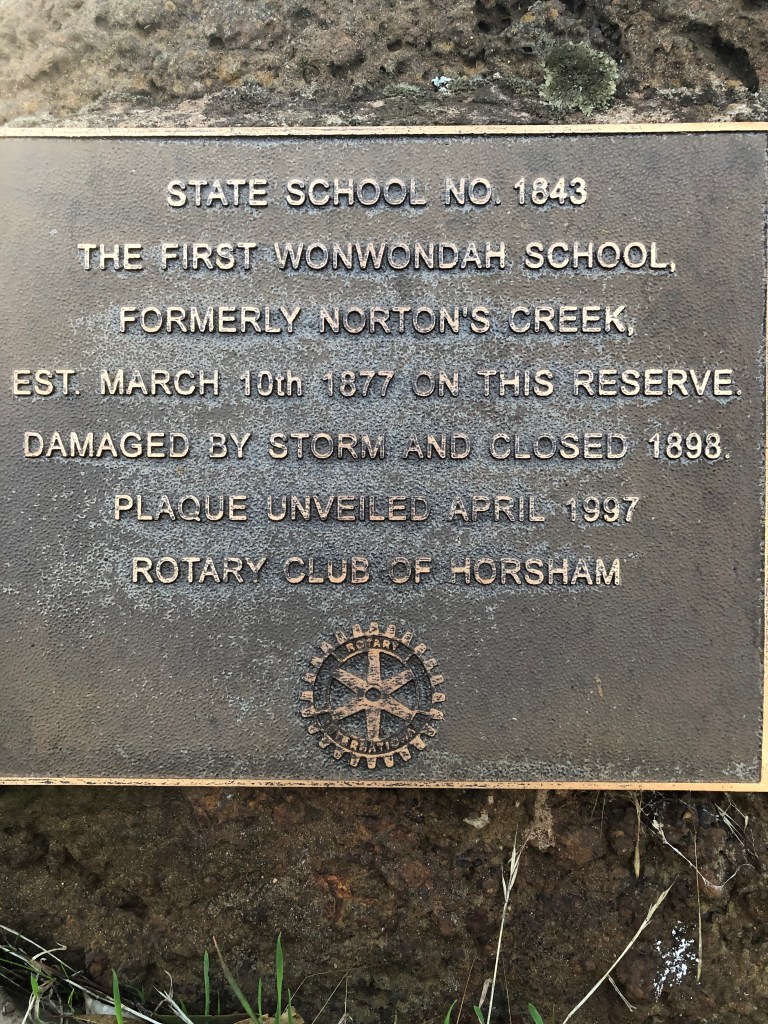
A plaque tells how this was the site of Wonwondah’s first school named Norton Creek way back in 1877. Classes ended when it was destroyed by a wind storm in 1897. Apparently two other district schools got hit in the same storm.
In December 1882 the school picnic was held here along the creek and the local paper reported that:
“About 120 or 130 were present during the day, about the half of whom were children. A still greater number would have been present but for the fact that that a number of the farmers are busy stripping (their crops).”
They ran, ate, sang and were in ‘rapt attention’ during a long lecture on astronomy.

It is hard to imagine that many people at this quiet, anonymous patch of bush nearly 140 years later.
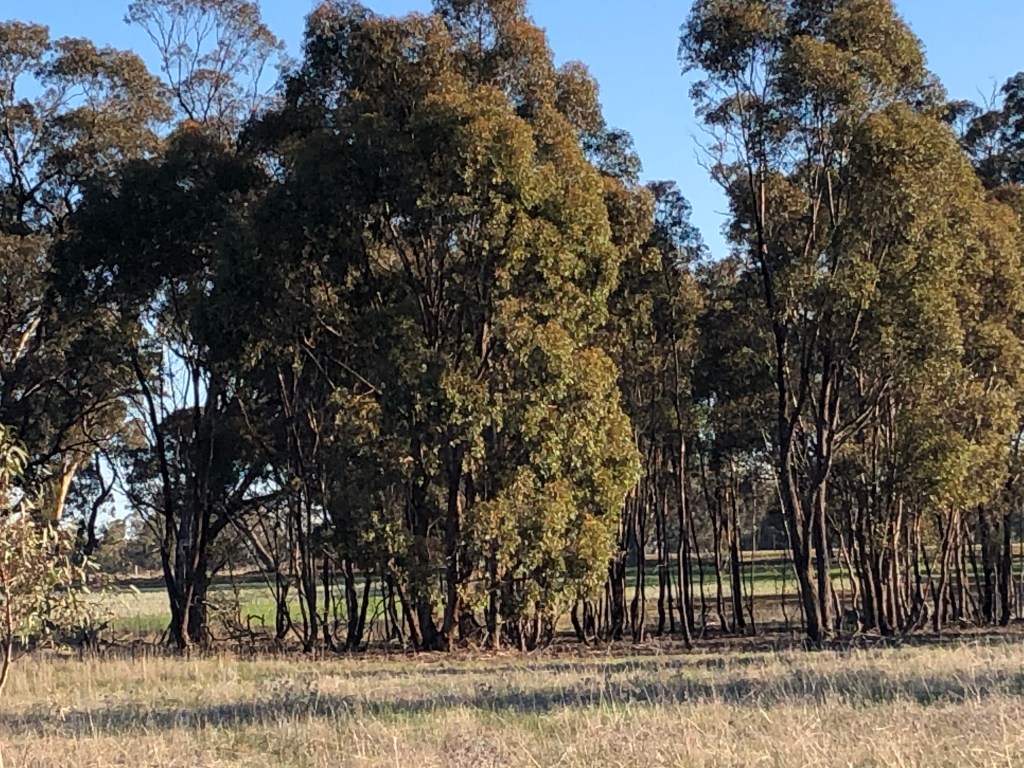
And it seems a bit of a miracle that is has survived relatively unscathed all those years when you see how it is surrounded by emerging green cops from cleared paddocks.
Tyer swamp covers much of the reserve, Norton Creek runs along the western boundary and there is quite a hill at the northern end that probably only served to add more water.
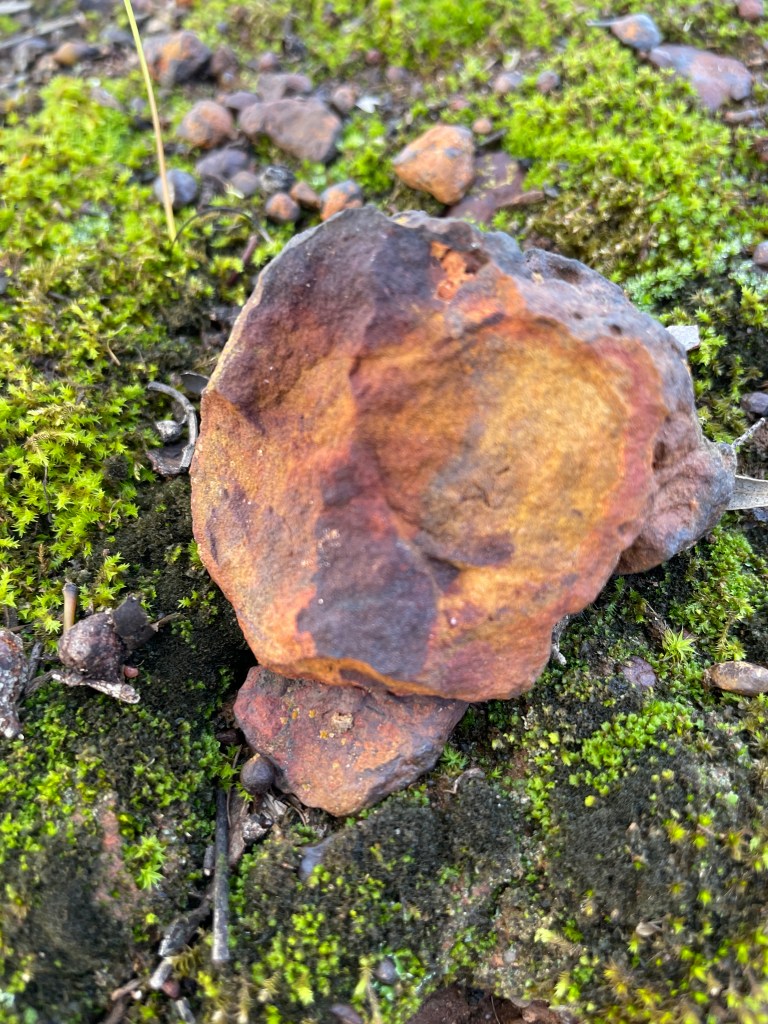
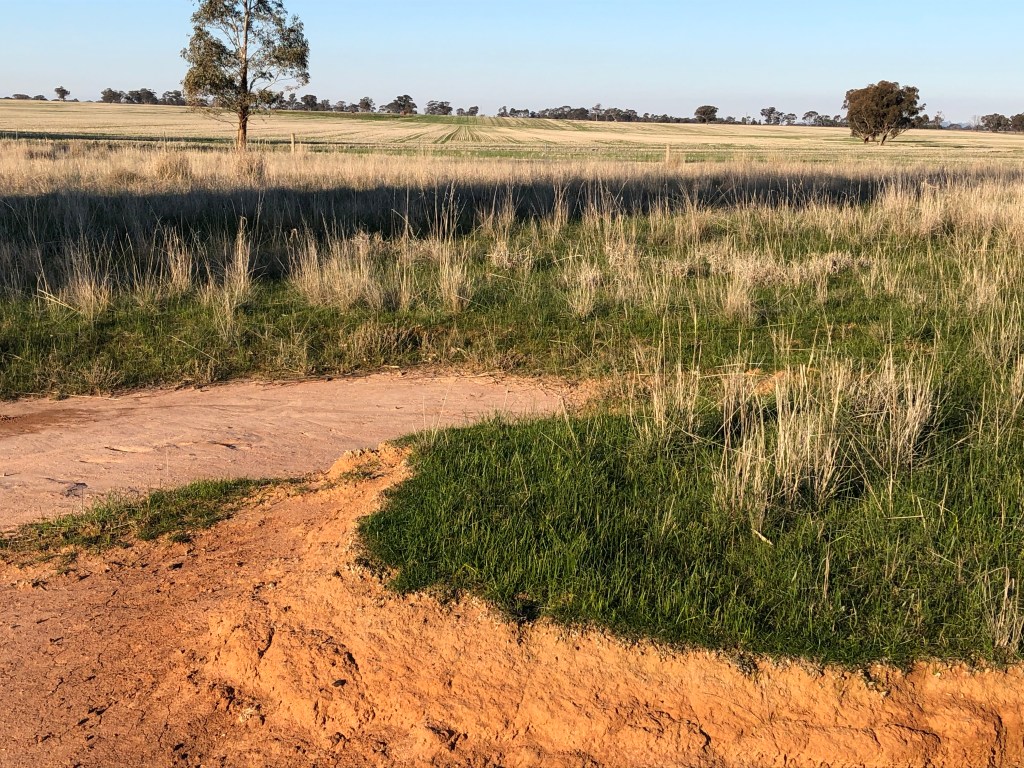
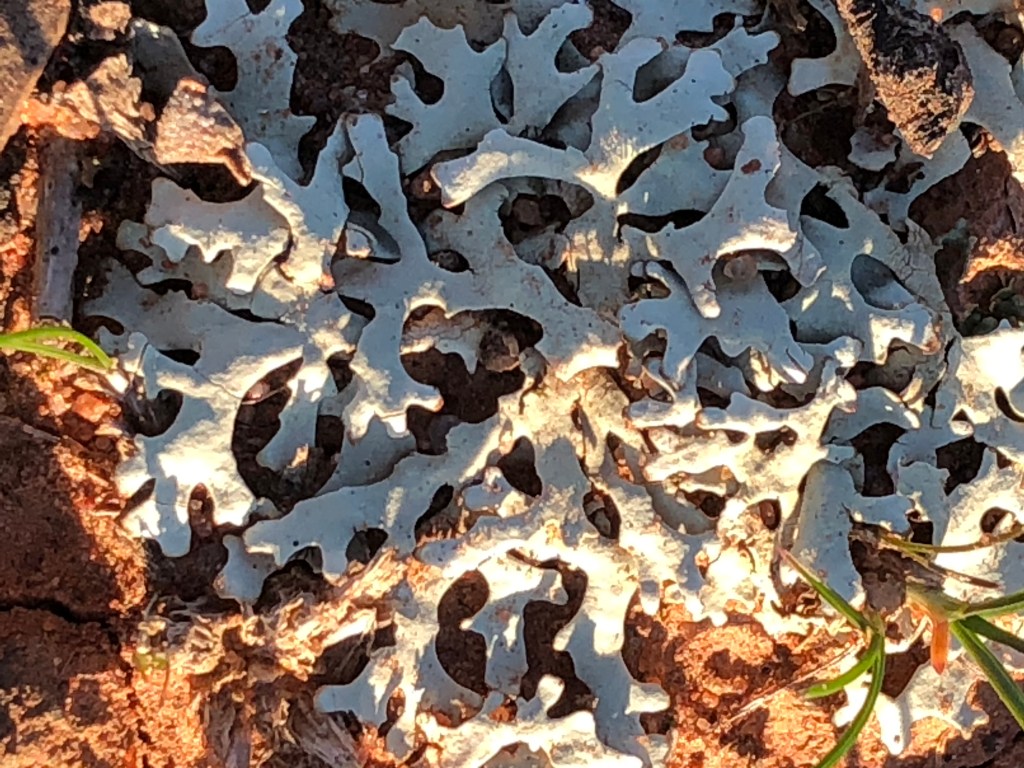
Soil on the higher ground away from the swamp is quite red/orange and host to lace-like pale green lichen growing on the ground – rather than on trees.

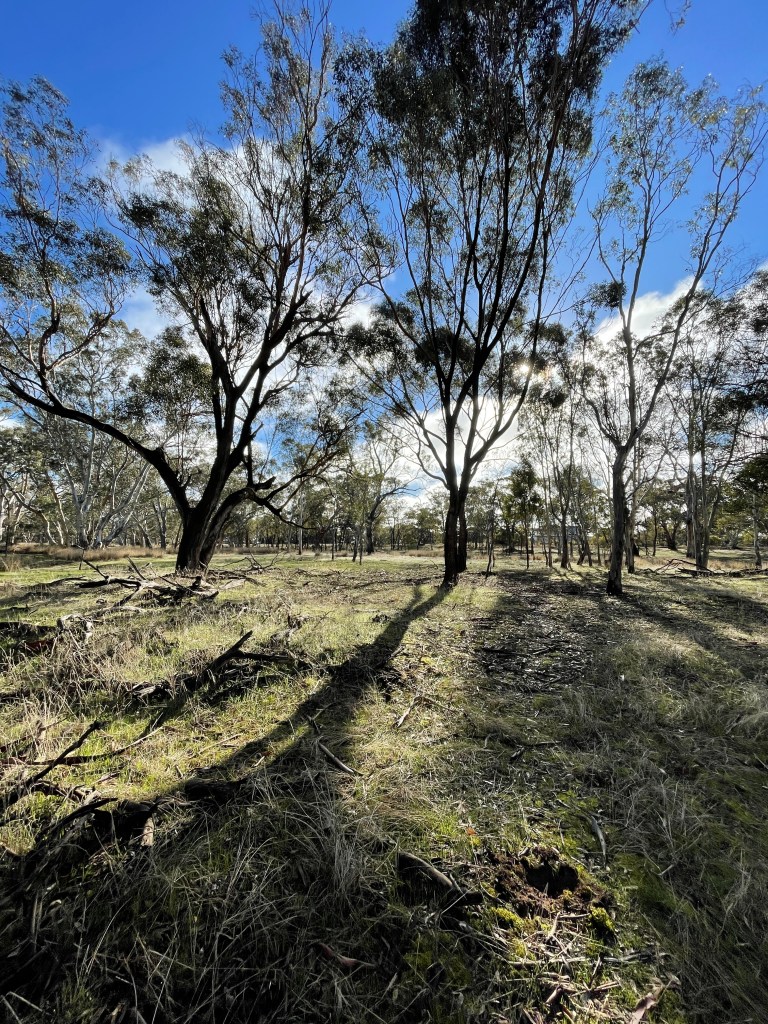
There are some nice eucalypts around the swamp edge and I see a good sized mob or roos heading through the trees on the hill.
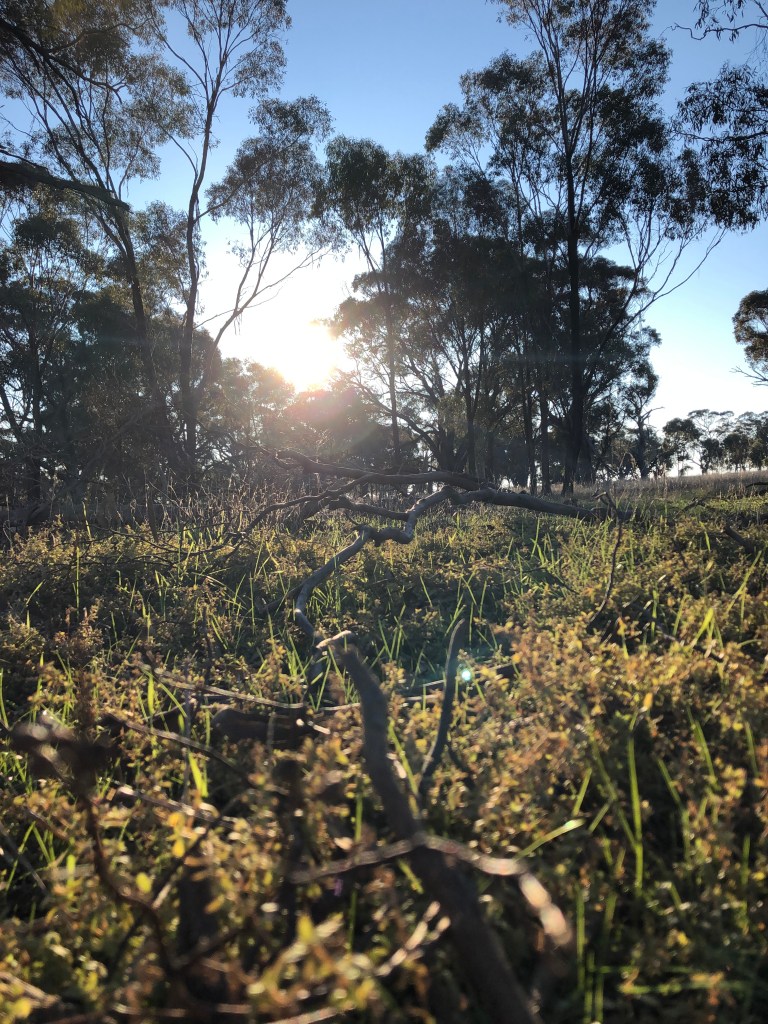
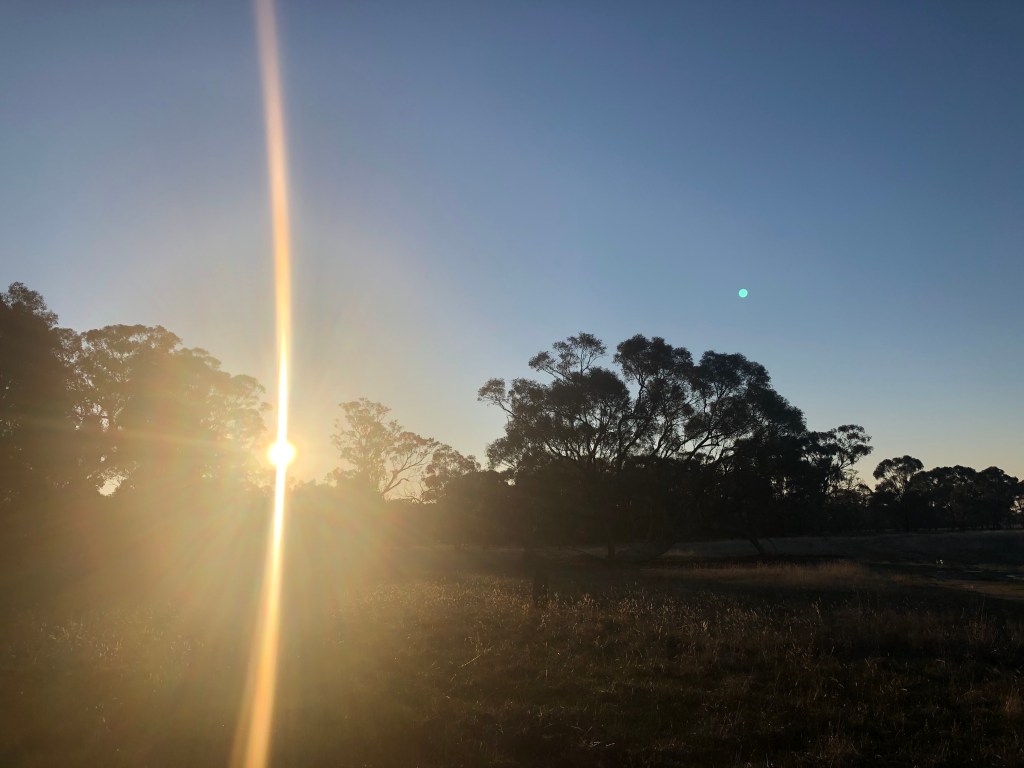
The late afternoon sun is just beaming – even if it was about minus 3 earlier in the day.
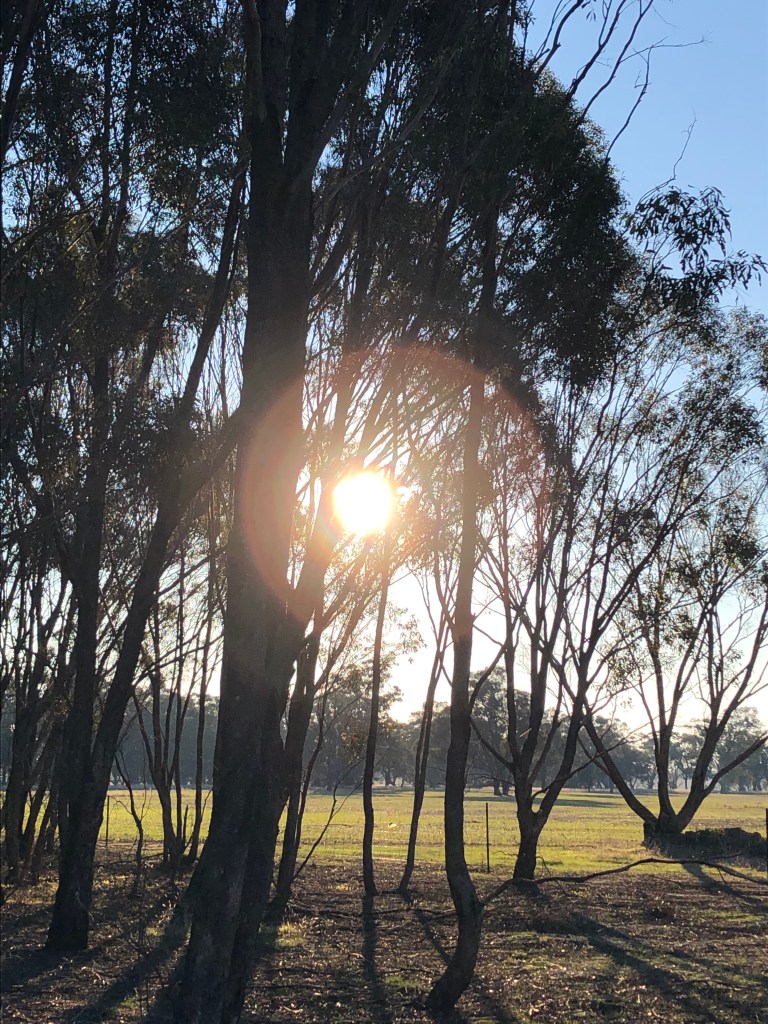
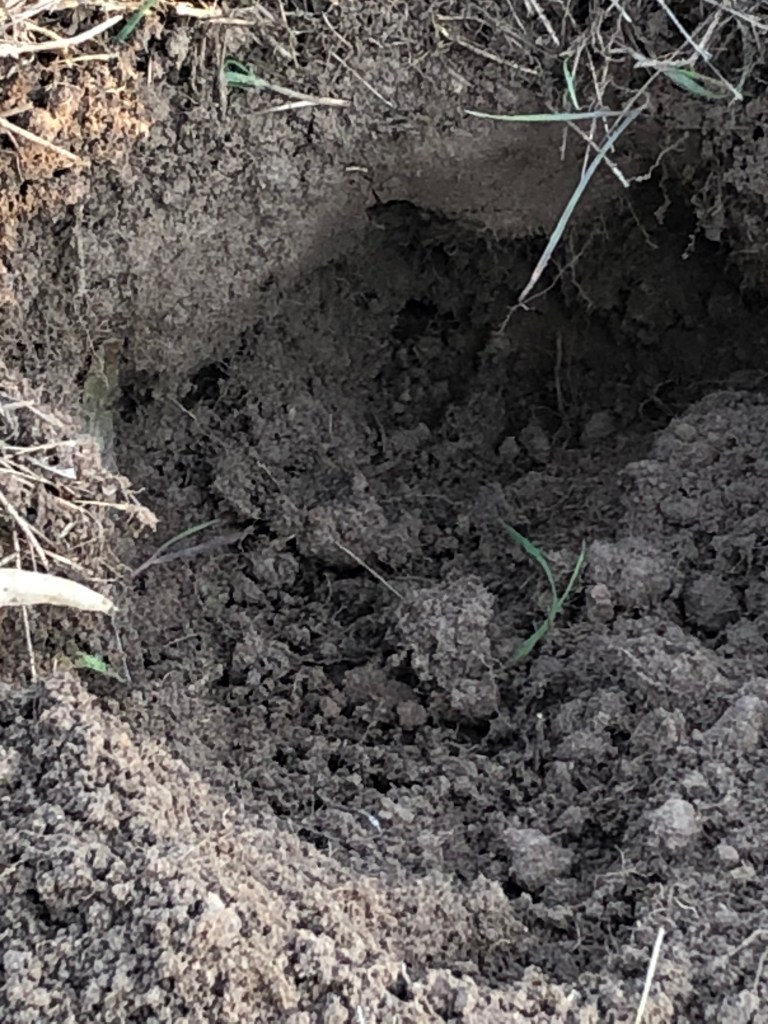
Things get sandy as I move up the rise. At one point I see some scratching, complete with a pointy hole that suggests some echidna handywork.
This hill provides great views of the swamp and the Grampians Gariwerd and I wonder if anyone ever built a house up there.

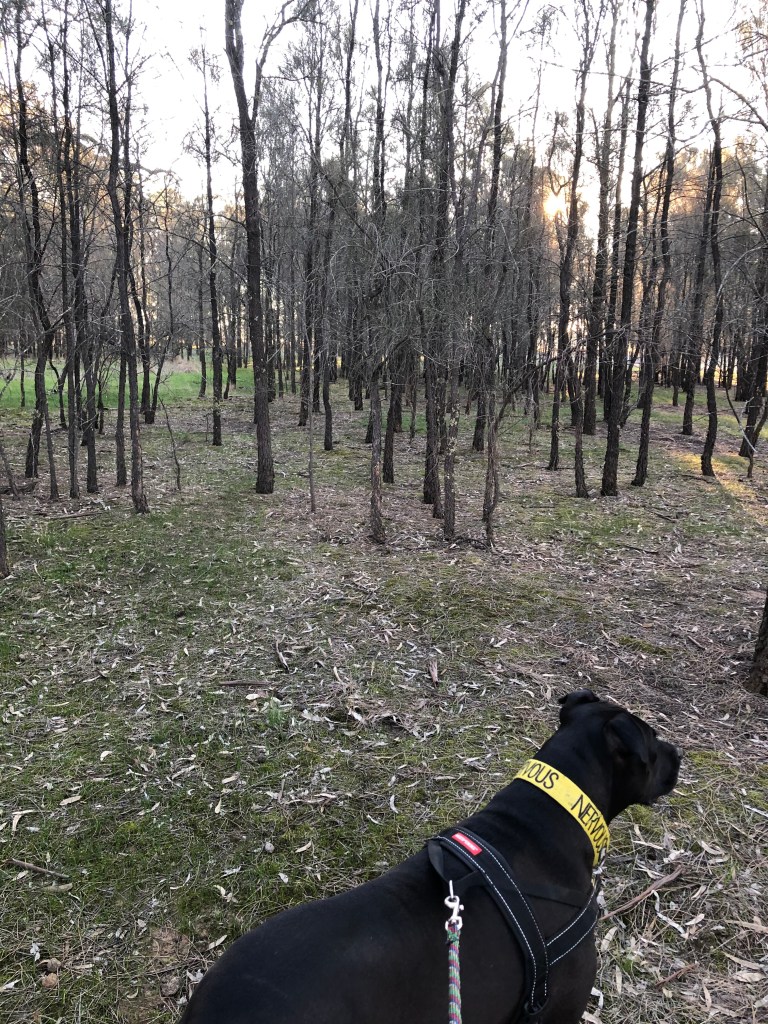
Towards Norton Creek there’s mini forest of skinny bulokes – uncharacteristically quiet because of the still evening.
The sound of an engine breaks the silence and I watch a farm ute crawl across the swamp to the back fence. My car at the gate might have got the locals wondering.
In the far corner is an unusual scar tree – its long slender wound starting about 3-4 metres from the ground.
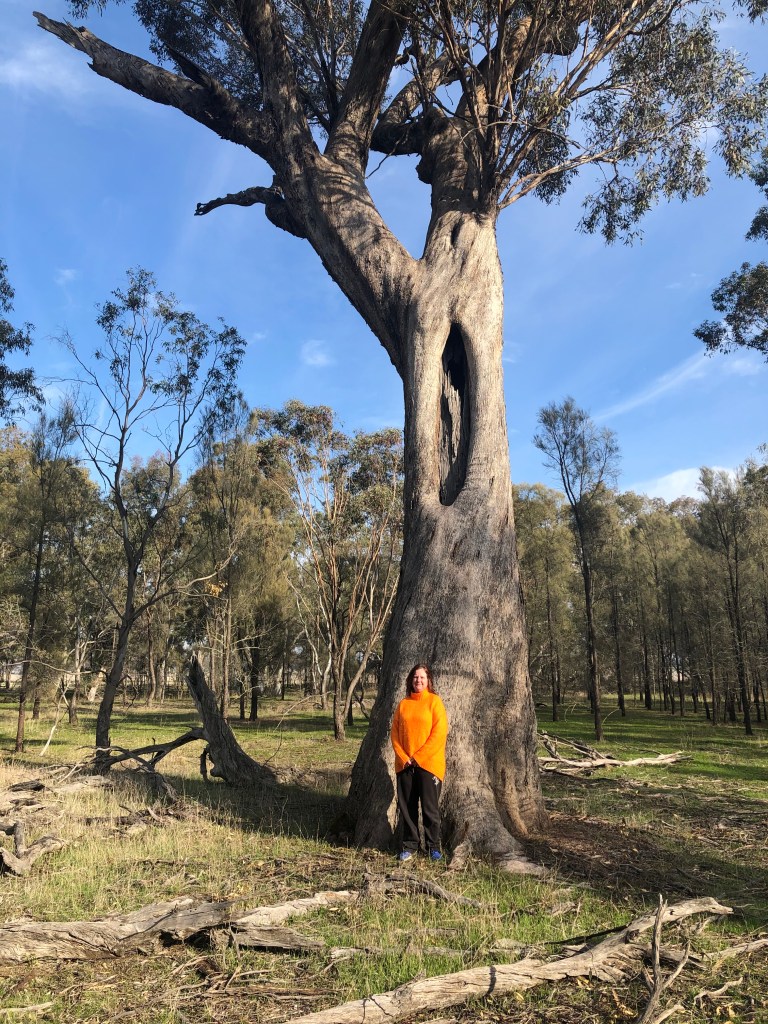
I follow the empty creek south enjoying the trees, other plants including Dianella and some emerging fungi. The 1882 picnic report told how “ample shade was given by the’ large red-gum trees’ and they don’t disappoint today.

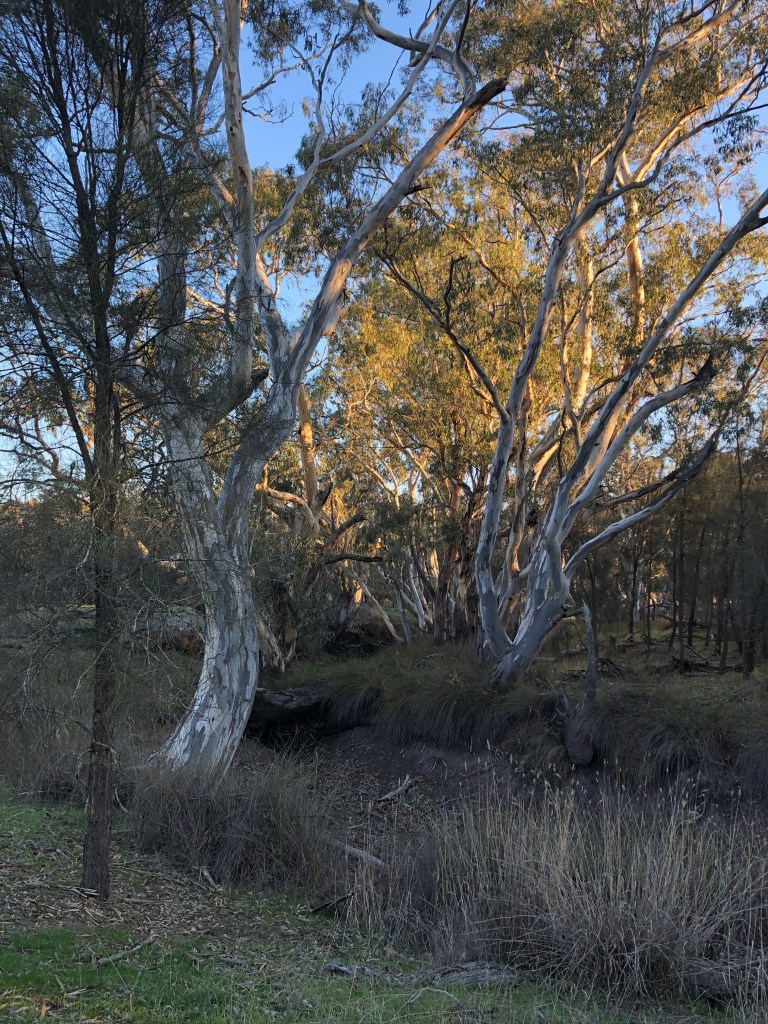

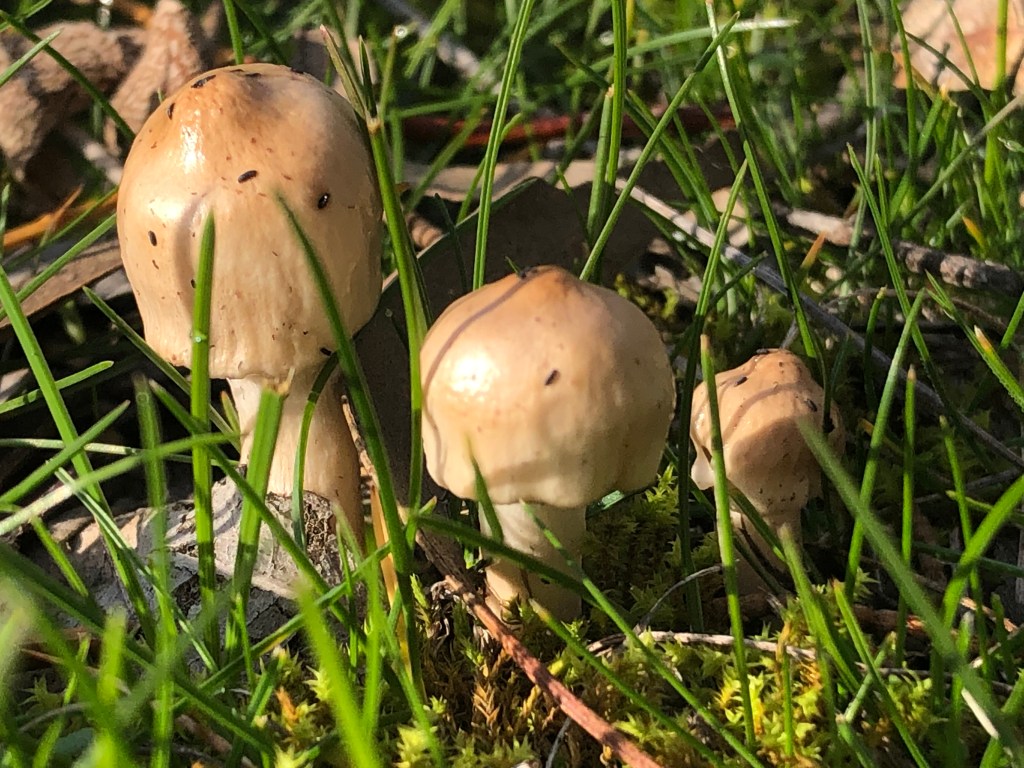

The evening sun helps with the ample shade, especially on the huge carpet of spongey mosses and lichen on the ground – what a great place this would have been for those students from the 1880s to play or lie and watch the clouds roll by.
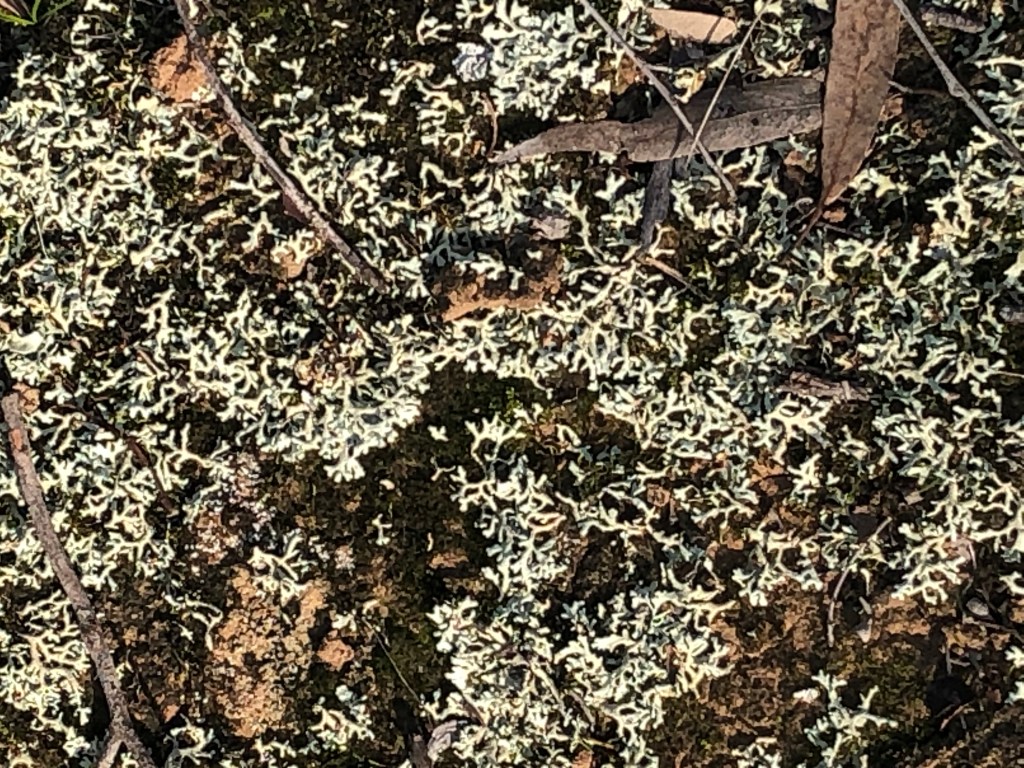
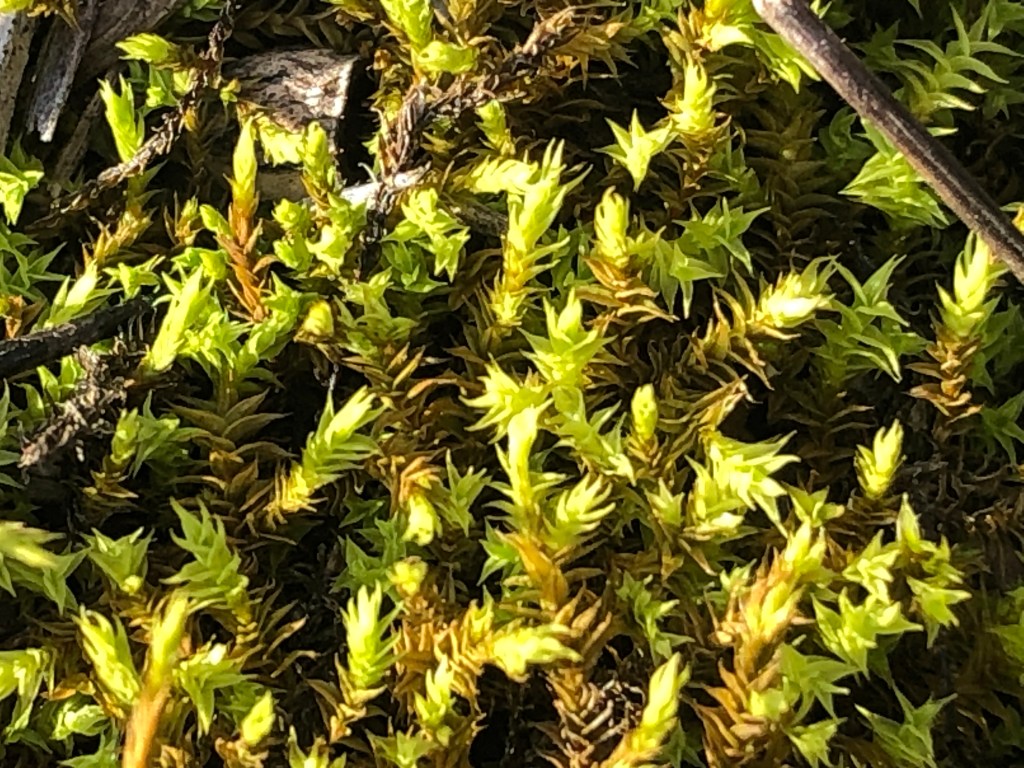
Today the sky is endless blue as we pass through more bulokes on the track back to the gate.
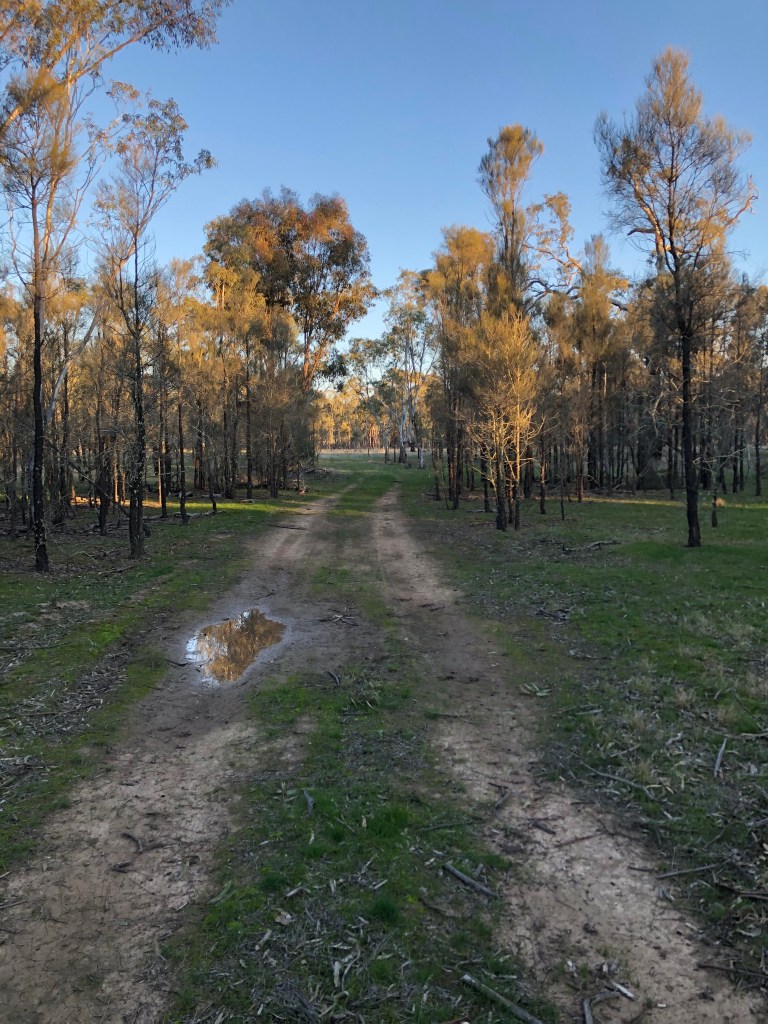
The ute slowly passes me near the walk’s end. I get an obligatory wave but I suspect they don’t get a lot of visitors here.

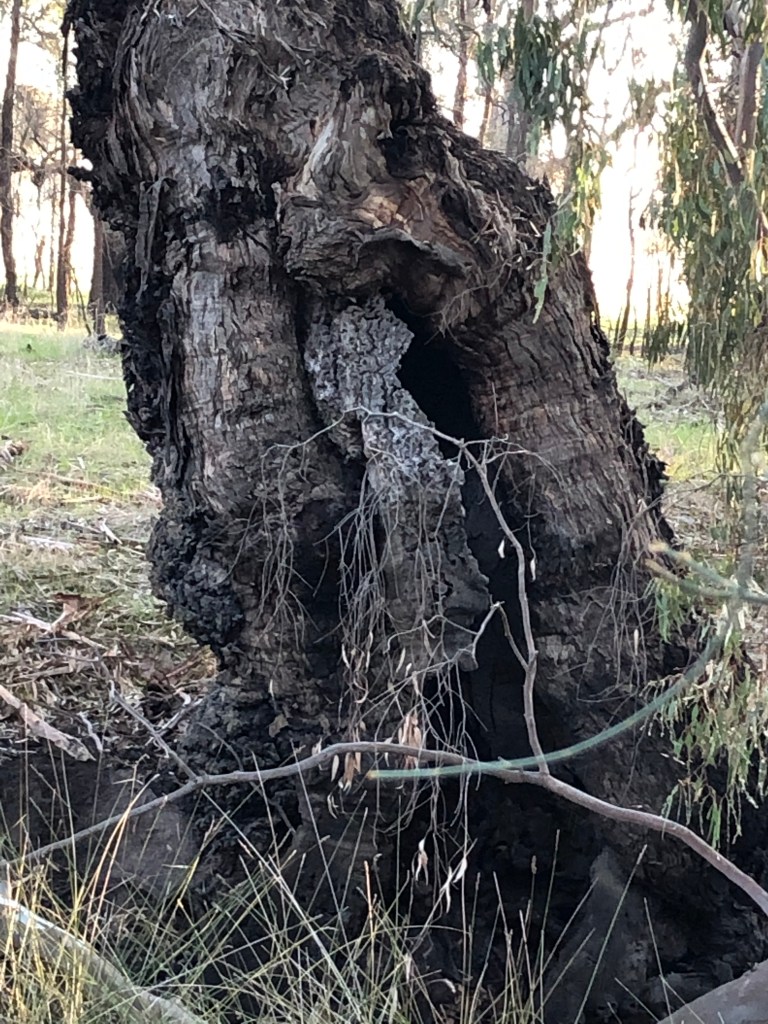
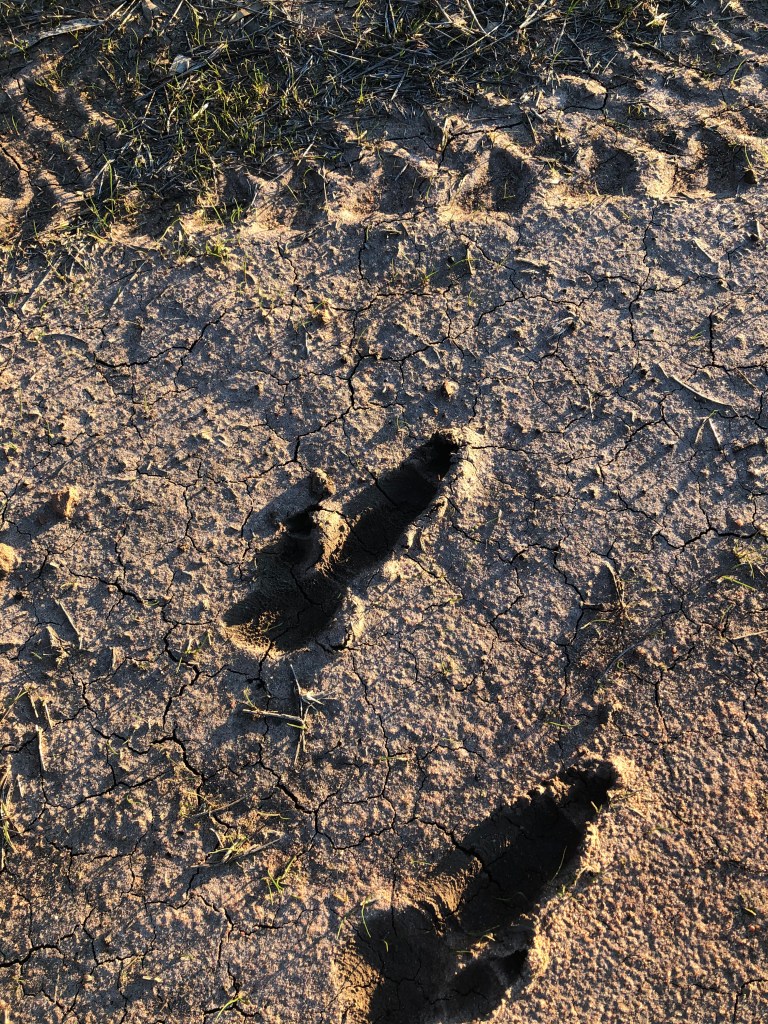
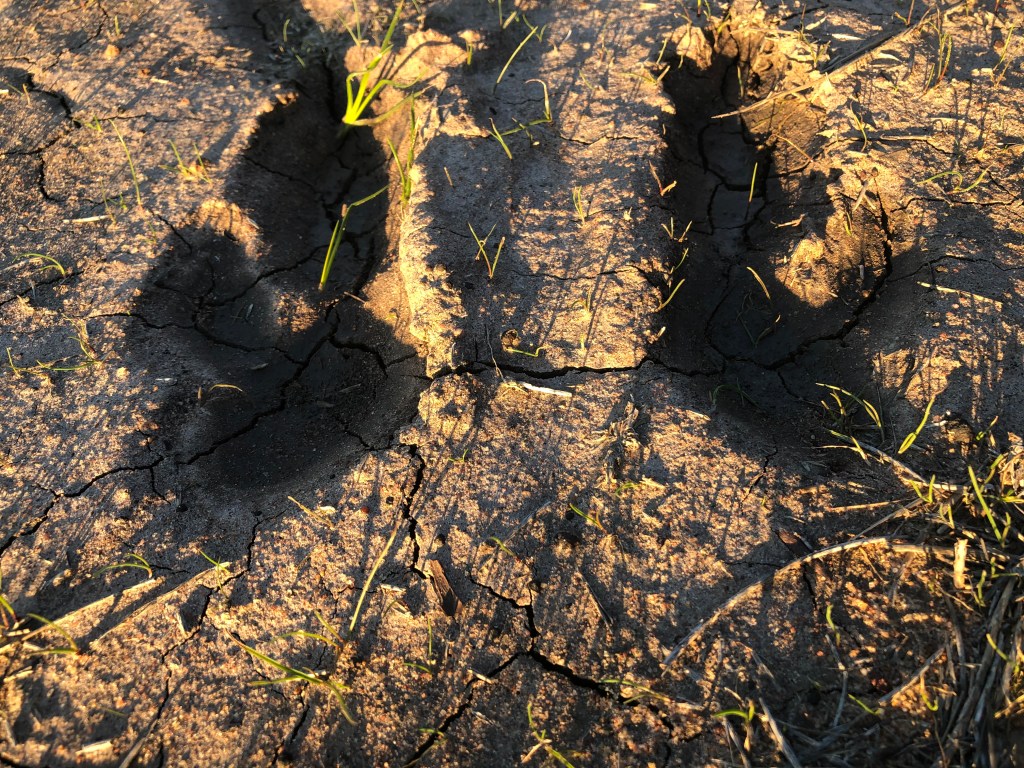
I see a few more trees that might be scarred and Bean, myself, wheel tracks and roo prints all cast dramatic shadows on the sandy track.
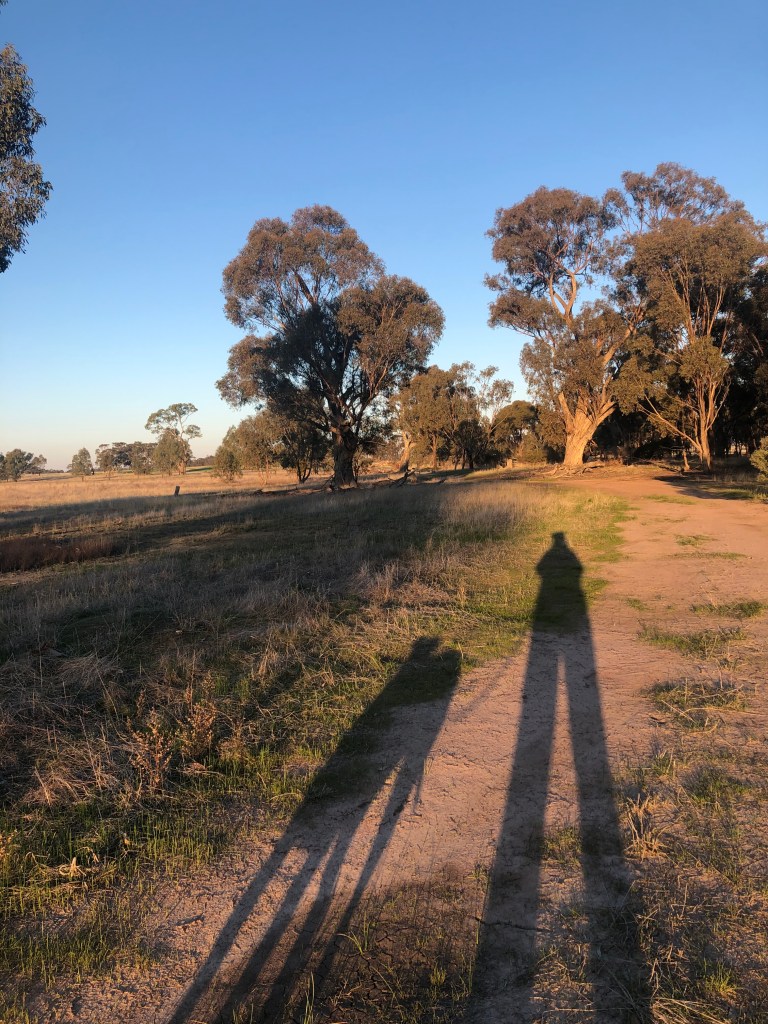
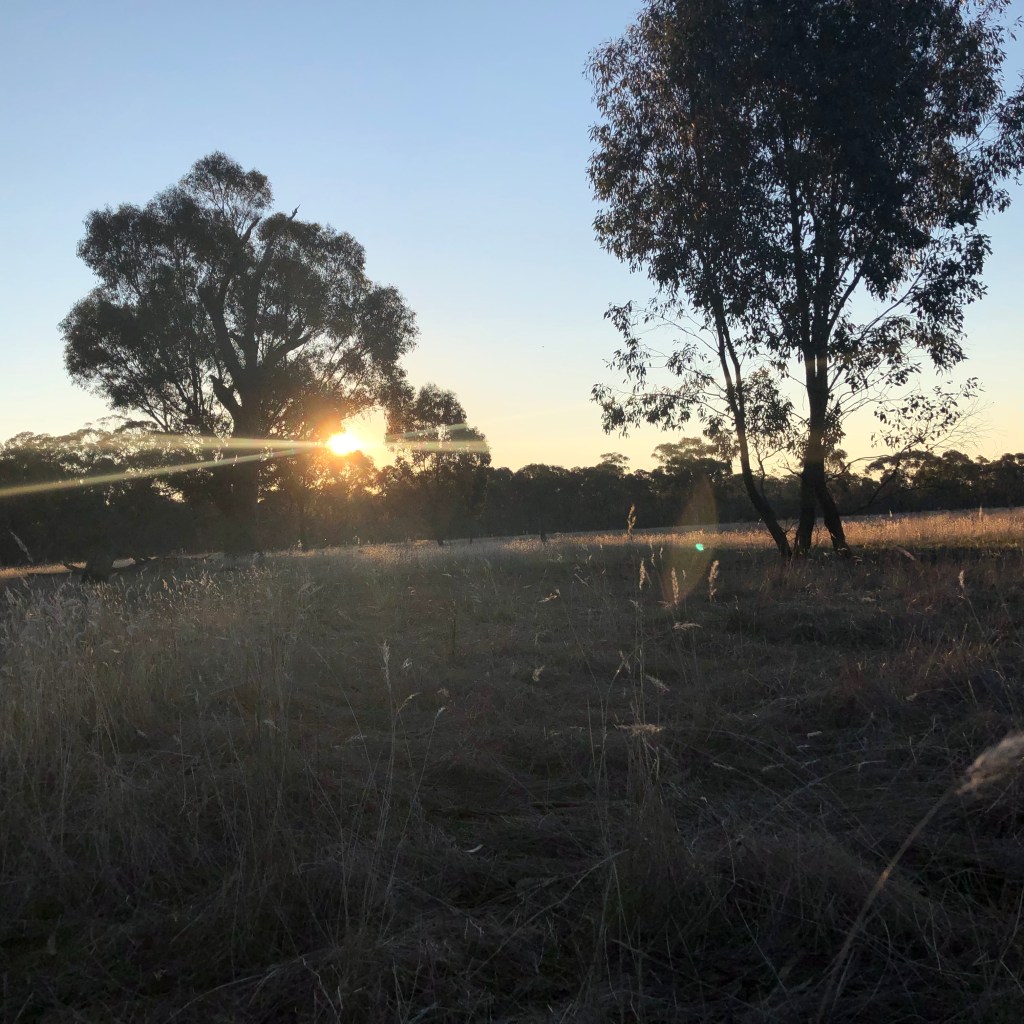
There are also a couple of lone trees out of the swamp – making the most of the last bit of sun before it disappears for the day.
It has been a short 3km walk but well worth the explore. And I can’t wait to return when the next big rains fill those holes in Norton Creek.
NOTE – I did go back a few days later to find the scar tree and discovered the gate at the front had been shut – it was open when I got there for the first walk. So, if you visit Tyer it would be a good idea to make sure you shut the gate as directed by the sign (which I did not see the first time).
 52 weeks 52 walks