Week 30 – Warming up with Clarke
What – Clarke Lake State Game Reserve
Where – About 40km from Horsham on Sherwoods Dam Road.
How long – 5km around the edge, with a couple of detours.
10 words – Mix of plants, kangas, birds. Good views, don’t drive past
I am not sure who Clarke was but the lake named in their honour is well worth a visit.
There is a Clarke Lane in the Noradjuha district and I found evidence of a Mr Clarke singing very well at a nearby Lowan School fundraiser in the 1930s for a family which had been burnt out in fires. But that’s about all I can tell you.
Clarke Lake sits beside Sherwoods Dam Road, between Mt Arapiles – Dyurrite and Clear Lake and, with a few hills beyond its shores, I reckon it has capacity to fill quite well with rain.
Covering 75ha it is part of the Douglas Depression – a 70km skinny line of lakes that stretch from north east of Natimuk south to Douglas near Harrow.
These saline or brackish lakes are considered regionally significant because they host birds and plants and are pretty awesome to look at, too.
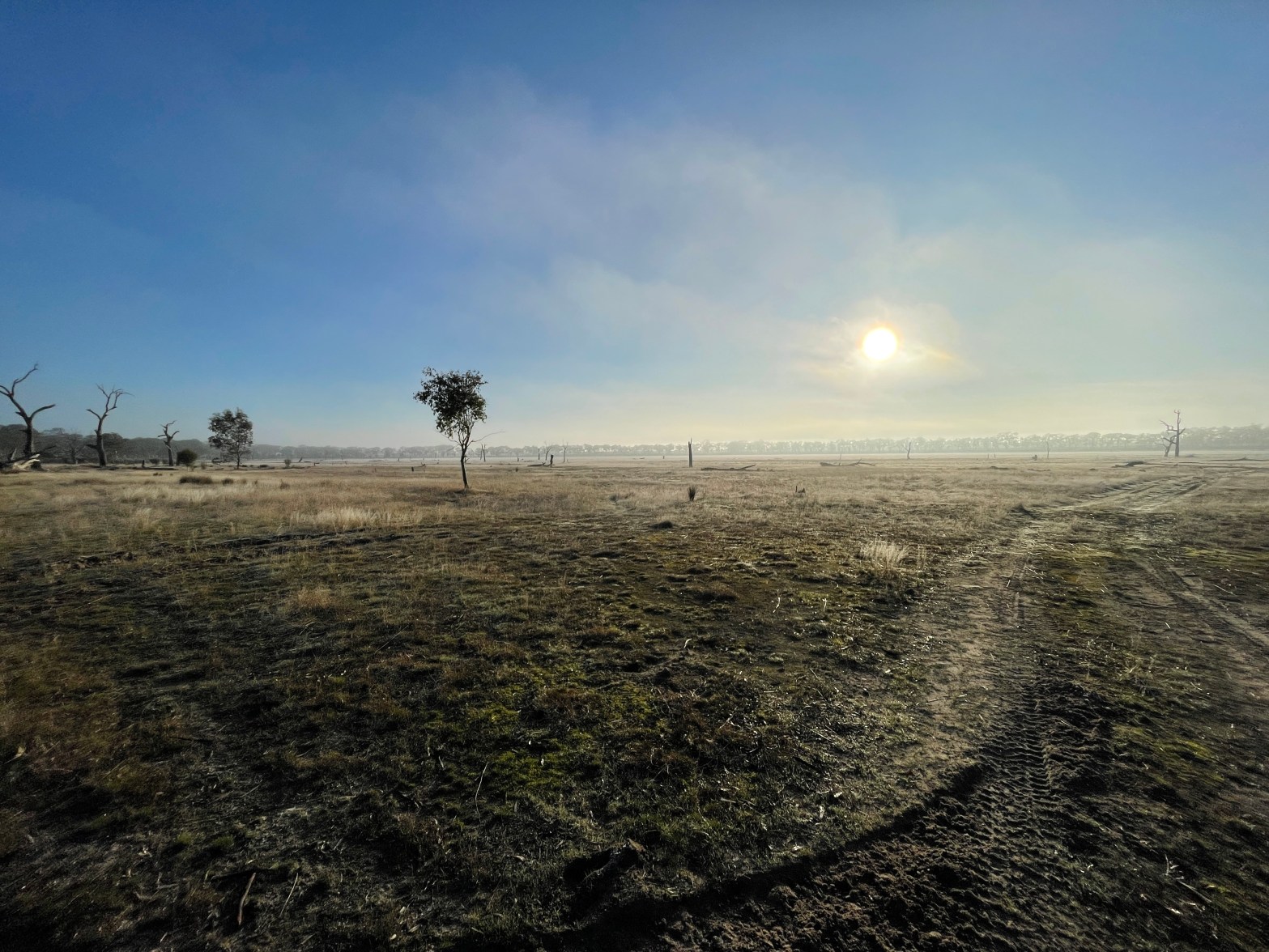
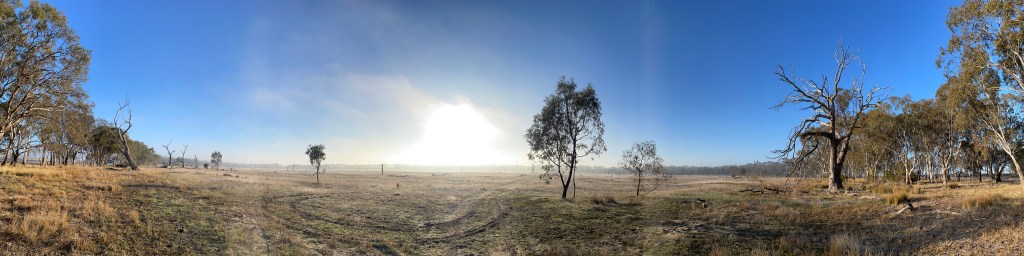
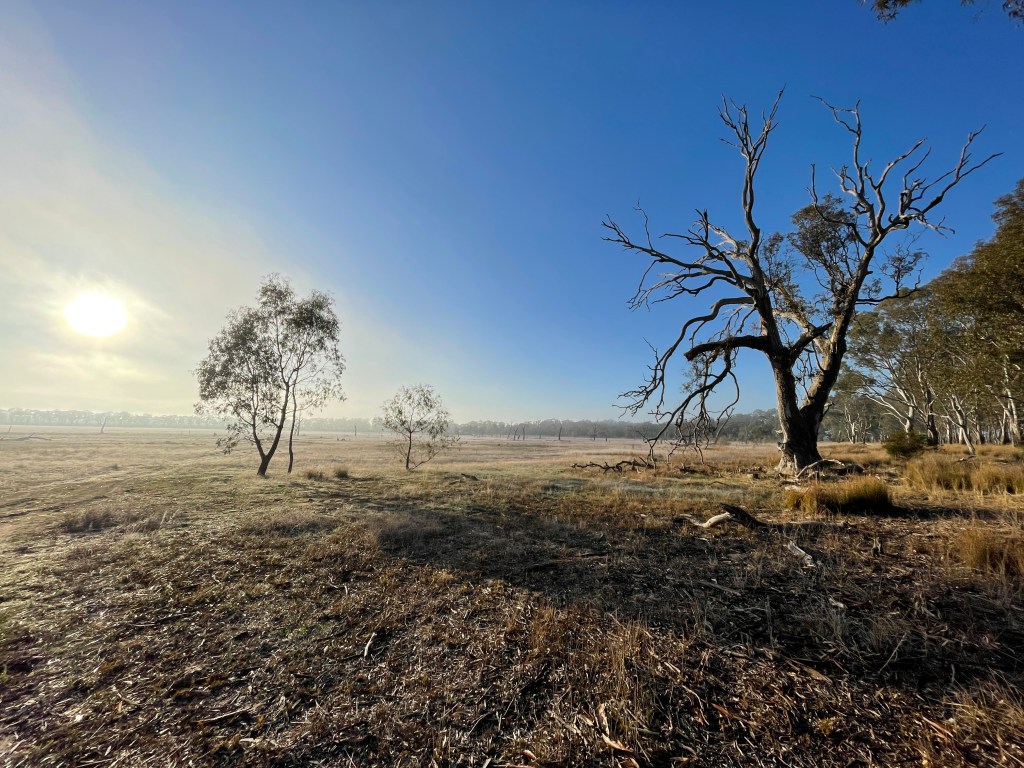
Today there is no water but the ice then sunshine and trees and wildlife make it a wonder to behold.
It’s literally freezing when we arrive about 8.45am. I am walking with Mandi and Deb who got up early on a Saturday morning to minus 2 – which felt like minus 4.
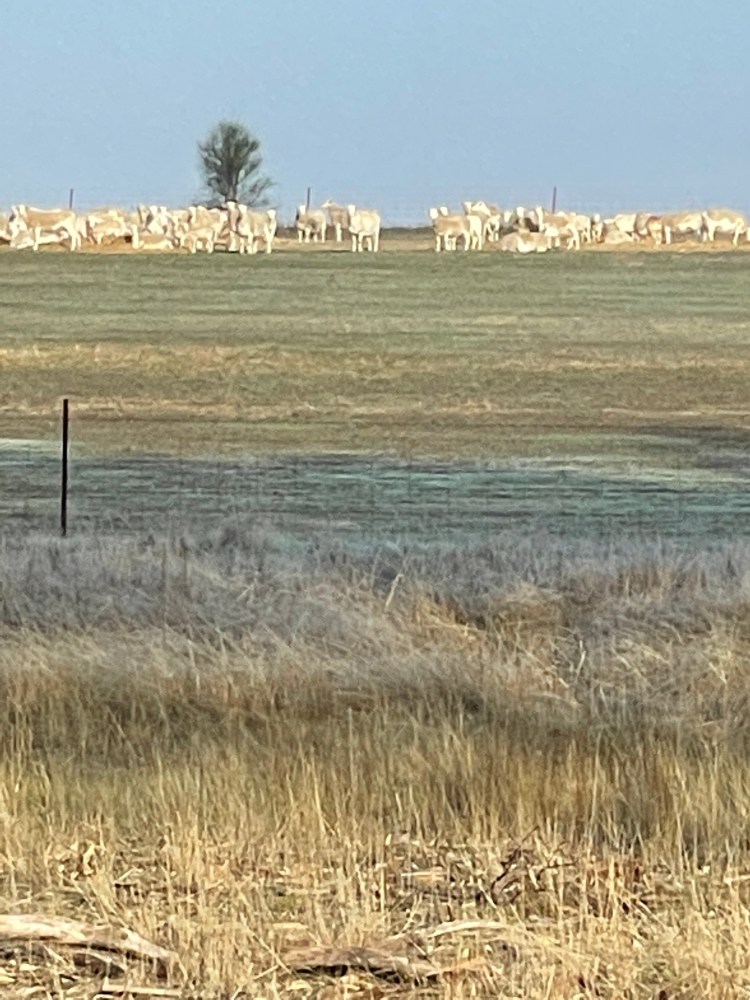
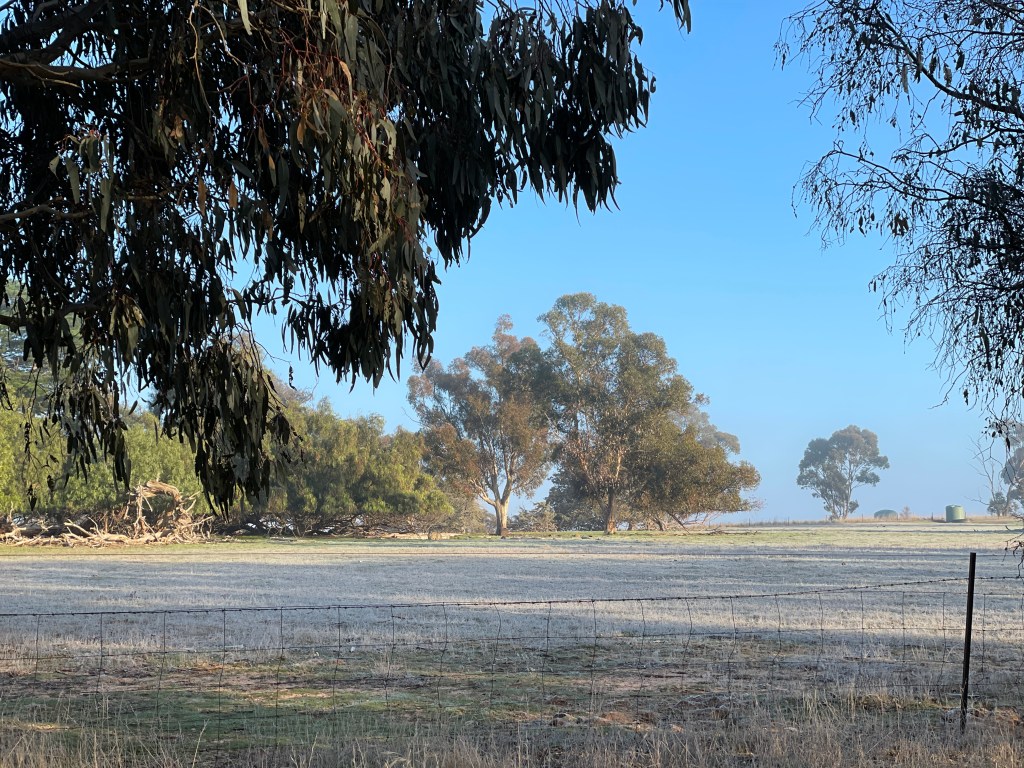
Someone had to have chosen the rise where we park as a house site. We see an old stove in the paddock and several peppercorns long the fenceline. Maybe this was where our singing Clarke lived.
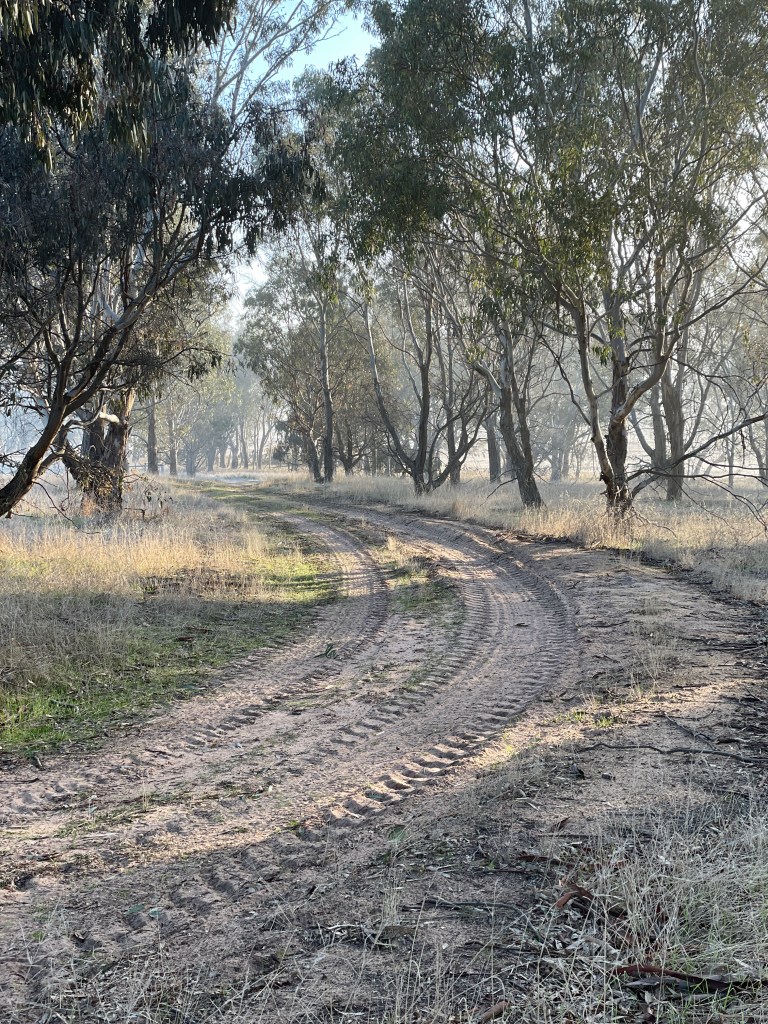
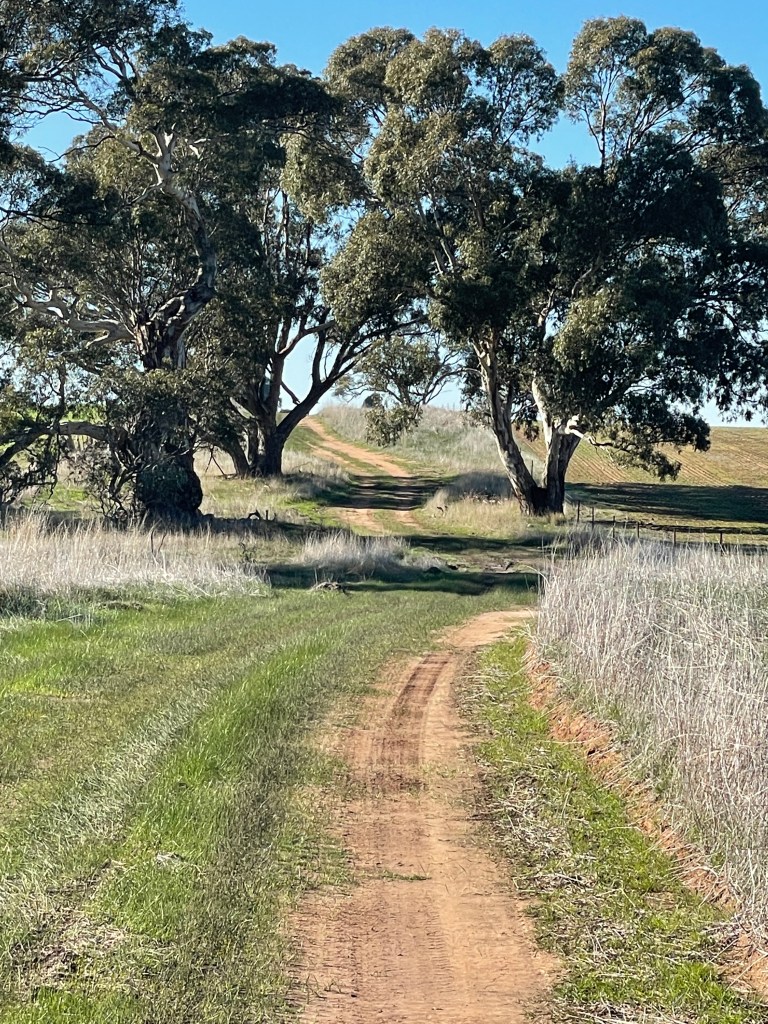
The sandy track takes us downhill where a sign erected within the last decade announces Lake Clarke State Game Reserve. This place is flash on two levels – a new sign and its status as a lake not a swamp.
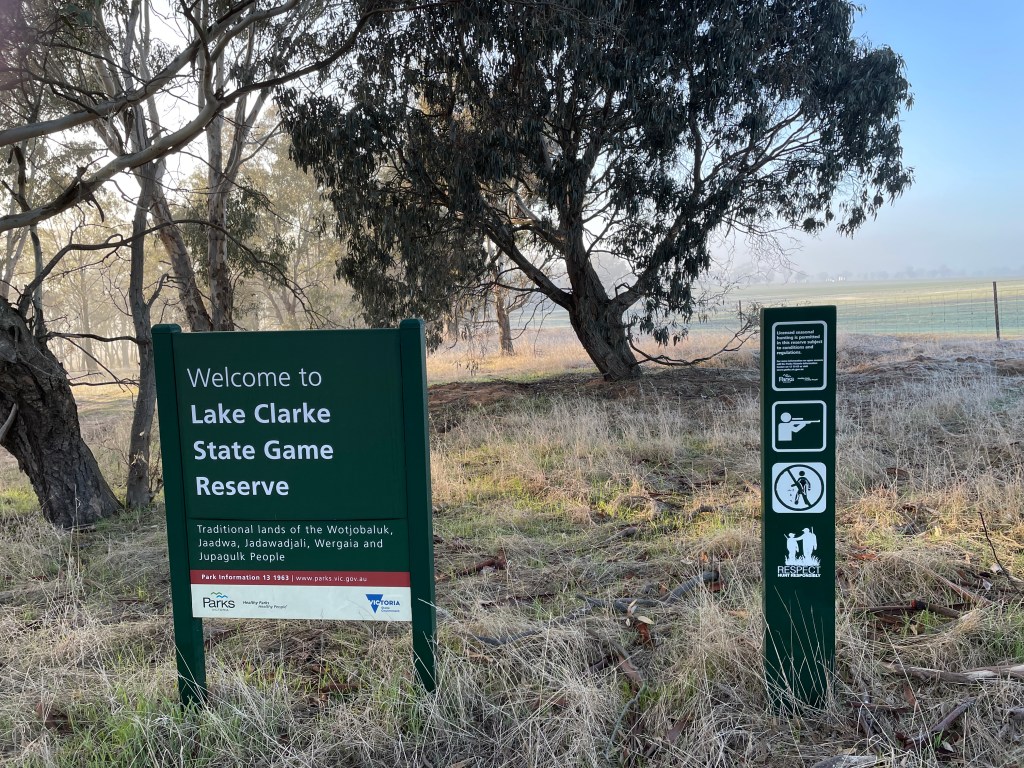
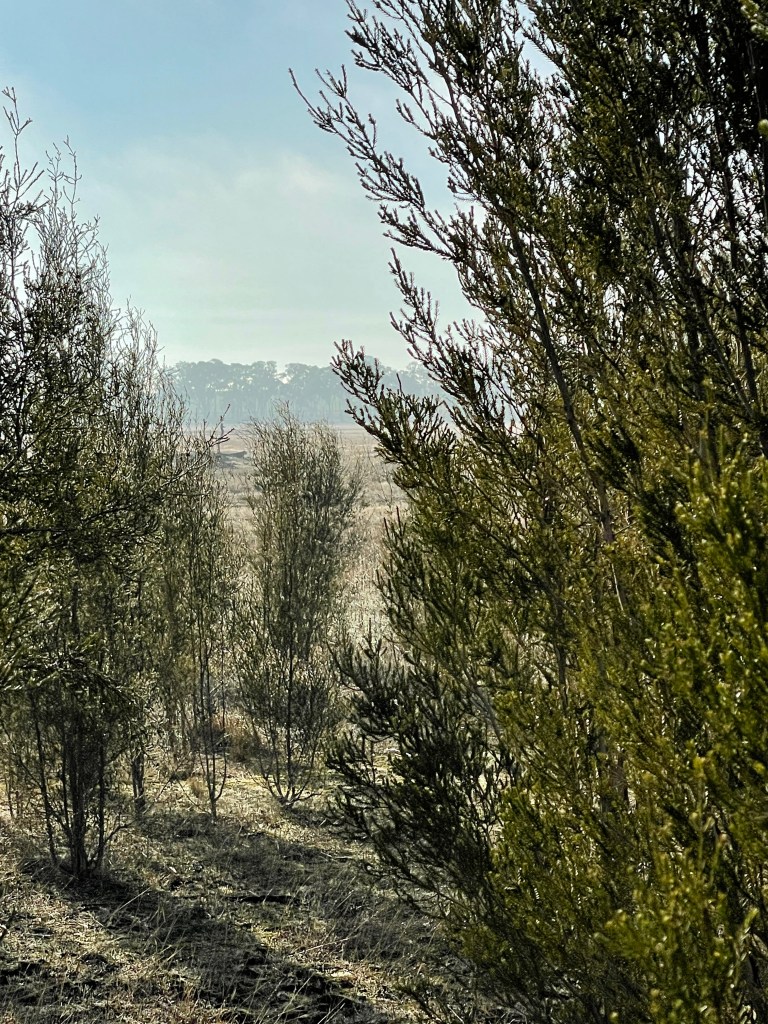
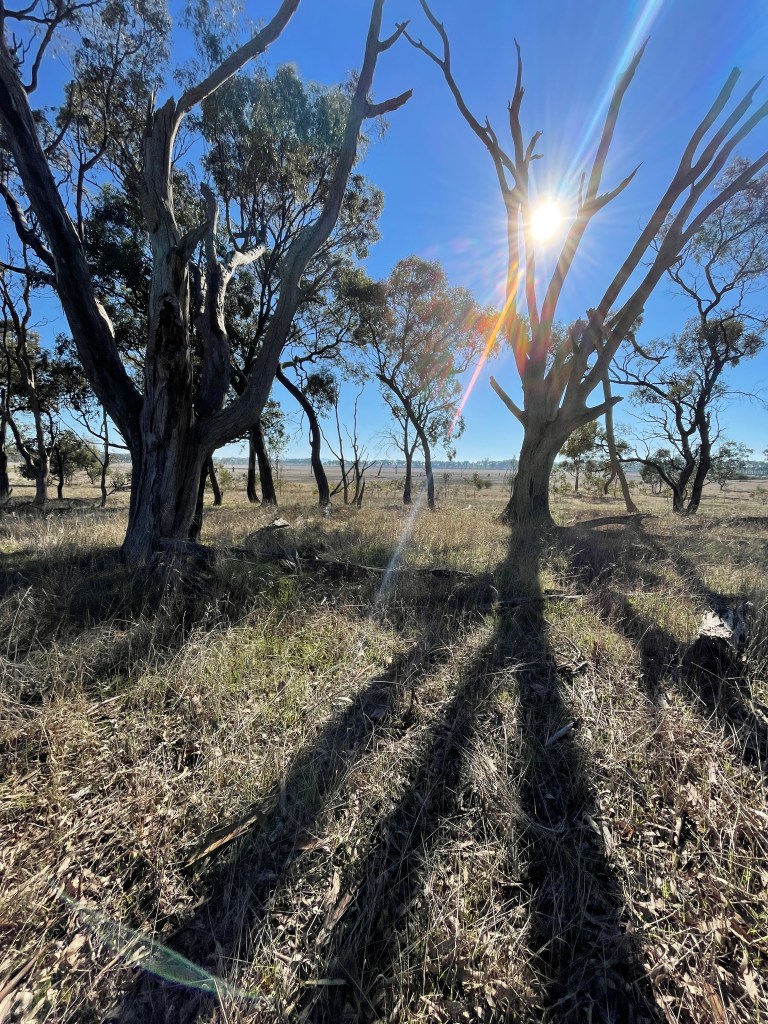
There are quite a few trees on the sandy incline leading down to the shore.
Twitchers have reported 61 different birds here but right now the only sign of any action are two mountain ducks loudly departing after we disturbed their breakfast graze. The remind me of a familiar couple who are getting deaf and yell at the top of their voices, no matter who else is around.
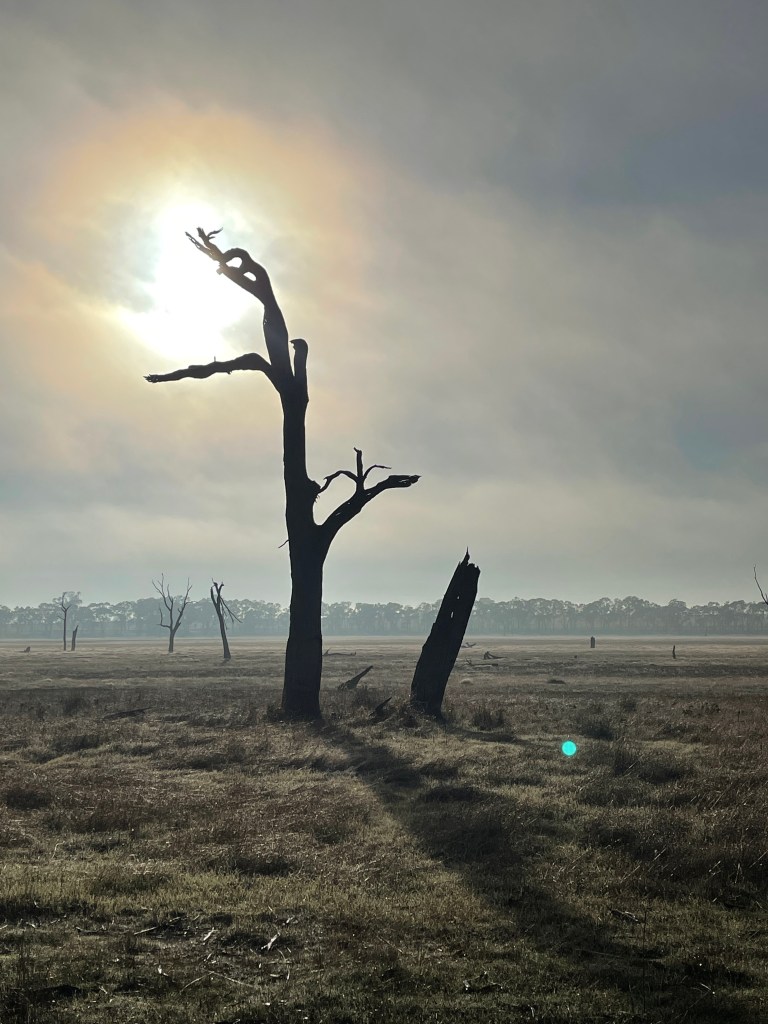
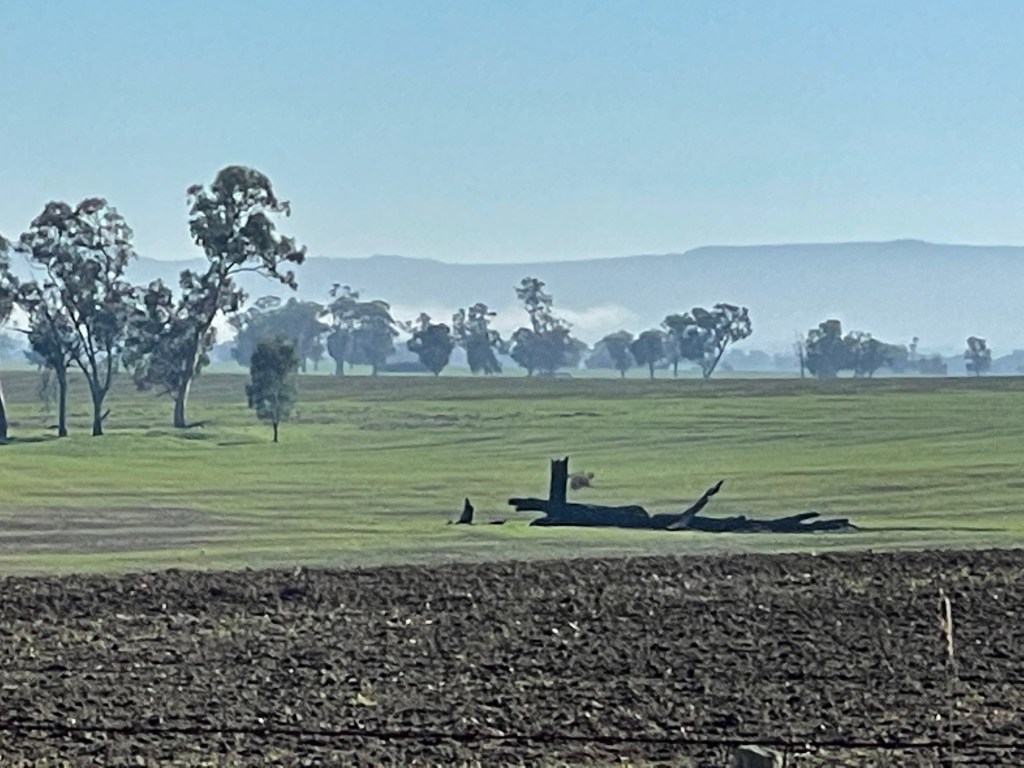
Once they duck off things are still and quiet again. Fog blurs trees on the other side of the lake and bed is a sea of frosty white,’
And then, as if the curtains have been drawn, the sun bursts onto Clarke’s stage.
We feel instantly warmer, the sky is blue and the day has arrived.
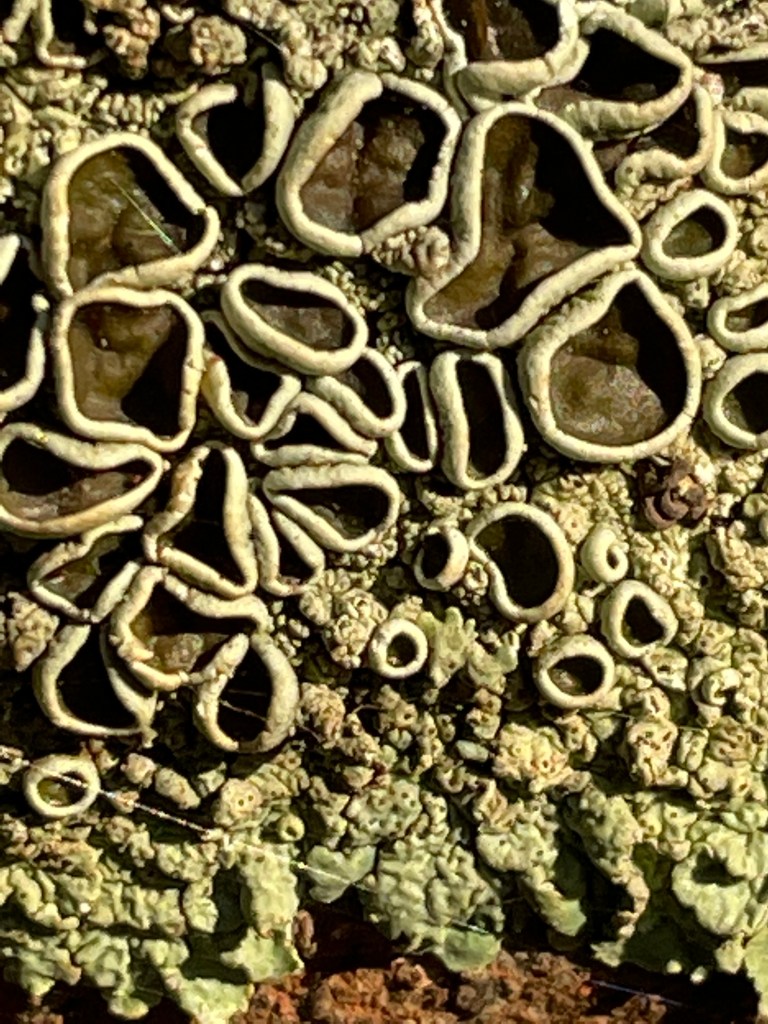
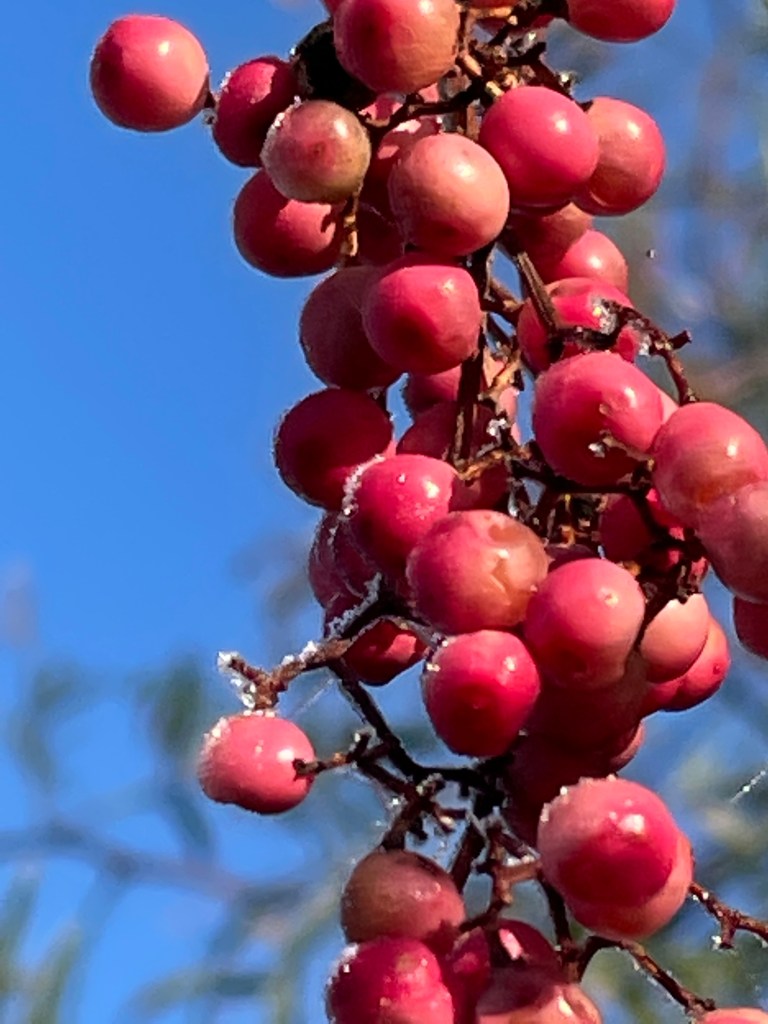
Lichens and even peppercorns take on a new glow.
About a quarter of the way around we come across an interesting patch of plants. Wine red and beady they are possibly glasswort which I’ve previously found at salt lakes. Nearby is a stand of paper barks – also sign of salt.
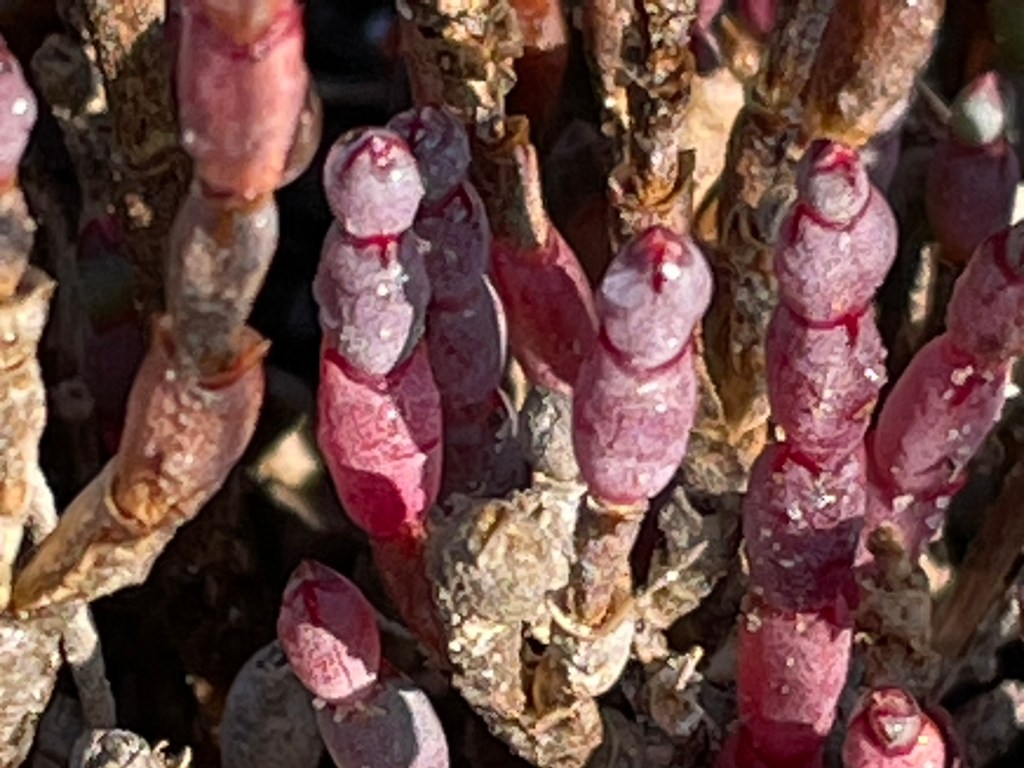
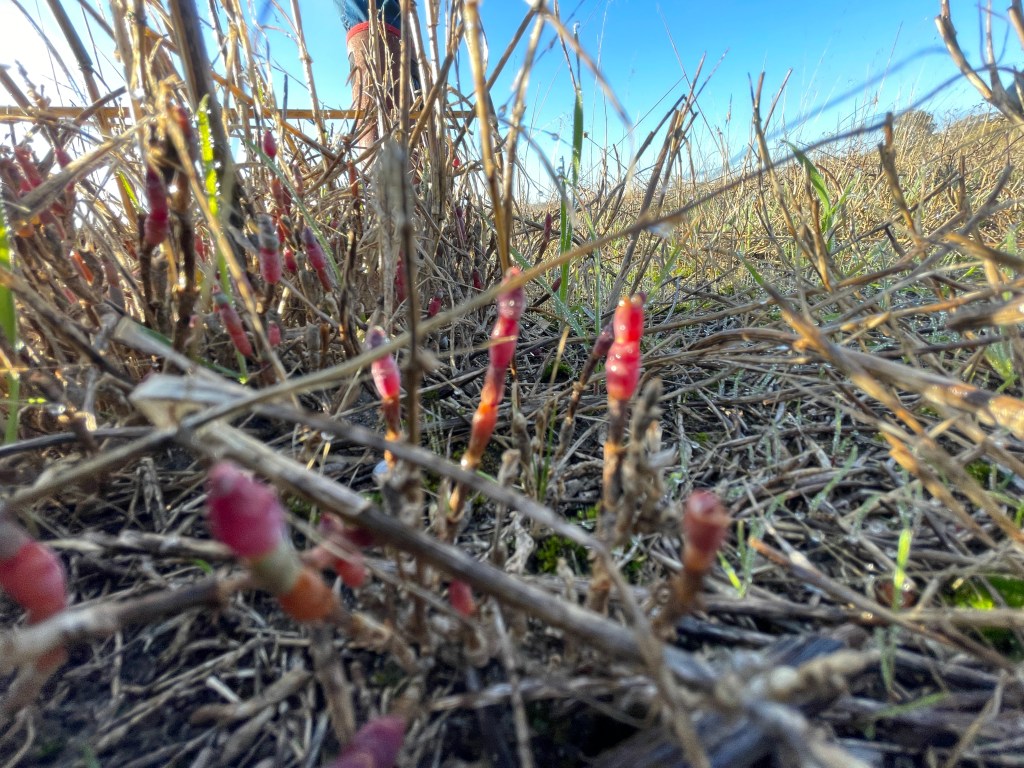
This patch of the Douglas Depression appears to living up to the brackish reputation, at least at this spot.
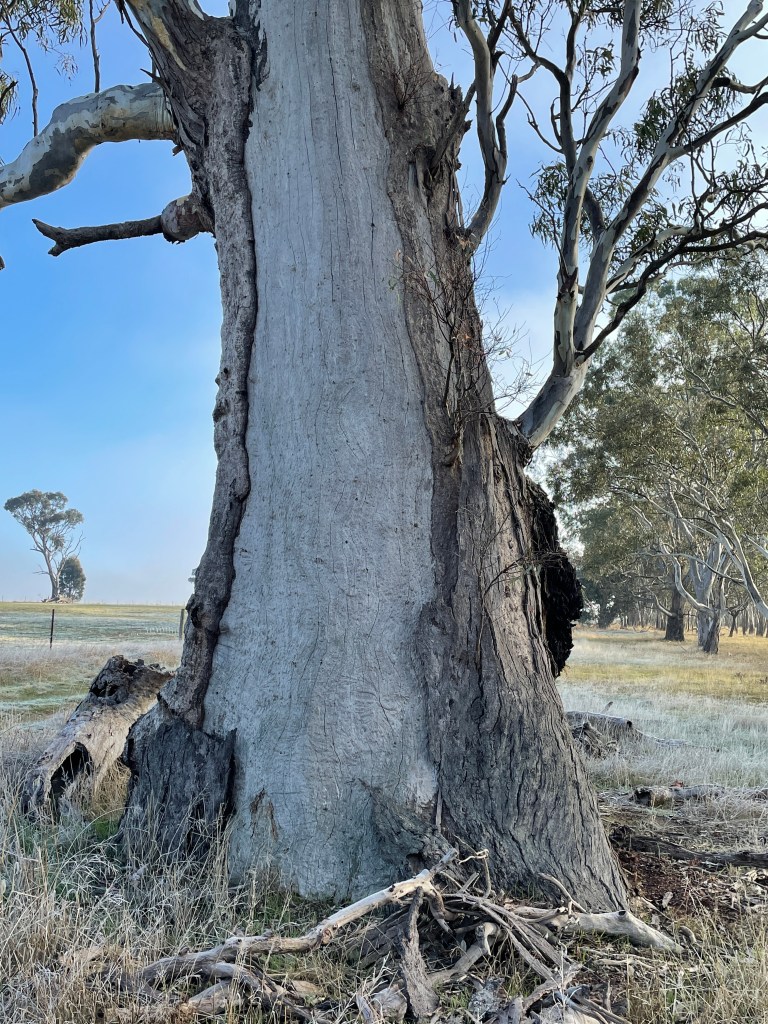
We find a scar on one tree and another thin trunk that has grown out of a previously cut down trunk.

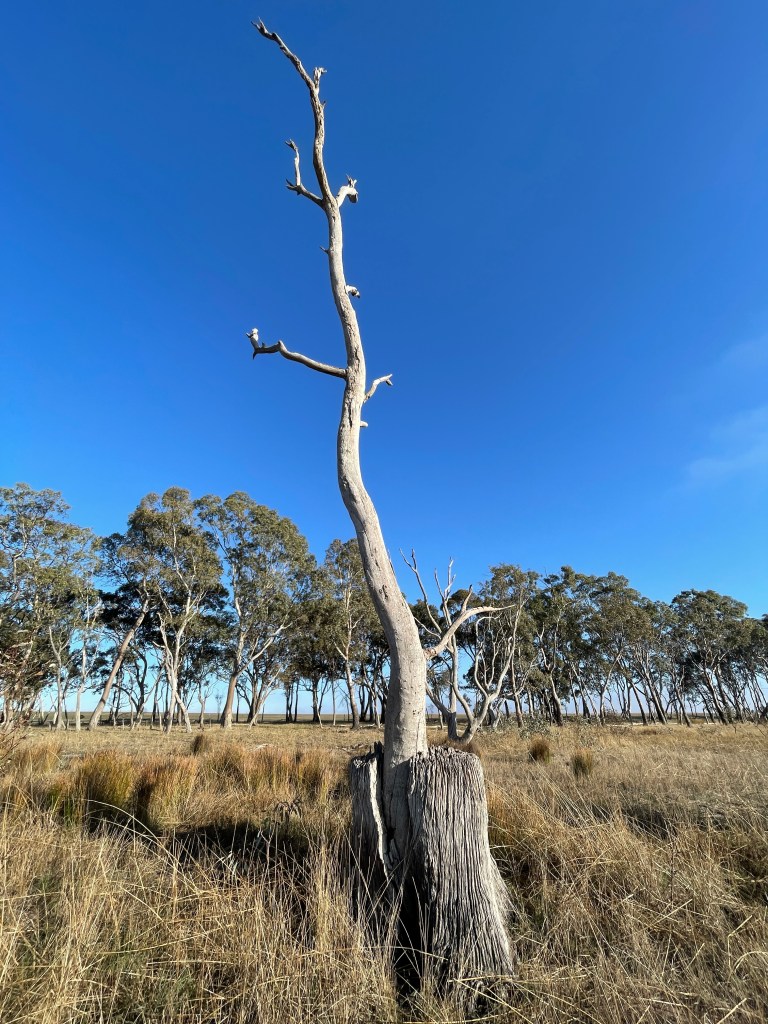
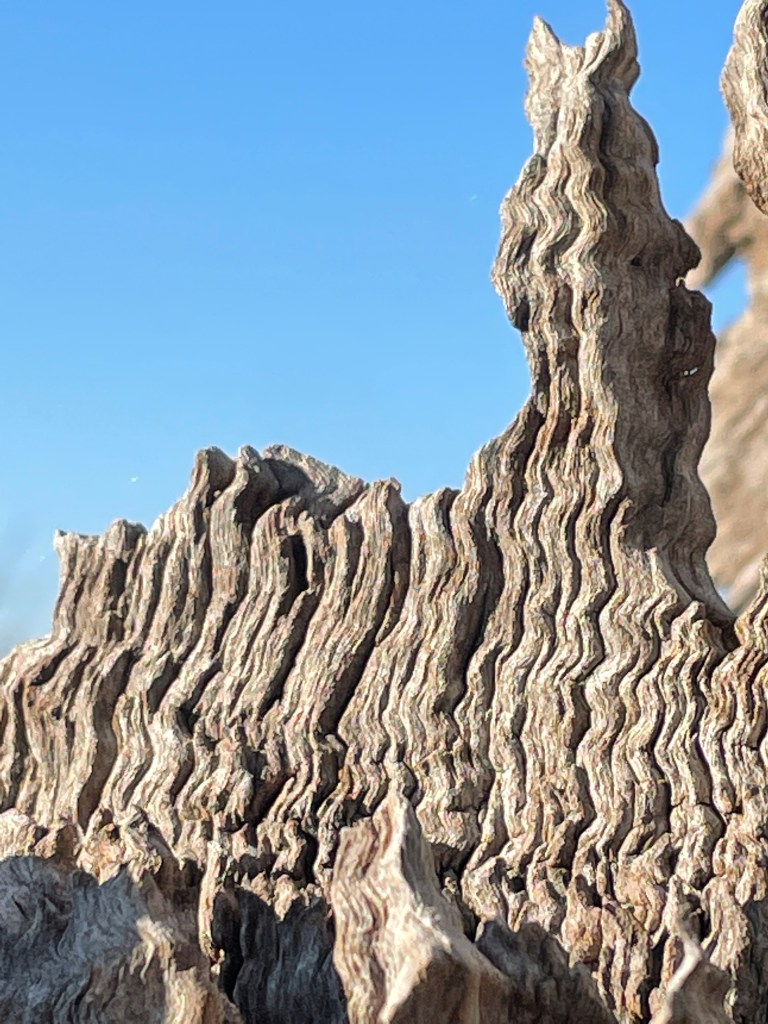
The wrinkly dead, grey timber is tough and beautiful on many of the trees.
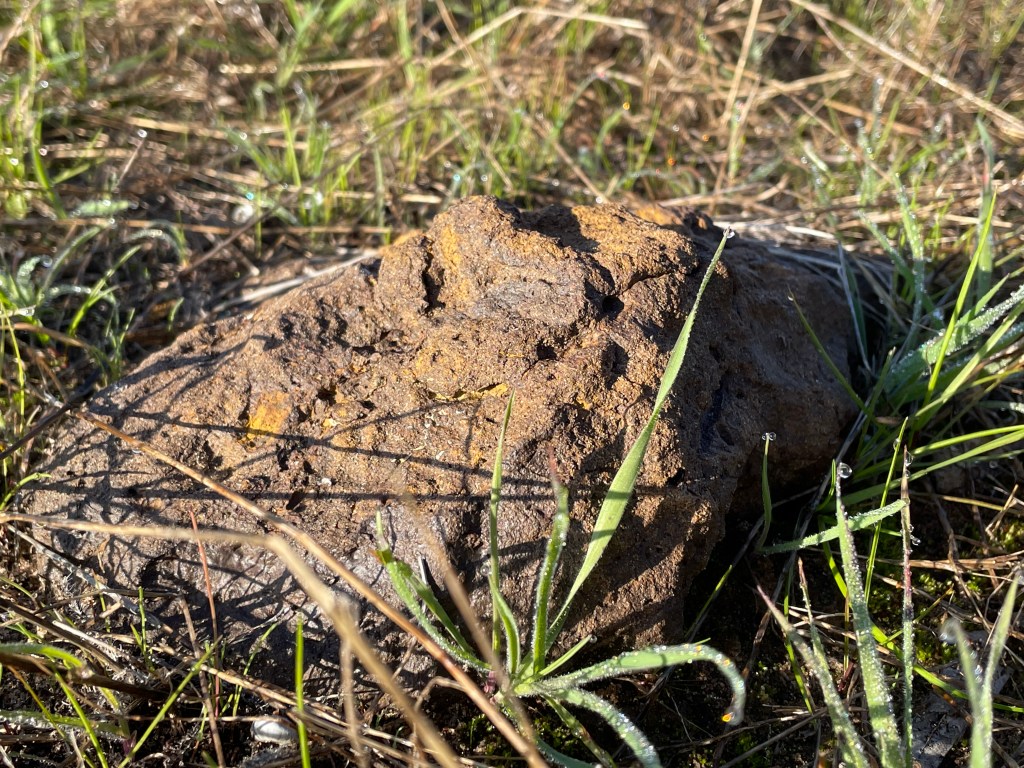
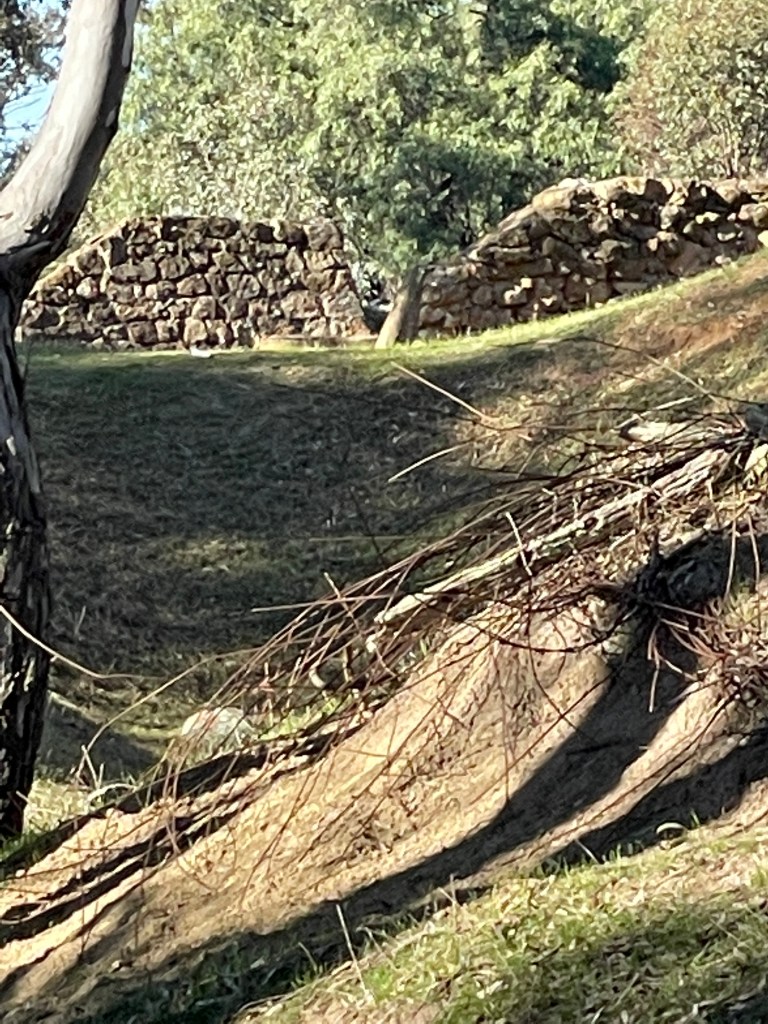
The other interesting thing we find are a heap of rocks – something I have not see in other swamps.
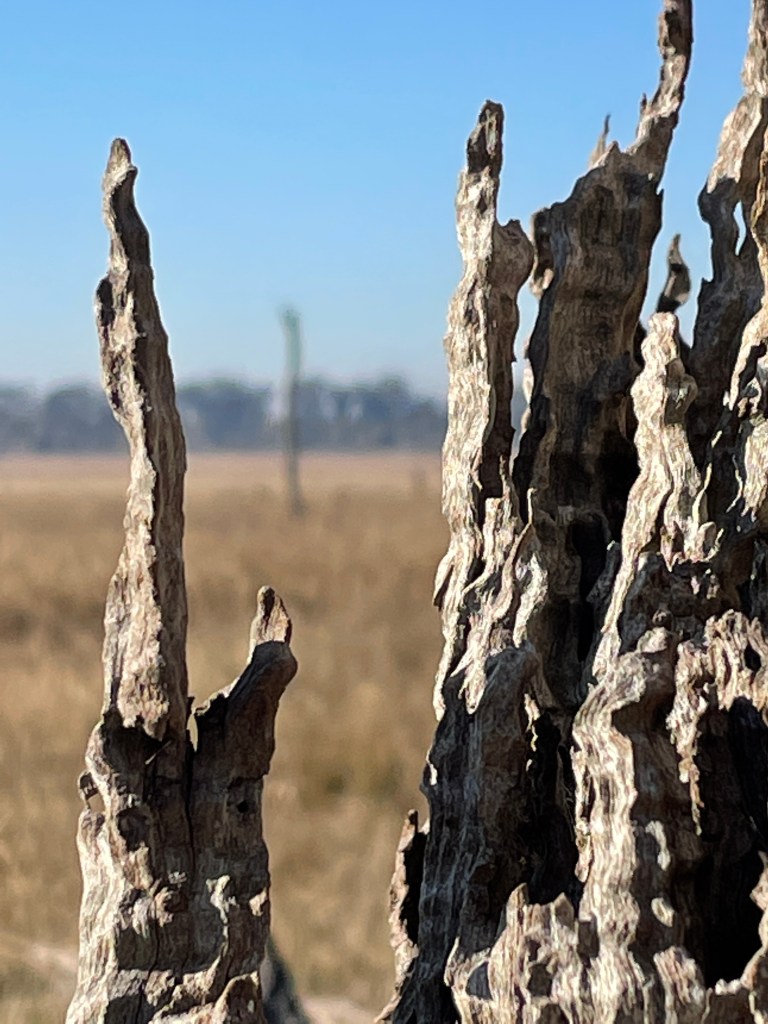


The sun is beaming now but is still bloody freezing, especially when we stand in a patch of shade.
One tree has steam coming off it and close inspections in the shadows reveals ice on thistles, branches, grasses, leaves and weeds.
Up close it is such a beautiful, complex combination of tiny crystals.
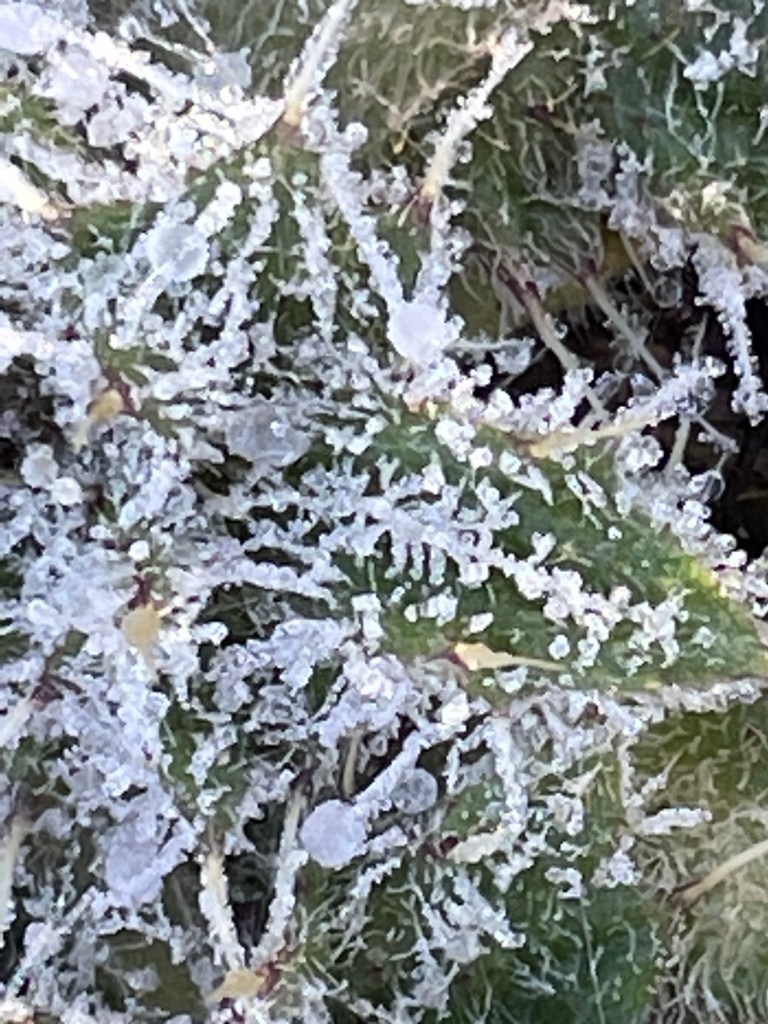
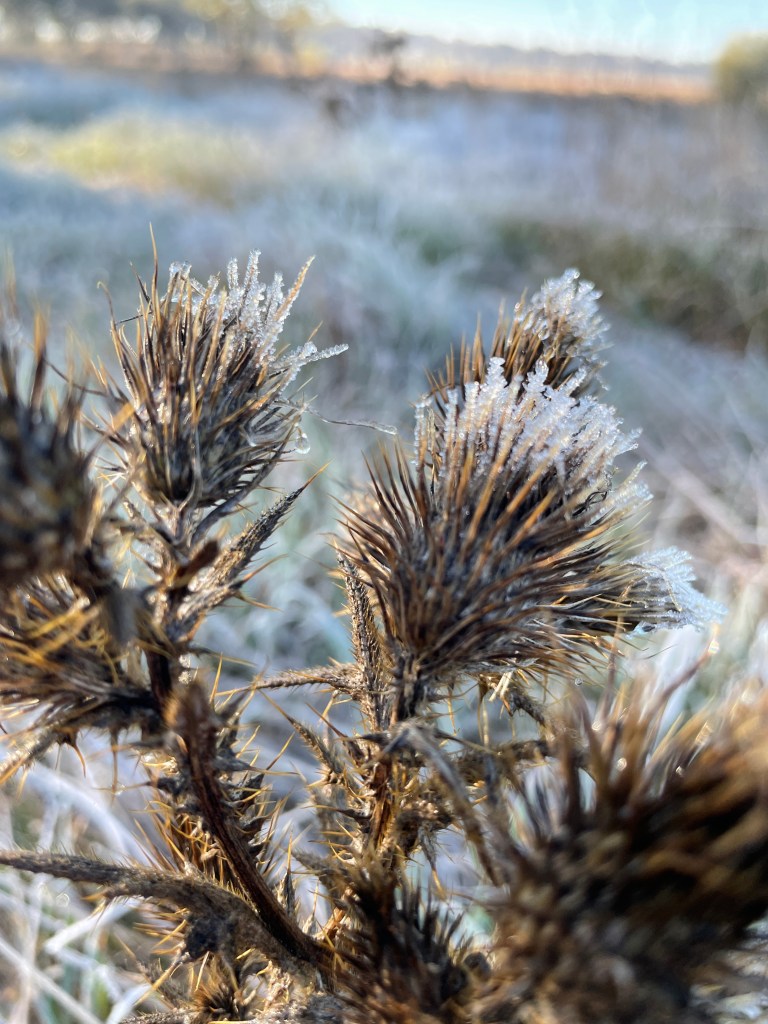

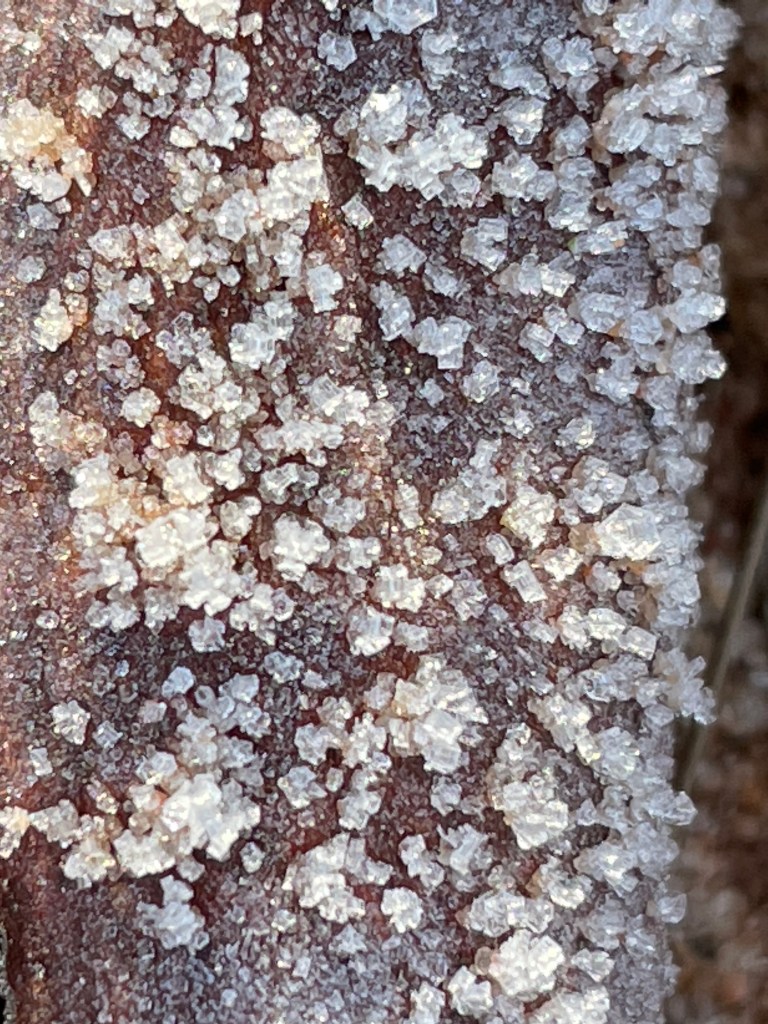

There is also some awesome drip action on stems, plants and spider webs that make for some wonderful images.
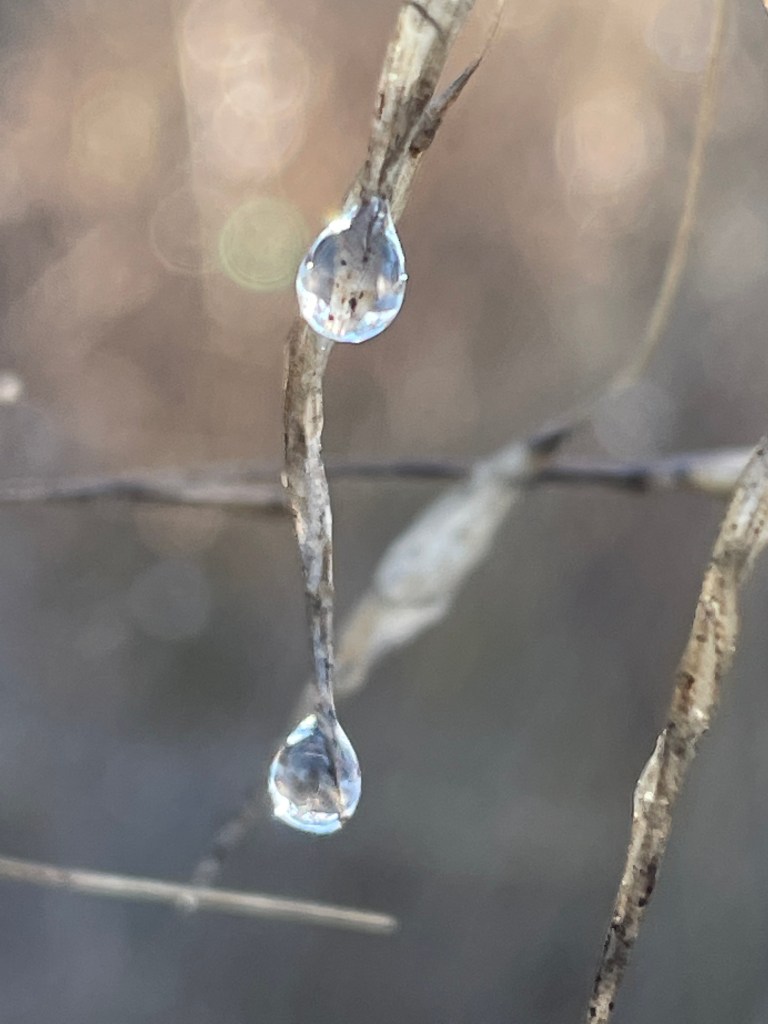

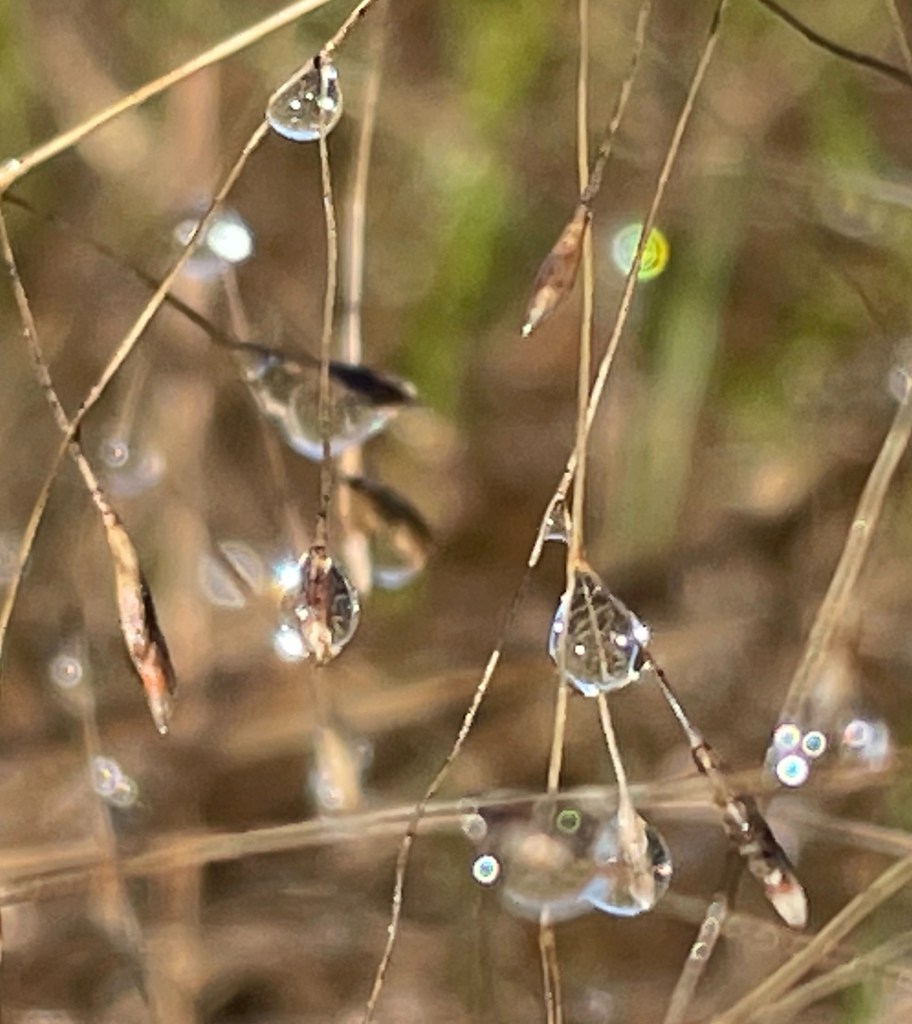
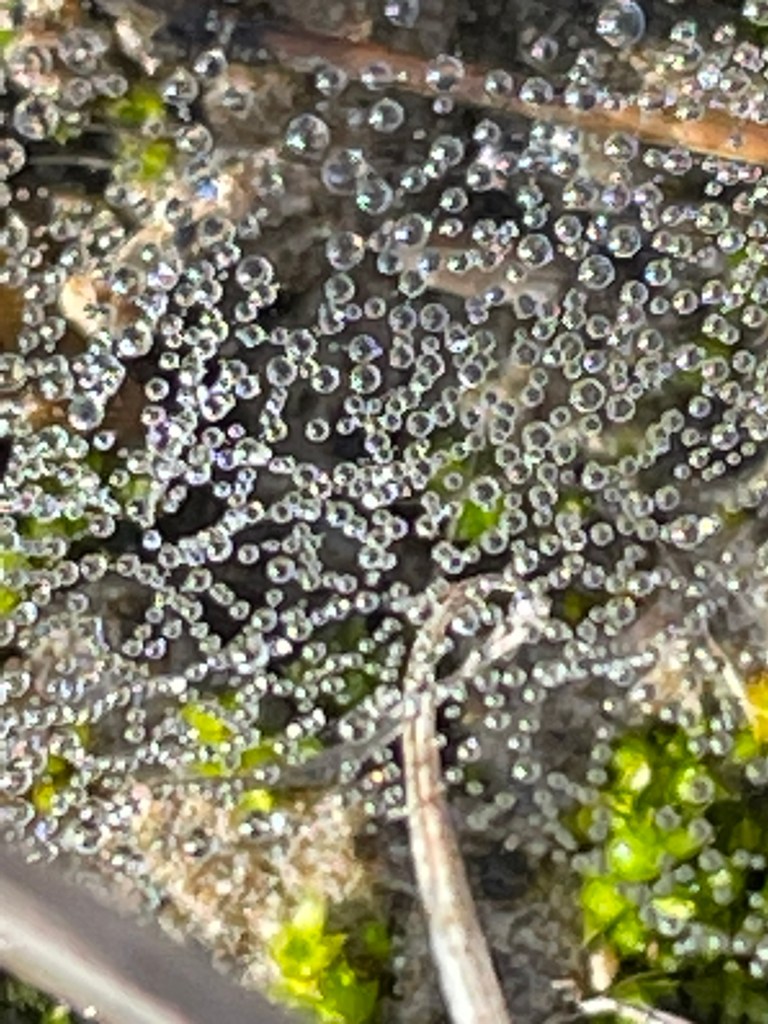

Deb and Mandi spend way too much time waiting for me as I bend over mesmerised by a tiny speck of ice or water.
About half way round, we come across some more glasswort – very scrawny and red which is apparently a sign of stress. It has been a long time between drinks for Clarke I imagine.
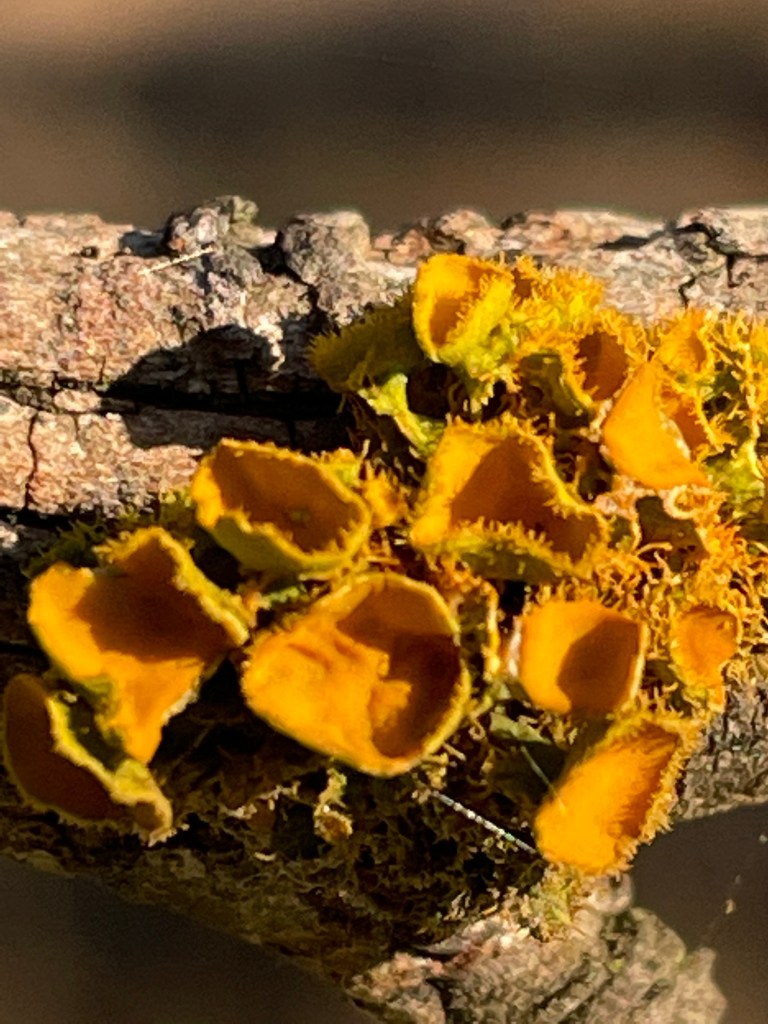
There are also some brilliant orange fungi.
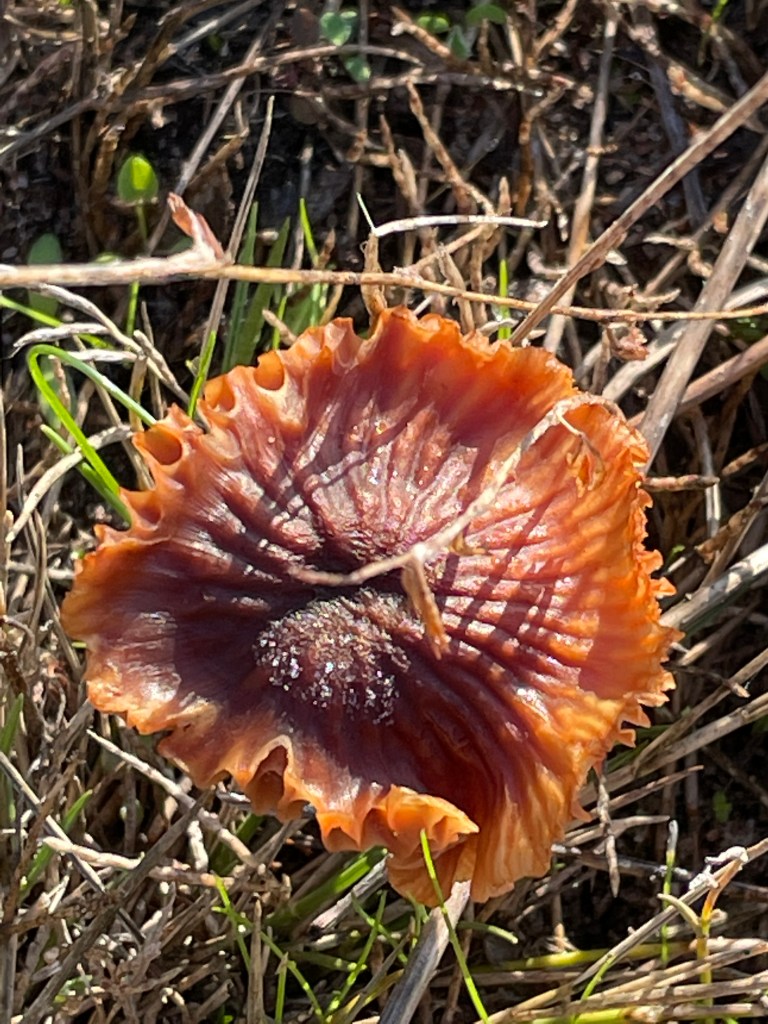
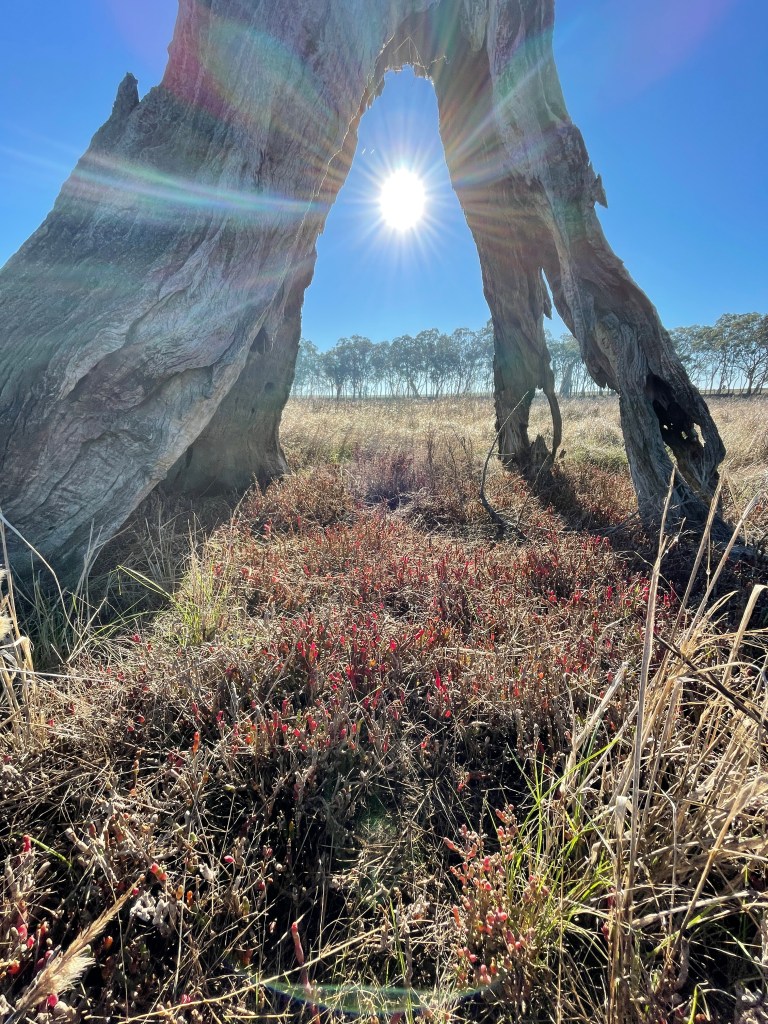
We also notice a ute crawling around the swamp’s boundary track. A local suspicious of our presence? Nah turns out ‘Bill’ is giving the dogs a run and happy to stop for a yarn.
He comes here often and tells us there are more birds here than nearby Boundary Swamp and kangaroo numbers have been growing recently.
All along the walk we’ve been watching the kangas move from spot to spot but remain on the reserve. We see a bird of prey scanning its brunch prospects from a dead tree but can’t get close enough to identify it.
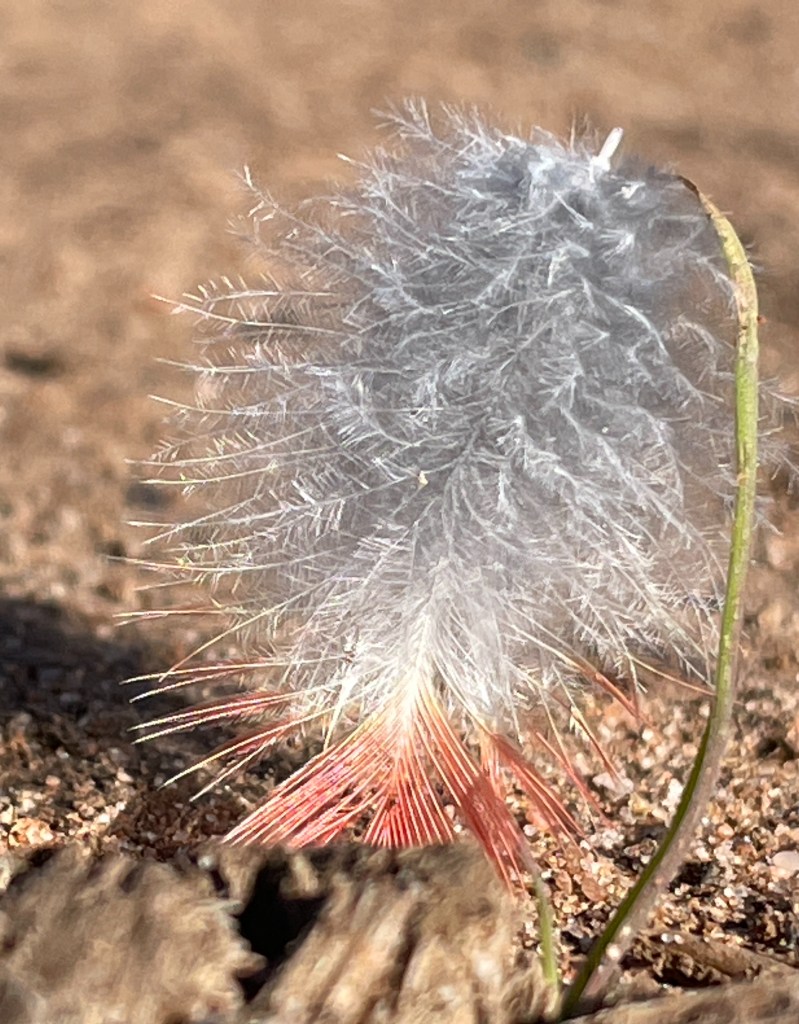


Clarkes Lake Road rises from the lake’s eastern edge and provides a great view of the lake. It is worth a detour up this track, as you also get a lovely outlook to Arapiles – Dyurrite which is eerie today, partly shrouded in fog.
From here it is back west towards the car although we do take a quick look at another water way – St Mary’s dam – a man-made thin reservoir created on an inlet into Clarke.
There is an old diving board at the edge of what is a very deep hole. How wonderful this must have been for cooling on a hot Wimmera day paddling, swimming and even water skiing.
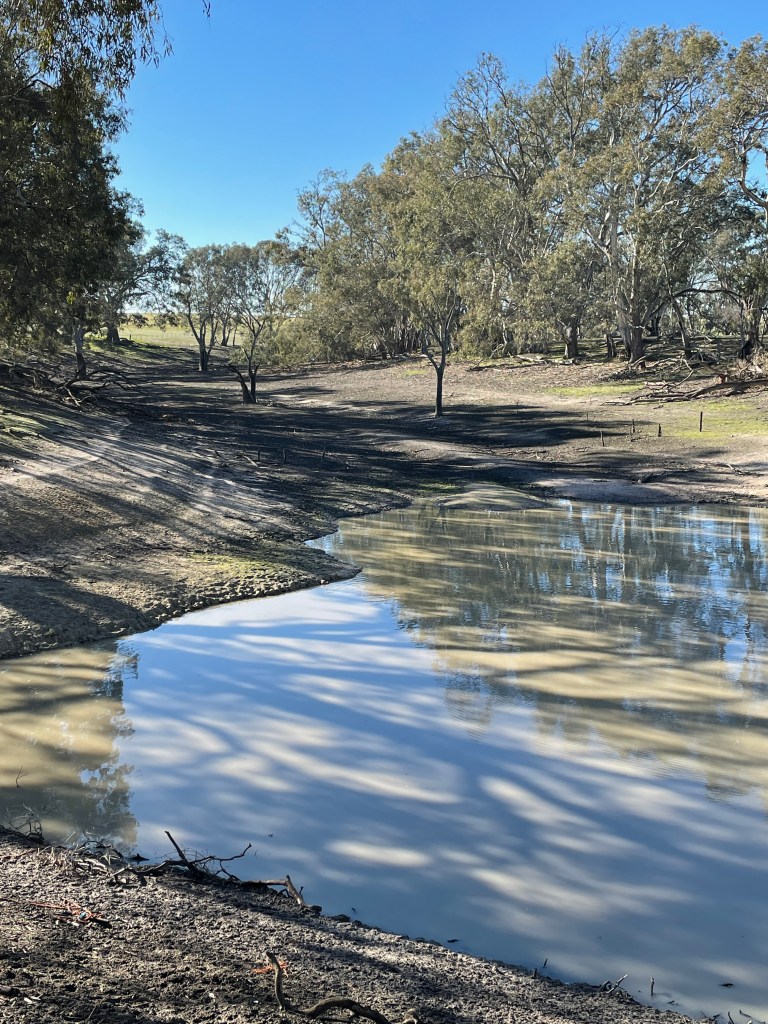
Must have been a lot of water to spare when this was regularly filled.
About 10 minutes later and we complete the full Clarke circle. What better way to warm up on a sub zero morning than brisk, 5km walk around this really impressive reserve. Thanks Mandi, Deb and our new friend ‘Clarke’, for a great walk.

 52 weeks 52 walks