Week 31 – Mullinger Swamp
Where – Victoria-SA border about 90 minutes west of Horsham
What – Swamp and Reserve with trees, water and fascinating history
10 words – giant gum, invisible drain, dead trees, two states, worth visiting
Please note this trip was done BEFORE restrictions and lockdowns.
This is a story of giant trees, a disappearing swamp and disputed territory, with a few rabbits, crooks and mis-directed explorers thrown in.
Bordering on the ridiculous? Well, yes. It’s that too – literally.
We are at Mullinger Swamp – a small stretch of trees and water straddling the Victoria- South Australia border about 90 minutes west of Horsham on what I think may be land of the Jardwadjali peoples.
You can tell exactly where the border cuts through the reserve. There is one sign with two sets of yabbying rules – one for each state.

Things were not so clear for the first 70 years after Europeans arrived and began transforming the land.
With a border set at the 141st meridian – a team of surveyors led by Henry Wade mapped the line in 1847. After nine months of drought, swamps (including Mullinger), sand dunes and broken equipment they gave up 250km south of the Murray River.
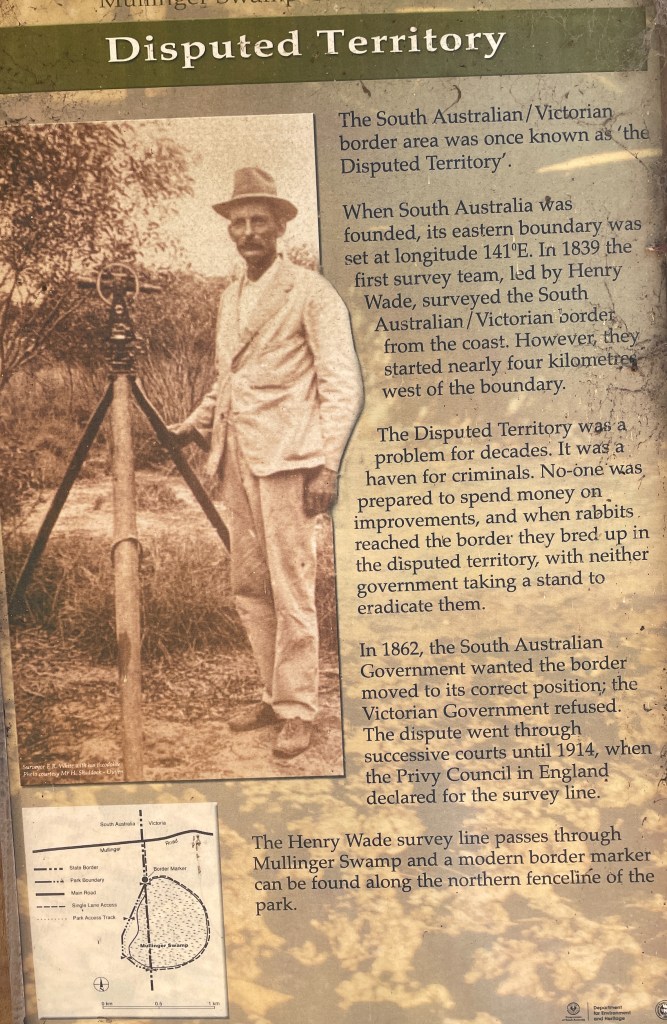
Two years later Wade’s assistant, White, finished the last 250km but only after killing and bleeding his horse to survive and stagger the last few miles to the Murray.
As equipment got better later in the 1800s, doubts began to emerge about the accuracy of Wade and White’s handiwork.
Apparently Wade and White had begun their surveys in the wrong spot – due the arrow made by rocks in the sand near Nelson being 3.3km west of the 141st.
During this time the so-called .33km wide ‘disputed territory’ became a haven for criminals and rabbits who neither government wanted to control.
In 1914 the argument was finally settled in England by the Privy Council which ruled in favour of Victoria.
Today the lines are still drawn – to a degree.
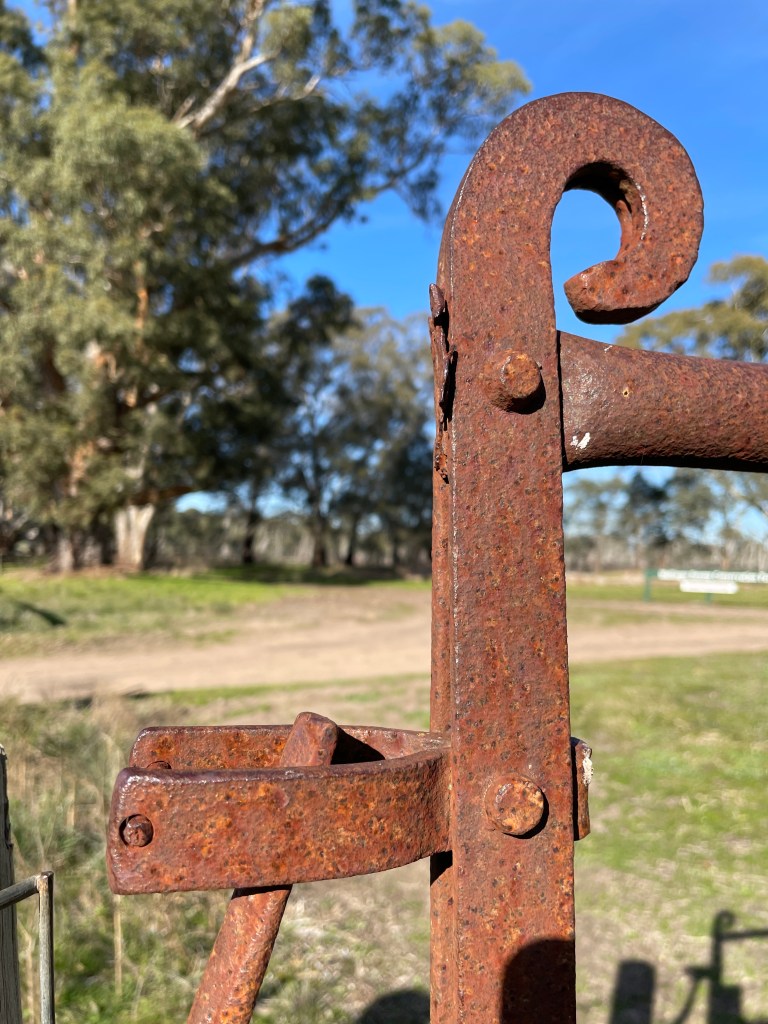
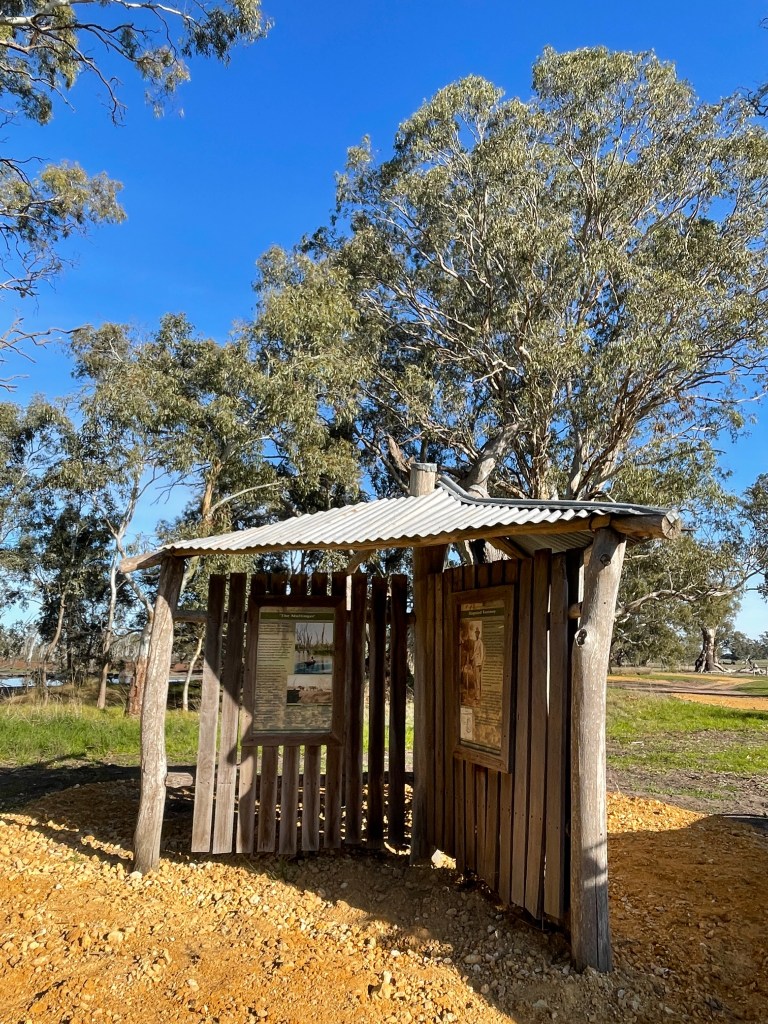

The Victorian side is called Mullinger Swamp Wildlife Reserve and the SA bit is Mullinger Swamp Conservation Park. And yes, there are two signs.
What can’t be argued is the humbling site of swamp’s giant gum trees.
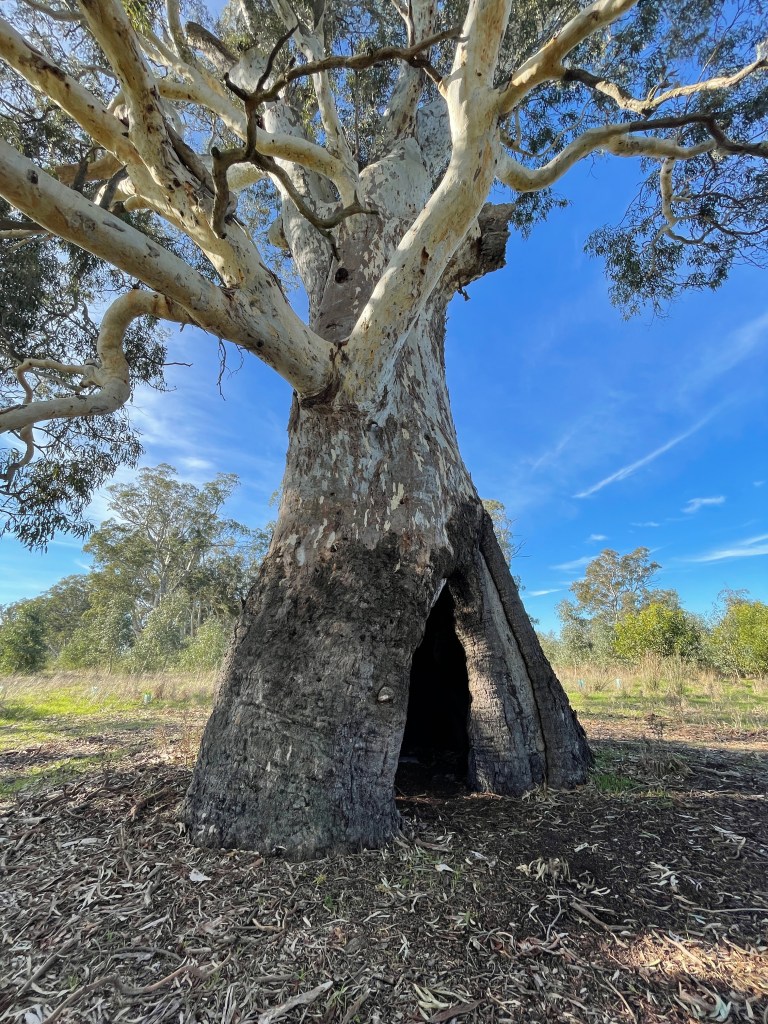
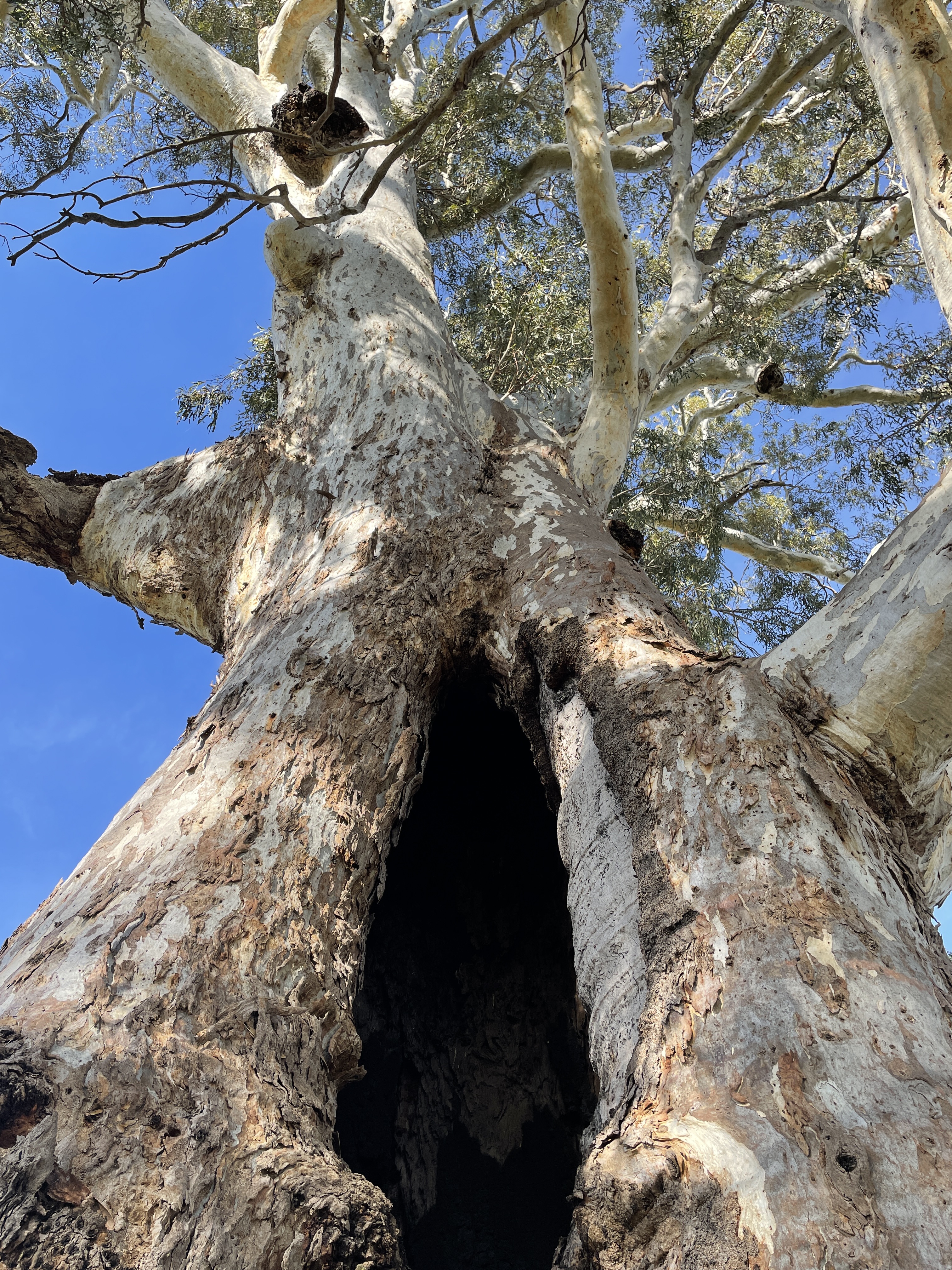
Big Red – the largest – stands 39 metres high and is 11.6m around the girth. He is estimated to be 800 -1000 years old and has a hollow base burnt out before white settlement.
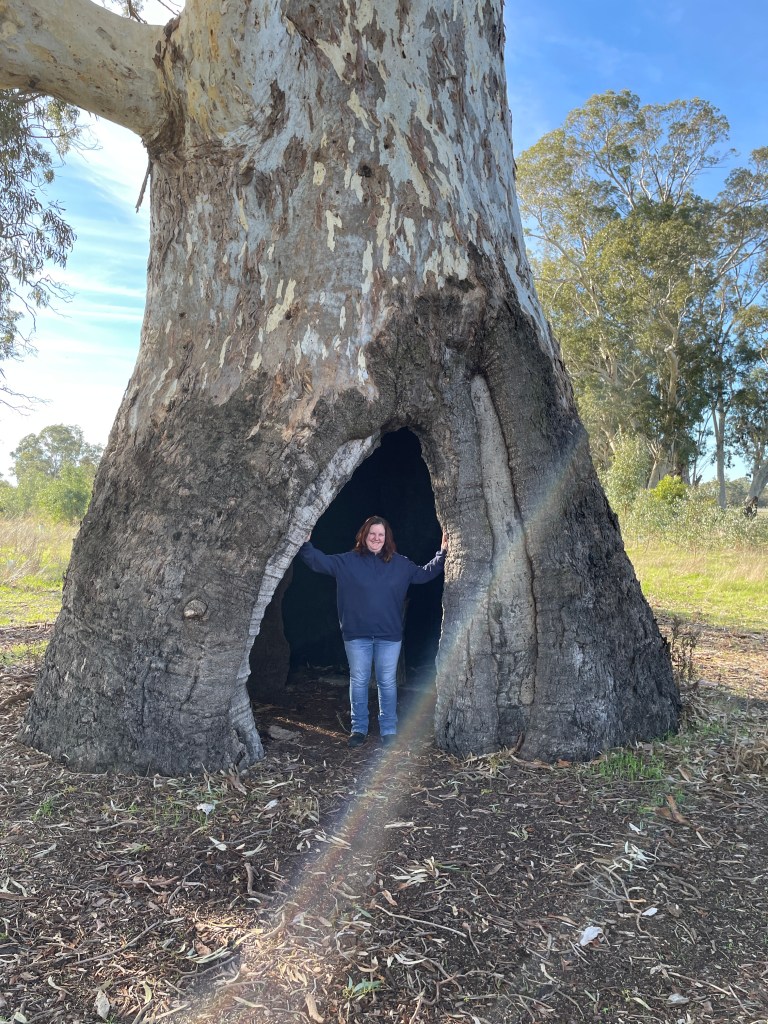
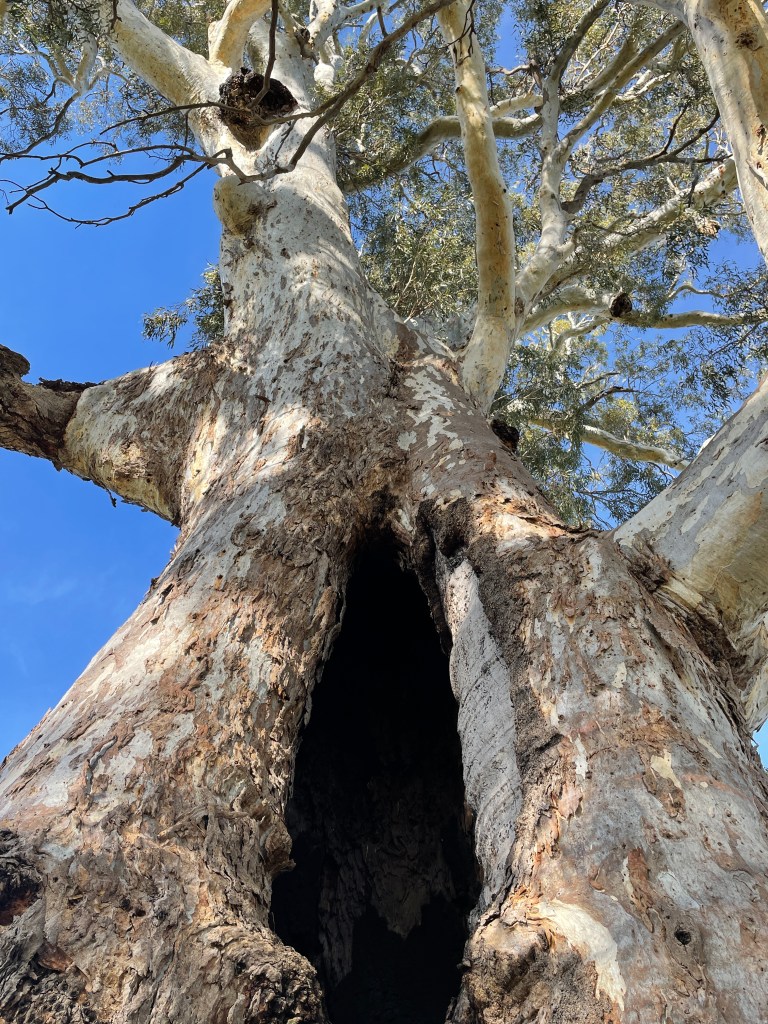
Red is almost like a room with a couple of windows and apparently doubles as a change area for swimmers.
You wonder what great shelter he would made for so many different people over the centuries.
SA proudly claims Big Red is the “largest living Red Gum in the South East of SA”.
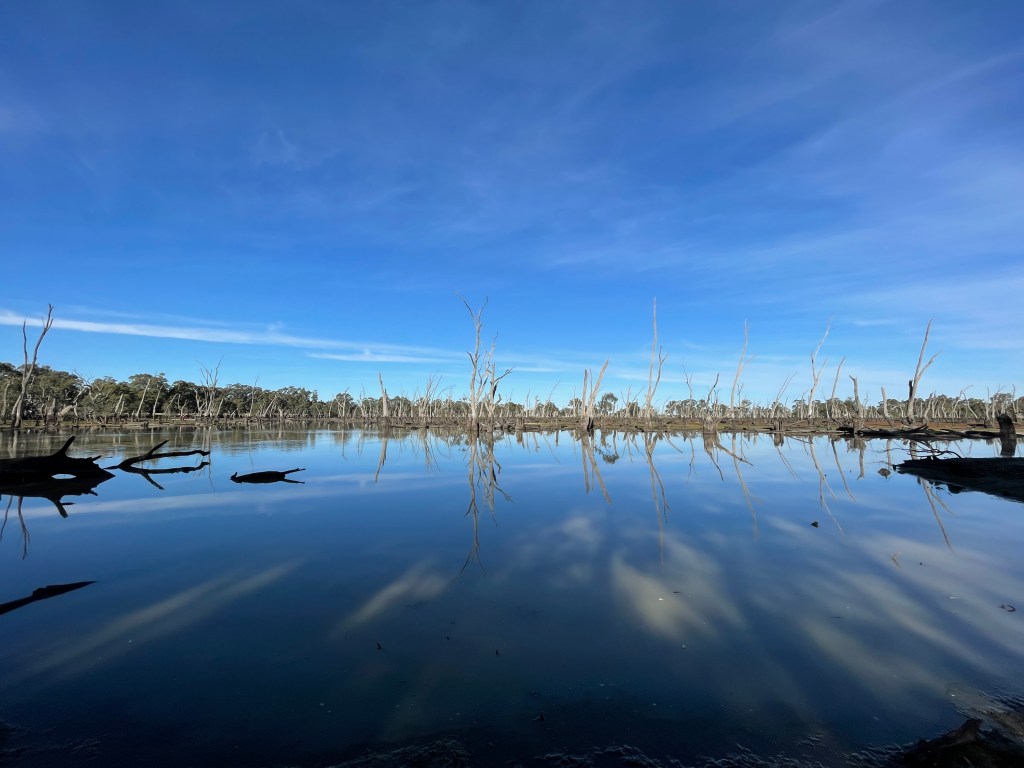
The other thing about Mullinger is the water – perfect for swimming, yabbying, scout camps and picnics.
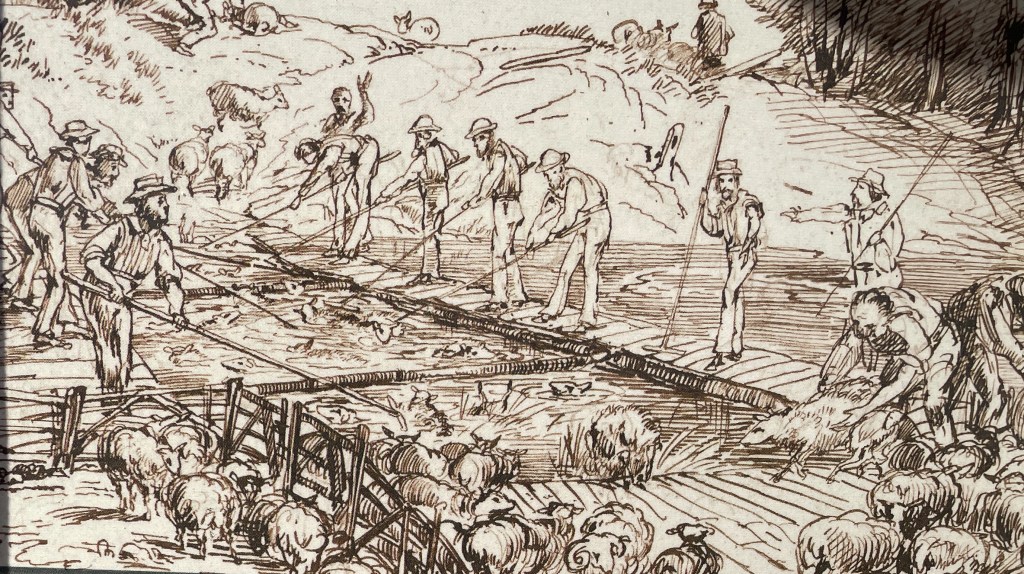
Back in the day it was also used by the Kybybolite Station to clean sheep fleeces of dirt and grease before shearing. The unsuspecting sheep were unceremoniously thrown in a deep end of the swamp and made to swim between parallel planks.
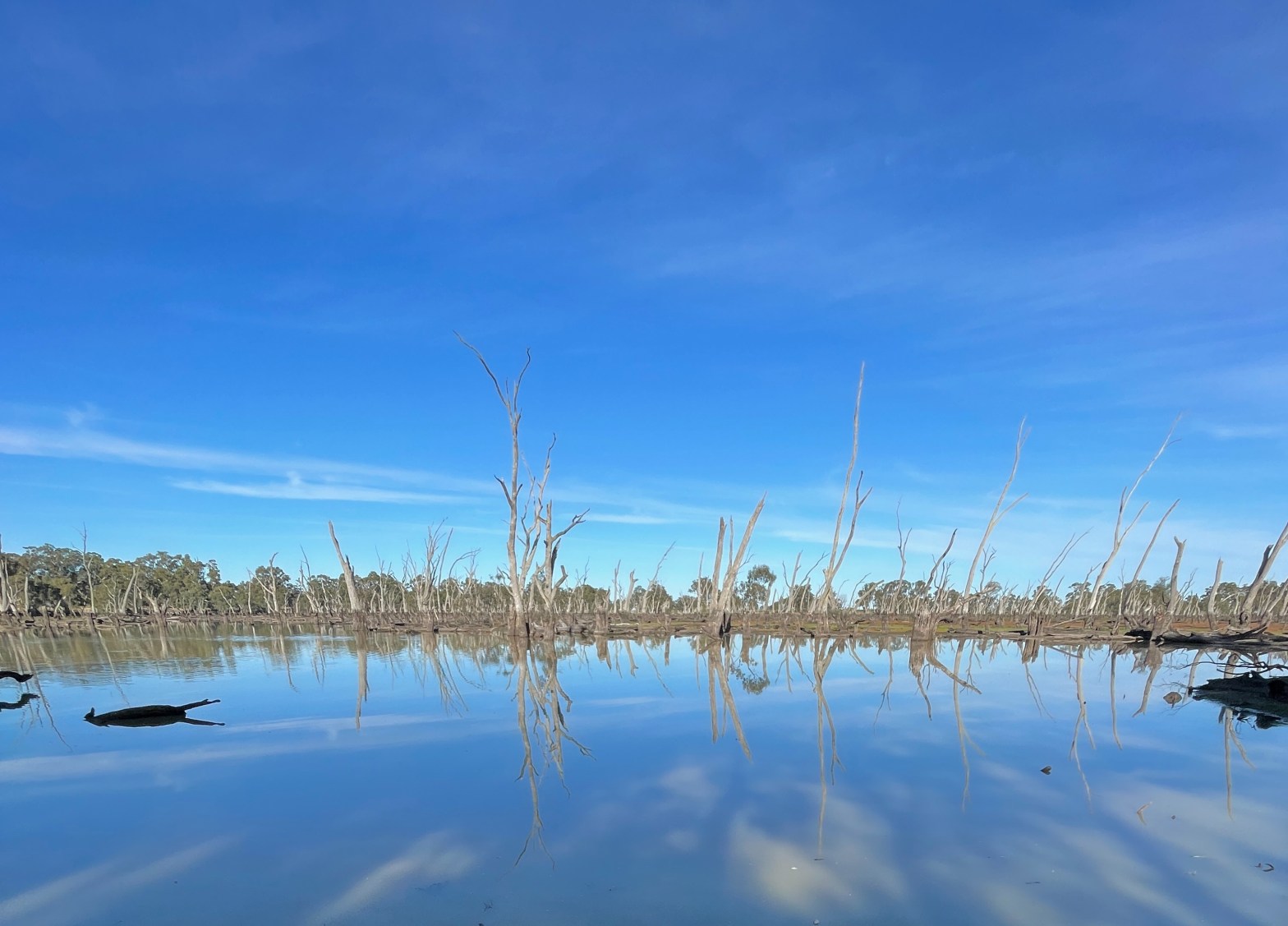
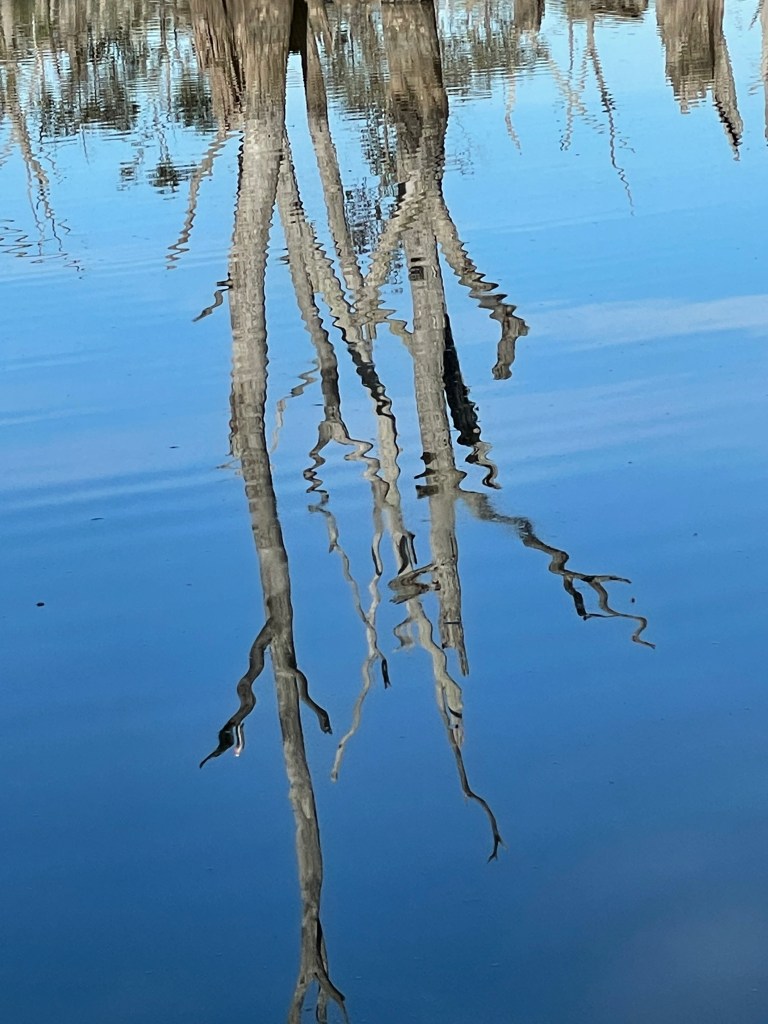
Today the blue sky is mirrored beautifully on the patch of water near the reserve entrance but look further around the swamp and it does seem that the sheep might struggle to be get very wet in the shallow water.
The might be good reason for this. Mullinger is home to a runaway hole – which sees water drain from the surface to the aquifer below.
These holes are renowned for being spectacular when they “let go” and at Mullinger the escape hatch sits at the park’s northwest end.
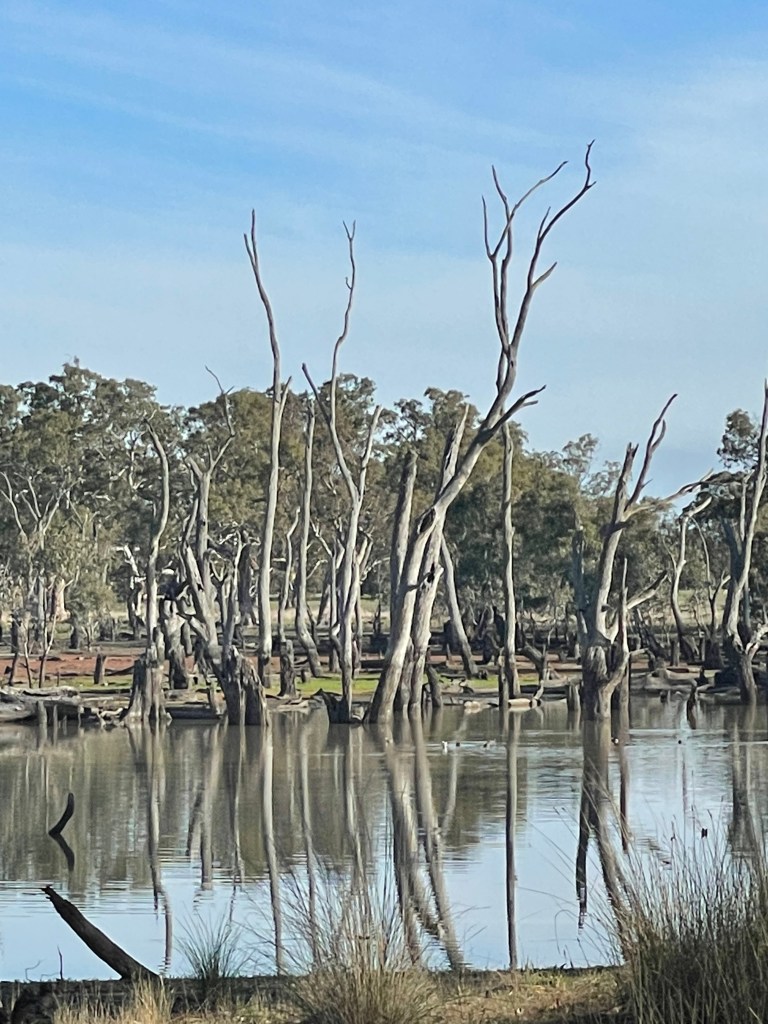
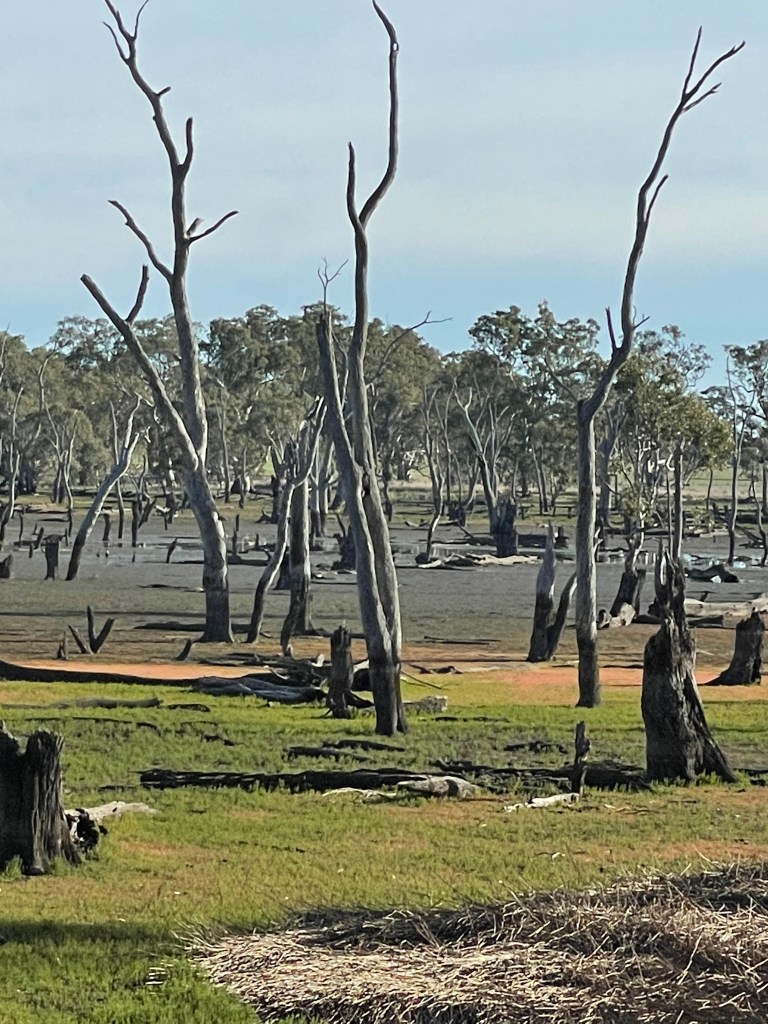
The reserve information sign tells us that some time before European settlement, this runaway hole blocked, and the trapped water drowned the trees.
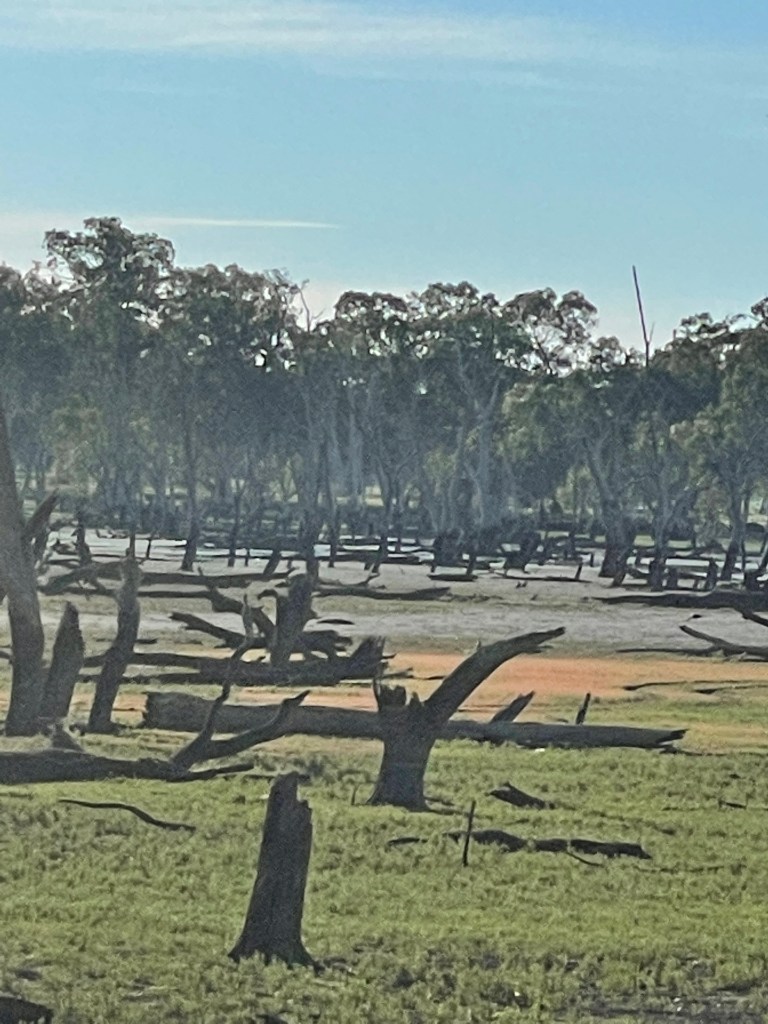
And that is the other things that you notice– there are a lot of dead trees.

Walking the track around its edge and the many black marks at the trunk bases suggest water has been much deeper in the past. It reminds me of the Wimmera Mallee reservoirs whose water levels also change – with weirs, droughts and new pipelines – rather than run-aways.

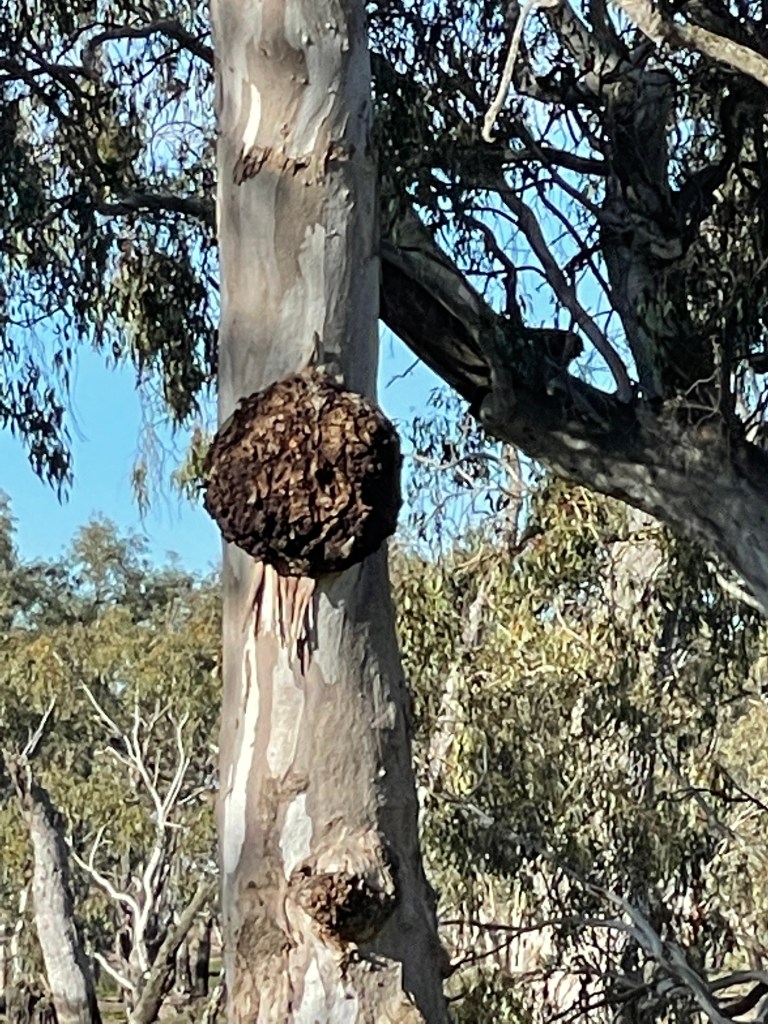
Away from the swamp, I notice one tree which seems to have been ringbarked many years ago and others that look healthy and strong. One has a giant burl and another appears to have mistletoe growing like unruly hair out of one side.
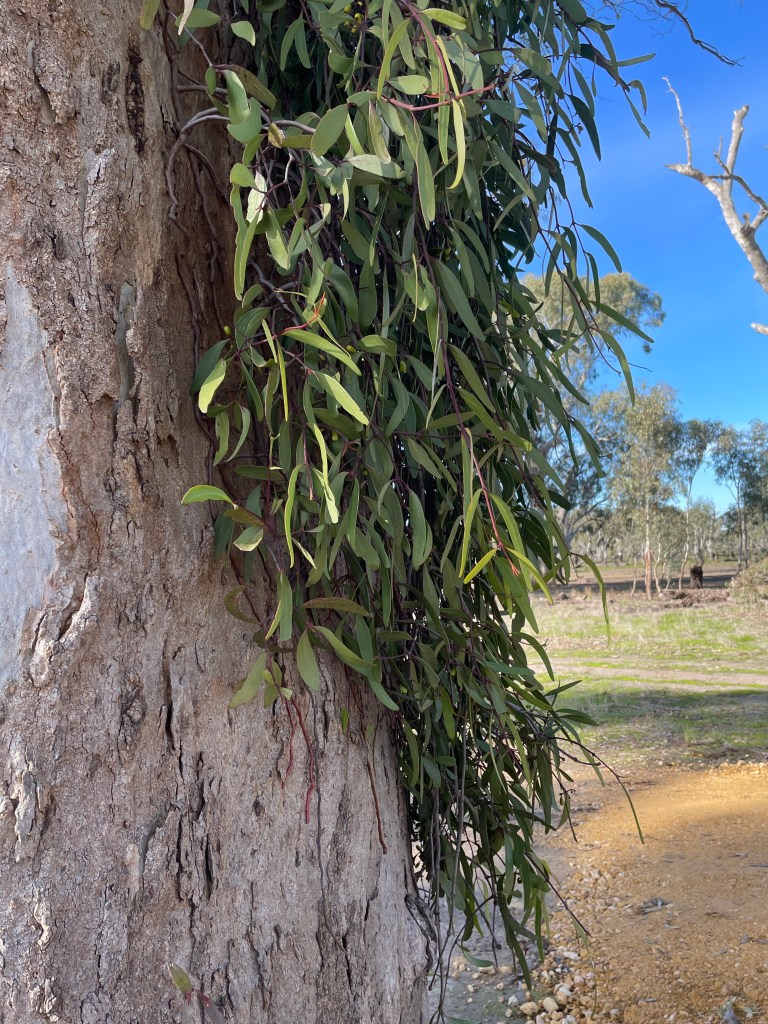
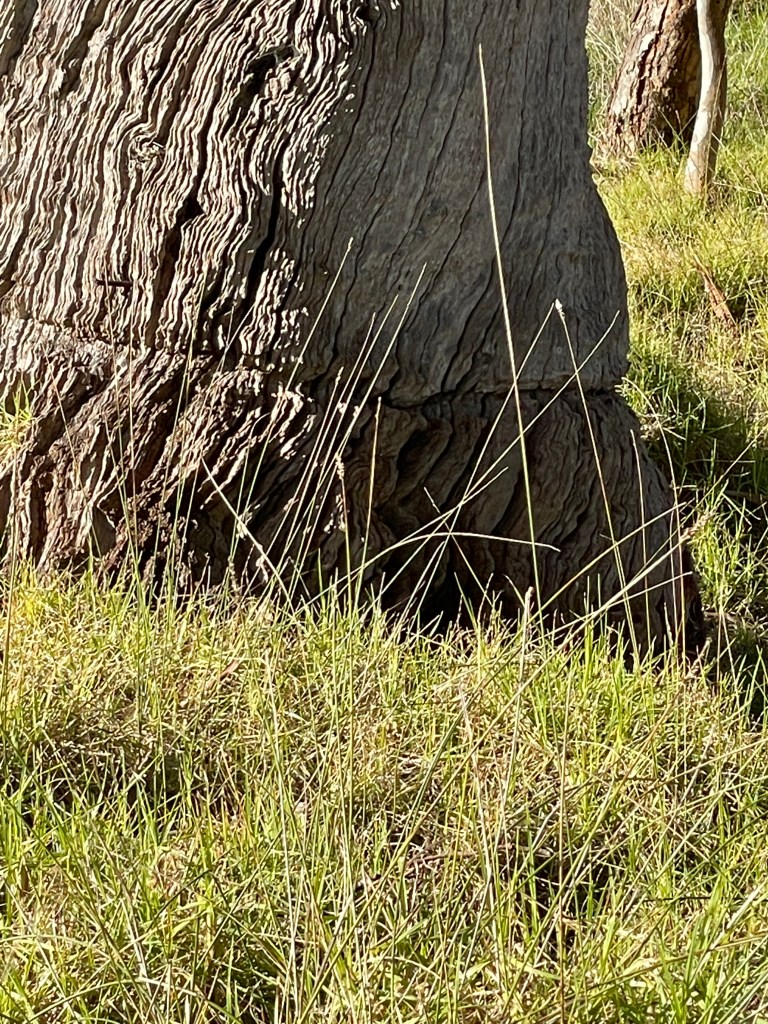
There is also a covering an iridescent lime green lichen on one trunk which from a distance looks like paint.
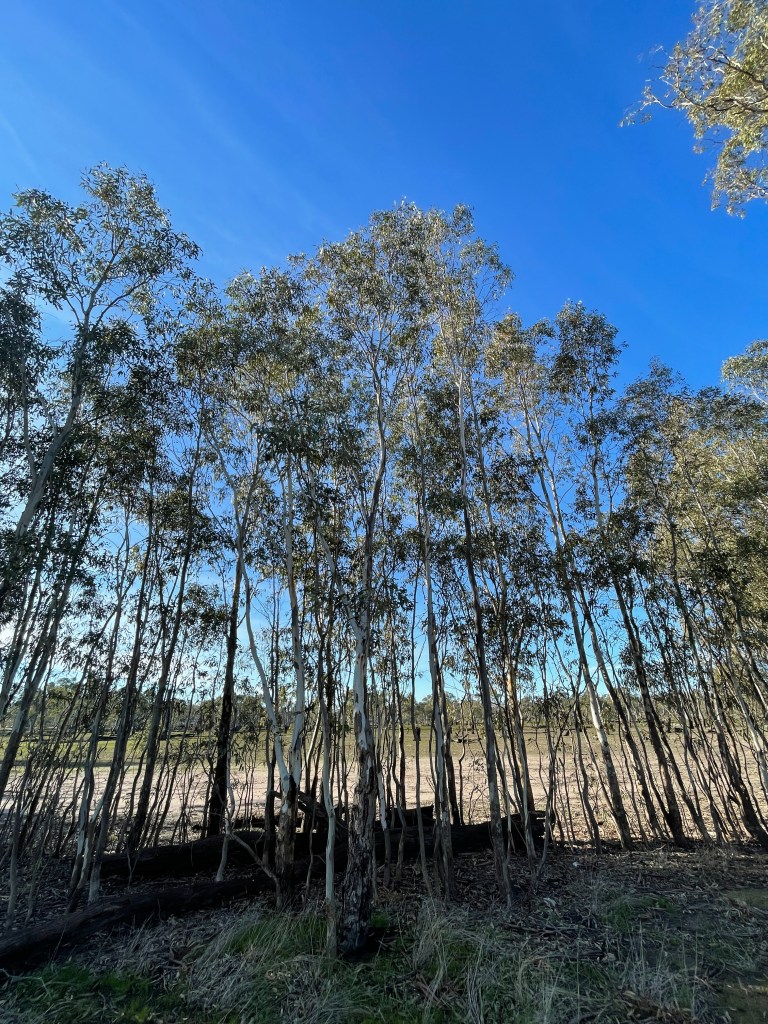
It is nice to see a series of skinny red gum saplings – maybe from a recent flood – which contrast positively with death and destruction in the centre.

It is not all gloom, with green and red swamp groundcover providing a carpet of colour among the skeletons .
Where there is life, there is hope and I hope one day to water bring this place back to life again.
In summary, Mullinger is tranquil – No wind, bright sunshine and almost silent but for the call of the local birds.
Ir is a place of wonder. Such a privilege to stand inside a living plant that watched up to 1000 years of this wetland’s ebbs and flows.

But there is also something unsettling.
Maybe it is the dead trees.
Or the disturbing reality that this whole swamp could be sucked down a drain at any given moment.
Or the wounds left by colonisation, inundation, disputes over an invisible line and rabbits running riot.
But maybe that’s the point. Life is about taking the good with the bad.
Mullinger is an expert in being swamped by both and continues to not only survive – but like Big Red – stand tall.
 52 weeks 52 walks