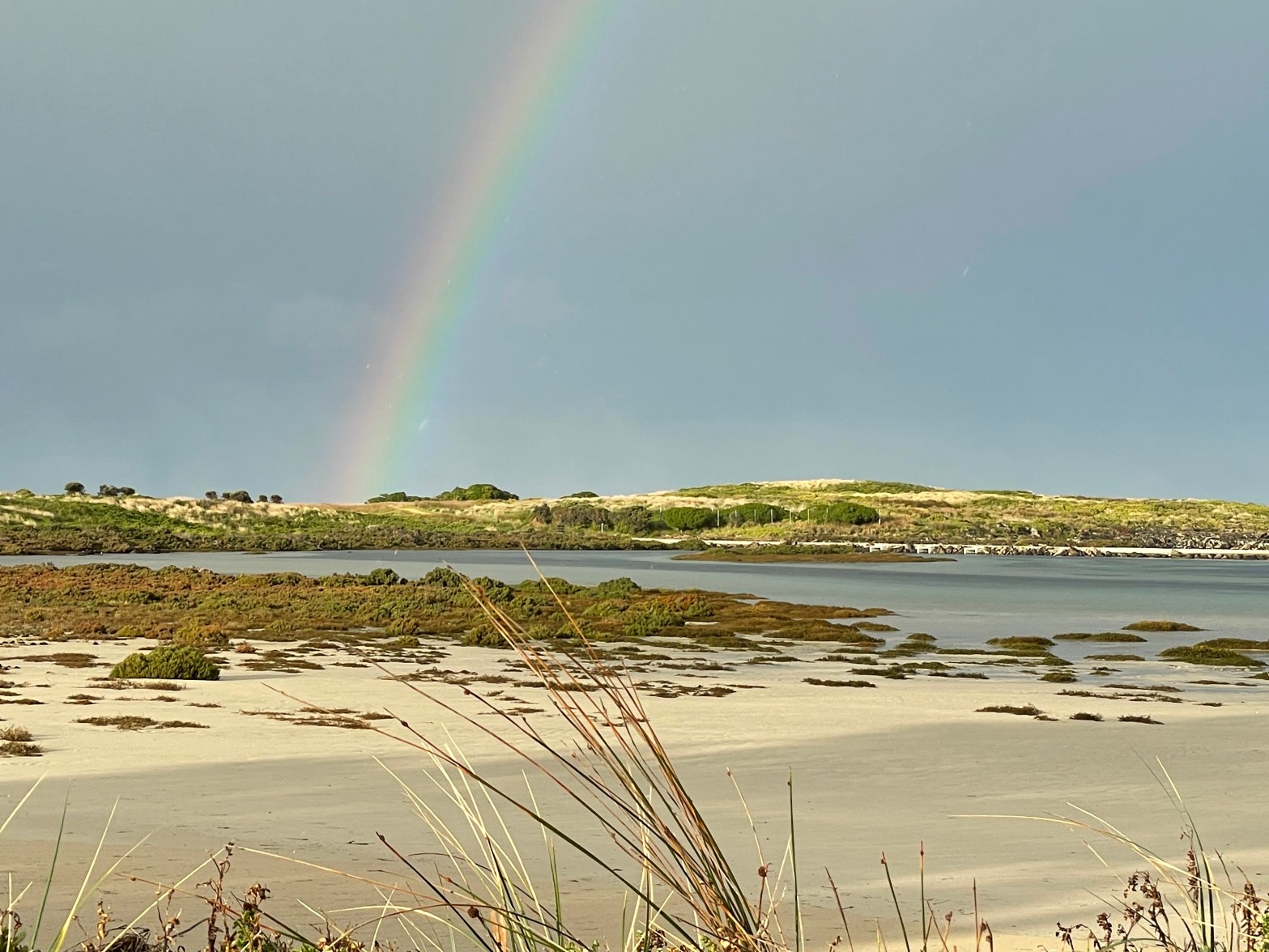
What – Griffiths Island Port Fairy
Where – just past the wharf and over the causeway
How – free and open but keep to the track be mindful of where you walk, especially when the mutton birds are here.
10 words – Wallabies, birds, waves, fresh air, sand, history, rocks, escape
(PLEASE NOTE – this walk was done the same weekend as Tower Hill and was NOT done during lockdown)
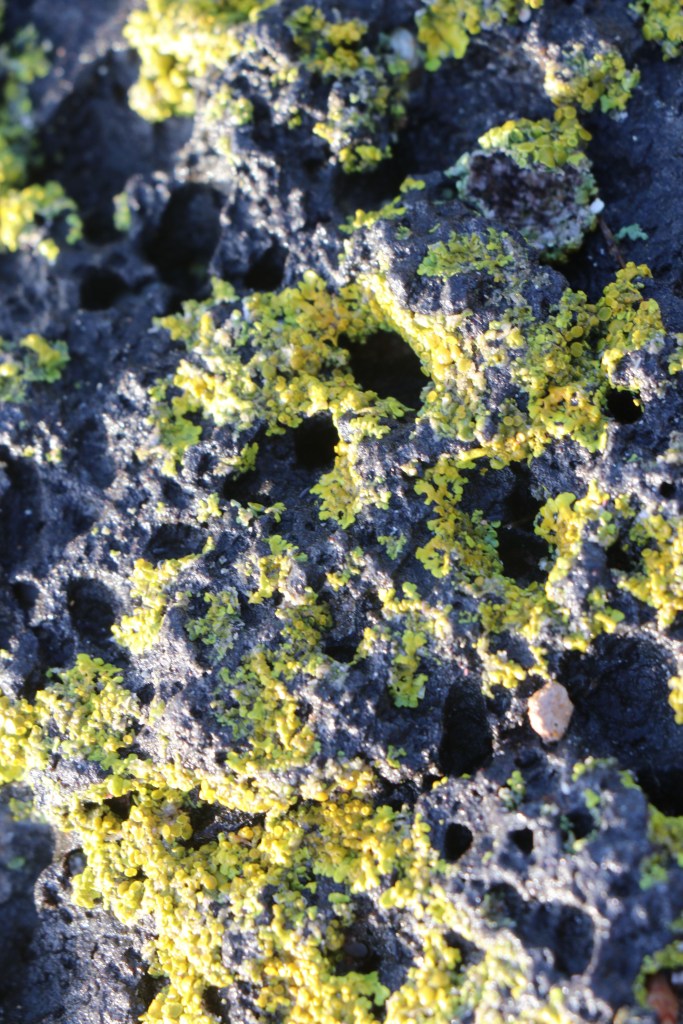
If you have been to Port Fairy you have probably been to Griffiths Island – 1.5km long and less than 1km wide it seems like just an unassuming point where the river meets the sea.
Nothing could be further from the truth.
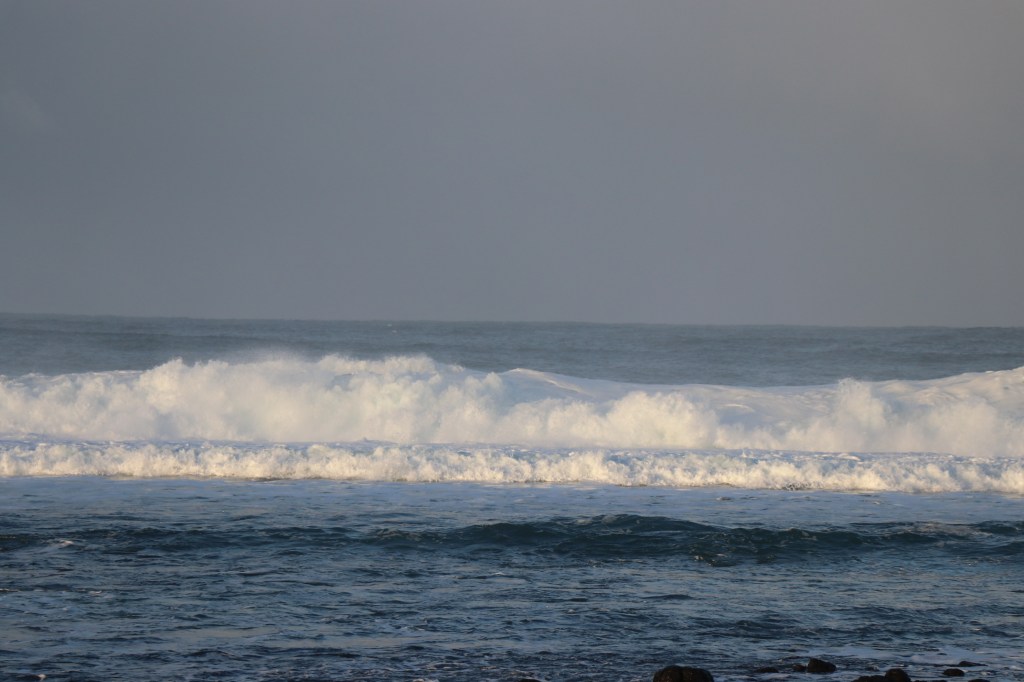
Yes it is small but it has an ocean of stories to tell about rabbits and goats, wallabies, mutton birds, missions, whalers and waves lapping at the lighthouse door.
Come for a walk with me and I will reveal all.
Griffiths was apparently known as Moleen by the local Gunditjmara Peoples – and while it was visited by the local mob I could not find a lot more detail of why and how they connected with it.
Gunditjmara are traditionally river and lake people and this island sits at the mouth of the Moyne river which has its origins in lava flows 82km upstream at Penshurst .
The first white settlers came in the mid 1830s and chose Griffiths as a base for their short-lived whaling operations that ended in 1843. That decade it was also the site of ship construction with The Brothers built here in 1847.
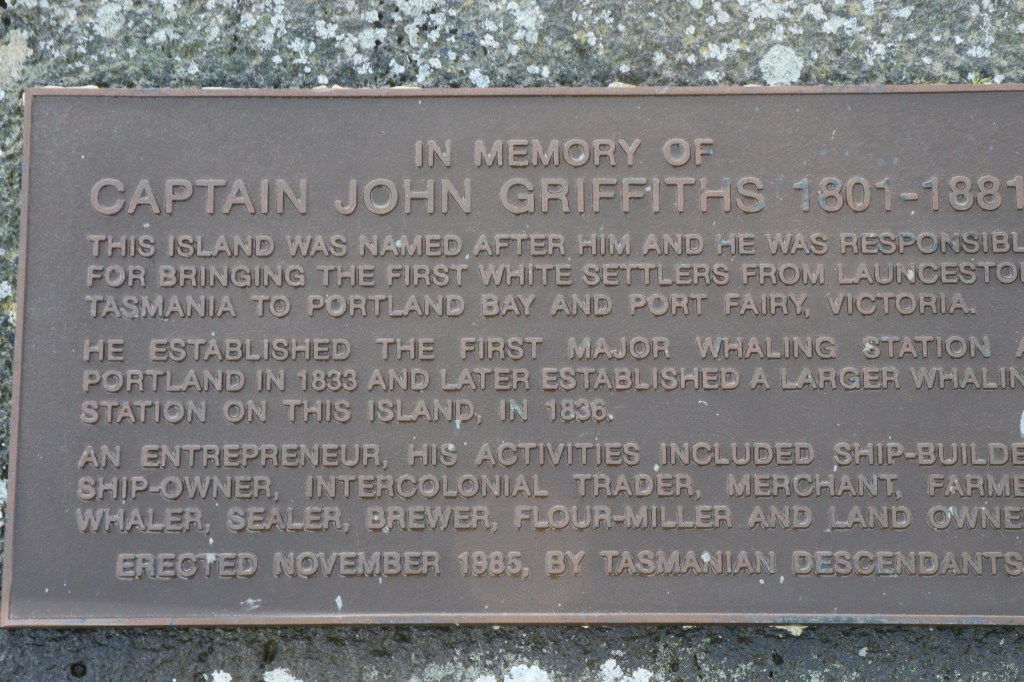
For a short time in the 1850s, widow and colourful character Flora Dunlop turned the abandoned whaling station buildings into a sort of ‘mission’ for young Aboriginal children. The operation, which included a house, farm, schoolroom and dormitory, closed in 1854.
Back then the island was separated from the mainland but now it is as simple as walking across a concrete for access.

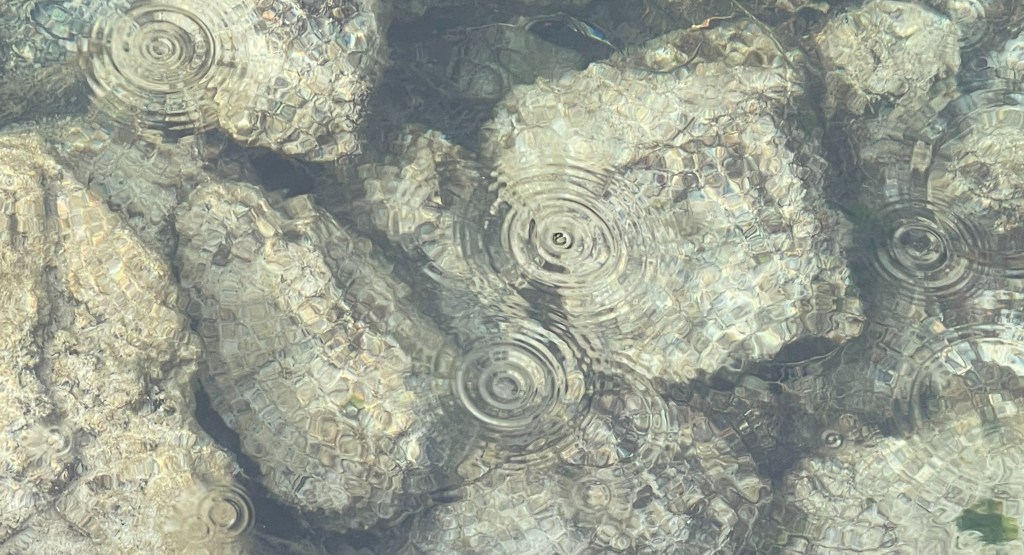
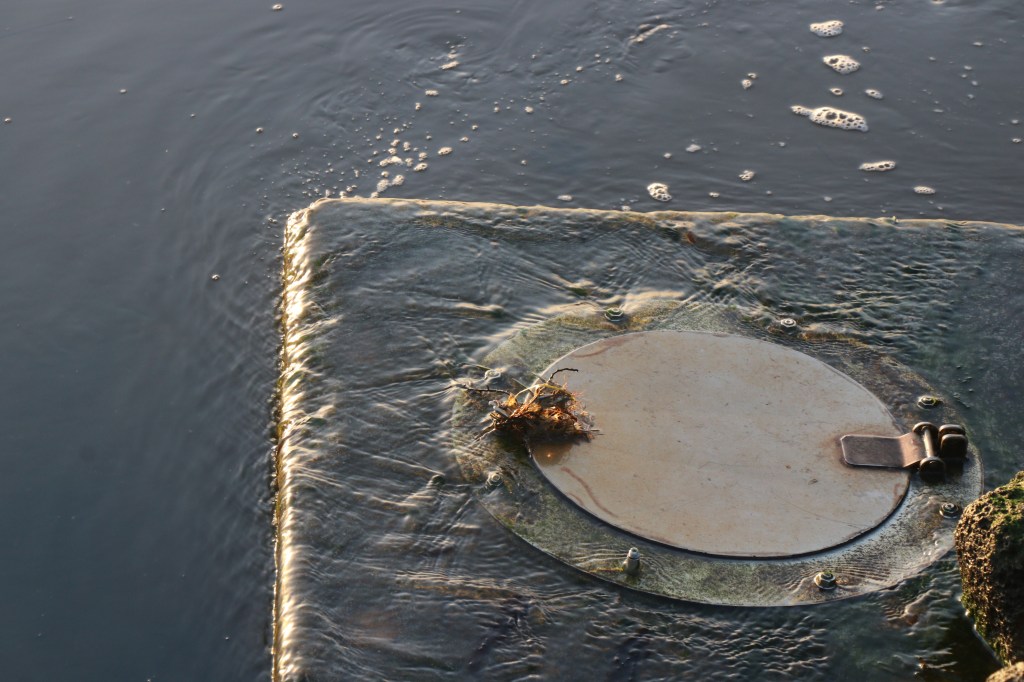
The water from The passage, to the west, passes beneath as we cross. There are many things to see in and near the clear water.
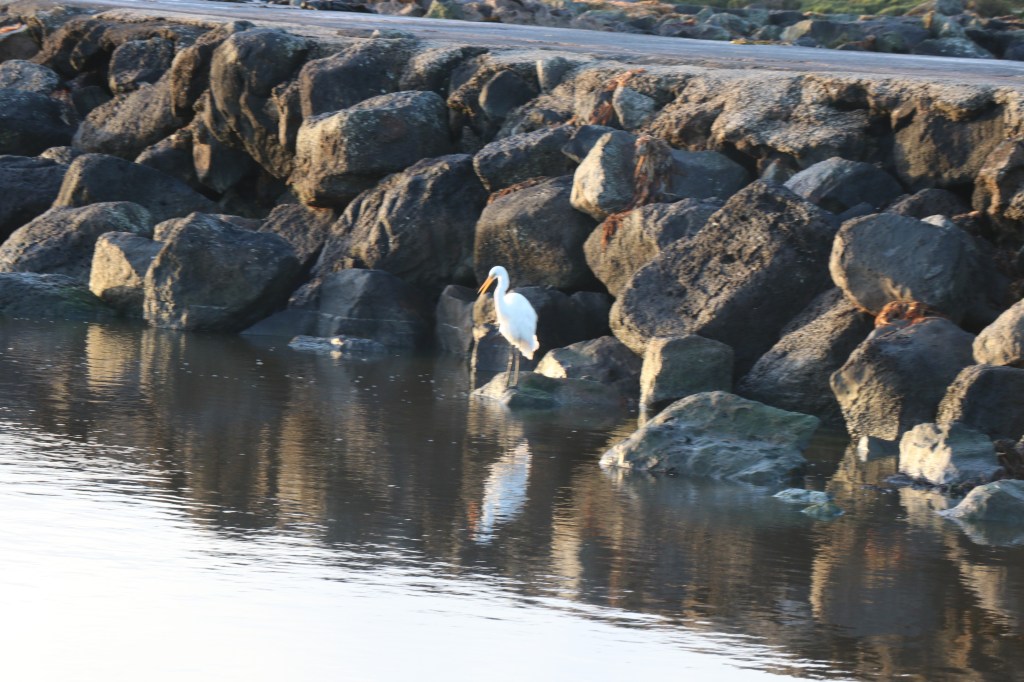

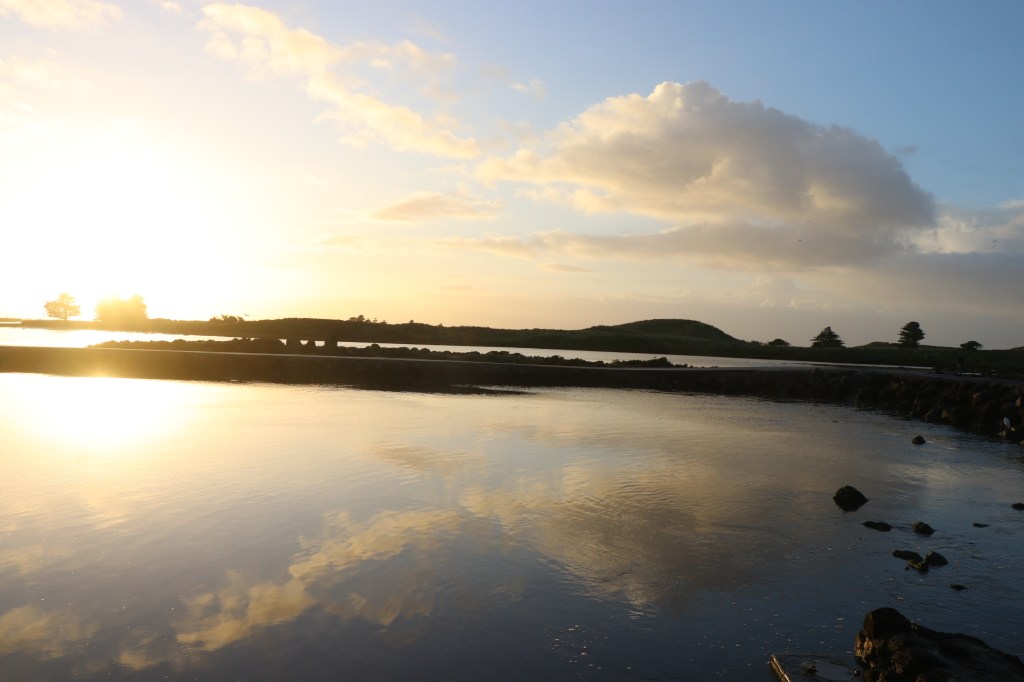
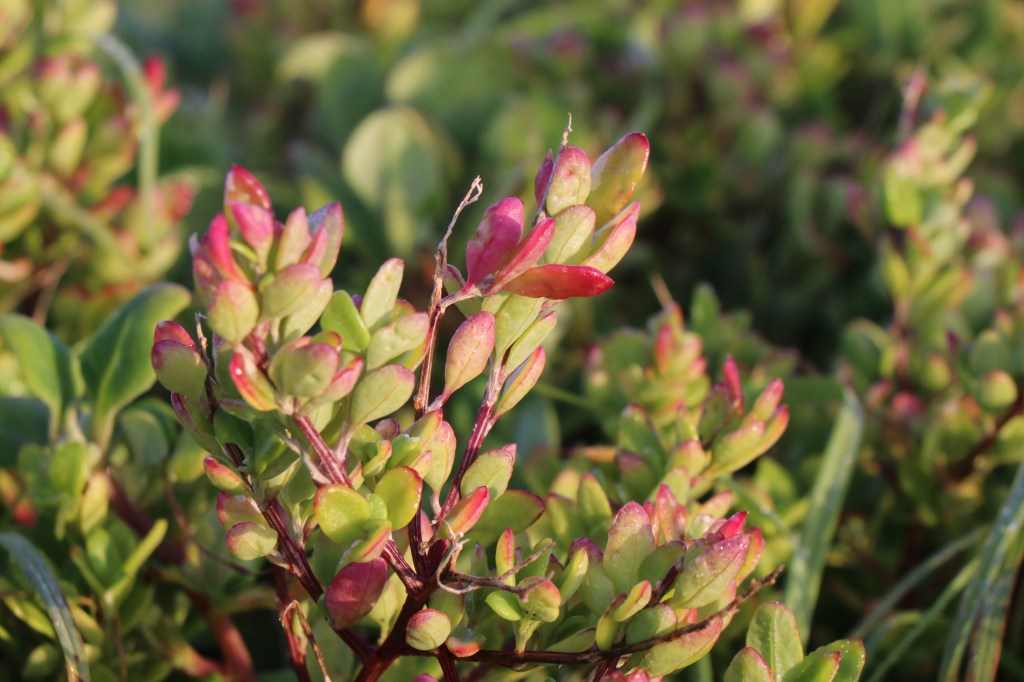
Once across we are on the island – which was originally three islands. We arrive on the original Goat Island and follow the path south to a very rocky shore on the other side. If you look closely you will see burrows in the vegetation. They are empty in winter but in spring they come to life with the return of resident owners – mutton birds fresh from a flight half way round the world.
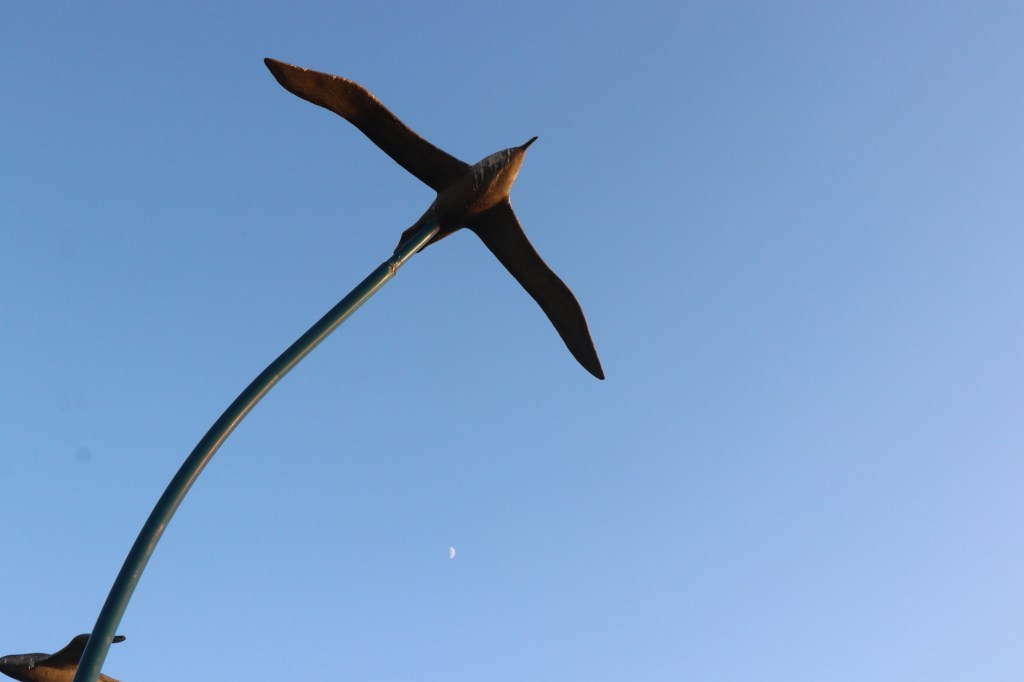
These birds work like clockwork – returning within days of September 22, mating mid November and leaving again in April. They also feed out at sea during the day and all arrive home about dusk – at the same time. It is like a scene from ‘The birds’ as they arrive en masse at sunset.
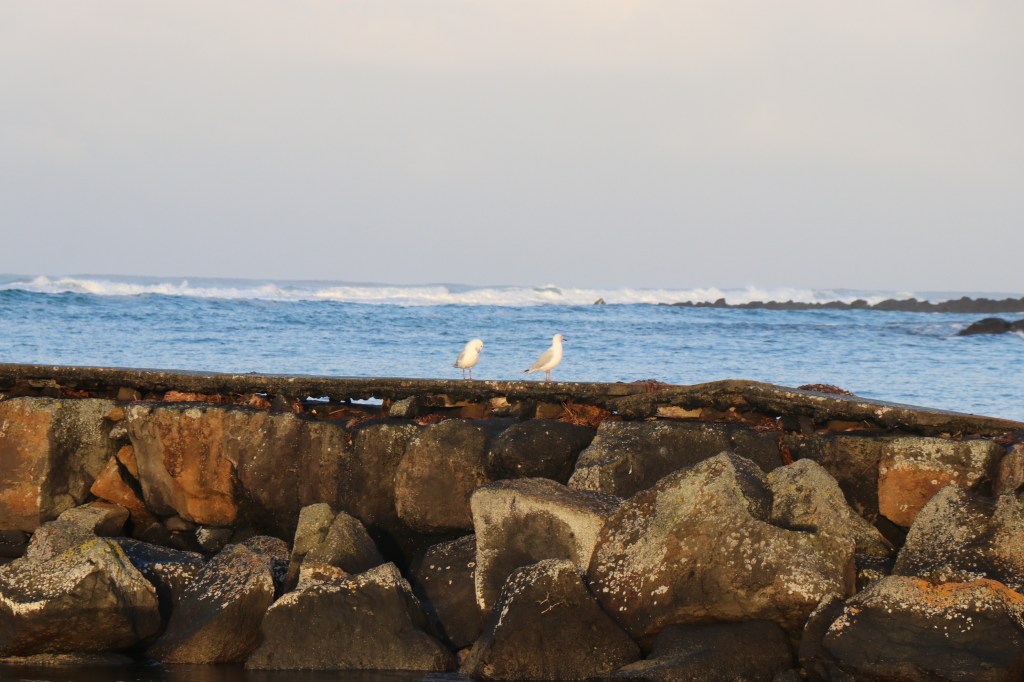
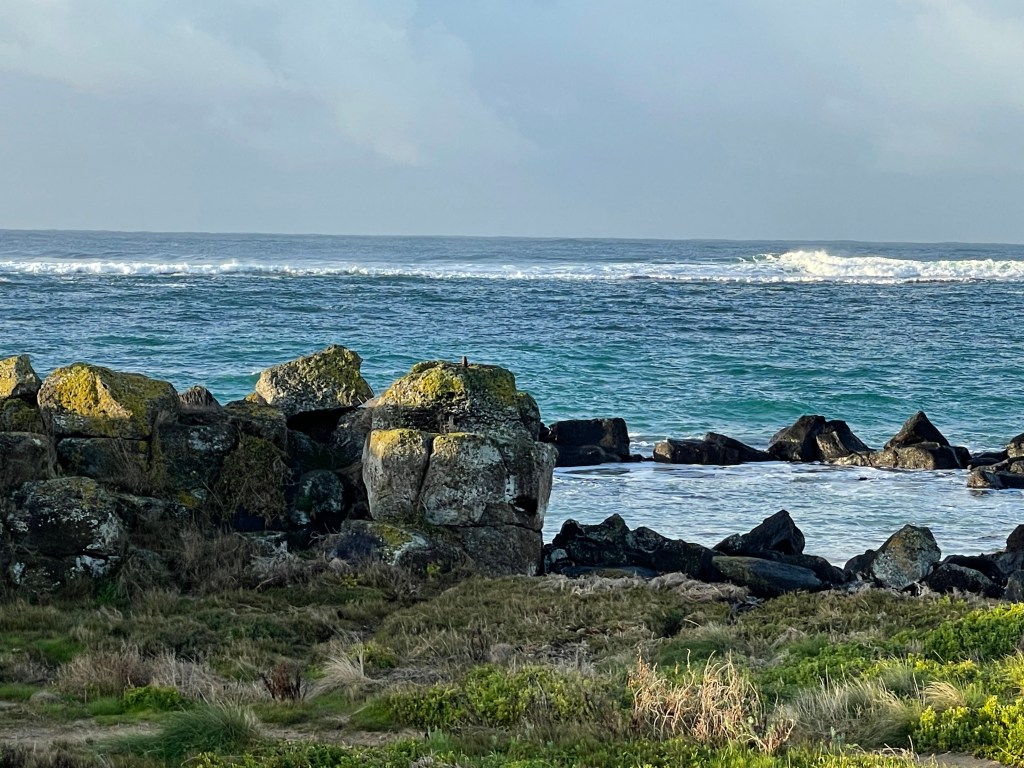
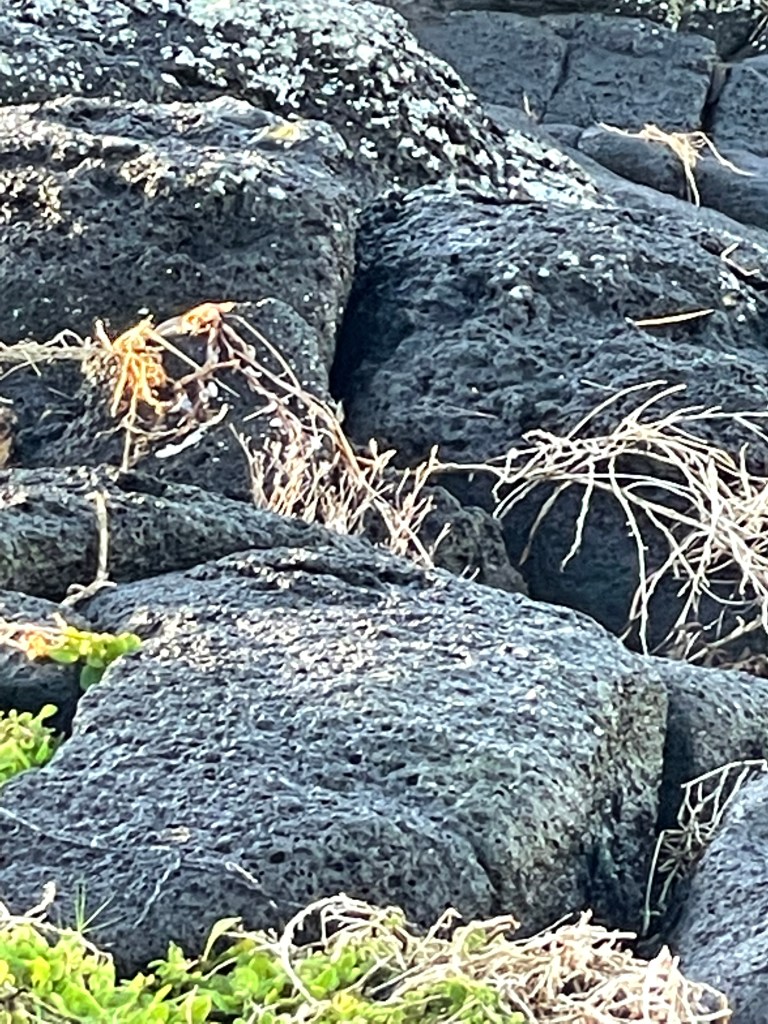
The path takes you to the sea on the south side which has many rocks – I think this actually has a name Daisy Miller Island and the hill behind us also has the same name.
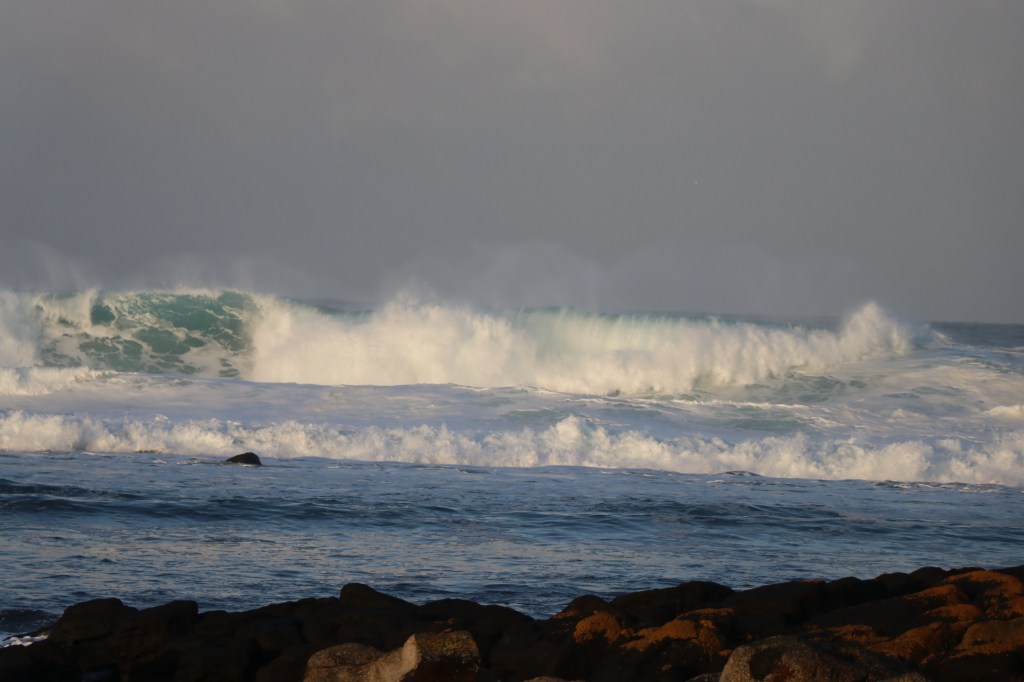

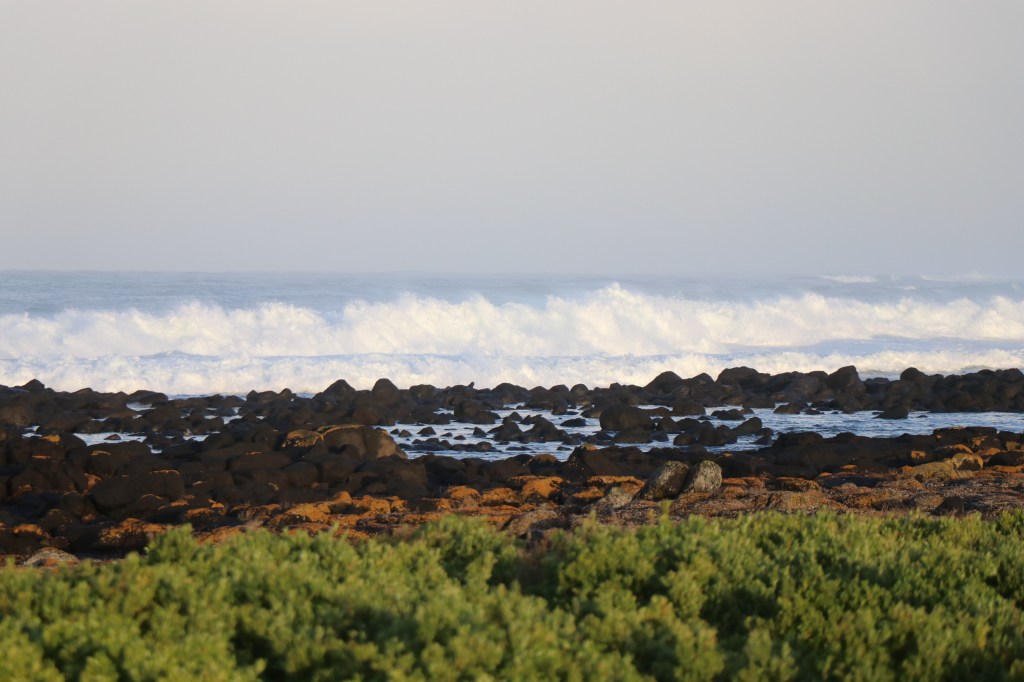
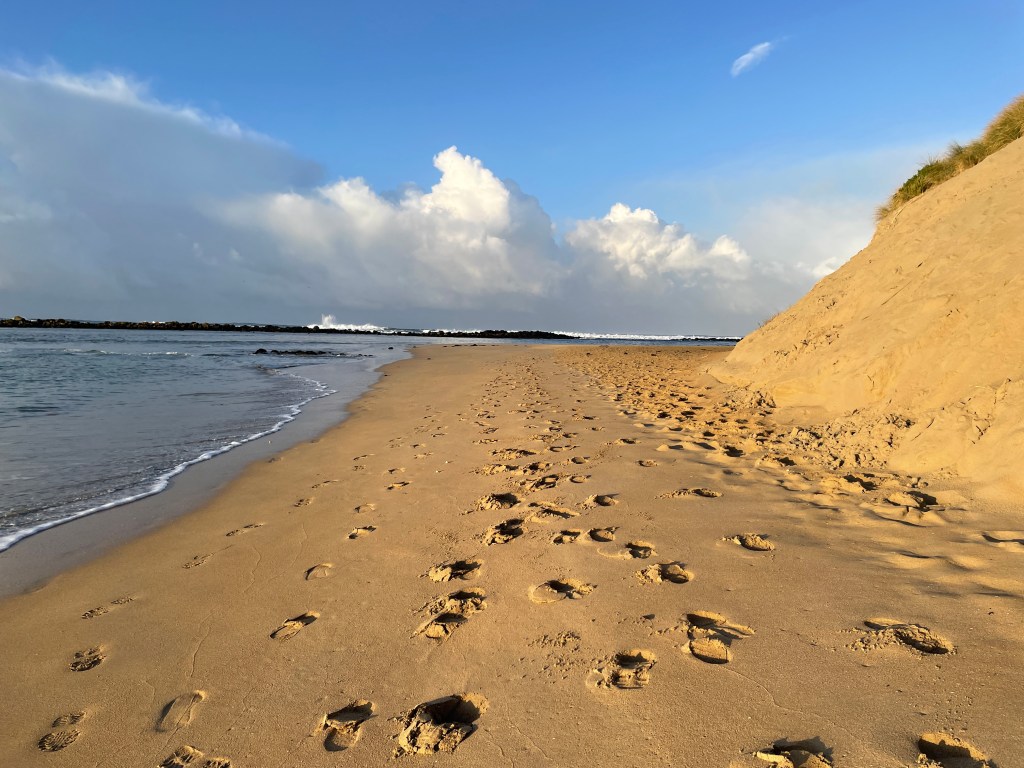
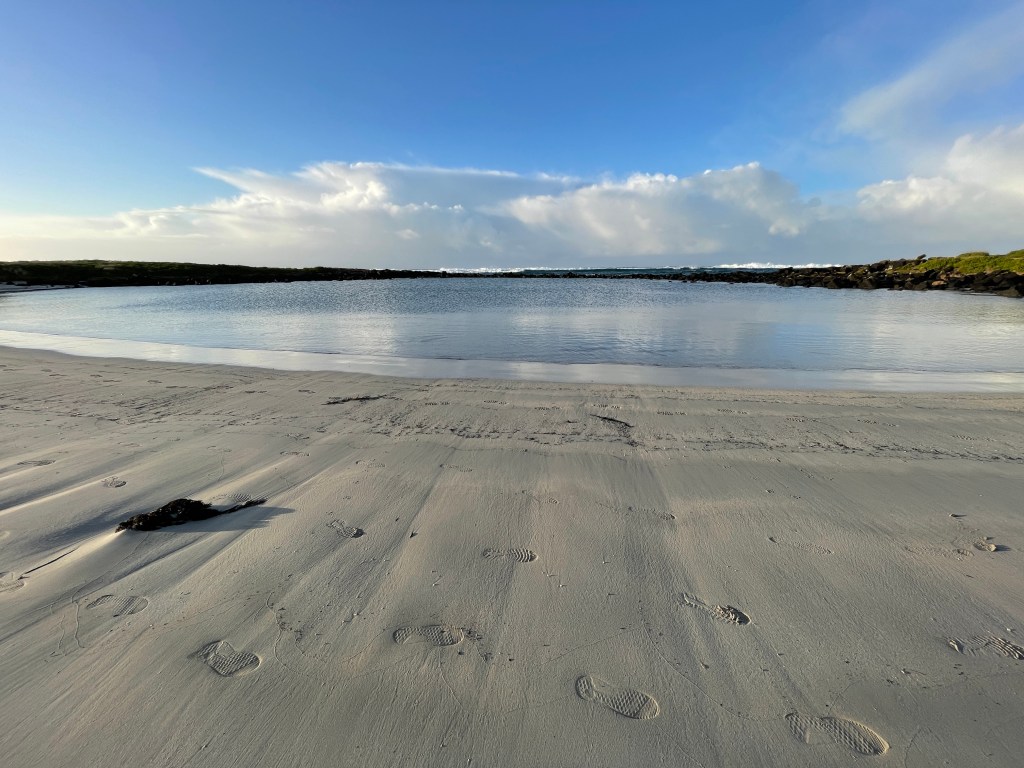
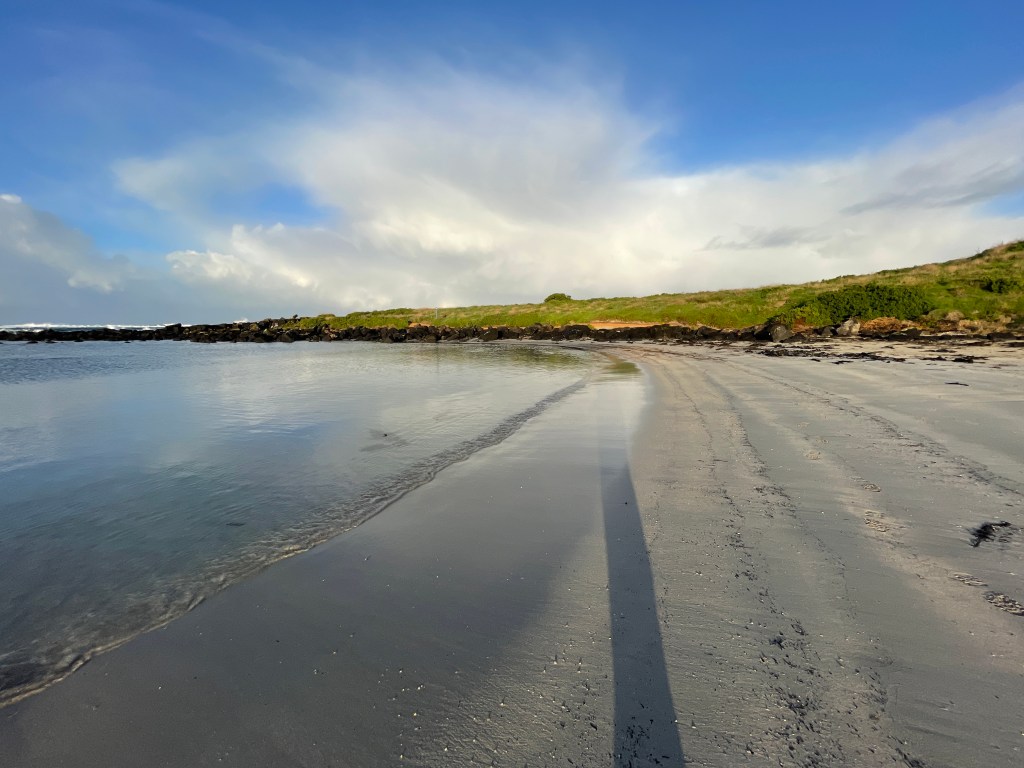
It feels like you are a world away from the mainland as you trek along the shoreline – looking to rocks and wandering big sandy beaches. This part is likely the original Griffiths Island, by far the bigger of the three islands.
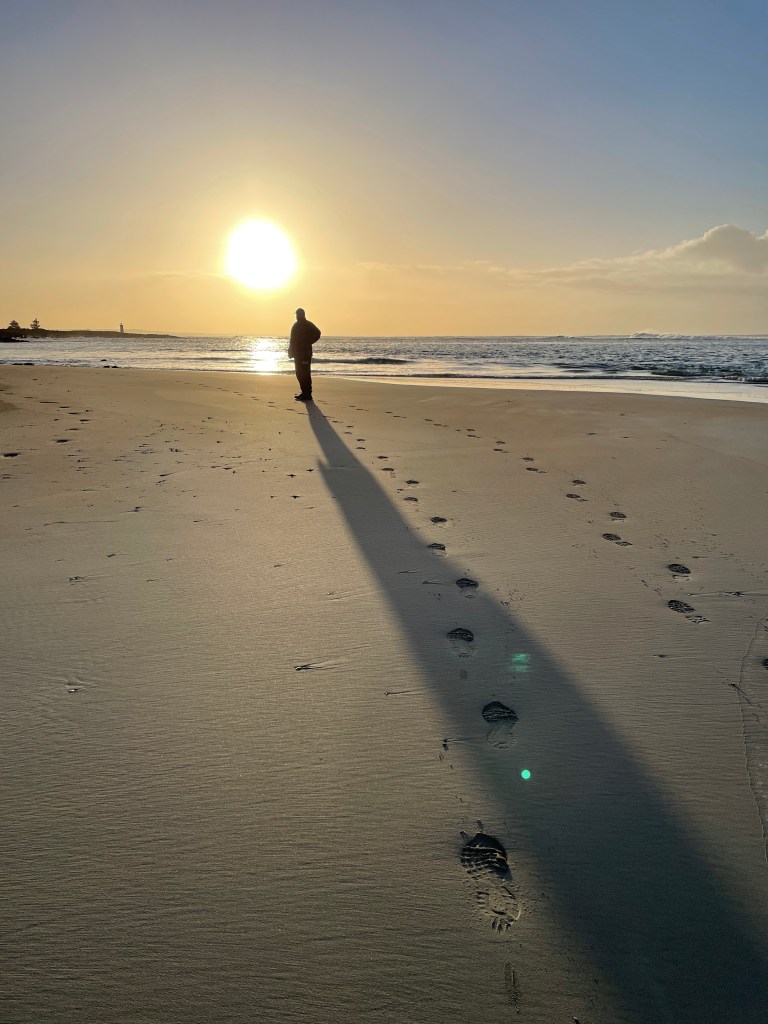
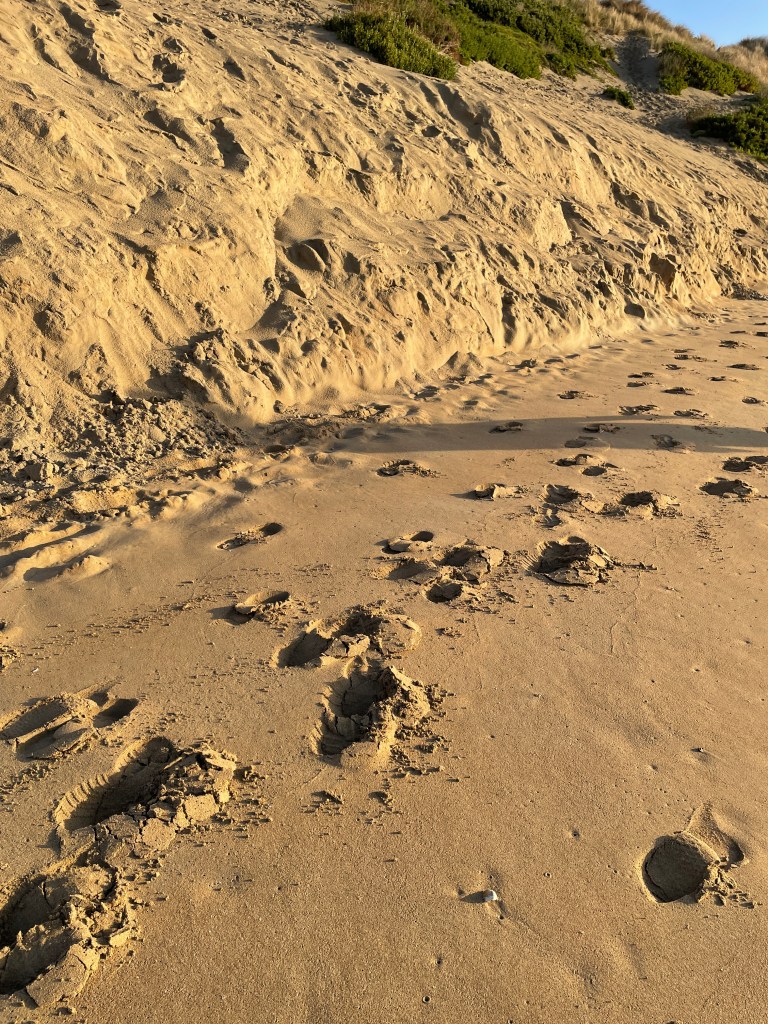
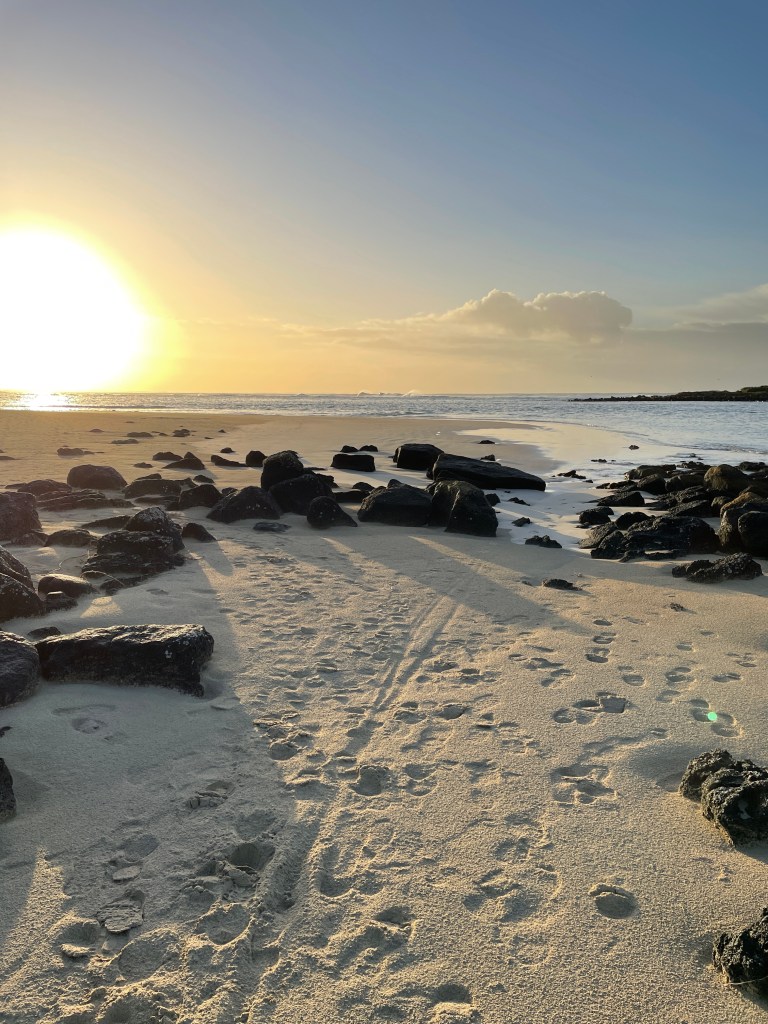
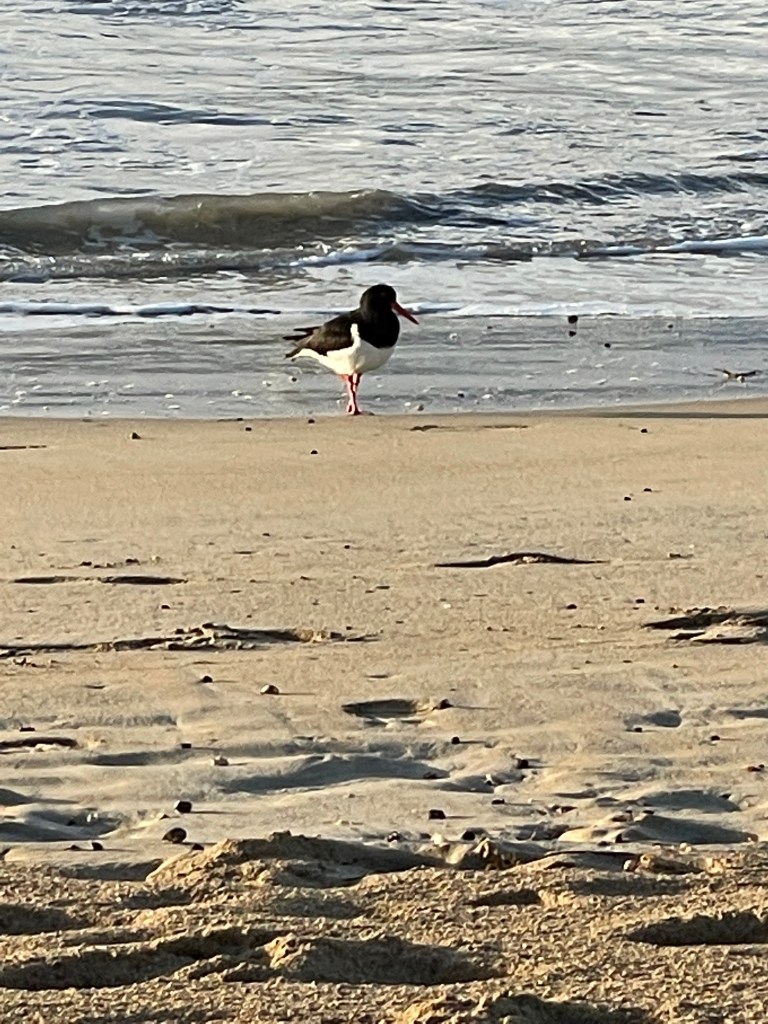
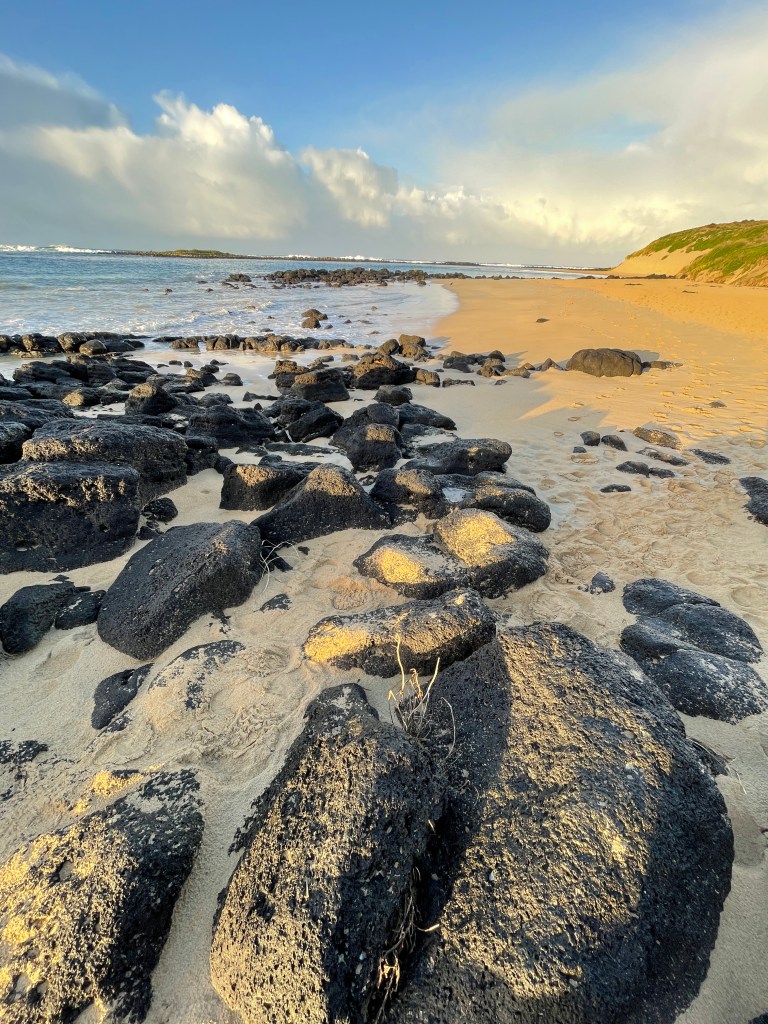
At one point there is a little bay which seems to be ringed by rocks – possibly a former breakwater.
We also pass the old quarry which may have supplied rock for the 1860s training walls and the breakwater which, with landfill, joined the islands.
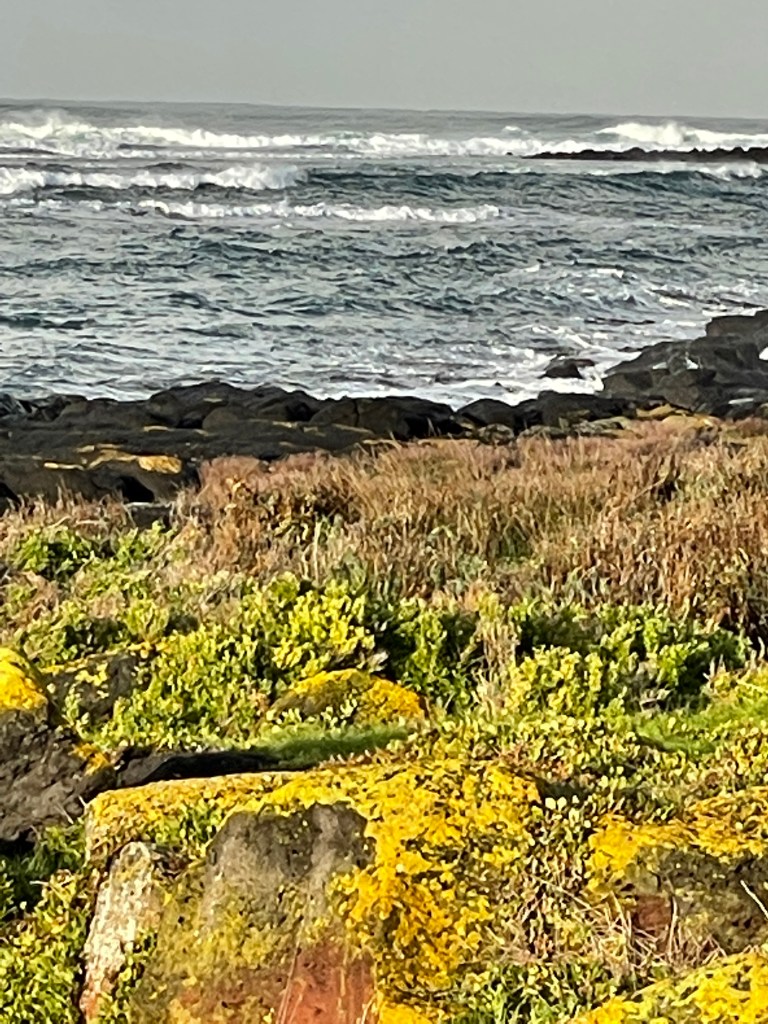
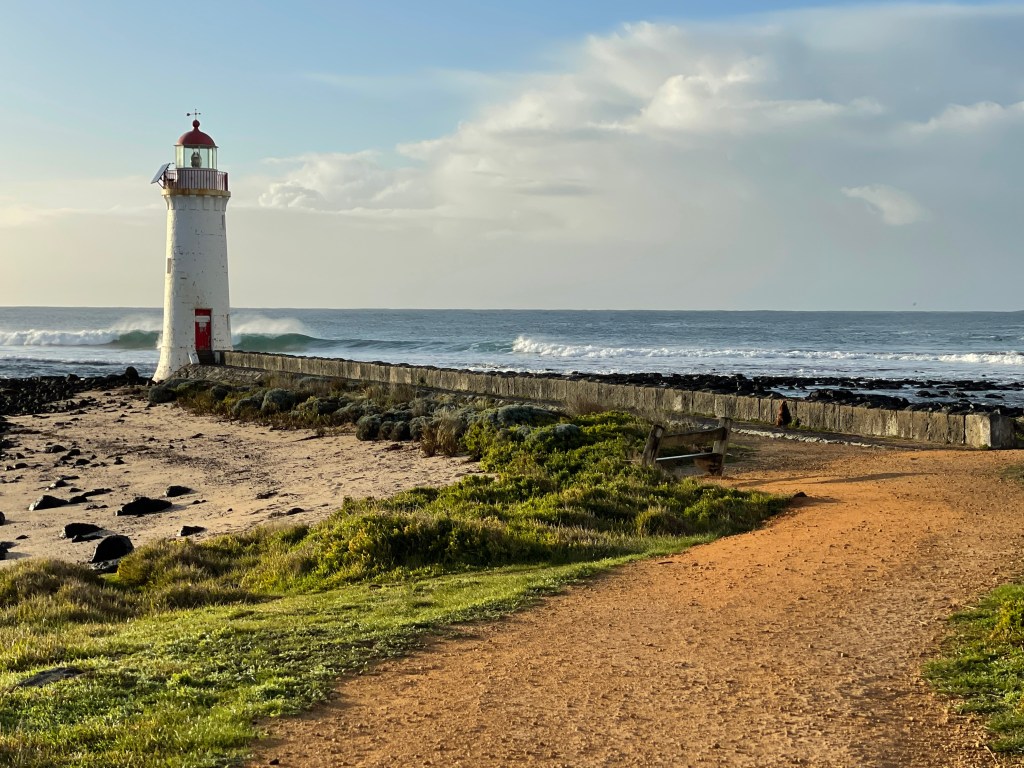
We have now reached Rabbit Island – and the eastern most point where we find 1859 lighthouse.
Erected at sea level, it rises almost eleven metres above high water mark and features a spiral stone staircase, with each step inserted in a course of stonework in the outside wall.
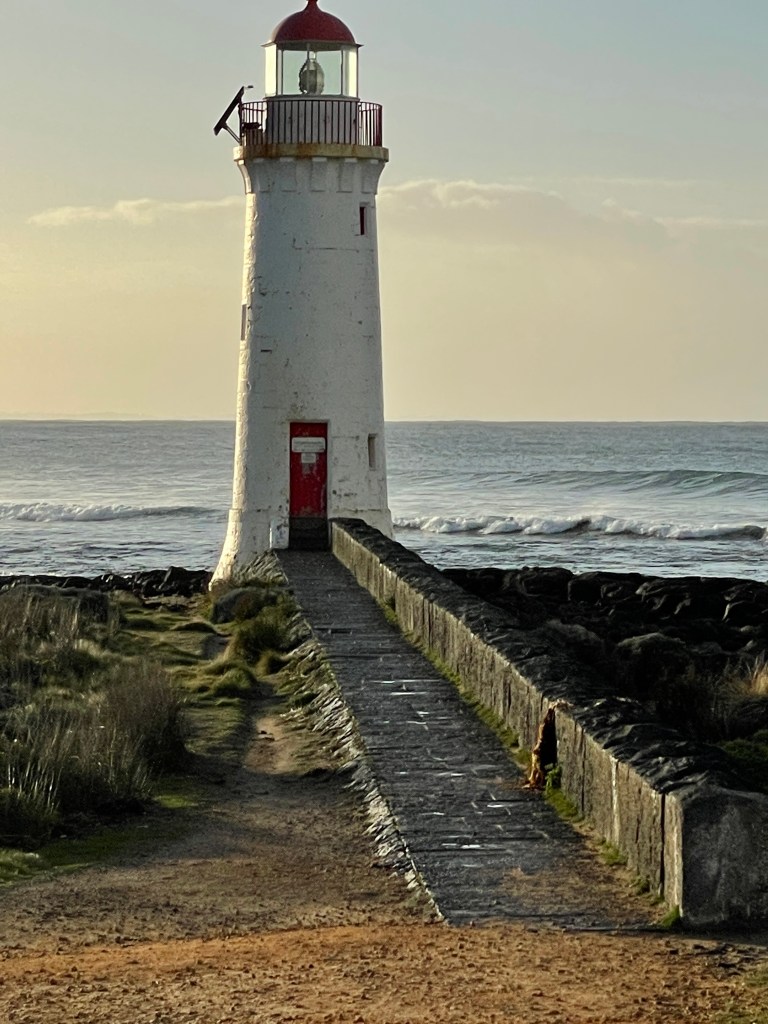
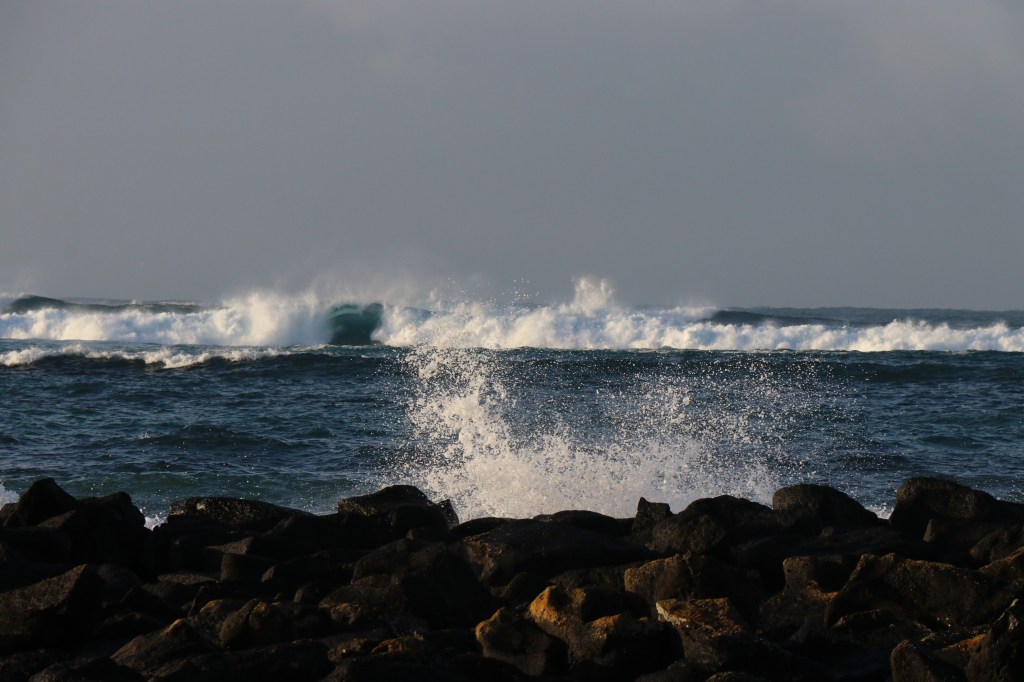
Back in the day it was not easy to get to the island and you had to be pretty self-sufficient – even though you were shouting distance from the town.
Huge Haldane was the lighthouse keeper from the 1929-1953 and recorded his memories.
“Big seas could cut the island off and also make it difficult to get in and out of the lighthouse. Sometimes waves were at the bottom of the door, ” he said.
“My boys were fisherman and they set about building two fishing boats, in the area behind the cottages. We launched them in the bay at the north. There was a garden for vegetables and flowers, and we kept a cow, fowls and pigs (though I didn’t like them). “
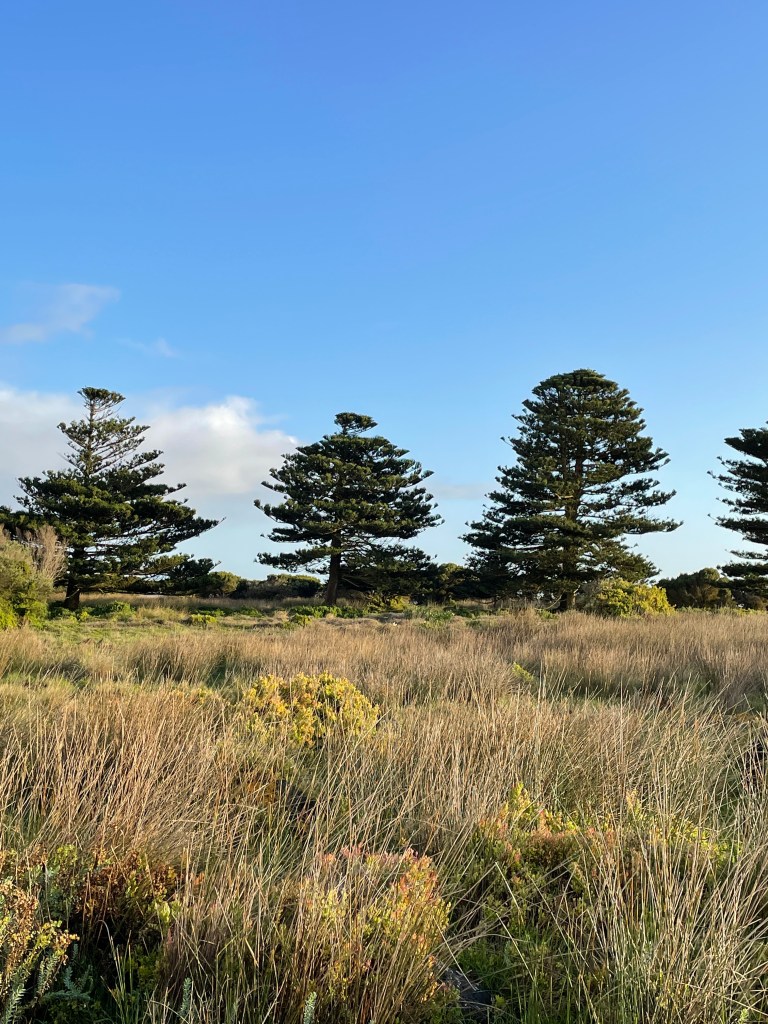
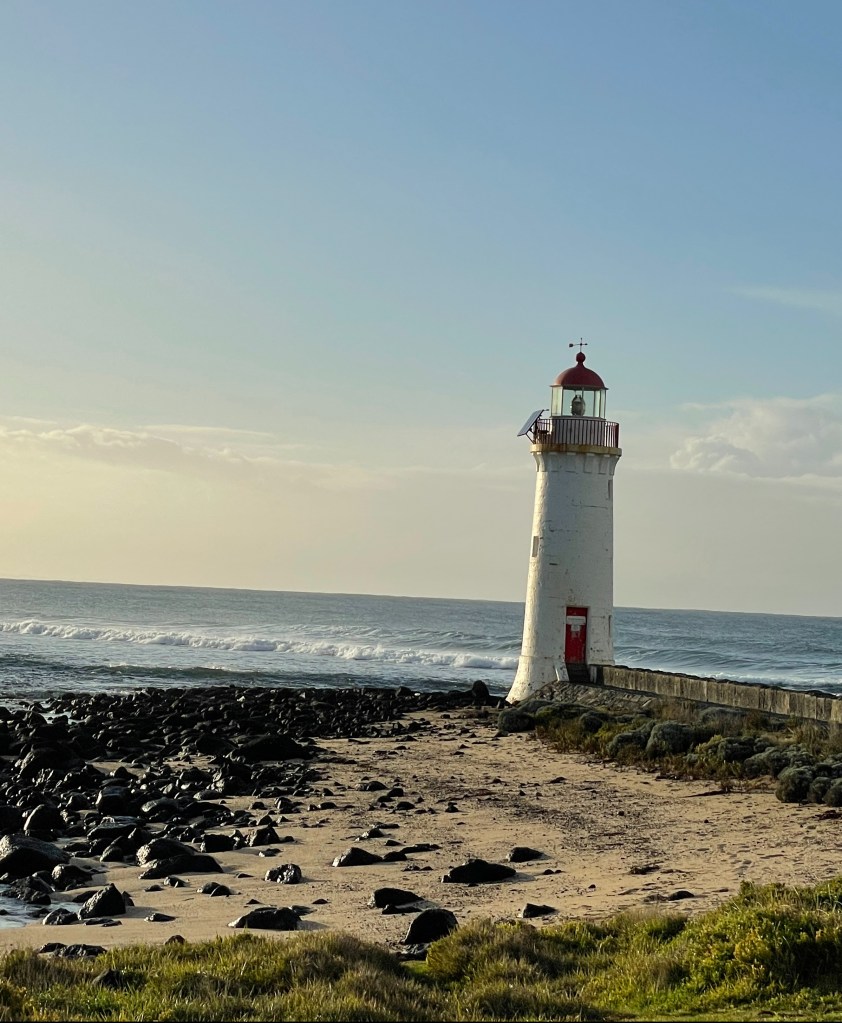
While the house is long gone the Norfolk Island pines Hugh planted remain.
Today the most obvious residents are wallabies who coexist with thousands of tourists passing by and taking their photographs.
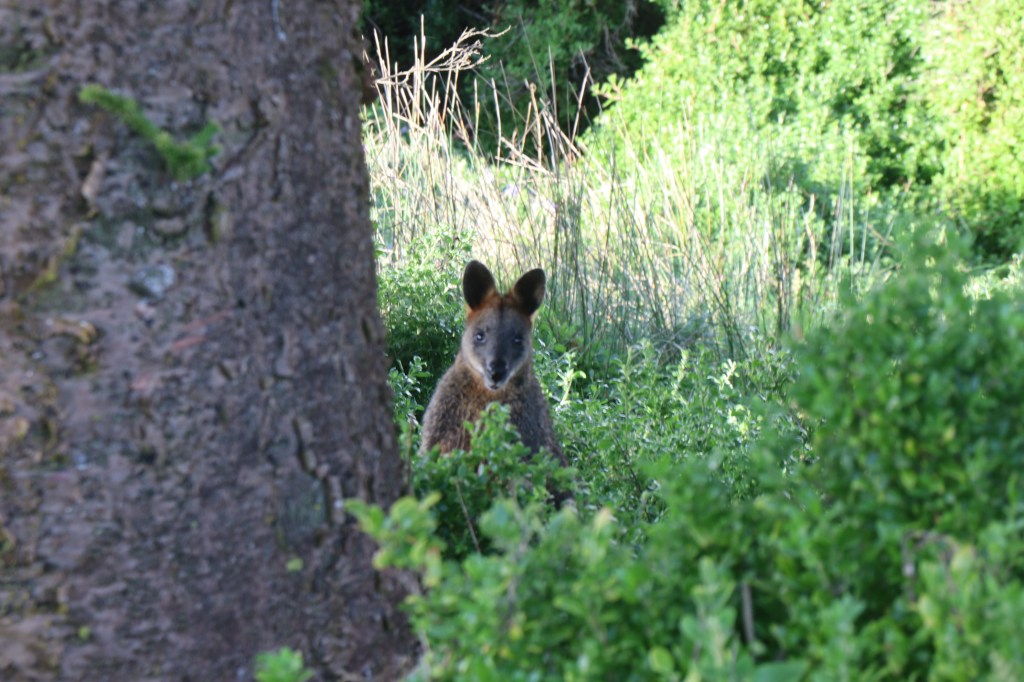
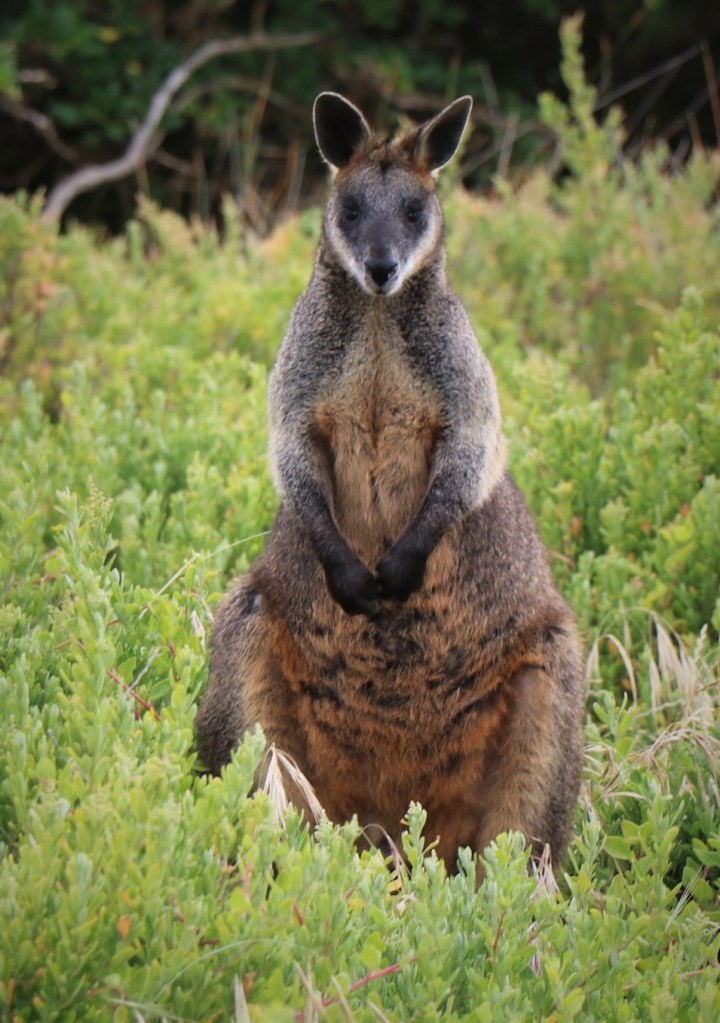
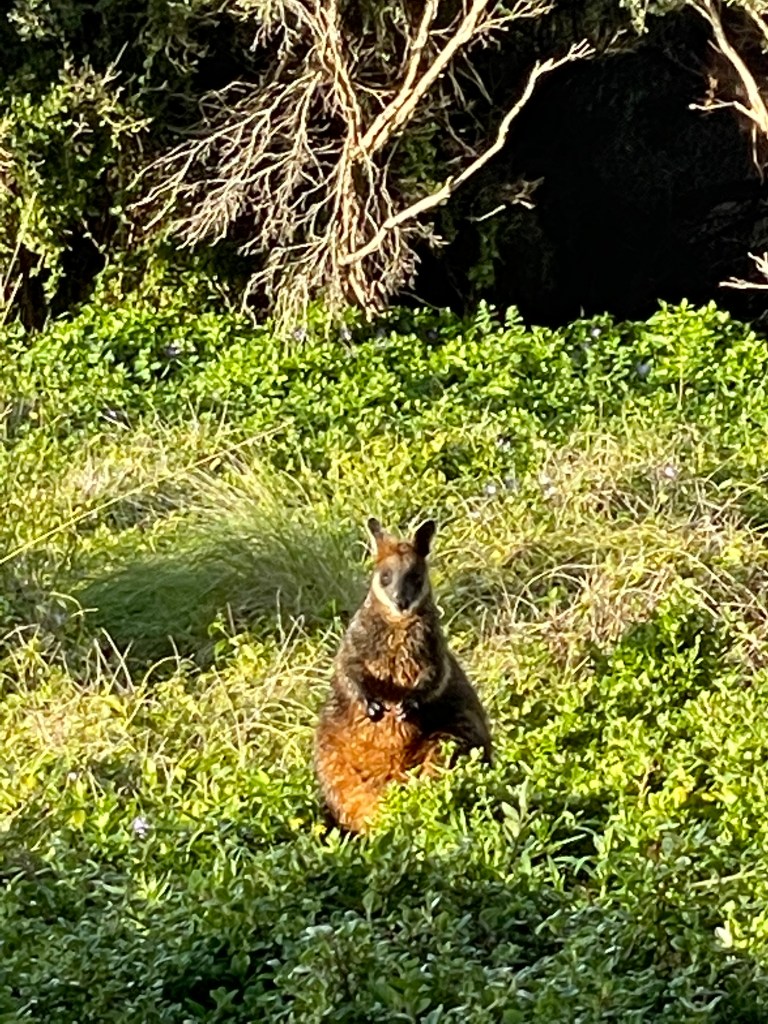
Like the lighthouse, they stand quiet and still watching the world go by.
Once past the lighthouse, the ‘training wall’ takes us back to the causeway.
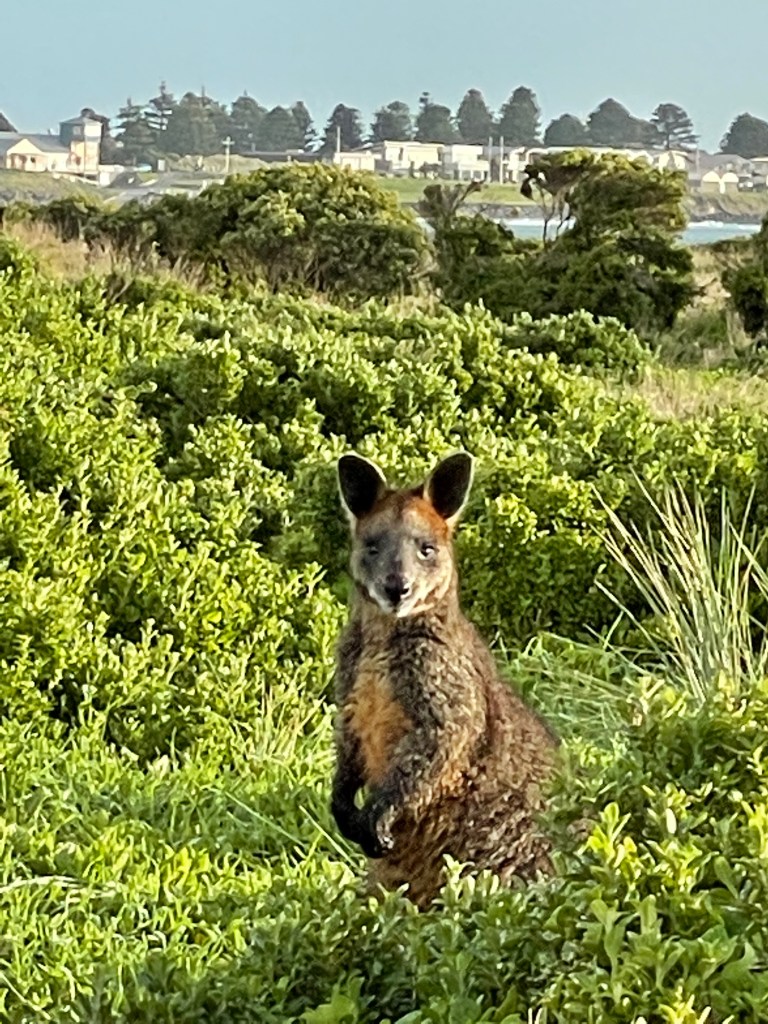
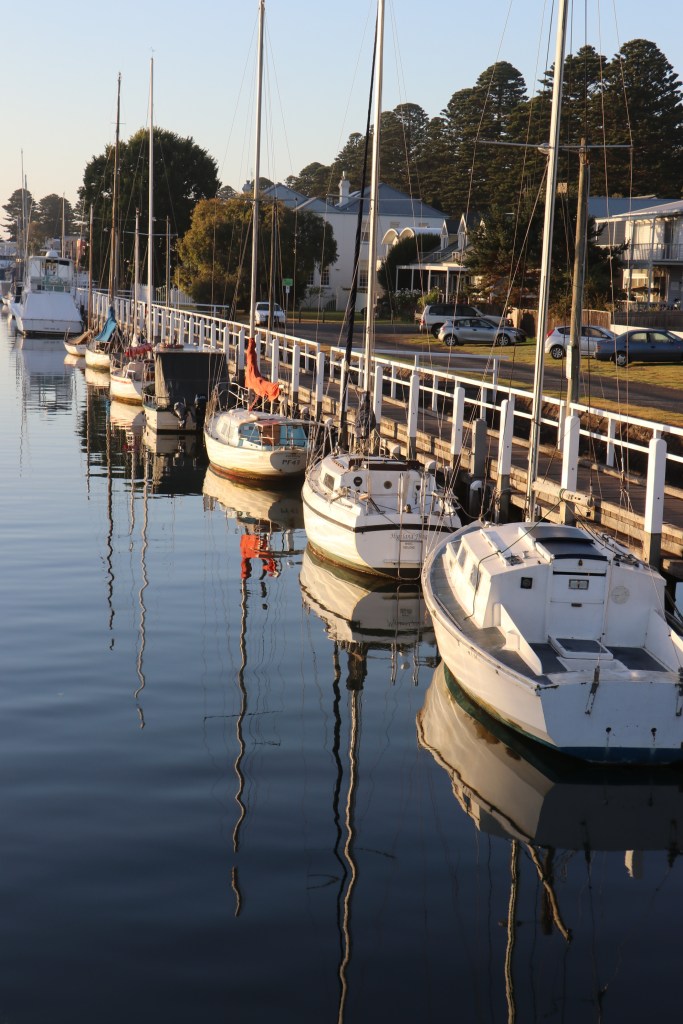
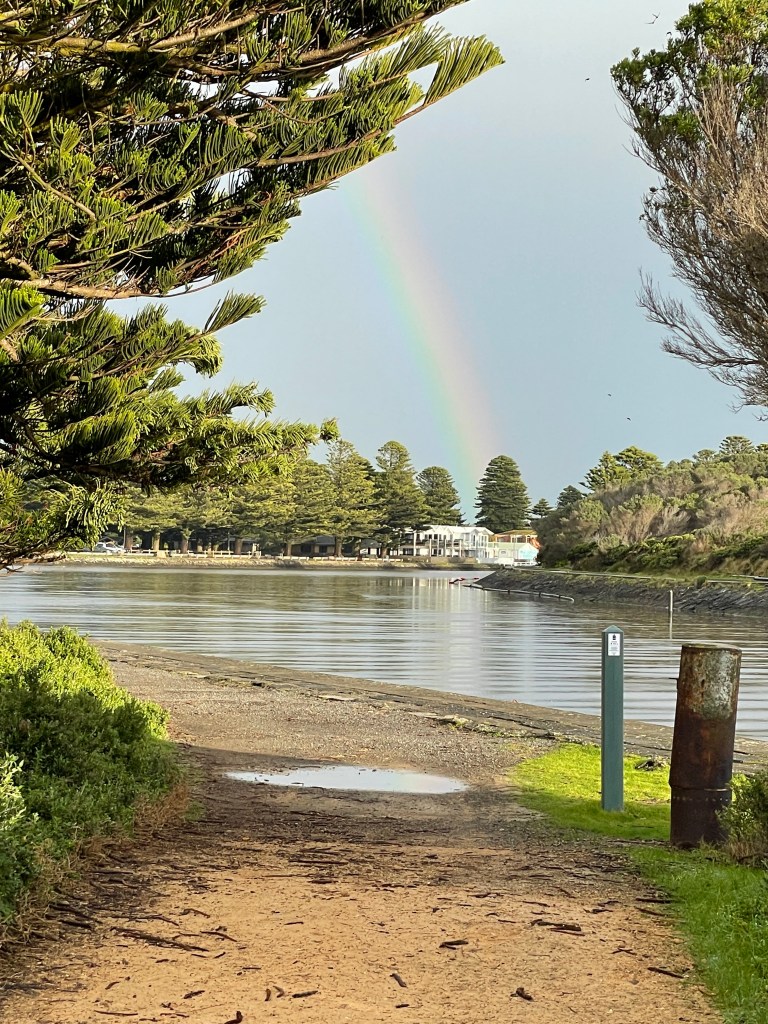
Griffith Island is a short walk, but one with diversity, history, smiling wallabies and plenty of life.
 52 weeks 52 walks